


Understanding the Core Technology Behind Talking Flash Cards
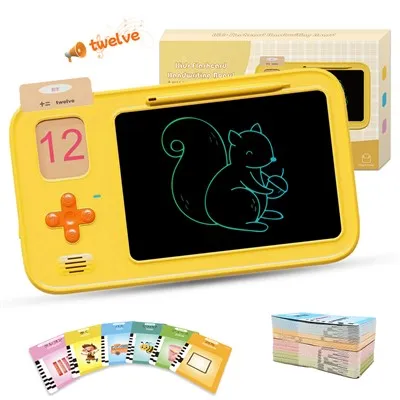
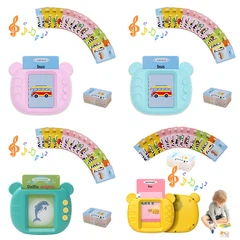
At their heart, talking flash cards are straightforward yet effective learning tools. A typical set includes a reader device and a stack of double-sided cards-often 112 to 224 cards total, covering 12 to 14 different themes like animals, food, transportation, colors, numbers, and everyday objects. When a child places a card on or near the reader, the device recognizes it and plays the corresponding audio.
Recognition methods vary by model and price point. Basic versions use simple button triggers where kids press an area after inserting the card. More advanced ones rely on barcode scanning or even RFID technology for smoother, more reliable interaction. The audio comes from an embedded IC chip with preloaded voice data, usually stored in around 16MB of memory. Sound plays through a small integrated speaker, and power typically comes from a rechargeable lithium battery in the 200-400mAh range, which keeps things lightweight and safe for young users.
The housing is generally made from durable ABS plastic, while the cards themselves are laminated for longevity. This combination holds up well to the rough handling kids dish out. Traders appreciate that the modular design allows for straightforward customization without reinventing the entire product each time. You can swap language packs, add new themes, or bundle cards with complementary features like a drawing tablet in 2-in-1 models.
From a trader's perspective, this technical simplicity translates into real business advantages. Production is scalable, quality control is manageable, and the products ship compactly, which helps control freight costs. Multi-language support opens doors across the United States, Europe, Japan, Korea, and emerging markets, making these items a versatile addition to any educational toy lineup.
Breaking Down Pricing and Quotation Strategies for Importers
One of the biggest questions traders ask when sourcing talking flash cards is how pricing works and where the margins sit. Entry-level models with basic audio functionality typically start around $3.50 to $4.00 per unit at minimum order quantities near 500 pieces on an EXW basis. Standard configurations with better features land in the $4 to $7 range, while retail prices in stores or online often hit $9 to $15 or higher depending on the channel and branding.
Several factors drive the final quoted price. The number of cards in the set matters a lot-112-card basics cost less than 224-card expanded versions. Adding multiple languages increases recording and chip costs. Packaging choices, from simple color boxes to window boxes or full gift sets, also impact the bottom line. Extra functions like drawing boards, Bluetooth connectivity, or quiz modes push prices higher but can justify premium positioning in the market.
Smart traders always request tiered pricing that reflects volume breaks at 1,000, 3,000, and 5,000 units. This structure helps with accurate margin planning across different order sizes. Asking for EXW, FOB, and CIF quotes gives you flexibility depending on whether you handle logistics yourself or want the factory to manage more of the process. Experienced suppliers in Shenzhen and surrounding areas usually provide clear breakdowns, allowing you to balance features against target price points for your specific markets.


Building a Winning Product Catalog and SKU Strategy
Successful traders don't just buy one model and hope for the best. They build a diversified catalog that covers different price segments and customer needs. Standard offerings often include the basic talking flash card reader, bilingual or multilingual editions, combination sets that pair cards with a drawing tablet, and custom curriculum bundles tailored to specific educational standards or cultural preferences.
Core specifications remain fairly consistent across the category: 224 to 448 learning points from double-sided cards, 14 common themes, solid ABS construction, and reliable audio playback. What sets suppliers apart is their ability to customize. Language packs for English, Spanish, French, Japanese, Arabic, and others make the same hardware viable in many countries. Private labeling, custom packaging, and localized content-whether for religious education or specific school curricula-add significant value for brands and larger retailers.
When planning your SKU strategy, think about how these products fit into broader assortments. A basic set works great for mass-market e-commerce, while feature-rich 2-in-1 models appeal to parents looking for multifunctional learning tools. Offering both standard and customized options lets you test markets with lower-risk orders before committing to larger production runs. This flexibility is one reason talking flash cards have become popular high-turnover items for distributors.
Navigating Export Markets, Logistics, and Supply Chain Reliability
Factories with strong export track records tend to be the safest bets for traders. These manufacturers have shipped successfully to the United States, European Union, Japan, and Korea, which means they already understand regional compliance needs, documentation requirements, and common shipping challenges. Reliable communication and consistent delivery performance reduce headaches that can eat into profits.
Logistics options give traders flexibility. Sea freight remains the most cost-effective choice for larger orders, with typical transit times of 20 to 35 days. Air freight speeds things up to 5-10 days when timing is critical, and express services handle samples in 3-7 days. Monthly production capacities often range from 50,000 to 200,000 units, supporting both test orders and scaling volumes.
Lead times vary by order type. Standard models can ship in 7-15 days, while OEM customization usually takes 15-30 days and full ODM projects require 30 days or more. Working with integrated manufacturers that handle both OEM and ODM work gives you options as your business grows.


MOQ Considerations and Smart Ordering Strategies
Minimum order quantities (MOQs) play a key role in balancing inventory risk with unit costs. Many standard models start at 500-1,000 pieces, making them accessible for initial market testing. OEM orders often require 1,000-3,000 units, while new ODM developments push toward 3,000 pieces or more. Lower MOQs are sometimes possible but come with higher per-unit pricing.
A practical approach for many traders is starting with around 1,000 units to validate demand in their target channels. Once sales prove consistent, scaling to 3,000+ units unlocks better pricing and stronger margins. This stepwise strategy minimizes risk while building supplier relationships that can support long-term growth.
Meeting Certification and Compliance Requirements
Because talking flash cards combine toys with electronics, they face regulations in both categories. For Europe, expect needs for CE marking, EN71 toy safety standards, and RoHS compliance. In the United States, ASTM F963, CPSIA, and FCC requirements apply. Global considerations include REACH and UN38.3 battery testing.
Reputable factories maintain ISO9001 quality management systems and often hold BSCI or SEDEX social compliance certifications. Always request current test reports, material safety data sheets, and verification of certification validity dates. Doing this upfront prevents costly delays or rejections at customs.


Why Talking Flash Cards Represent a Strong Opportunity for Traders
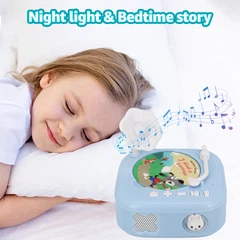
In today's educational toy landscape, parents and educators continue seeking screen-free, engaging tools that support early learning. Talking flash cards deliver exactly that-interactive audio feedback that reinforces vocabulary, pronunciation, and cognitive skills in a fun, hands-on way. Their compact size, durable construction, and adaptability make them easy to market across retail and online channels.
For traders, the category offers low entry barriers combined with solid scalability. Competitive pricing, reliable supply chains from experienced Chinese manufacturers, and customization potential create multiple paths to profitability. By focusing on suppliers who understand export logistics, maintain proper certifications, and offer flexible MOQs and tiered pricing, you position yourself to build a sustainable business in this growing segment.
Whether you're expanding an existing educational toy portfolio or entering the category fresh, taking time to understand the technical details, pricing dynamics, and compliance landscape pays off. The right sourcing partner-one with proven export experience and strong OEM/ODM capabilities-becomes a key asset for consistent quality, timely delivery, and competitive edge in multiple international markets.
As demand for interactive, educational products continues evolving, talking flash cards stand out as a practical, profitable choice. Their blend of simplicity and functionality appeals to both budget-conscious buyers and parents seeking quality learning aids. For traders willing to dig into the details and build solid supplier relationships, this category offers clear opportunities for steady growth and strong returns.