








Story Projector – The Paper Trail That Travels With Every Unit
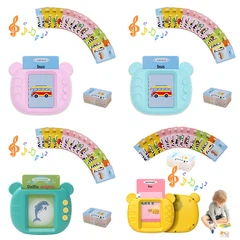
Details: A projector is one of the few children's products where what happens off the shelf matters as much as what happens on it. A lithium-ion cell, a light source and a child's face share the same object, so a buyer needs to know which batch a unit came from, what was checked before it was packed and which documents travel with the shipment. This one runs from an 1800 mAh lithium-ion cell with continuous playback of about eight hours and a charge time of about two hours, projects over a range of two to three metres with focus adjustment, and carries a speaker in its own cavity. It ships with an 8 GB TF card and a 50 cm Type-C cable, and delivery is planned around the records a buyer will need.
What Traceable Actually Means
Traceability is an easy word to print on a brochure and a hard one to deliver, because it is not a feature of the product at all. It is a property of the process: whether a unit that reaches a customer can be connected back to the materials it was made from, the checks it passed and the documents that described it. On a projector that chain matters more than on a plush toy, because a fault that appears in one batch is a question about every unit made in the same run.
The chain begins with the batch. Units are produced in identified batches, and the batch code follows the product from the line to the carton and onto the shipping document, so a question raised months later about one unit can be answered by looking up the run rather than by guessing. That is what turns a complaint into a fact, and it is the first thing a serious buyer asks to see.
The second link is the content version. A projector ships with an 8 GB TF card and a story library loaded against it, and the version of that library is recorded for the batch. When a buyer releases a second story set, the record is what tells the factory that a customer who received the first run is holding the correct card rather than a mixed one.
The third is inspection. Each batch carries a signed record covering the checks it passed: power-on behaviour, projection clarity and focus, the automatic cut-off that switches the light off within 30 cm of an obstacle, speaker output, charging behaviour and the physical condition of the ABS shell. The record is not a marketing document; it is the sheet the factory would consult if a batch were ever questioned.
The fourth is the certificate file, and it is the link buyers most often underestimate. A projector sold into several markets carries paperwork for each one, and that paperwork has to match the batch rather than the product line. Keeping the file tied to a shipment is what stops a container arriving at a port with documents describing an earlier build.
The fifth link is delivery itself. Because the product carries a cell, it is subject to transport requirements that do not apply to a wooden toy, and the packing, marking and documentation have to be right before the goods leave rather than corrected at the port. Buyers who treat this as part of the specification rather than as paperwork discover fewer surprises in transit.
None of these five links is difficult to maintain, and that is precisely why they are worth specifying up front. A factory that keeps them has a process a buyer can audit; one that reconstructs them afterwards has no process worth the name.
A sixth link is worth adding even though it is not a document: the honesty of the schedule. A factory that gives a realistic date and meets it is far more useful to a buyer than one that promises an earlier date and slips, because a slip moves a shipment past a season and the season does not move. Delivery reliability is part of what is being bought, and it is the one part a buyer can only judge after the first order has been placed and received.
All of this matters more on this product than on a plush toy, and the cell is the reason. A fault in a soft toy is a disappointment; a fault in a product carrying a lithium-ion cell and a light source is a safety question, and safety questions are answered with records rather than with assurances. A buyer who asks for the record at the outset is not being difficult - they are recognising which category of product they are ordering.
Story Projector – Model LMP-003 Data Sheet
| Story Projector – Specification Summary (LMP-003) | |
| Item | Story Projector / LMP-003 |
| Colour | Produced to order, with a two-colour projection effect |
| Battery | 1800 mAh lithium-ion; continuous playback about 8 hours, charging about 2 hours |
| Charging | Type-C, 1 A, 50 cm cable supplied |
| Speaker | Independent cavity with an iron shell, 4 ohm 3 W |
| Projection | Two to three metre range, with focus adjustment |
| Controls | Track switching, volume, play and pause, Bluetooth playback and mode switching |
| Housing | ABS |
| Storage | 8 GB TF memory card |
| Safety Cut-Off | Projection switches off automatically within 30 cm of an obstacle |
| Product Size | 138 × 190 × 118 mm; box 160 × 210 × 150 mm |
| Unit Weight | 500 g |
| Compliance | CE, CPC, UKCA, FCC and RoHS; ASTM F963 or EN71 testing on request |
Buyers who care about the record tend to ask for it at the quotation stage, and that is the right moment. Tell us the markets you are selling into and the documents your importer expects, and the reply sets out the inspection record, the certificate pack, the batch coding and the packing requirements alongside the layout and tiered quantity bands. The full range is here: https://www.kidsoundbook.com/products
Six Points Where the Product Can Be Traced
Details: A projector can be followed from a production line to a child's bedroom through six recorded points. Each is a document rather than a claim, and together they are what a buyer can audit.
The Batch Code on the Unit
Each production run is identified and the code is carried on the product, so a specific unit can be linked to the batch it came from. This is the single most useful record on the list, because without it a fault can only be discussed in general terms rather than narrowed to the units that share it.
The Carton Mark
The carton repeats the batch reference together with the destination, so a shipment can be reconciled against the order without opening every box. When a buyer receives a part delivery or a mixed pallet, the marking is what makes it obvious which cartons belong to which run.
The Inspection Record
Every batch is checked against a signed sheet covering power-on behaviour, projection clarity and focus, the 30 cm automatic cut-off, speaker output, charging behaviour and the condition of the ABS housing. The sheet is kept rather than filed away, because its value appears only if a batch is ever questioned.
The Content Version
The story library loaded onto the 8 GB TF card is versioned for each batch, so a second release can be matched to the units that should receive it. Without a version record, a reissue becomes a question of which card a customer happens to be holding rather than a known fact.
The Certificate File
Documents are prepared per destination and tied to the batch being shipped, so a container arrives with paperwork that describes the goods inside it. Because this product combines a cell, a light source and radio equipment, the file is assembled for the markets in the order rather than kept as one generic set.
The Delivery Milestones
Sample approval, production start, inspection, packing and despatch are recorded as they happen, so a buyer knows where an order stands without asking. A shipment with a cell in it has to clear transport requirements before it moves, and milestone records are what keep that from becoming a delay at the port.

The Audit You Run Yourself
The six points above exist to be tested, and a buyer can test them without visiting the factory: pick one unit at random, read its batch code, ask for the sheet that belongs to that batch and the documents that left with its carton. If all three line up, the process is real. If any of them cannot be produced, the rest of the file is decoration.
Six Buyers Who Have to Show Their Working
Some buyers can sell a product on its merits alone; others have to be able to explain where it came from. This projector is ordered most often by the second group, and their requirements shape how it is delivered.
None of these buyers is asking for extra administration. Each is protecting something specific: a licence, a listing, a tender, or simply the ability to answer a customer question without a week of correspondence behind it. A supplier who understands which of those is at stake tends to keep the account.
Where the Record Touches the Order
| Traceability Milestones – Story Projector | ||
| Stage | What Is Recorded | Why It Matters to You |
| Before the run | The approved sample and the frozen specification | The reference every later batch is judged against |
| Content load | The library version written to the TF card | Lets a second release reach the right units |
| Inspection | A signed sheet covering the batch's checks | Answers a complaint with a fact, not an opinion |
| Packing | The batch and destination marked on each carton | Reconciles a part delivery without opening boxes |
| Documents | The certificate pack for each destination | Stops a container being held for missing paperwork |
| Despatch | The milestone log through to loading | Shows where an order stands without chasing it |
Two habits make this chain hold together. Attach every record to the batch rather than to the product line, because a generic document answers no useful question. And settle the document requirements before the run begins, since a certificate produced after the goods have moved is worth far less than one that travelled with them. A third habit is worth adding: name one person on each side who owns the record. A file with two owners is effectively a file with none, and the moment a question arrives is the wrong moment to discover that nobody is certain where the batch sheets are kept or who last updated them. Ownership is what stops the chain quietly breaking between two orders, and it costs nothing more than an agreement made at the start.
Why the Paper Trail Pays
A record costs a little time and saves a great deal of it. Four effects are worth weighing before an order is placed.
| Two Ways to Supply a Battery Product | ||
| With a batch-linked record (LMP-003) | With the paperwork kept loosely | |
| A reported fault | Traced to one production run | Discussed across the whole product line |
| Documents at the port | Raised for the batch and shipped with it | Assembled after the goods have moved |
| A retailer audit | Answered from the file the same day | Answered from memory, over several days |
| A second content release | Matched to the units that should receive it | Sent broadly and sorted later |
| A part delivery | Read off the carton marking | Confirmed by opening cartons |
| An institutional order | Documentation produced on request | Documentation promised and chased |
One honest note belongs here. A record only works if it is kept, and keeping it is a habit rather than a feature. The practical test for a buyer is not whether a supplier says the right things about traceability but whether a single batch, named at random, can produce its own sheet and its own documents within a day. That is a question a factory either passes easily or cannot answer at all. That test costs a buyer one email and reveals more about a supplier than any brochure, which is why it is worth running before an order is placed rather than after a problem has appeared.
From Order to Sealed Carton, With the Record Attached
A projector project moves through eight stages, and a record is created at each one. The sequence below is the one this model follows.
| Project Flow – Story Projector | ||
| Stage | What Happens | Your Input |
| 1. Requirements | Markets, documents and transport needs are agreed first | The territories and what each importer expects |
| 2. Colour and content | The shell colour and the story library are specified | The two-colour effect and the story list |
| 3. Sampling | A working projector is built and sent for review | Sign-off on projection, focus and audio |
| 4. Golden sample | One unit and one signed sheet become the reference | Written approval of the specification |
| 5. Production | The batch is built and its code is applied | The quantity and the delivery window |
| 6. Inspection | The batch sheet is completed and signed | Any additional checks the market requires |
| 7. Packing and documents | Cartons are marked and the certificate pack is assembled | Carton wording and importer details |
| 8. Despatch | The milestone log is closed as the goods load | The forwarder and the shipping instructions |
The stage buyers most often overlook is the first, because documents feel like an afterthought next to a projection lens. In practice the market list decides the document set, and the document set decides when the goods can move. Buyers who name their territories at the start of a project spend the rest of it discussing the product rather than chasing paper. Documents are also cheapest when they are planned alongside the product: a market list decided at the start costs nothing to serve, while the same list discovered at the port costs a week of somebody's time.
Ordering a Story Projector – The Questions Buyers Ask
Q1: What does the projector play, and how is the content stored?
Stories and songs are held on an 8 GB TF card fitted inside the unit, and the library can be replaced or extended by loading a new card set. Playback can also be taken over from a phone by Bluetooth, which makes the projector usable with material a family already owns as well as with the card that ships in the box. The loaded library is versioned per batch so a later release can be matched to the right units.
Q2: Can we customise the colour and the projection effect?
Colour is produced to the buyer's requirement, and the projection uses a two-colour combination whose picture effect can be specified for the edition. The shell is ABS, so it can be moulded in a chosen shade or finished for a licensed look, and the artwork on the box and any sleeve is produced alongside it. Both are settled before tooling is confirmed.
Q3: Which safety features does the projector have?
The projection switches itself off automatically when it comes within 30 cm of an obstacle, which keeps a child from staring into the lens at close range. That feature is checked on every batch and recorded on the inspection sheet rather than being treated as a one-off design claim, because it is the kind of protection that only matters if it works on the unit in the box.
Q4: What documents travel with a shipment?
Each destination receives the certificate pack it requires, prepared for the batch being shipped rather than kept as a generic set, together with the inspection record for that run and the transport documentation the goods need. Boxes carry the batch reference and the destination, so a part delivery can be reconciled against the order without being opened.
Q5: How is the lithium battery handled in transport?
A unit with a lithium-ion cell is subject to rules that do not apply to a passive toy, so the packing, marking and shipping documents are prepared before the goods move rather than corrected at the port. Buyers should tell us at the quotation stage which carriers and routes they intend to use, because that decides part of the paperwork alongside the destination.
Q6: Can a single unit be traced back to its batch?
Yes, and it is the point of the process rather than a special service. Take the batch code from any unit and the corresponding record can be produced: the sheet that batch was inspected against, the library version that was loaded and the documents that left with its carton. A buyer is welcome to run that test on a random unit before placing a larger order.
Q7: How do samples and first orders work for a new model?
A working projector is produced before the run so the projection, the focus and the audio can be judged in use, and the approved unit becomes the reference for production. Quantities and terms are confirmed in the quotation, and shorter trial runs can be arranged where a market is being tested. Whatever the samples cost is credited back when the production order is placed.
Q8: Which certifications come with the projector?
CE, CPC, UKCA, FCC and RoHS documentation is held, and ASTM F963 or EN71 testing is arranged where a market asks for it. Because this product contains a rechargeable cell, a light source and Bluetooth radio, the file covers several areas at once and is assembled per destination. It is revised when a standard changes, so it describes the batch being shipped rather than an earlier build.
The Plant Behind the Projector
for children
The projector is built by Xinditai Electronics, a Shenzhen manufacturer of children's audio products that has been in the trade since 2010. Its programmes are OEM and ODM work on children's audio and interactive products, spanning projection toys, story players, sound books, talking cards, writing tablets, sleep aids and musical devices, for brands, publishers and distributors in many countries.
Optics, electronics, audio and packing are handled on one 3,000-square-metre site staffed by more than 100 engineers and operators, which is what makes a batch record practical: the same building that assembles the unit also holds the sheet it was inspected against. The rule the house works to is a short one – Create with heart, ship with pride – and checking is built into each stage rather than left to the end, so a batch can be followed from its components to the carton it left in.

Compliance & Certificates
Certificates
This product brings together a rechargeable cell, a light source and Bluetooth radio, so its documentation covers more ground than a passive toy would. The file is built for the markets an order is going into and tied to the batch it describes, and it is updated as standards change.

CE

RoHS

FCC

SEMTA

EMC

ISO