What Is a Children's Product Certificate?

A children's product certificate is the written statement an importer issues to say that a specific product made for children was tested and meets the children's product safety rules that apply to it. It reads like paperwork, and it behaves like a gate. It is the document a retailer's compliance reviewer opens before a purchase order becomes a delivery, the document a marketplace asks for when a listing is challenged, and the document that decides whether a container is released or held. A children's product certificate rests on three things: a test result from an independent laboratory, a product description precise enough to identify the exact goods in the box, and the identity of the party that stands behind the statement. It is issued per product rather than per factory, and it is signed by the importer of record rather than by the supplier who made the goods. In the United States the underlying framework is CPSIA, and the practical consequence for a buyer is simple: a test report in a folder is not a children's product certificate, and a supplier who says "we are compliant" has not given you one. Which rules apply to your materials, and which age definition applies to your positioning, should be confirmed with your own counsel, your laboratory or the relevant authority. As an OEM/ODM manufacturer of electronic and voice-enabled learning toys, we build to the requirements you bring us and we assemble the children's product certificate supporting files while the goods are being made.
How Does a Children's Product Certificate Work In An OEM/ODM Project?

Treat a children's product certificate as a project deliverable with a schedule, not as a form you fill in after production. A children's product certificate is decided in five places, and each of them is cheapest on a drawing and most expensive on a finished container. The pattern we see repeatedly is not a failed test; it is a good product whose documentation was started too late, so the certificate describes a version of the goods that is no longer in the carton. Each dimension below is paired with the lead time we commit to, because the calendar is where this subject actually costs money.
Dimension A → Decide whether your SKU is a children's product at all: age grading follows design, channel and marketing together, not the label alone - a range presented to a nursery audience does not stop being a children's product because the carton says otherwise. In the United States a children's product is generally understood as one intended primarily for children twelve years of age or younger, and the current definition and its application to your range should be confirmed with your own counsel or the relevant authority. This decision belongs in the quotation, because it determines whether you take on testing and certification obligations at all. We issue the STP file within 3 days of a signed brief, which is the first point at which form factor, trigger style and age positioning can be reviewed together.
Dimension B → Freeze the rule list at the same time as the BOM: the rules a product is tested against are chosen from what it is made of - substrates, coatings, inks, plated parts, battery chemistry, electronic assemblies. Writing the material declarations and the applicable rule list in the same week as the BOM is what keeps the test plan from growing later. Our electronics team returns a working PCBA sample in 5 days, and that is the natural moment to lock the electronic part numbers, since the cable, the charging board and the protection circuit are the items most often substituted later without a document being updated.
Dimension C → Test the configuration you intend to ship: a report describes the unit that was submitted. Firmware state, output level, charging behaviour and the exact material set have to be the ones that go into mass production, which is why a program white paper turns software into an engineering input rather than a variable. We deliver that white paper in 3 days, and it is the cheapest document in the project - one page that answers the certificate question, the battery question and the sound-output question at the same time.
Dimension D → Write the children's product certificate elements before packaging is printed: product description, manufacturer identity, date and place of production, the laboratory that performed the testing, and the rules the product was tested against. Each of those has a physical counterpart - a permanent traceability label, a carton marking, a manual page, a barcode. A 3D-printed mock-up is ready in 3 days and is where label position, carton copy and the mechanics of the battery compartment get checked together. Reprinting packaging costs a week and a print run; moving a label on a drawing costs nothing.
Dimension E → Agree the change rule and hold it through production: the question is not whether your first sample passes; it is whether the tenth container still matches the file. A written rule stating which component, coating or supplier changes trigger new testing and a re-issued certificate is the difference between a children's product certificate that ages well and one that stops describing your goods the moment a purchase order saves a few cents. A dedicated mold takes 30 days and mass production follows 30 days after sample sign-off, and the same BOM discipline has to run through both.
Six Checkpoints Before a Children's Product Certificate Is Signed

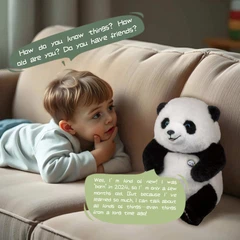
1. Age Positioning Is A Design Decision - AI Interactive Toy
Feature: the AI interactive toy is specified with its intended audience, its age-grading statement and its warning text written into the specification before industrial design is frozen, and the same statement is carried onto the product, the carton and the manual.
Advantage: age grading follows the product, the channel and the merchandising together, so deciding it early costs a paragraph in a brief, while deciding it after tooling costs a reprint, a re-test and a revised children's product certificate. We raise the question at quotation stage rather than at sample stage.
Benefit: you avoid paying for a test programme and a certification obligation on a SKU that was never meant to sit in a children's aisle, and you avoid the opposite failure - a range sold into family channels while its file assumes an older audience. Both errors surface at the same expensive moment, when the goods are already on the water.
Evidence: 3 structural and design engineers; STP file in 3 days; 10 new products developed every year; 100,000+ PCBA and sound-light designs delivered since 2010.
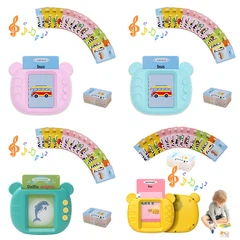
2. The Rule List Follows The BOM - Talking Flash Cards
Feature: the card reader and its card library are declared material by material - enclosure resin, coating, card stock, lamination film, printed inks, plated contacts, battery chemistry - and that declaration is created in the same review as the BOM.
Advantage: the cost of a children's product certificate is not the certificate; it is the number of items that have to be tested. Declaring materials early lets you reduce that number deliberately - self-coloured moulding instead of paint, lamination as a barrier layer, one coating supplier instead of three - which is a design choice worth more than any saving found later in purchasing.
Benefit: fewer submitted items means a shorter test cycle and a lower laboratory bill, and it also narrows the re-test scope whenever a material changes. For a refill-driven line where card packs ship every season, that difference is recurring margin, not a one-off discount.
Evidence: all raw materials RoHS and CPSIA compliant; 4 electronics engineers; PCBA sample in 5 days; 400gsm laminated cards for the reading surface.
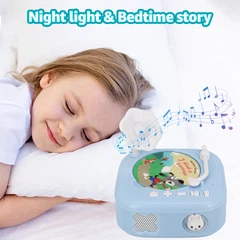
3. Test The Production Configuration - Kids Story Player
Feature: the story player is submitted with the shipping firmware build, the shipping speaker and battery, the shipping enclosure resin and the shipping content set, and that unit is kept as a sealed reference sample.
Key functions include:
• Program white paper stating firmware state, output level, sleep and wake behaviour, charging behaviour
• Sealed reference sample held against the production batch
• Content library loaded in the language and version that will ship, not a demo build
• Charging and timer settings fixed, so the tested state is the delivered state
Advantage: a report describes the unit that was on the bench. Firmware is the most common reason two samples of the same hardware behave differently, and a written build state is what turns one report into a file you can defend later instead of a snapshot of one afternoon.
Benefit: the document and the goods stay aligned, so a marketplace or retailer request is answered in hours from a folder rather than in weeks from a new test booking. It also protects the listing you have already paid to build, which is usually worth more than the compliance exercise itself.
Evidence: program white paper delivered in 3 days; 1 dedicated AI content creator; content library updateable by USB or SD card; 4 electronics engineers in-house.
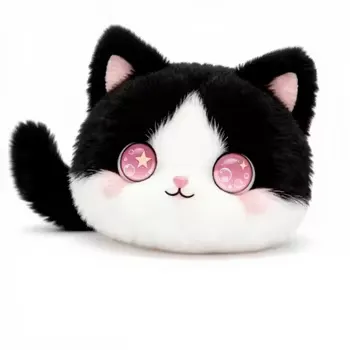
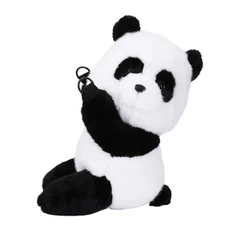
4. One Certificate Per SKU, Not Per Factory - Interactive Plush Toy
Feature: each interactive plush SKU carries its own pack - test report, certificate elements, BOM with controlled part numbers, label artwork, manual page and a written rule for what triggers re-testing.
Advantage: the most common misunderstanding in this subject is that a factory holds a children's product certificate. A factory holds test reports, material declarations and production records; the certificate is issued by the importer for a named product. Once a buyer internalises that split, the file stops being something to chase and becomes something to assemble.
Benefit: faster retailer onboarding and faster marketplace document review, because the compliance team closes the file in one pass. It also lowers inventory risk: with a documented platform, a second colourway or a second character reuses the tested electronics and shrinks the re-test scope instead of reopening it.
Evidence: ISO9001 quality system; factory certifications include BSCI, SEDEX, CE (EN71), FCC, RoHS, UKCA and CPSIA; 2 graphic designers for label and manual artwork; 120+ countries served.


5. Traceability Labels Connect The File To The Carton - White Noise Night Light
Feature: the night light carries a permanent traceability marking with production date, batch and manufacturer identity, matched to a carton marking, a barcode and a multi-language manual page that states the same information.
Advantage: a children's product certificate speaks about a batch, not about a brand. Without a physical marking that ties a carton to a production record, the document cannot be matched to the goods in front of an inspector, and the buyer ends up re-testing a product that already passed.
Benefit: faster goods-in at a retail distribution centre and a faster answer to any document request on a nursery listing. In a category where reviews and returns decide the next reorder, being able to close a question in a day is worth more than trimming a few cents from the packaging budget.
Evidence: 100% functional testing on every unit; AQL 1.0 inspection; 10 QC inspectors on line; 20,000+ units daily capacity to hold one packaging and label source across repeat orders.
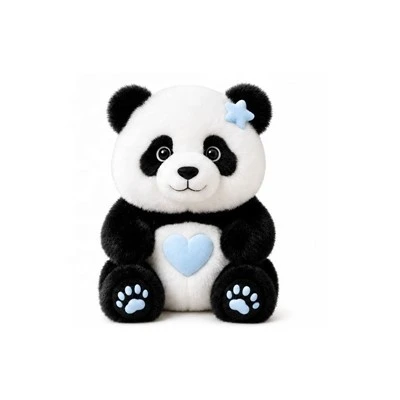
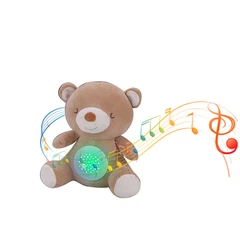
6. A Written Change Rule - AI Plush Toy
Feature: every AI plush SKU ships with a documented rule stating which changes - fabric supplier, coating, stuffing, electronic part, battery source - require new testing and a re-issued certificate before the batch is released.
Advantage: the expensive failure in this subject is not a bad design; it is a good design whose production batch quietly uses a different fabric or a cheaper charging board than the one the file describes. Children's product certificate failures of that kind never appear in the golden sample you signed off, because the golden sample was correct.
Benefit: no stopped shipment and no delisting caused by a document that no longer matches the goods, and a repair window inside the 30-day production schedule rather than after arrival. It also makes the reorder conversation easier, because the same rule protects the tenth container as the first.
Evidence: AQL 1.0 with 100% functional testing, 2 quality engineers owning the record, dedicated mold in 30 days, mass production 30 days after sample sign-off, 12-month warranty with a spare-parts kit.
B2B Applications: Where a Children's Product Certificate Meets Your Channel

The same document lands differently in each channel. A brand owner cares about how quickly a differentiated SKU can be quoted and tested; a retail chain cares about whether the file closes line by line; a marketplace seller cares about what happens when a document is requested on a live listing. Below is how the US children's product certificate requirement meets each buyer, and which product line we would put in front of them.
1. Brand owners and IP licensors: your differentiation is the character and the conversation, and both now run on electronics. Recommended lines: AI Interactive Toy and AI Plush Toy - LLM-driven dialogue with a defined persona, no camera, push-to-talk wake-up, and a persona and content white paper written before the character design is frozen. Practical point: ask for the material declaration and the rule list at quotation stage. That is the one question that decides whether your launch date holds, and it is much harder to answer once a mold exists.
2. Large supermarkets and chain retail: this is the buyer whose file is audited line by line, and the one where a missing document costs a delivery slot. Recommended lines: Interactive Plush Toy and Children's Phonograph Toy - proven mechanisms, strong shelf presence, low return rates. What the compliance reviewer will ask for: BSCI and SEDEX social-audit reports, ISO9001 quality system, CE (EN71) covering EN71-1/2/3, EN 62115 for the electric functions, FCC Part 15 evidence where a radio or fast digital function is present, RoHS, UKCA, and CPSIA together with the children's product certificate supporting documents, AQL 1.0 inspection and 100% functional testing. Name the pack in the quotation; a retail buyer cannot accelerate a document that was never created.
3. B2B importers and distributors: you want standard SKUs that reorder cleanly, and you are the party who signs the certificate. Recommended line: Talking Flash Cards - pre-loaded content, six-plus themes, mother-tongue narration, and a card library that supports refill packs. Practical point: hold one resin, one coating source and one battery source across reorders, so the file you built for the first container still describes the tenth. Refill packs are also the highest-margin repeat item in this line, with paper-level inventory risk rather than electronics-level risk.
4. Amazon and marketplace sellers: your risk is a document request arriving at the worst possible moment. Recommended line: White Noise Night Light - light and sound in one unit, timer with memory of the last setting, custom sound library, compact packaging. Practical point: keep the test report, the label artwork, the manual statement and the traceability photo in one folder per ASIN. A suspended listing costs more than the entire compliance exercise, and reassembling the folder under time pressure is where mistakes are made.
5. Education and nursery channels: durability and predictable behaviour matter more than novelty. Recommended line: Kids Story Player - screen-free, RFID or figure-triggered, content updated by USB or SD, no network dependency in the classroom. Practical point: a product that needs no radio removes an entire review from your calendar, and for a channel with fixed term dates the calendar is the binding constraint.
6. Gift, hotel and promotional channel: the buyer needs a demo in three seconds and a price that survives a seasonal negotiation. Recommended line: Children's Projector Toy - wall projection with synchronised audio, swappable content reels, adjustable focus and brightness, and strong IP potential. Practical point: lock the electronics before the artwork. Artwork can be reprinted in a week; a board change cannot, and a late board change is exactly what invalidates a finished file.
OEM/ODM Customization Services for US-Bound Children's Products

Product Design Customization
Geometry decides where a battery compartment sits, how a seam is closed and how much surface gets painted, so structure is where a US children's product file is really created. We start from your character, your channel and your age positioning, then place the mechanics before the surface design is frozen.
• STP file within 3 days of a signed brief
• 3D-printed mock-up within 3 days, checked for label position, seam geometry and battery-compartment access
• 3 structural and design engineers; 10 new products developed every year
• 10 injection machines and an in-house mold shop for wall-thickness and coating-reduction iteration
• Platform approach: one chassis, several shells, so a second SKU reuses the tested electronics
Dedicated mold in 30 days, with the material set and the coating decision agreed before steel is ordered.
Hardware Customization
Our electronics team designs the board, the power path and the acoustics as one system, then hands you a sample you can measure - and a BOM you can submit.
• PCBA sample in 5 days, early enough to change the board before the enclosure is frozen
• Controlled part numbers for cable, charging board, protection circuit and battery cell, written into the BOM
• Power options: AAA dry cells, rechargeable lithium with a protection board, or USB-C input
• Technology stack available: NFC, RFID, vibration sensing, touch sensing, voice recognition, colour recognition, temperature control
• All raw materials RoHS and CPSIA compliant, with material declarations assembled alongside the BOM
Software & Audio Content Customization
Firmware and content are what make the product yours, and firmware is also part of what gets tested. We write both down, so the file you submit matches the product you ship.
• Program white paper in 3 days: firmware build, output level, sleep and wake behaviour, charging state, test mode
• LLM-driven dialogue with a custom persona; no camera, push-to-talk wake-up, and a data path we can describe on one page
• Audio library in English, Chinese, Spanish, Arabic, French and Japanese, with mother-tongue narration available
• Content updateable by USB or SD card, so a second season does not need a second mold
• One dedicated AI content creator for script, persona and age-appropriate phrasing
Comfort, companionship and a calm-down routine are what this category can honestly promise; we do not claim therapeutic outcomes, and we do not claim a privacy certification we do not hold.
Packaging & Compliance Customization
The file pack is part of the product. We assemble it while the goods are being made, not after a buyer asks for it.
• One pack per SKU: test report, children's product certificate elements, BOM with controlled part numbers, label artwork, manual page
• Permanent traceability marking matched to carton marking, barcode and production record
• Written change rule: which component or material changes trigger new testing, agreed before mass production
• Retail packaging: barcodes and UPC, shelf-ready cartons, multi-language manuals, 2 graphic designers on staff
• Quality: AQL 1.0 inspection and 100% functional testing on every unit, 10 QC inspectors on line
• Certification scope: ISO9001, BSCI, SEDEX, CE (EN71), FCC, RoHS, UKCA and CPSIA; which rules apply to your specific materials should be confirmed with your own laboratory or notified body

Why Choose XINDITAI as Your Children's Product Manufacturing Partner
Factory-Direct Manufacturing
Design, tooling, electronics and assembly sit in one 5,000 ㎡ site, which is why a children's product certificate question can be answered with a BOM record in hours rather than a supplier negotiation in weeks.
• 5,000 ㎡ facility, 20,000+ units daily capacity, 10 injection machines, in-house mold shop
• 3 structural and design engineers, 4 electronics engineers, 2 quality engineers, 10 QC inspectors
• 1,000,000+ products manufactured, 100+ manufacturing partners, 10 new products developed each year
• AQL 1.0 inspection with 100% functional testing; dedicated mold in 30 days, mass production 30 days after sample sign-off
Global Export Experience
Shipping to 120+ countries means the file pack is built for the market on the carton, not translated afterwards.
• Exported to 120+ countries and regions; 20,000+ customers served since 2010
• OEM and ODM each account for roughly half of our business - both a factory and a development partner
• National high-tech enterprise; certifications include ISO9001, BSCI, SEDEX, CE (EN71), FCC, RoHS, UKCA and CPSIA
• 7×24 sales response, so a compliance question raised in your time zone is answered in your time zone

Frequently Asked Questions About the Children's Product Certificate
Q1: What is the MOQ, and how should I think about tooling cost?
MOQ depends on the line and on whether you take an existing tool or a dedicated one. The useful way to read tooling is per unit, not per month: the mold is paid back by repeat orders, not by the first one, so cavity count should be chosen from a twelve-month forecast rather than from the first purchase order. Ask us for the amortisation curve on two or three volume scenarios before you sign; the answer usually changes the cavity decision, and that decision is made once.
Q2: What compliance file will a US retail chain ask for on a children's product?
Expect the reviewer to work through BSCI and SEDEX social-audit reports, ISO9001, CE (EN71) with EN71-1/2/3, EN 62115 for the electrical functions, FCC Part 15 evidence where a radio or fast digital function is present, RoHS, UKCA, and CPSIA together with the children's product certificate supporting documents, AQL 1.0 inspection records and 100% functional testing. Which rules apply to your specific materials and age positioning should be confirmed with your own laboratory, notified body or counsel; we build to the requirements you bring us and document what we built.
Q3: Does the AI function create an extra problem for a children's product?
It creates a question you should be able to answer on one page: what is collected, where it is processed, how long it is kept and how it is deleted. Our AI lines are LLM-driven with no camera and push-to-talk wake-up, and we document the data path rather than describe it verbally. We do not claim a privacy certification we do not hold. The commercial point is that a privacy failure is not a fine, it is a delisting - which is why the data map belongs in the same pack as the test report and the certificate elements.
Q4: How long does development take?
STP file in 3 days, 3D-printed mock-up in 3 days, program white paper in 3 days, PCBA sample in 5 days, dedicated mold in 30 days, and mass production 30 days after sample sign-off. Those six dates are the reason the documentation questions are asked early: an age-grading statement and a material declaration are worth an afternoon on a drawing and several weeks once packaging is printed and steel is cut.
Q5: Can I have a private mold and retail-ready packaging?
Yes. A private tool gives you a shape nobody else can list, and the packaging is designed with the shelf and the FBA dimension in mind at the same time - barcodes and UPC, shelf-ready cartons, multi-language manuals, permanent traceability marking and insert artwork handled by our two in-house graphic designers. Private tooling also makes the platform logic work: one tested chassis under several shells keeps the second SKU cheap and keeps its children's product certificate re-test scope small.
Q6: What happens if a batch fails inspection or a component changes?
Every unit is 100% functionally tested and inspected to AQL 1.0, with 10 QC inspectors on line and 2 quality engineers owning the record. If a component or material has to change, our written change rule states whether the change triggers new testing and a re-issued children's product certificate before the batch ships, so the file keeps describing the goods in the container. After delivery, we back the product with a 12-month warranty, a spare-parts kit and 7×24 response.
Future Trends in Children's Product Compliance
1. Document requests move earlier. Retailers, marketplaces and border processes increasingly ask for evidence at listing or at entry rather than after a complaint. For buyers this means the children's product certificate support pack has to exist during production - a pack assembled in advance is worth far more than a report produced on request, because it arrives in hours instead of weeks.
2. Chemical compliance becomes a supply-chain discipline. A single test report is a snapshot; a supplier declaration plus an incoming-material record plus a written re-test rule is a system. Expect more buyers to ask for the material declaration at quotation stage and to audit whether it still matches the BOM at reorder stage.
3. Platform discipline becomes a compliance strategy. One chassis, one board, one cable and one material set across several shells and colourways shrinks the re-test scope every time a range is extended. It is the cheapest way to launch a second SKU without reopening a closed children's product certificate file.
4. Age positioning splits into two product strategies. Family and nursery ranges carry one documentation burden; teen and adult ranges positioned for companionship and a calm-down routine carry a different one. The decision belongs in the first brief, because it shapes design, channel and packaging at the same time - and it cannot be reversed with a sticker.
Conclusion: Start Your US-Bound Toy Project Today
A children's product certificate is not a form a supplier hands you at the end; it is the visible tip of a short list of decisions made at the beginning - which audience the product is for, which materials it is made of, which configuration gets tested, what the carton says, and which changes force the file to be rebuilt. Buyers who treat it as paperwork discover the cost at the port or in a listing suspension, when the only remaining options are a new test booking or a missed season. Buyers who treat it as a project deliverable usually never think about it again, which is the point.
Send us your channel, your feature list, your age positioning and your target retail price, and we will come back with the material declaration, the children's product certificate checkpoint list and the six lead times that apply to your SKU. We will also tell you where a feature is not worth the documentation burden it creates, because the fastest route to shelf is still the shortest list of things that have to be tested.
Contact Us
Contact: Zoey
WhatsApp: +86 13342950150
Email: xdt06@dtdianzi.com
Company: SHENZHEN XINDITAI ELECTRONIC CO., LTD | Website: www.kidsoundbook.com