



What Is Montessori Toy Design?

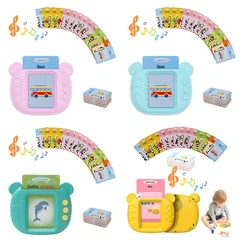
Montessori toy design is the discipline of turning a set of educational principles into a product brief a factory can actually build: the child can see the mistake without an adult, one difficulty is presented at a time, materials are real rather than represented, the environment has an order, and the adult steps back instead of performing. For a buyer it is not a philosophy essay. It is five specification questions that decide tooling, content and packaging copy: who tells the child they got it right, how many concepts sit on the table at once, whether the hand does any real work, what the object is made of, and what the box may claim. Montessori toy design has become a commercial category because parents search for it, but the category is policed by educators and, increasingly, by marketplaces and retail compliance teams, which means a loose claim is now a listing risk rather than a marketing flourish. That is the commercial reason to treat Montessori toy design as an engineering brief: the claim has to survive somebody else's review, and those reviews are getting stricter every season. Our work in this area starts from one physical form factor, the Kid Talking Flash Card With Drawing Tablet, a card-insert learning machine that pairs spoken cards with an LCD writing board and a stylus inside a single housing of roughly 25 x 18 x 3 cm. As an OEM/ODM manufacturer with in-house tooling, electronics engineering and content recording, we treat Montessori toy design as a brief to be engineered and documented rather than as a word to be printed, because the first version of the claim that survives a retailer's review is always the one written into the specification.
How Does Montessori Toy Design Work in a Real Product?

Read Montessori toy design as a sequence of engineering constraints rather than as a decorative adjective. A principle only survives contact with manufacturing once it has been given a number: a card material, a slot geometry, a voice script, an erase behaviour, a housing size. Below we set out what a Kid Talking Flash Card With Drawing Tablet actually does when a child picks it up, then the five decisions that decide whether a finished Montessori toy design project can honestly be described as Montessori-aligned in your market.
How the Kid Talking Flash Card With Drawing Tablet Works: Functions in Detail
Function 1 - Card insert and local playback: a printed card goes into the slot, optical or contact recognition identifies it, and the matching audio plays from local storage, with no network connection, no account and no app; the whole interaction is one motion a young child can repeat alone, which is the first constraint any Montessori toy design brief has to satisfy.
Function 2 - Card library and theme order: the platform carries a 200+ card library across 6+ theme categories, covering nature, everyday objects, animals, colours, numbers and body parts, with 138 cards preloaded; a buyer can ship a starter set and then sell theme packs against the same reader instead of re-tooling for every curriculum.
Function 3 - Bilingual audio with optional pinyin: content is recorded by native speakers and shipped as Chinese-English bilingual with optional pinyin, with English, Chinese, Spanish, Arabic, French and Japanese available, held in 4GB to 16GB of storage depending on the language set you sell.
Function 4 - LCD writing board and stylus: an LCD writing board and a stylus sit beside the card slot, so a child hears the word, traces or writes it, and clears the board with one key; the writing half is what turns a listening product into hand work, and it is the reason this housing carries two systems rather than one.
Function 5 - Card material and housing: cards are printed on 400gsm laminated card stock that can be wiped clean, and the body is ABS in a flat tablet form of about 25 x 18 x 3 cm with an integrated slot; the material list is short and documented, so a retailer's material question is answered with a file instead of an assurance.
Function 6 - Power and idle behaviour: the unit runs on AAA dry cells or a rechargeable lithium pack and closes itself down after an idle period, so the runtime a caregiver experiences is the runtime you specified; power behaviour belongs in the brief because it sets battery cost, shipping documentation and the volume of first-use complaints.
Function 7 - Audio path and volume ceiling: the speaker is matched to a sealed rear cavity with stepped volume and a capped output, keeping speech intelligible at a calm level; a quiet object is a deliberate engineering choice, and that choice is part of Montessori toy design rather than a number trimmed at the end.
Function 8 - Two systems in one housing: the Flashcard System and the Writing Board System are two of the ten technology platforms we build on, and pairing them is what lets one certified article carry listening, reading and writing at one shelf price instead of three.
Step A → Decide who delivers control of error: choose whether the unit echoes the word so the child can compare, whether the card reverse carries the answer, or whether nothing confirms at all. This is the spine of Montessori toy design, and it has to be settled before recording starts, because changing the script after the studio session is a second studio session.
Step B → Decide the card set and its order: fix which of the 6+ themes ship in the box, how many of the 200+ library positions you use, and in what sequence; the card is the moving part of the product and the part a school will judge you on, and it is also the cheapest part to get wrong at sampling and the most expensive to reprint after launch.
Step C → Decide whether the board traces or writes free: a guided tracing layout teaches a stroke order, a blank board invites free writing, and the two need different LCD board artwork and different stylus storage; make this call before tooling, because slot geometry and board size share the same steel.
Step D → Decide the language sequence: confirm bilingual Chinese-English, whether pinyin appears, and which of the six languages ship in which market; storage runs 4GB to 16GB, and native-speaker recording in six languages is a content schedule that has to run in parallel with tooling, not after it.
Step E → Decide the copy boundary and freeze it: agree what the box may say, what age grading it carries and which languages the manual covers, then freeze it with the artwork. Our front end runs on fixed steps, 3 days for STP, 3 days for 3D printing, 3 days for the programme white paper and 5 days for the PCBA sample, with 30 days for tooling and 30 days for mass production behind them; a copy change after freeze does not cost a day, it costs a slot in that sequence.
Key Features of Montessori Toy Design

1. Control of Error Is the Product, Not a Feature
Feature: on the Kid Talking Flash Card With Drawing Tablet the card triggers its own spoken answer, so the child compares what they said with what the unit said and corrects themselves without an adult in the loop.
Advantage: the teaching mechanism is audible in three seconds on a shop floor, which is rare for an educational claim and rarer still for one that costs nothing in BOM.
Benefit: demonstration drives conversion in this category, and a self-correcting demo shortens the retailer's own decision cycle; it also cuts the "it does not teach anything" review, which is the complaint that kills reorders rather than first orders.
Evidence: recognition and playback are local, with no network or account, and every unit passes 100% functional testing before it is packed, which is the half of a Montessori toy design claim you can actually evidence.
2. One Card, One Difficulty: the Slot Decides the Lesson
Feature: the reader accepts a single card at a time, and the library is organised into 6+ discrete themes across a 200+ card capacity with 138 cards preloaded.
Advantage: the hardware enforces the sequence rather than trusting the user to impose one, so the same unit behaves like a curriculum in a classroom and like a toy in a living room.
Benefit: you can sell depth instead of noise, starter set first and theme packs later, against one tooling investment and one compliance file, which is what turns a single SKU into a repeat-purchase line.
Evidence: 400gsm laminated card stock survives the wiping and handling a nursery gives it, and the library sits on the Flashcard System we already run in production.
3. The Hand Does the Work: Writing Board Beside the Reader
Feature: an LCD writing board and stylus sit next to the card slot, so a child hears the word, traces it, and clears the board with one key.
Key functions include:
• hearing then writing, two modes on one surface, no extra housing;
• one-key erase that lets a child retry without asking for help;
• a stylus stored on the unit, because a lost stylus is a dead feature.
Advantage: listening becomes hand work, which is the step most audio-only early-learning products never make and the step that earns a higher shelf price. It is also the step most Montessori toy design briefs leave out, because specifying a stroke is harder than specifying a sound.
Benefit: one carton, one certification and one planogram slot carry two activities, so the unit economics of a gift-season listing improve without adding a second article to your compliance calendar.
Evidence: the Writing Board System is one of our ten in-house technology platforms and is already integrated with the Flashcard System in a 25 x 18 x 3 cm ABS housing.
4. Real Materials, No Screen: What the Object Is Made Of
Feature: cards are physical, printed on 400gsm laminated stock; the body is ABS; there is no emissive display to stare at and no network connection to manage.
Advantage: the product passes the no-screen filter many education buyers apply before they read a single line of copy, and it does so without an argument.
Benefit: you avoid the two costs that follow a screen, content moderation and account support, and you keep the material story short enough to answer in one document when a retailer asks.
Evidence: materials follow our standard list, ABS housing with RoHS and CPSIA conforming raw materials, and production is inspected to AQL 1.0 with 100% functional testing.


5. Language Is a Sequence, Not a Switch
Feature: content ships Chinese-English bilingual with optional pinyin, recorded by native speakers, with English, Chinese, Spanish, Arabic, French and Japanese available in 4GB to 16GB of storage.
Advantage: one hardware platform serves several markets, and the language order is a content decision you own rather than a firmware limitation you inherit.
Benefit: regional launches share tooling, testing and packaging artwork, so a second market costs a recording session and a print run instead of a new development project.
Evidence: an AI content specialist owns the script library, and the front-end schedule is fixed at 3 days for the programme white paper and 5 days for the PCBA sample.
6. Where the Claim Stops: the Boundary You Should Write Down
Feature: some education settings exclude electronics entirely, and the word itself is used loosely in the market; whether your packaging may use it, and on what evidence, is a question for your own legal and brand teams, not for a factory.
Advantage: a buyer who separates the design rules from the naming claim can sell into mainstream education retail without carrying an unsupported statement on the box.
Benefit: you keep the listing when a marketplace or a retailer reviews claims, and you keep the argument with an education buyer who wants to know what the child actually does, not what the carton says, which is the only test any Montessori toy design programme has to pass twice: once with the buyer, and once with the parent.
Evidence: we build to the design rules you specify and record them in the programme white paper; we do not certify a philosophy, and we will tell you when a request crosses that line.
B2B Applications: Where Montessori Toy Design Fits

A Montessori toy design brief lands differently with each buyer type, because each one is buying a different outcome from the same housing. The six profiles below are the ones we see most often, and the recommendation in every case is the Kid Talking Flash Card With Drawing Tablet, specified differently.
1. Education brand owners - you are building a range, not a unit. Start with the card sequence and the writing behaviour, then let the housing follow; our ODM route covers STP in 3 days, 3D printing in 3 days and a private tool in 30 days, so your intellectual property sits in the card library and the board layout rather than in a shared shell. A Montessori toy design programme owned that way is also harder to copy than one bought from a catalogue.
2. Large retail chains and hypermarkets - the gate is documentation. We work to ISO9001, BSCI and SEDEX social audits, with CE (EN71) covering EN71-1, EN71-2 and EN71-3, EN 62115 for electric toys, FCC Part 15, RoHS, UKCA and CPSIA with a Children's Product Certificate for the US, inspected to AQL 1.0 with 100% functional testing; retail packaging carries barcodes, shelf-ready cartons and multi-language manuals. Which product-safety, electrical or age-grading route your destination market expects should be confirmed with your own laboratory, notified body or local market authority against the current text.
3. B2B importers and distributors - you need a stable SKU and a fast refill. A 20,000+ unit daily capacity across a 5,000 square metre plant with ten injection machines means a theme pack reprint does not wait behind a tooling queue, and the 200+ card library gives you a second sell without a second article.
4. Amazon and e-commerce sellers - the flat 25 x 18 x 3 cm body keeps the carton inside a lower freight and fulfilment bracket, and the demo is the listing: card in, word out, trace it, erase it. Keep the copy to what the child does and the review profile stays clean, which matters more here than anywhere else.
5. IP licensors - character card sets turn a property into a curriculum. Voice can be recorded to match an existing character, and theme packs let a series ship in waves against one certified reader, so a second release is a print and recording job rather than a new compliance file.
6. Kindergarten chains and nursery groups - durability and order win the account. Wipe-clean 400gsm cards, a sealed ABS body, capped volume for shared rooms and a six-language library let one purchase serve bilingual sites, with the difficulty order fixed in the card set rather than left to staff.
OEM/ODM Customization Services for Kid Talking Flash Card With Drawing Tablet

Product Design Customization
We start from the housing you need and work back to the mechanics, because on this product the slot and the board share the same tooling decision.
• Private housing development with our own tooling shop, 3 days for STP, 3 days for a 3D printed sample and 30 days to a production tool.
• Card slot geometry and card size defined together, since tolerance lives in the steel and is cheap to change before tooling and expensive after.
• LCD writing board size, position and artwork, tracing layout or free-writing layout.
• Stylus storage, wipe key placement and edge radii specified for small hands and for drop behaviour.
• Colourways and finish in ABS, with a second colourway available for A/B testing without a second tool.
Three structural and design engineers carry the drawing package, and around ten new products are developed each year on this route.
Hardware Customization
Hardware choices here are mostly about what the product must not do: no network, no account, no glare, no surprises at volume.
• Card recognition by optical or contact reading, specified against your card print process and tested on production cards.
• Speaker and sealed rear cavity tuning, stepped volume and a capped output for shared rooms.
• AAA dry cells or a rechargeable lithium pack, with the idle auto shut-off behaviour written into the specification.
• Storage from 4GB to 16GB, sized against the language set and the card count you intend to ship.
• ABS housing, 400gsm laminated card stock, and a 25 x 18 x 3 cm form factor kept or adapted to your shelf plan.
Software & Audio Customization
Content is where a Montessori toy design project is won, and it is the layer most buyers leave too late.
• Card-to-audio mapping written as a document, so a curriculum owner can review before recording.
• Native-speaker recording in English, Chinese, Spanish, Arabic, French and Japanese, with a dedicated AI content specialist on the script library.
• Chinese-English bilingual as standard with optional pinyin, and a defined language order per market.
• Prompt tones, erase behaviour and error handling defined in the programme white paper, delivered in 3 days.
• Content updated by card side-loading, so a new theme pack does not create a new certified article.
Four electronics engineers own the firmware and the PCBA sample arrives in 5 days.
Packaging & Compliance Customization
The box is part of the claim, so we treat artwork as a compliance surface rather than a marketing one.
• Retail cartons with barcode or UPC, shelf-ready dimensions and drop-tested protective structure.
• Multi-language manuals laid out from the same content source as the audio, so the box and the unit agree.
• Age grading, marking and warning text placed with your own legal review, and moulded or printed as your volume justifies.
• Document pack assembled per destination market, from test reports to the Children's Product Certificate for the US.
• Two graphic designers handle artwork, and two quality engineers hold the inspection standard at AQL 1.0 with 100% functional testing.

Why Choose XINDITAI as Your Kid Talking Flash Card With Drawing Tablet Partner
Factory-Direct Manufacturing
We have built electronic learning products since 2010, and the Flashcard System and the Writing Board System are both developed in-house, so a Montessori toy design brief is engineered by the people who will run it rather than handed to a trading layer.
• 5,000 square metre plant with ten injection machines, our own tooling shop and 20,000+ units of daily capacity.
• Fixed front-end schedule: 3 days to STP, 3 days to a 3D printed sample, 3 days to the programme white paper, 5 days to a PCBA sample, 30 days to tooling and 30 days to mass production.
• AQL 1.0 with 100% functional testing, ten QC staff and a team of three design, four electronics and two quality engineers.
• ISO9001, BSCI and SEDEX audits current, with CE (EN71), EN 62115, FCC, RoHS, UKCA and CPSIA documentation prepared per destination.
Global Export Experience
OEM and ODM each account for roughly half of our business, and our customers sell into education retail, mass retail, marketplaces and institutional channels.
• Exports to 120+ countries and regions, with 20,000+ customers served and 1,000,000+ units manufactured.
• Native-speaker content in six languages, so one platform can be launched in several markets without re-engineering.
• 7x24 sales response, and a named engineer on every programme from white paper to first carton.

Frequently Asked Questions About Montessori Toy Design
Q1: What is the usual minimum order quantity for a Kid Talking Flash Card With Drawing Tablet programme?
It depends on how much of the unit is yours. A shared housing with your own card set, voice pack and artwork carries the lowest entry point; a private tool changes the arithmetic because the steel has to be amortised. Tell us the channel, the launch volume and whether the housing is exclusive, and we will quote against a real configuration rather than a placeholder.
Q2: Can you supply the compliance file a large retail chain asks for?
Yes. We work to ISO9001, BSCI and SEDEX, and prepare CE (EN71) covering EN71-1, EN71-2 and EN71-3, EN 62115, FCC Part 15, RoHS, UKCA and CPSIA with a Children's Product Certificate for the US, with inspection at AQL 1.0 and 100% functional testing. Which route your destination market expects for your specific configuration should be confirmed with your own laboratory, notified body or local market authority against the current text.
Q3: Is this really a Montessori product?
That depends on the brief, and we will not answer it for you. Some settings exclude electronics entirely, and the naming itself is used loosely in the market. What we can do is build to the design rules you specify, self-correction, one difficulty at a time, real materials, hand work, an ordered card set, and document them; whether your packaging may use the word is a decision for your legal and brand teams. A Montessori toy design project that separates the rules from the claim sells into more channels than one that does not.
Q4: How long does a project take from brief to shipment?
The engineering front end is fixed: 3 days to STP, 3 days to a 3D printed sample, 3 days to the programme white paper and 5 days to a PCBA sample, then 30 days for tooling and 30 days for mass production. In practice the calendar is decided by how quickly drawings, card content and voice scripts are signed off, because a second recording round costs the same elapsed time as a tooling change.
Q5: Can we have our own housing and packaging rather than a shared one?
Yes. A private tool is 30 days and gives you exclusivity on the shell; packaging is developed in parallel with artwork, barcode, drop testing and multi-language manuals handled in-house. Most buyers keep a shared housing for the first season and move to a private tool once the card library has proven itself, which puts the tooling spend behind evidence instead of ahead of it.
Q6: What happens if units fail in the field?
Warranty terms and a spare-parts allowance are written into the order file before production starts, so the answer is a clause rather than a negotiation. Units are inspected to AQL 1.0 with 100% functional testing, and our sales team responds 7x24; where a defect traces to one production week, lot-level records let it be narrowed rather than argued.
Future Trends in Montessori-Aligned Early Learning Hardware
1. Self-correction moves from claim to requirement - buyers are asking what the child does when they are wrong, not what the box says. For you this means the error path belongs in the brief early, because it is cheap to design and expensive to add after recording.
2. Handwriting returns to early-learning hardware - writing boards and tracing surfaces are appearing beside readers rather than replacing them, and the combination is what justifies a higher price in a flat category.
3. Card libraries become the recurring line - the reader is bought once, the theme packs are bought for years; a 200+ card library with 138 preloaded is a refill business, and refills do not need new tooling or a new compliance file.
4. Language-first SKUs replace one-global-version - six-language native recording lets a platform launch market by market, and Montessori toy design briefs increasingly start with the language sequence rather than the shell.
Conclusion: Start Your Kid Talking Flash Card With Drawing Tablet Project Today
Montessori toy design rewards the buyer who writes it down. Every principle in this article becomes a line in a specification, a card sequence, a script, an erase behaviour, a material, a sentence on the box, and the projects that go smoothly are the ones where those lines were agreed before steel was cut and before microphones were booked. The Kid Talking Flash Card With Drawing Tablet is a practical place to start, because the two functions that matter most, hearing the answer without an adult and writing it by hand, already sit in one 25 x 18 x 3 cm housing with a 200+ card library behind them.
Send us the age band, the language set and the channel you are selling into, and we will come back with a card sequence, a housing route and a schedule built on fixed steps: 3 days to STP, 3 days to a 3D printed sample, 3 days to the programme white paper, 5 days to a PCBA sample, 30 days to tooling and 30 days to mass production. That is a faster route to a shelf-ready early-learning SKU than starting from a philosophy and hoping the factory understands it.
Contact Us
Contact: Zoey
WhatsApp: +86 13342950150
Email: xdt06@dtdianzi.com
Company: SHENZHEN XINDITAI ELECTRONIC CO., LTD | Website: www.kidsoundbook.com