




AI Plush Toys: How Electronics and Fabric Are Made to Work Together
AI Plush Toys: How Electronics and Fabric Are Made to Work Together
The artificial intelligence is the easy part. The difficult part is keeping a battery, a speaker and a microphone alive inside something a child will sit on. An OEM/ODM platform built in Shenzhen by Xinditai Electronic Co., Ltd.
Table of Contents
02. What Counts as an AI Plush Toy
03. How Hardware Survives Inside Fabric
04. The Four Sub-Categories Compared
06. Eight Engineering Constraints
07. The Build Sequence, Brief to Carton
08. How to Test a Plush With Electronics

1. Introduction
Ask a room of buyers what makes an AI plush toy difficult and they will talk about the model, the voice or the cloud. Ask the people who actually build them and the answer is different: the difficulty is that the product is a contradiction. Soft goods are designed to compress, flex and be washed; electronics are designed to stay dry, stay cool and never be crushed. Every decision in this category is a negotiation between those two sets of rules.
That negotiation is invisible in a product photograph and decisive in the field. It determines whether the panda still speaks after a year on a bed, whether the speaker sounds like a voice or a tin can through three centimetres of polyester, whether a microphone hears a child or the fabric rubbing against it, and whether a battery is safe when a child sits on the toy for an hour. Most of the returns in this category are not software faults. They are mechanical ones.
This article looks at the category from the inside: what actually counts as an AI plush toy, how hardware is housed so that it survives, the four sub-categories and what separates them, who buys each, the eight engineering constraints that decide quality, how a build runs from brief to carton, how to test a plush with electronics inside it, and what to confirm before placing an order. The reference example is the PT-005 companion panda, but the reasoning applies to any soft product with a battery in it.
2. What Counts as an AI Plush Toy
The term is used loosely, which causes real procurement mistakes. In this article an AI plush toy is a soft-bodied product containing a processor, a power source and at least one input, where the behaviour changes according to what the user does. A plush that plays a fixed set of recordings when squeezed is a sound plush, not an AI plush, and the two have completely different cost, compliance and failure profiles.
Five characteristics define the category as it currently ships:
- A soft body with a rigid core: the electronics sit in a sealed housing inside the plush, and the fill is arranged around that housing rather than packed against it.
- At least one live input: a microphone, a touch sensor or a motion sensor, which means the product responds rather than merely plays.
- A power source that must be charged: a rechargeable cell with a port that has to be reachable through fabric without leaving an opening that compromises the seam.
- A voice or sound output: a driver mounted so that sound leaves the body, which is the single hardest acoustic problem in soft goods.
- Behaviour that varies: a processor running firmware that shapes responses, rather than a chip that indexes fixed tracks.
For a buyer, the classification matters because it sets the whole project plan. A sound plush needs a moulded button and a speaker pocket. An AI plush needs a housing design, thermal headroom, microphone isolation, an antenna window if it is connected, and a service path for firmware. Those are different products made in different ways, and a quotation that treats them as the same thing should be read carefully.

3. How Hardware Survives Inside Fabric
Four structural decisions keep a device alive inside a soft body, and each of them is fixed early enough that changing it later means a new pattern.
Step 1 - A Rigid Housing Inside
The electronics are built into a sealed box or two-part shell that holds the battery, board and speaker in fixed relation to each other. The housing absorbs compression, keeps the battery from bending and stops the speaker from being pressed against a seam.
Step 3 - Seams That Route Around the Core
The seam pattern is redrawn so no stitching runs across the housing, the port or the speaker aperture. This is where a plush designed for electronics differs from a plush with electronics added, and it is visible as soon as the sample is turned inside out.

Step 2 - Fill Arranged, Not Packed
PP cotton is placed in volumes around the housing rather than stuffed in as one mass, so the body keeps its shape while the core stays in position. A body packed uniformly will distort around the box within weeks and leave a hard edge under the fur.
Step 4 - A Service Path
A concealed opening - usually a hook-and-loop flap in an inconspicuous seam - gives access to the charging port and, on connected products, to a reset or pairing control. Without it, every firmware or battery issue becomes a whole-unit replacement.
4. The Four Sub-Categories Compared
| Sub-Category | What It Does | Build Complexity | Best Fit |
|---|---|---|---|
| Sound plush | Plays a fixed set of recordings when a module is pressed. | Low: a module pocket and one button. | Gift and low-price lines where the plush is the product. |
| Interactive plush | Responds to touch or motion with sound and light, but does not converse. | Medium: sensors, a small board, an effect sequence. | Character merchandise and mid-price retail. |
| Conversational plush | Listens, processes speech and answers in generated language. | High: microphone isolation, thermal headroom, connectivity, compliance file. | Companion lines sold on the relationship rather than the character. |
| Animatronic plush | Moves - eyes, mouth, limbs - in addition to sound. | High: motors, linkage, wear parts, noise control. | Premium and licensed character lines where motion is the selling point. |

- Toy Brands Adding a Companion Line: The character, the voice and the marketing are usually already decided; what is missing is a body that can hold hardware without losing its shape. That is a development problem, not a design problem.
- Plush Manufacturers Moving Into Electronics: Factories that sew well often underestimate thermal and acoustic constraints, and the first sample is where that becomes expensive.
- Electronics Manufacturers Moving Into Soft Goods: The reverse problem: a working board that cannot be assembled into a body at a commercial rate, because the seam pattern and the fill sequence were never designed around it.
- Licensors Approving a Character: A licensee is lending a character to a body that will be squeezed for years. Approving the shape without reviewing the housing and seam plan is how a beloved character acquires a hard lump in its stomach.
- Quality and Returns Teams: Most returns in this category are mechanical - a dead speaker, a port that will not charge, a body that has gone lumpy - and all three are decided long before the customer opens the box.
6. Eight Engineering Constraints
These are the physical limits that decide whether a soft product with hardware inside it works. Each one has a design answer, and each one is cheaper to solve on paper than on a production line:
Heat Has Nowhere to Go
Fabric is an insulator, so a board that runs cool on a bench can heat up inside a plush. The housing needs passive venting through an inconspicuous path, and the charging circuit should be the first thing checked after an hour of use.
Compression Is Constant
A plush is sat on, hugged and slept against. The housing has to take a sustained load without transferring it to the battery or the speaker cone, which in practice means a shell with ribs rather than a flat box.
Washability Has to Be Answered Honestly
Most electronics in plush cannot be machine washed, and the product should say so plainly rather than implying otherwise. A removable module turns a washing question into a handling instruction, which is a better customer experience than a ruined toy.
7. The Build Sequence, Brief to Carton
A soft product with electronics is developed in six stages, and the order matters: the pattern has to be redrawn before the housing is finalised, or the housing will be designed for a body that cannot hold it.
Brief and Body Specification
The starting document covers the character, the finished size, the weight target, the behaviours the body has to support and the price band. Weight is the constraint people forget: a 900 g companion and a 250 g keyring need completely different housing strategies, and the brief should state the target before any sketch is approved.
Pattern Redraw
The plush pattern is redrawn around the housing volume, with seam lines moved away from the speaker aperture, the port and the microphone, and with the fill divided into compartments. This stage is where a factory that has never built an electronic plush will try to reuse an existing pattern, and it is why those samples arrive with a hard box under the fur.
Housing and Electronics
The shell, the board stack, the speaker mount and the battery cradle are engineered together so that assembly is a sequence rather than a squeeze. Ribs, stand-offs and a defined cable route prevent the most common field failures: a wire pinched at the seam and a speaker pressing against fabric.
First Sample
The first unit is assembled by hand and handled roughly - squeezed, dropped, sat on, charged and drained - before anyone looks at the embroidery. A sample that only photographs well has told you nothing; the useful information comes from what happens after ten minutes of abuse.
Refill and Balance
Fill weight is adjusted until the body sits upright, holds its shape and still feels soft over the housing. This is a tactile judgement made by hand, and it is the stage most buyers skip when they approve a sample from photographs rather than from the object itself.
Production and Final Assembly
Production separates the sewn shell from the electronic sub-assembly, then marries them at a defined station so that every unit is tested before the final seam is closed. Testing after closure is possible, but it means opening a finished toy to fix a fault, which is why the sequence is designed the way it is.
Where the Costs Actually Sit
Buyers often expect the electronics to dominate the bill of materials and are surprised to find that pattern development, fill labour and assembly stations carry a large share. A soft product is assembled by hand at several stages, and every added compartment, flap and reinforcement is minutes of labour multiplied across a run. That is why a simple body with a well-placed housing is cheaper to build than an elaborate body with a compromise housing, even though the second looks like more work on paper.
Why the First Sample Is Expensive
The first unit carries the entire learning cost of the project: a new pattern, a housing iteration, a fill trial and a hand assembly that has never been done before. It is normal for that sample to cost many times a production unit, and it is a mistake to negotiate it as though it were one. What a buyer is paying for is the discovery of problems while they are still cheap.
What Changes Between Sample and Production
A hand-built sample and a production unit are not the same object. Fill density drifts when the work moves to a line, seam allowances shift by a millimetre, and the person closing the final seam is no longer the person who designed it. Good programmes specify a golden sample and a fill weight with a tolerance, then check the first hundred units against it, because that is the window in which drift is still correctable.
The Repair Question
When a soft product fails, the customer is not returning a component; they are returning a companion, and the emotional cost of that is higher than the freight. That is why the service path matters commercially as well as technically. If the electronics can be removed through a concealed flap, a dead battery or a failed speaker becomes a module swap rather than the loss of the whole toy, and a brand can offer a repair instead of an apology. Designing that flap costs very little at the pattern stage and is nearly impossible to add later.
8. How to Test a Plush With Electronics
Four checks, all physical, reveal whether the body and the hardware were designed together or merely combined.
Step 1 - Squeeze and Sit
Press the body firmly where the housing sits, then put your weight on it for a minute. You are feeling for a hard edge, a creak or a shape that does not recover - all three mean the fill and the shell were not designed together.
Step 3 - Listen Through the Fabric
Play a voice clip at the volume a child would use and stand a metre away. The words should be clear and the tone should still sound like a voice; a hollow or muffled result means the aperture and the mount are fighting the pile.

Step 2 - Charge It and Hold It
Charge for half an hour and then hold the toy against your cheek where the battery sits. Warm is normal; hot is a housing problem. Fabric hides heat, so this check belongs in every sample review rather than in a lab report.
Step 4 - Read the Care Instruction
Check whether the box and the manual say what can actually be done to the product. If the instructions imply a wash the electronics cannot survive, the fault is not in the factory but in the claim - and it is the claim a customer will hold you to.
9. What to Agree in Writing
In a soft product the specification is half drawing and half behaviour. The eight points below should be agreed as written requirements rather than as photographs:
Housing and Compression Spec
Ask for the housing material, wall thickness and rib pattern, and confirm the load it is designed to take. This is the single document that predicts whether a body goes lumpy in a month or holds its shape for a year.
Aperture and Microphone Path
Confirm where sound leaves the body and where the microphone sits, including how the fabric is kept off both. A drawing of these two paths is more useful than a paragraph claiming "clear audio".
Thermal Behaviour
Ask for a temperature reading after an hour of continuous use and after a full charge. Fabric hides heat from the customer and from the test bench, so the number has to be measured rather than assumed.
Care Instructions You Can Stand Behind
Agree the cleaning method before the packaging is printed, and make sure the manual, the box and the listing all say the same thing. A washable claim the electronics cannot survive is a returns engine with a marketing budget.
Port and Flap Design
Inspect the charging opening in the sewn sample, not on a drawing. It needs a reinforced facing, a flap that closes without tension and enough clearance that a plug enters straight rather than at an angle.
Fill Weight and Recovery
Specify the fill weight and the recovery target after compression, then test both by hand. A body that does not return to shape looks tired within weeks, and appearance drives returns far more than sound quality does.
Motor Noise, If There Are Motors
Listen with the audio muted and the mechanism running. Any eyelid, mouth or limb movement will be amplified by the body, so the mount matters more than the motor specification on the datasheet.
Certification for a Soft Body
Toy safety, electrical safety and material rules apply together, and a plush with a battery has to satisfy all three. Confirm the file covers the soft materials, the stuffing, the electronics and the charging behaviour for the destination market.

10. Platform and Services
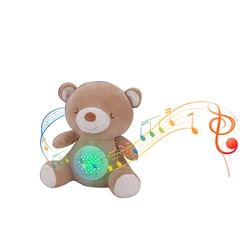
Xinditai AI companion plush platform: the reference build is a 50 x 40 x 15 cm panda at 900 g, with polyester fur over 100% PP cotton around a sealed mechanism, motorised eyelids, a head-touch sensor, a microphone, a 4G link, a 400 mAh cell charged over Type-C and a carton count of twelve units.
Body engineering: pattern redraw around the housing, compartmented fill, seam routing away from the port and apertures, and a concealed service flap - the work that decides whether the product still behaves like a plush after a year.
Acoustic and thermal work: speaker aperture geometry, microphone isolation, motor damping and passive venting, checked on a finished sample rather than on a bench prototype.
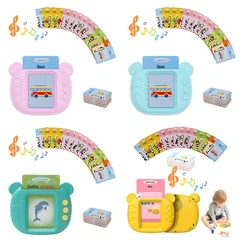
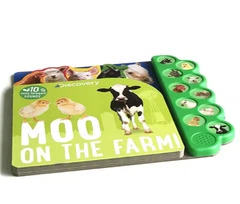
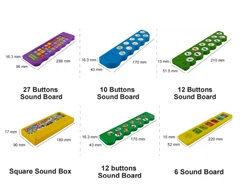
Category breadth: the factory also produces sound plush, interactive plush, card phonographs, talking flash cards, drawing machines, sound books and NFC story machines, so a soft-goods line can be developed alongside passive and connected formats. The site carries ISO 9001, BSCI and SEDEX certification, and custom orders begin at 1,000 pieces.
11. FAQ
Q: Can an AI plush toy be washed?
A: Usually not as a whole unit, and the honest answer is the better commercial one. A removable electronics module makes the outer body washable, and a product that says "surface wipe only" plainly avoids the returns that follow a machine wash. What matters is that the box, the manual and the listing all say the same thing.
Q: Why does the speaker sound muffled compared with a hard toy?
A: Because sound has to travel through fabric. The fix is geometric rather than electronic - a controlled aperture, a mount that keeps the driver clear of the pile and a cavity that is not packed with fill. A better driver behind a blocked aperture will sound worse than an average one behind a designed opening.
Q: What is the most common failure in this category?
A: The charging port, followed by the seam around it. It is the point where a hard connector meets a sewn opening, and it takes constant stress. A reinforced facing and a flap that closes without tension extend the product's life more than most electronic improvements.
Q: Does a heavier plush feel more premium?
A: Up to a point, and then it becomes a handling problem. Weight signals quality to an adult hand, but a child has to carry it, and a heavy body needs a stronger housing and a stiffer fill. The target weight belongs in the brief, not in the sample review.
Q: How is the electronics housing kept in place?
A: By the pattern rather than by glue. Compartmented fill and a shell with mounting points hold the housing in a fixed position, so it cannot migrate toward a seam or settle under the seat of the toy. Adhesive is a repair, not a design.
Q: Can a plush factory quote this without an electronics partner?
A: It can quote it, but the sample usually reveals the gap: a body that holds a box rather than a body designed around one. The useful question is not whether a supplier has both capabilities, but whether the pattern and the housing were developed together from the first drawing.
12. Contact Us
Send us the character, the behaviours the body has to support and the target weight, and our team will come back with a development plan and a sample schedule.
Email: xdt01@dtdianzi.com
If you already have a pattern, attach it with your message and we can mark the seam, port and aperture changes before the first sample is cut.
WhatsApp / Mobile: +86 139 2381 3463
A single enquiry is enough to get started, and a clear next step with sample options normally arrives within a working day.