


What Is Toy Material Selection?

Toy material selection is the discipline of deciding which polymers, soft-touch compounds and plush textiles a product is built from, and writing those decisions into a single specification so the unit that ships matches the unit that was tested and approved. On a purely mechanical toy this is a short note; on an AI plush toy it is one of the largest commercial decisions in the programme, because the product is made from two industries at once - a sewn textile shell and a sealed electronics unit - and the boundary where they meet is where most returns, odour complaints and compliance questions are born. A toy material selection regime answers three questions a buyer will be asked by a retailer or a marketplace: what the product is physically made of, which chemical and safety route it complies with, and what it does after a child has drooled on it, dropped it and washed it for six months. As an OEM/ODM manufacturer running both an electronics workshop and a plush production line under one roof, we treat toy material selection as a contract with the retail file rather than as a line on a bill of materials, because every ambiguity around a material eventually turns into a re-test, a re-sew or a disputed shipment.
How Does Toy Material Selection Work?

Read toy material selection as a set of decisions made in week one rather than a list of regrets read in month six. An AI plush toy hides a sealed electronics unit behind a soft shell, and every boundary between the two - the button, the eye lens, the seam, the joint - is a material decision with a cost, a feel and a compliance consequence attached. The discipline exists because the same fabric that feels premium in a showroom can read as cheap after one wash, and the same polymer that machines cheaply can fail a chemical screen in the destination market. Below we set out how the product actually works, then the five decisions that turn a cuddly shape into a controlled, shippable specification.
How an AI Plush Toy Works: Functions in Detail
Function 1 - Button-wake voice capture with no camera: the unit listens only after a deliberate press, and the microphone path sits inside the sealed ABS electronics housing so no moisture reaches it from the plush side; this is the first place toy material selection matters, because the housing polymer and its seal decide whether the seam between fabric and circuit survives real use rather than studio use.
Function 2 - LED expression eyes: two soft-glow eye units sit behind a matte diffuser, and the lens is a clear polymer chosen for scratch resistance and low-light comfort instead of raw brightness, because the value is "can it show a feeling", not "can it light a room".
Function 3 - Persona-driven emotional dialogue: voice recognition, a reply engine and a reviewed persona table run on the sealed board, so what the toy may say is approved before it ships and the talking behaviour is a versioned content set rather than open output.
Function 4 - Movable parts such as a tail or ears: a low-torque joint is actuated softly, with the joint housing moulded from the same ABS family as the electronics shell so it does not rattle against the soft outer layer.
Function 5 - Scripted comfort routines: bedtime, alone-time and separation moments are built as calm-down routines using voice and a slow eye-fade, positioned for companionship and comfort rather than as any promise of treatment.
Function 6 - Capped audio through a small tuned cavity: the speaker sits in a sealed pocket of the housing so speech stays clear at a calm volume instead of being pushed until it distorts, which keeps the unit pleasant in a quiet bedroom.
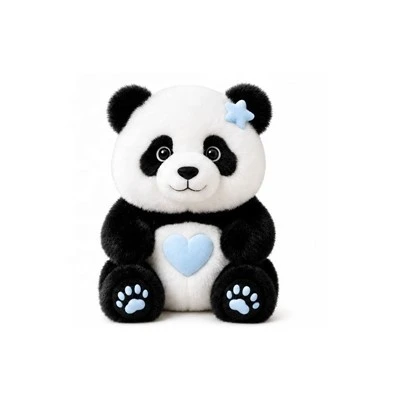
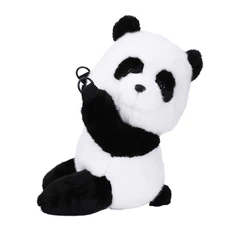
Function 7 - Soft plush shell with compliant filling: the outer fabric and the filling meet EN71 and CPSIA requirements, which is the line buyers in the United States and the European Union ask about first, and the line a retail buyer will request documentation for before listing.
Function 8 - Power behaviour and auto shut-off: the unit runs on the cell type the channel expects, with an idle timeout that protects the runtime a caregiver actually experiences; the battery housing is part of the sealed structure, so its polymer and its closure are decisions, not afterthoughts.
Step A → Choose the housing polymer: pick the structural plastic for the sealed electronics unit. We baseline on ABS non-toxic housing because it machines cleanly in our own injection workshop and records well against RoHS and CPSIA requirements for your destination market; in any toy material selection plan this is the first line written, because changing it later means new steel, not a substitution.
Step B → Choose the soft-contact compound: the button, the cheek patch and any surface a mouth can reach are where a child goes first, so the choice between a TPE overmould and a silicone skin is a safety and feel decision, not a colour decision, and it is captured in the same spec sheet that the compliance file quotes.
Step C → Specify the plush fabric and filling: gram weight, pile, colourfastness and filling compliance are set against EN71 and CPSIA, and the fabric is chosen so it survives the wash and the drop that a retail return policy assumes; good toy material selection here is what keeps a unit looking new on the second shelf it lands on.
Step D → Decide surface finish and joint feel: matte versus gloss, a hard seam versus a rolled seam, and how the movable joint feels at the shell are the details that decide whether the unit reads as premium or as cheap in a customer's hand, and they are cheap to get right at the drawing stage and expensive to fix after tooling.
Step E → Freeze the material spec with the mould: once tooling opens, the material spec is locked; a later material change is a new tooling event and a new compliance note rather than a swap, and this is the step where toy material selection becomes a purchase order instead of an intention. Tooling takes 30 days and mass production a further 30 days, so the freeze point belongs before the steel is cut.
Key Features of Toy Material Selection

1. The Sealed ABS Housing Is the Spine
Feature: the electronics unit is sealed inside an ABS non-toxic housing that the plush shell is built around, with the microphone and the battery both protected from moisture and pressure from the fabric side.
Advantage: one documented polymer is used for the housing and the internal joints, so there is a single material record for the whole structural core instead of a dozen loose ones.
Benefit: you remove the most expensive failure mode in this category, which is not a broken circuit but an unprovable one - a retailer or a marketplace that cannot be shown what the unit is made of will ask you to withdraw across a range rather than fix one lot, and a clean toy material selection record is what answers that question in minutes.
Evidence: production runs under AQL 1.0 with 100% functional testing, and the material record is kept alongside the build record before the carton is closed.
2. The Eye Diffuser Is a Comfort Part, Not a Lamp
Feature: the LED expression eyes sit behind a matte diffuser made from a clear polymer selected for low-light comfort and scratch resistance, so the glow reads as emotion rather than as illumination.
Advantage: the lens material is specified for the bedroom scenario the product is built for, not for maximum brightness, which keeps the unit gentle in the moments it is actually used.
Benefit: your brand avoids the single most damaging review an AI plush toy can collect, a parent describing the eyes as harsh or cheap, and the diffuser spec is a line you can defend to any buyer who asks what the face is made of.
Evidence: the eye unit is part of the sealed housing design owned by 3 structural and design engineers, so the lens and its finish are decided in the drawing, not on the line.
3. The Soft-Contact Compound Is a Safety Decision
Feature: every surface a mouth can reach, the button and the cheek patch, is built from a defined soft-touch compound chosen between a TPE overmould and a silicone skin, recorded against the chemical route your market expects.
Key functions include:
• a bite-safe contact surface that reads as soft rather than as hard plastic;
• a button that keeps its shape after thousands of presses, because the compound is specified, not guessed;
• a colour that stays in the compound instead of on the surface, so it cannot rub off onto a child's hands;
• a single declared material name that travels with the compliance file.
Advantage: the same decision covers feel, safety and documentation at once, so a buyer gets one answer instead of three.
Benefit: your listing clears chemical screening without a surprise, and the unit keeps its premium feel on the shelf where the next order is decided. A disciplined toy material selection here is what separates a return rate you can live with from one you cannot.
4. The Plush Shell and Filling Are Specified, Not Assumed
Feature: the outer fabric and the filling are chosen to meet EN71 and CPSIA requirements, with gram weight, pile and colourfastness written into the order file rather than left to the cutting table.
Advantage: the shell is selected for the wash and the drop a retail return policy assumes, so the product survives its second owner, not just its first photoshoot.
Benefit: you protect the reorder, because a plush toy that pills or fades after one wash is a one-time sale, while one that holds its look is a standing line on a buyer's plan. Which chemical and age-grading route your market expects for the textile and filling should be confirmed with your own laboratory, notified body or local market authority against the current text; we build the file to the route you specify.
Evidence: raw materials are specified to RoHS and CPSIA, and the filling and fabric record is held beside the electronics material record for the whole run.


5. Finish and Seam Decide the Price Point
Feature: matte or gloss, rolled or hard seam, and how the movable joint feels at the shell are specified as part of the same material plan, because they are the details a customer reads in three seconds.
Advantage: the finish is chosen for the channel you sell into, so a premium lion or wish-bear reads as a gift and a volume dog reads as a value line, using the same platform with different surface decisions.
Benefit: your margin is protected at the shelf, where the next order is won or lost, and you are not paying a premium finish on a unit that was always meant for a promotion.
Evidence: roughly ten new products are developed each year, which is the pace that keeps a shared platform current without forcing every unit onto one finish.
6. The Material Spec Freezes With the Mould
Feature: once tooling opens, the full material specification - housing polymer, soft-contact compound, fabric and filling - is locked against one build number and one compliance set.
Advantage: a later material change is visible as a cost line and a calendar line before it happens, so the project stays predictable after the emotional part of the launch begins.
Benefit: your budget and your launch date are both protected from the slowest kind of delay, the one nobody formally decided on, and responsibility is unambiguous if something does slip. Good toy material selection is the half of the project that pays for itself inside the first season.
Evidence: tooling takes 30 days and mass production a further 30 days, with the spec written into the inspection record before the carton is closed.
B2B Applications: Where Toy Material Selection Fits

The same discipline reads differently depending on who is buying. What a brand owner wants from toy material selection is a consistent character material palette; what a retail chain wants is a file it can hand to an auditor; what a distributor wants is a reorder whose shell feels like the sample. All six of the buyer types below are buying the same AI plush toy, and each one should ask for a different piece of the material record.
1. Brand owners - building a differentiated character from zero, you should own the material palette and the compliance record outright, and treat the declared polymer and fabric list as part of your brand asset rather than as a factory detail. Ask for the material spec as a deliverable you can carry to a second supplier, and ask for the colour and finish to be versioned in your name so a later run cannot drift.
2. Large retail chains and hypermarkets - the material record belongs in the technical file next to the social and product compliance set you already demand: BSCI and SEDEX social audit reports, ISO9001, CE (EN71) covering EN71-1, EN71-2 and EN71-3, EN 62115 for electric toys, FCC Part 15, RoHS, UKCA, CPSIA with the children's product certificate, AQL 1.0 inspection and 100% functional testing. A chain buyer who can show what the shell and the housing are made of can defend the listing; one who cannot will be asked to withdraw across all stores rather than one lot.
3. B2B importers and distributors - your economics depend on the reorder feeling like the sample, so specify that a replenishment order ships on the same material spec unless a written note says otherwise, and keep the declared-material list on your own purchase orders so your warehouse can tell the difference without opening a carton.
4. Amazon and e-commerce sellers - reviews are material-specific in this category, because a faded seam or a cracked lens reads to a customer as a broken unit. Lock the material spec before the listing goes live, and you protect the review base that took months to build; a toy material selection decision made late is a refund made public.
5. IP licensors - character colour, pile and finish must be tied to the licence window, so that when the licence ends or renews there is a documented material set that corresponds to it. Ask for the fabric and colour to be listed by revision so the licensor's approval can be matched to a shipment.
6. Education buyers and chain kindergartens - group use means more washes and more drops, so the shell, the filling and the sealed housing should be specified for institutional durability rather than for home display; a school buyer adopting a tougher material revision across an existing fleet can extend a programme without replacing hardware, which is usually the condition that makes a tender affordable.
OEM/ODM Customization Services for AI Plush Toys

Product Design Customization
An AI plush toy can take the form of a lion, a dog or a wish bear, and the character you choose decides which parts are moulded and which are sewn. We start from your brief, not from a catalogue, and every geometry decision is frozen with the material spec.
• character form development across lion, dog and wish-bear builds, with a sculpt and a colourway set your team approves before steel;
• private tooling developed in our own mould workshop, 30 days from drawing release to first shots;
• STP files in 3 days and a 3D printed shell in 3 days, so material and geometry decisions are made on a part you can hold;
• character proportion, hand feel and weight distribution handled by 3 structural and design engineers;
• roughly ten new products developed each year, which is the pace that keeps a shared plush-and-electronics platform current without forcing you onto one.
A shell change after freeze is the change that costs both money and weeks, which is why the material plan is signed before tooling.
Hardware Customization
The electronics side is where most of the material risk sits, so it is specified line by line in the brief rather than left to a sample round.
• a sealed ABS non-toxic electronics housing, with the polymer recorded against RoHS and CPSIA requirements for your destination market;
• a soft-contact compound for the button and bite-surface, chosen between TPE and silicone and declared in the compliance file;
• a low-torque joint for movable parts, moulded from the same ABS family so it does not rattle against the shell;
• a battery housing built into the sealed structure, with the cell type your channel expects chosen up front;
• button-wake capture with no camera, so the privacy story matches what the unit physically does.
Software & Audio Customization
This is the layer that makes the product yours, and the layer where a calm, consistent character is built.
• a reviewed persona and scripted emotional responses, including the tone, catchphrases and refused topics you approve;
• a content library rather than open model output, so nothing ships that your brand team has not read;
• native-speaker recording in English, Chinese, Spanish, Arabic, French and Japanese, each language held as its own revision;
• a programme white paper issued in 3 days that states behaviour, states and fallbacks in plain language before code is written;
• data minimisation and no-camera design, so the privacy story you tell your market matches what the unit does.
The white paper is the artefact that turns a conversation into a specification, and the material plan is the artefact that turns the specification into a product.
Packaging & Compliance Customization
Packaging and documentation are the last place a material can leak, and the first place a retailer looks.
• retail-ready packaging with barcodes and UPC, shelf-facing window and a drop-tested carton matched to the shell finish;
• multilingual manuals that name the declared materials actually used on the unit;
• a document pack assembled per destination market, with test reports and declarations filed against the shipped material spec;
• inspection at AQL 1.0 with 100% functional testing, and the material record printed into the inspection sheet;
• warranty terms and a spare-parts allowance written into the order file before production starts.
Which product-safety, chemical or age-grading route your market expects for the housing, the soft-contact compound and the textile should be confirmed with your own laboratory, notified body or local market authority against the current text; we build the file to the route you specify.

Why Choose XINDITAI as Your AI Plush Toy Partner
Factory-Direct Manufacturing
Founded in 2010, we run a 5,000 square metre facility with our own tooling workshop and 10 injection machines, which is why a material spec can be honoured: the mould, the sealed housing and the plush line are made under one roof and one project file, not negotiated across three suppliers. Good toy material selection is only worth the paper it is written on when one factory owns the polymer, the compound and the fabric.
• daily capacity above 20,000 units, with lot records kept against the material spec that produced them;
• in-house electronics team of 4 engineers and 2 quality engineers, so a housing or compound change is quoted by the people who specify it;
• 10 QC at AQL 1.0 with 100% functional testing, and the material record kept beside the build record;
• 100+ manufacturing partners and 1,000,000+ units produced cumulatively, with a national high-tech enterprise qualification.
Global Export Experience
We have shipped to more than 120 countries and served over 20,000 customers, so a material file is written for the person who has to clear it, not for the engineer who wrote it. In practice, toy material selection is an export documentation discipline as much as a design one.
• certifications held include ISO9001, BSCI, SEDEX, CE (EN71), FCC, RoHS, UKCA and CPSIA;
• OEM and ODM each account for roughly half of our business, so both a standard plush SKU and a ground-up character programme are normal work here;
• 7×24 sales response, which matters most after the order is placed, when a question about a declared material cannot wait for a time zone;
• raw materials specified to RoHS and CPSIA, with the textile, compound and housing records kept together for the whole run.

Frequently Asked Questions About Toy Material Selection
Q1: Does a custom AI plush toy programme require a high minimum order quantity?
Order quantity is flexible and is set against the tooling and content scope rather than against a fixed number. What we ask is that the quantity be decided before the material spec is frozen, because the housing, the compound and the fabric print run are all costed against it, and a quantity change after freeze is a commercial change, not just a production one.
Q2: Which compliance documents ship with a material-controlled plush toy?
For retail channels the file we assemble typically includes BSCI and SEDEX social audit reports, ISO9001, CE (EN71) across EN71-1, EN71-2 and EN71-3, EN 62115 for the electric construction, FCC Part 15, RoHS, UKCA where required, and CPSIA with the children's product certificate for the United States, alongside AQL 1.0 inspection records and 100% functional test results. The declared-material list is filed with that set, so the documents describe the units on the pallet. Which chemical and age-grading route your market expects should be confirmed with your own laboratory, notified body or local market authority against the current text.
Q3: How are chemical safety and soft-contact materials handled?
The housing is ABS non-toxic and recorded against RoHS and CPSIA, and the soft-contact compound for the button and bite-surface is declared in the compliance file. Surface colour is kept in the compound rather than on it, so it cannot transfer to a child's hands. We do not claim chemical certifications we have not obtained, and we write the actual materials into the technical file for your own review. Which specific migration or substance route your market expects should be confirmed with your own laboratory, notified body or local market authority against the current text.
Q4: How long does it take from material freeze to mass production?
The front end is fast: 3 days for STP, 3 days for a 3D printed shell, 3 days for the programme white paper and 5 days for a PCBA sample. Tooling takes 30 days and mass production a further 30 days. The material freeze point belongs before tooling starts, which is what keeps those 60 days clean instead of turning them into a rolling revision of the shell and the housing.
Q5: Can the plush shell be washed, and how is that specified?
The shell and its filling are chosen to survive the wash and the drop a retail return policy assumes, with colourfastness and pile written into the order file rather than left to the cutting table. A washable-spec shell is a material decision made in week one, not a label added at the end, and it is the decision that protects the reorder in channels where the product passes through many hands.
Q6: What happens if a shipped material spec needs to change?
Any post-freeze material change goes through a written note with a cost line, a calendar line and a compliance consequence line before it is executed, so you decide with numbers rather than with urgency. Warranty terms and a spare-parts allowance are agreed in the order file before production starts, and 7×24 sales response covers the period after shipment when a material question usually arrives.
Future Trends in AI Plush Toys
1. Declared materials become a retail requirement - large chains increasingly want the housing polymer, the soft-contact compound and the fabric named alongside the test reports, so expect toy material selection to be a tender question rather than an engineering footnote. Buyers who can answer it will clear vendor review faster than those who cannot.
2. Soft-touch and bite-safe compounds standardise - TPE and silicone contact surfaces are moving from a premium option to a baseline expectation for any unit a young child can put in a mouth, which turns the compound choice into a default rather than a debate and rewards buyers who specified it early.
3. Mono-material housing supports recycling goals - as sustainability requirements tighten, a single documented polymer for the sealed housing and its joints is becoming the easier route through packaging and material regulations, because it is simpler to declare, simpler to separate and simpler to defend.
4. Localised plush fabric supply shortens the lead - keeping the textile and filling closer to the assembly line is becoming a scheduling advantage as much as a cost one, because it lets a colour or a pile change be absorbed without a long cross-border reorder, and that flexibility is what protects a season's shelf date.
Conclusion: Start Your AI Plush Toy Project Today
Toy material selection is not a line on a bill of materials added at the end of a project; it is the decision that makes every later decision cheap. A sealed ABS housing, a declared soft-contact compound, a compliant plush shell and a spec frozen with the mould turn an AI plush toy from a cuddly prototype you hope behaves into a product you can prove, wash and reorder. Buyers who set the materials early spend their calendar on selling, and buyers who leave them open spend it on re-tests.
Send us the character form, the channel you are selling into and the markets you must clear, and we will return a programme white paper in 3 days stating the behaviour, the states and the fallback rules in plain language, followed by STP in 3 days, a printed shell in 3 days and a PCBA sample in 5 days. From there the material freeze is yours to set, and the 30 days of tooling and 30 days of production behind it run on one declared, documented spec you can show any retailer.
Contact Us
Contact: Zoey
WhatsApp: +86 13342950150
Email: xdt06@dtdianzi.com
Company: SHENZHEN XINDITAI ELECTRONIC CO., LTD | Website: www.kidsoundbook.com