
Turning a simple idea into a branded children's product that delights kids and meets strict market requirements sounds intimidating for many first-time buyers. Yet the process behind a custom story projector follows a clear, sequential path. It boils down to five key decisions that build on each other: your artwork on the discs, your chosen colors on the housing, your design on the packaging, the necessary certifications for your target market, and a production schedule that hits your deadline.
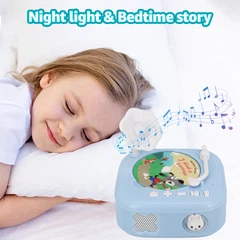
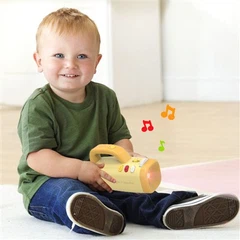
This flashlight-style projector creates magic for young children. It projects colorful story slides onto walls or ceilings, lets kids turn a dial to advance frames, and plays music or narrated stories through a built-in speaker. With five discs holding a total of forty image frames, it becomes a personal mini cinema experience. For brands, agencies, or event organizers, customizing this toy means making it distinctly yours while keeping the manufacturing efficient. A recent real-world example-a 2,000-unit order for a French festival-shows exactly how this unfolds in practice.
Understanding the Story Projector and Why Custom ODM Makes Sense
Children's story projectors occupy a sweet spot in the toy market. They combine education, entertainment, and imagination in one durable device. Parents love the screen-free projection that encourages storytelling and creativity without staring at tablets. For businesses, whether running festivals, educational programs, or retail lines, a custom version strengthens brand identity and creates memorable giveaways or products.
The base model already works well, but true customization elevates it. Instead of generic stock images, you insert your own artwork-perhaps classic paintings from a museum collection, original illustrations, or branded characters. You select housing colors that match your palette, design premium gift packaging that serves as the first impression, and ensure full regulatory compliance for markets like the European Union. The entire journey remains predictable when you follow the right sequence, avoiding common pitfalls that delay first-time importers.
Many assume original design manufacturing (ODM) involves endless complexity and high minimum orders. In reality, it rewards preparation and clear communication. Each step leverages existing tooling and processes, minimizing costs while allowing meaningful personalization. Let's break it down step by step, drawing from that French festival order to illustrate how decisions flow and timelines align.


Crafting Custom Discs: Bringing Your Art to Life on Projection Film
The heart of the story projector lies in its discs. This is often the most creative and technically demanding part of customization. In the French example, the agency provided 16 high-quality files: 15 classic paintings plus a logo splash screen. Some arrived as low-resolution web images, others as scans-highlighting a common starting point where preparation matters most.
Resolution stands as the non-negotiable requirement. Each frame on the disc measures roughly 18mm in diameter. To project sharply onto a bedroom wall or ceiling, source images need at least 300 PPI at final print size, translating to a minimum of around 212 pixels across each circular frame. Lower resolutions result in soft, blurry projections that disappoint end users. Designers recommend starting with original artwork around 200x200mm so that scaling preserves quality.
The process begins with the manufacturer sending a layered template file-typically in AI or PSD format. This template shows exact frame dimensions, bleed areas, and safe zones for each of the eight frames per disc. You or your designer then place the artworks into position, creating a clear sequence across the five discs. A review follows for resolution, alignment, color profile (usually CMYK for optimal film printing), and overall fit.
Next comes the critical pre-production sample: a single disc printed on the same optical film used in mass production. You test it in an actual projector unit, projecting onto a white wall under real conditions. This step confirms that colors pop vibrantly and details remain crisp. Once approved, full production of the five-disc set moves forward. Your 16 artworks can repeat across frames if needed, or the team can supplement with complementary images to fill all forty slots.
Preparation is key here. Provide source files in high-resolution formats like AI, PSD, or PDF whenever possible. Include a detailed list specifying which image belongs on which disc and in what order. Vector logos work best for splash screens. This artwork phase typically takes 7-10 days from receipt to approved sample, making it one of the longer lead times. Starting early prevents bottlenecks later in the project.
For brands with extensive collections, this flexibility shines. Museums, publishers, or educational organizations can curate narratives that align perfectly with their mission, turning a toy into a storytelling companion that reinforces learning themes.
Achieving Custom Colors: Two-Tone Design Without New Tooling Costs
Color customization adds instant brand recognition without reinventing the wheel. The projector body consists of two separate ABS plastic parts: the rotating head that adjusts focus and the main housing that contains the battery, speaker, and disc mechanism. Each molds independently, so two-tone schemes require no new tooling-just different color masterbatches in the injection molding process.
In the French order, the team selected deep navy blue for the head and black for the body, creating a sophisticated look suitable for a cultural festival. Standard colors like blue, pink, or green offer quick starts, but custom Pantone matches provide precision.
The workflow is straightforward. You supply specific Pantone codes for each part. The material supplier mixes a small batch of colored ABS pellets with concentrated pigment. Technicians then mold color chips-small 50mm x 50mm plaques-for approval under both natural daylight and indoor lighting. This visual check ensures consistency across environments. Upon approval, full masterbatch quantities are ordered for the production run.
Color chips usually arrive within 3-5 days, with masterbatch following shortly after. The real bottleneck often lies in decision-making rather than manufacturing. Choosing colors early allows this step to run parallel with disc development, keeping the overall project on track. Because color lives in the plastic itself, there's no painting or secondary finishing, which maintains durability and reduces costs while delivering a premium feel.
This approach works especially well for seasonal or event-specific branding. A vibrant palette for summer camps or elegant tones for holiday collections becomes achievable without compromising the product's robust construction.


Designing Custom Packaging: Making the Unboxing Experience Memorable
Packaging transforms from mere protection into a powerful branding tool, particularly for festival or retail distributions. In the example order, the 2,000 units headed to the Fête des Lumières needed gift-ready boxes that would impress recipients immediately. Standard brown or simple color boxes won't suffice when the box itself serves as the first brand touchpoint.
Specifications for these boxes include precise dimensions-around 215mm x 107mm x 102mm internally-to accommodate the projector, five discs, charging cable, and manual. Printing uses full four-color CMYK offset for vibrant, detailed artwork covering the exterior. Inside, a die-cut EVA or PET blister tray secures every component, preventing damage during shipping.
Text requirements demand attention to detail, especially for international markets. Bilingual French and English content covers product names, age recommendations, CE marks, WEEE symbols, manufacturer details (such as Shenzhen Xinditai Electronics), batch codes, and country of origin. Retail barcodes integrate seamlessly.
You control the creative side by providing print-ready AI or PDF files at 300 DPI minimum in CMYK color space. Vector logos ensure crisp reproduction. The manufacturer handles printing and structural integrity. Avoid low-resolution mockups from design tools-professional files prevent printing issues that could delay everything.
Well-designed packaging enhances perceived value and streamlines logistics for events. It also incorporates necessary regulatory markings right from the start, reducing compliance headaches downstream.
Navigating Certifications: Ensuring Safety and Market Access
For children's products entering markets like the EU, certifications aren't optional-they're essential for customs clearance and legal sales. The French agency needed assurance for France, which mirrors broader European Union requirements in 2026. This includes CE marking, multiple EN 71 tests, EN 62115 for electric toys, RoHS, REACH, and the mandatory GPSR responsible person filing.
Key tests cover mechanical safety (sharp edges, small parts), flammability, chemical migration of heavy metals, and electrical safety for the lithium battery, LED, and circuitry. Third-party reports from labs like SGS or TÜV provide the evidence behind self-declarations. The factory typically supplies core reports for the base model, while you handle brand-specific details and the EU responsible person.
Request full PDF reports upfront and verify test dates, as material changes (like new color masterbatches) may require updates. Planning certifications early prevents last-minute surprises. For global markets, requirements vary, but starting with a strong base model simplifies adaptation.
This rigorous process reassures parents and retailers that the projector meets high safety standards, building long-term trust in your brand.


Mastering the Timeline: From Artwork to Delivery in 12 Weeks
Successful ODM projects run on realistic scheduling. For the French festival targeting early December, the team worked backward from a late November arrival in Lyon, creating roughly a 12-week window. A detailed week-by-week plan keeps everyone aligned.
Early weeks focus on artwork placement, color approvals, and packaging files. By week 4, a full pre-production sample ships for final sign-off. Mass production then ramps up, covering injection molding, disc printing, assembly, and quality control. Sea freight to Europe takes 28-35 days, with buffers for customs and last-mile delivery.
Sample policies usually include two pre-production units-one for approval and one for independent testing. Battery choice-rechargeable 18650 lithium for longer playtime versus AAA alkaline-needs early confirmation to avoid redesigns. Payment terms typically involve a deposit with purchase order and balance before shipment, with FOB Shenzhen as standard.
The factory timeline stays predictable. Your decision speed determines overall success. Adding buffer time accounts for unexpected delays like port issues.
Why This Sequential ODM Approach Delivers Results
Customizing a children's story projector doesn't require reinventing manufacturing. By addressing discs, colors, packaging, certifications, and timing in order, brands create distinctive products efficiently. The French festival order demonstrates how preparation and partnership turn concepts into high-quality, compliant deliverables ready for delighted children.
Whether you're planning an educational launch, corporate event, or retail collection, this process offers clarity and control. Focus on high-resolution artwork, clear specifications, and timely decisions, and the result is a projector that not only projects beautiful stories but also tells your brand's story powerfully.