










Every toy buyer has asked the same question in the last three years.
"Happy, should I move production to Vietnam? India? Mexico?"
The answer has always been the same: it depends on your product. For simple cut-and-sew plush toys with no electronics, Vietnam works. For plastic injection molding with integrated circuits, speakers, batteries, and firmware - the answer is more complicated than a wage comparison.
The Shantou factory owner who moved to India and back is not an outlier. He is a case study. His numbers are not confidential. He shared them openly because he wants other factory owners to learn from his mistake before they make their own.
Here is what happened, why it did not work, and why the 50-kilometre radius around Shantou and Shenzhen is the most undervalued asset in the global toy industry. ☝️

1. The 50-Kilometre Supply Radius
The Scenario 🎯
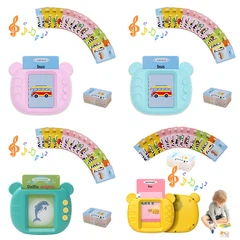
A talking flash card machine contains roughly 40 separate components. ABS plastic housing. Silicone buttons. A PCB with a Jieli chip. A speaker driver. A MEMS microphone. A lithium battery. A USB-C port. An RFID card reader. Printed cards. A colour box. An instruction manual. A polybag.
In the Pearl River Delta, every single one of these components is manufactured within a 50-kilometre radius of our factory. The ABS pellets come from Dongguan. The PCB is fabricated in Shenzhen. The speaker driver is wound in Huizhou. The packaging is printed in Guangzhou. If we order a component at 10 AM, it arrives by 4 PM the same day. If the component is wrong, the replacement arrives tomorrow morning.
What this means in production terms:
Component sourcing: 40 suppliers. Average distance from our factory: 28 kilometres. Average lead time for a re-order: 1 day.
Quality issue response: A batch of speakers arrives with a 2 dB deviation in frequency response at 1 kHz. We call the supplier at 9 AM. Their engineer arrives at our factory at 11 AM with a spectrum analyser. The problem is diagnosed by noon. Corrected speakers arrive the next morning. Production resumes. Total delay: 1 day.
Rush order capability: A buyer needs 500 additional units with a custom audio file loaded within 2 weeks. We can pull components from inventory. We can ask our PCB supplier to run a small batch over the weekend. We can ask our packaging supplier to print 500 boxes by Wednesday. None of this is possible if the PCB supplier is a 4-week container shipment away.
The India comparison:
The Shantou factory owner's Indian operation relied on the same component suppliers. The difference was geography. The components were manufactured in Dongguan, Shenzhen, and Huizhou - then shipped by container to India.
Component shipping time: 4 weeks from Pearl River Delta to Indian port. Plus 1 week for customs clearance. Plus 3-5 days for last-mile trucking to the factory. Total: 5-6 weeks.
Minimum order quantity penalty: Indian suppliers for certain components existed but required minimum runs of 50,000-100,000 units. Small batch runs were not economical. The factory had to buy from Chinese suppliers and absorb the freight cost. Freight on a small batch cost more than the components themselves.
Raw material inventory: To avoid production stoppages, the Indian factory maintained 3 months of component inventory in a warehouse. This tied up working capital. It also meant that a component quality issue discovered in production had already affected 3 months of inventory sitting in the warehouse.
BOM Reality Check 🔧
The supply radius is not a logistics metric. It is a production speed metric. A factory within 50 kilometres of its component suppliers can respond to a quality issue in 1 day. A factory 5,000 kilometres away takes 5-6 weeks. The labour cost difference between Shantou and India is roughly 40-50 per cent. The supply radius difference is roughly 4,000 per cent in response time. Speed beats wage.

2. The 3-Day Sample
The Scenario 🎯
A European toy brand needed a last-minute modification to a talking flash card machine. A new card design. A new audio track. A new colour for the housing. They needed a sample in 1 week to show their retail buyer before the catalogue deadline.
The Shantou factory received the request on a Monday. The PCB team modified the card reader firmware on Tuesday. The injection molding team ran 10 units in the new colour on Wednesday. The audio team loaded the new track on Thursday. The sample shipped by air freight on Friday. It arrived in Hamburg on Monday. Total turnaround: 7 days.
When the same factory tried this from India, the timeline collapsed. The firmware change was fine - the engineer could do it remotely. But the new colour required new ABS masterbatch. The masterbatch supplier was in Dongguan. Shipment to India: 5 weeks. The sample could not ship until the masterbatch arrived. The buyer missed the catalogue deadline. The order went to a Shantou competitor.
What makes the sample speed possible:
Tooling proximity: Injection mold shops are concentrated in Dongguan and Shenzhen. If a mold cavity needs a 0.1 mm adjustment, the mold maker visits the factory the same day. In India, the mold is either shipped back to China for modification (2-3 weeks round trip) or modified by a local shop with less specialised equipment (lower precision, longer lead time).
Electronics iteration: PCB prototyping in Shenzhen takes 24-48 hours for a 2-layer board. The prototyping house is 30 minutes away by courier. In India, the PCB is designed in India, fabricated in China, and shipped back. Each iteration cycle is 4-5 weeks instead of 2 days.
Audio content testing: Loading a new audio file onto a sound toy and testing it on actual hardware takes 30 minutes. If the audio is wrong (wrong bitrate, wrong file name, wrong volume level), the correction is a 5-minute phone call. The delay between cycles is measured in hours. The delay when the audio engineer is 5,000 kilometres away and the hardware is in another country is measured in weeks.
BOM Reality Check 🔧
The sample speed difference is not 3 days versus 4 weeks. It is 3 days versus 12 weeks when you account for the iteration cycles. Most product modifications require 2-3 rounds of feedback. In Shantou: 3 rounds times 3 days equals 9 days. In India: 3 rounds times 4 weeks equals 12 weeks. The labour cost difference per unit is measured in cents. The delay cost is measured in missed Christmas seasons.

3. The Hidden Costs That Eat the Wage Savings
The Scenario 🎯
The Shantou factory owner did the math when he moved to India. He projected a 40 per cent labour cost reduction. For a factory employing 200 workers at roughly USD 400 per month versus USD 700 per month in Shantou, that was a projected annual saving of roughly USD 720,000.
Here is what he actually spent:
The hidden cost breakdown:
Freight on component imports: The Indian factory imported roughly 60 per cent of its components from China. Every container of components cost roughly 3-4 times what the same components cost to truck within Guangdong. Annual incremental freight: roughly USD 250,000.
Inventory carrying cost: 3 months of component inventory tied up roughly USD 300,000 in working capital at any given time. At an 8 per cent cost of capital, that is USD 24,000 per year. Plus the warehouse rent: USD 36,000 per year. Total: USD 60,000.
Quality rejection cost: Components that sat in a container for 4 weeks and then in a humid Indian warehouse for 2 months developed higher defect rates. PCB oxidation. Speaker cone warping. Battery capacity degradation. The defect rate on imported components was roughly 3-5 per cent versus 0.5-1 per cent on locally sourced components in Shantou. On USD 2 million in annual component spend, that is USD 60,000-100,000 in rejected material.
Rush order penalty: When a Christmas order arrived late, the factory had to air freight finished goods to meet the delivery window. Air freight from India to the US costs roughly 5-6 times sea freight. In Shantou, the faster production cycle meant fewer rush orders needed air freight. Incremental air freight cost: roughly USD 80,000 per year.
Missed order cost: The factory lost 2 major clients during the India period. Both cited delivery reliability issues. The orders did not go to another Indian factory. They went back to Shantou competitors. Lost annual revenue: roughly USD 1.2 million.
The net equation:
Projected labour savings: USD 720,000. Actual incremental costs: USD 450,000-530,000. Net savings: USD 190,000-270,000.
Against lost revenue of USD 1.2 million, the net savings were negative. The move cost the factory roughly USD 1 million per year in total economic impact. The cheaper worker was more expensive.
BOM Reality Check 🔧
When a buyer asks "should I source from Vietnam or India to save on labour," the right answer is not yes or no. The right answer is: show me your total landed cost model including freight, inventory carrying cost, defect rate assumptions, air freight contingency, and sample iteration cycles. Labour is typically 15-25 per cent of a sound toy's FOB cost. The remaining 75-85 per cent is components, tooling amortisation, certification, and overhead. Saving 40 per cent on the 15-25 per cent saves 6-10 per cent on the total. If your freight and inventory costs increase by more than 10 per cent, the labour saving is a net loss.

4. What This Means for Buyers
The Scenario 🎯
A buyer asked me last month: "If production moves out of China, won't prices come down?"
The question assumes that the factory's labour cost is the main driver of the product's price. It is not. For a sound toy, the three largest cost components are the chip, the battery, and the tooling. The chip is designed in China and fabricated in Taiwan. The battery is manufactured in Guangdong. The tooling is built by mold makers in Dongguan. None of these become cheaper by moving final assembly to a different country. They become more expensive because you add freight to each one.
The cost structure of a typical sound toy:
Electronic components (chip, PCB, speaker, microphone, battery, connectors): 40-50 per cent of FOB cost.
Plastic housing (ABS material plus injection molding): 15-20 per cent.
Assembly labour (SMT, manual assembly, testing, packing): 10-15 per cent.
Tooling amortisation (mold cost divided by order quantity): 5-10 per cent.
Certification and testing (EN 71, ASTM, FCC, CE): 3-5 per cent.
Factory overhead (rent, utilities, management, QC): 10-15 per cent.
The labour component - the part that Vietnam and India compete on - is 10-15 per cent of the total. The component supply chain - the part that China dominates - is 40-50 per cent of the total. Moving assembly to save on 10-15 per cent while increasing component freight on 40-50 per cent is not a sourcing strategy. It is a math error.
What buyers should ask instead of "where is it cheaper":
What is the supply radius for the key components? If the chip, battery, speaker, and plastic supplier are in a different country from the assembly factory, add freight and lead time to every one of those components.
What is the sample iteration cycle? If the buyer wants to change the colour, add a new audio track, or modify the packaging artwork, how many days does each round of feedback take?
What is the rush order capability? If a Christmas order arrives 2 weeks late, can the factory compress the production schedule or is the timeline rigid?
What is the total landed cost, not the FOB cost? FOB is the factory gate price. Total landed cost includes freight, duty, inventory carrying cost, and the cost of capital tied up in goods in transit. A lower FOB with higher freight, duty, and transit time is not a better deal.
The Fix
When you compare two factories, compare their supply ecosystems, not their labour rates. A factory in Shantou with a 50-kilometre supply radius will beat a factory with cheaper labour and a 5,000-kilometre supply radius every time the order changes. And orders always change.
THE COMMON THREAD
The Shantou factory owner who moved to India and back did not make a mistake because India is a bad place to manufacture. He made a mistake because he compared wages instead of comparing supply chains.
China's toy manufacturing advantage is not cheap labour. It has not been cheap labour for at least a decade. The advantage is the ecosystem. Four decades of factories, suppliers, mold makers, PCB prototyping houses, packaging printers, testing laboratories, and logistics providers all concentrated in a 100-kilometre corridor between Guangzhou and Shenzhen. That ecosystem cannot be replicated by lowering wages in another country. It can only be replicated by decades of organic growth.
At XDT, we have been in this ecosystem since 2001. We do not claim it is the cheapest place to make a toy. We claim it is the fastest place to make a toy right. In an industry where missing a Christmas season costs more than saving a dollar on labour, speed is the real margin. 🔧

WHAT THIS MEANS FOR YOUR NEXT PROJECT
Three questions to ask before you diversify your supply chain:
Where are the critical components manufactured? If they are in China, what is the freight and lead time to your alternate assembly location? Factor that into your total landed cost comparison.
How many sample iteration cycles does your product typically require? Multiply the iteration time per cycle by the number of cycles. If the total exceeds your development window, the production location is wrong regardless of the labour rate.
What is your rush order capability? If you need 1,000 additional units in 2 weeks to meet a retailer deadline, can your factory deliver? If not, the savings on the base order are irrelevant.
IF YOU ARE EVALUATING PRODUCTION LOCATIONS RIGHT NOW
Send me your BOM and your target annual volume. I will give you a supply chain comparison: Shantou versus any alternate location you are considering. Not labour rates. Lead times, freight costs, inventory requirements, and sample iteration cycles. The numbers that actually determine whether your product ships on time.
Official Website: www.kidsoundbook.com | www.xinditai.com
Email: happy@xinditai.com
WhatsApp: +8613824343309
LinkedIn: https://www.linkedin.com/in/happy-gao-education-toy-oem-odm/ LET ME HEAR FROM YOU
Have you tried sourcing from a country outside China? What was your experience with lead times, sample iterations, and component quality?
Drop your story below.
#SupplyChain #ToyManufacturing #MadeInChina #Shantou #GlobalSourcing #OEM #ODM #ShenzhenFactory #Manufacturing #SourcingStrategy #PearlRiverDelta