








INTRODUCTION
Every sound product we ship contains a lithium battery. Every battery must pass a specific set of regulations depending on where it is going, how it is transported, and what cell chemistry it uses. These regulations change every year.
Most importers treat battery compliance as a checkbox. They ask: "Does it have UN38.3?" The factory says yes. They move on.
But UN38.3 is only one of four regulatory layers that can stop your shipment. And in 2026, three of those layers updated their requirements.
Here is what every importer of sound toys, electronic gifts, and battery-powered educational products needs to check before their next PO.

1. UN38.3 -- The Transport Passport Just Got Stricter
The Scenario
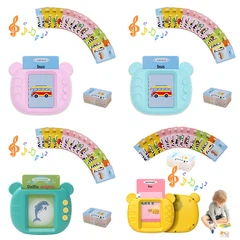
A client ordered 8,000 talking flash card machines for a Q4 school district contract. The product was ready on time. The battery supplier issued a UN38.3 report. But the report was based on the 2025 edition, and IATA DGR 67th Edition took effect January 1, 2026. The air freight forwarder rejected the shipment.
Why 2026 Is Different
The IATA DGR 67th Edition introduced new state-of-charge (SoC) requirements for lithium-ion batteries shipped with equipment. The key changes:
Lithium-ion cells must now be shipped at no more than 30% state of charge for air transport (previously 50% for some categories)
Test sample quantities increased: single-cell batteries now require 18 pcs + 30 pcs for full certification
Annual report updates are now mandatory -- a UN38.3 report older than 12 months is no longer accepted by most major carriers
Sodium-ion batteries now require separate certification (UN 3552, not the same as lithium)
UN38.3 Report Validity by Transport Mode:
Transport Mode Report Required Update Frequency Common Failure Air (IATA DGR)UN38.3 test report + MSDS Annual Outdated report, wrong SoC Sea (IMDG Code)UN38.3 test report + transport condition report Annual Missing transport condition letter Road (ADR)UN38.3 test report Every 2 years No cell matching reportRail (RID)UN38.3 test report Upon regulation change Rarely used for toys
The Fix
Verify that your battery supplier's UN38.3 report was issued within the last 12 months and matches the current IATA DGR edition. If your factory-sourced cells from a different manufacturer between PO and production, the new cells need their own UN38.3 report. A mismatch between cell supplier and test report is the #1 reason air freight gets rejected.
BOM Reality Check
There test fee for an expired report is 800-1,200. The cost of a rejected air shipment: $5,000-15,000 in storage, rerouting, and expedite fees. The math is brutal.

2. IEC 62133 -- The Cell Safety Standard That Keeps Expanding
The Scenario
A European buyer ordered AI plush toys with a custom 603040 pouch cell. The cell passed the manufacturer's internal tests. It had a CE marking. But the buyer's distributor in Germany required IEC 62133 certification for the cell -- not just the device-level CE. The cell supplier could not produce the report. The entire order was delayed by 5 weeks while we sourced and re-qualified a certified cell.
Why It Matters Now
IEC 62133-2:2017 (the current edition for lithium-ion cells) is referenced by most EU toy safety standards and is increasingly becoming a de facto requirement for toy importers worldwide. In 2026:
Germany, France, and the Netherlands now require IEC 62133 at the cell level for any battery-powered toy
Australia's RCM framework now references IEC 62133 for wireless toys
Brazil's ANATEL certification now asks for the cell-level report at submission
Cell Certification Requirements by Market:
MarketStandardWho EnforcesCost Impact, EU follows IEC 62133-2:2017 enforced by notified bodies and retailer requirements with an additional cost of $0.08-0.15 per cell for certified products over generic ones; the US applies UL 2054 / UL 62133 mandated by CPSC and retailers including Walmart and Target, adding $0.10-0.20 per cell; Australia adopts IEC 62133 via RCM regulated by ACMA with a cost increase of $0.05-0.10 per cell; Brazil complies with IEC 62133 and ANATEL overseen by ANATEL at an extra $0.12-0.18 per cell; Japan implements JIS C 8712 (PSE) enforced by METI, costing an additional $0.15-0.25 per cell.
The Fix
When you send us your product spec, tell us your target markets. We maintain a database of pre-certified cells for each market. If your cell of choice is not certified for your target market, we will flag it before production -- not after.
BOM Reality Check
A generic pouch cell costs 0.18−0.35.ThesamecellwithIEC62133+ULcertificationcosts0.18−0.35.ThesamecellwithIEC62133+ULcertificationcosts0.45-0.60. The difference is 0.10−0.25perunit.Ona5,000−unitorder,thatis0.10−0.25perunit.Ona5,000−unitorder,thatis500-1,250. The cost of a market rejection because your cell lacks a specific certification: your entire shipment value plus penalties.

3. EU Battery Regulation 2023/1542 -- The Phased Timeline Is Here
The Scenario
The EU's new Battery Regulation entered force in stages from 2024. The 2026 phase introduces carbon footprint declarations for EV batteries -- and while toy batteries are not yet in scope, the regulation includes a "battery passport" requirement for all batteries over 2kWh starting in 2027. If your product uses a large battery pack (uncommon for toys but common for audio devices with 18650 cells), this affects you.
What Toy Importers Actually Need to Know
The EU Battery Regulation 2023/1542 replaces the old Battery Directive 2006/66/EC. Key differences for toy and gift importers:
Portable battery collection targets increased to 45% by 2026 (was 25% under old directive). This does not directly require changes to your product, but it means your EU distributor may face new reporting obligations.
Mercury and cadmium limits tightened further. Even trace amounts in solder joints on battery PCBs are now being scrutinized.
Labeling requirements expanded: all portable batteries must show separate collection symbol, capacity, chemistry, and a QR code linking to the battery passport by 2027.
Removability requirement coming: by 2027, all portable batteries in products must be removable and replaceable by the end user. This directly impacts sealed sound book and sealed plush toy designs.
EU Battery Regulation Timeline for Toy Importers:
Date Requirement Impact on Toy Products Feb 2024 Regulation entered force. Baseline compliance required. Aug 2025 Labeling requirements began. New labels on battery packaging 2026 Collection target increase to 45%. Distributor reporting, no product change needed, 2027 Battery removability mandate. Sealed products may need redesign. 2027 Battery passport for > 2kWh. Large audio products were affected
The Fix
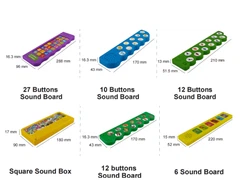
If your product has a sealed battery compartment (common in sound books, flash card machines, and plush toys), start planning for the 2027 removability requirement now. A battery compartment redesign is faster and cheaper when done in the mold design phase, not after the mold is cut.
BOM Reality Check
Adding a removable battery compartment to an existing product design costs $2,000–$5,000 for mold modification, plus an additional $0.15–$0.30 per unit for extra components (battery connector, compartment door, spring contacts). If designed in the initial stage, there is no extra cost.

4. US Customs -- The Traps That Catch Unprepared Importers
The Scenario
A first-time importer ordered 3,000 sound books with lithium pouch cells. The product was built, shipped, and arrived at Los Angeles port. US Customs and Border Protection (CBP) requested the battery compliance documentation. The importer had the UN38.3 report but not the IEC 62133 cell certificate. CBP held the shipment for "verification." It took 11 days to clear.
The storage fees alone were $4,800.
What US Customs Actually Checks:
UN38.3 test report (must be current within 12 months)
MSDS for the battery chemistry
Battery type designation (UN3481 for lithium-ion batteries packed with equipment)
Proper labeling on both the product and the outer carton
IEC 62133 or UL 2054 cell certification (increasingly requested, though not yet mandatory at federal level)
Common CBP Battery Holds We Have Seen:
Missing UN38.3 report (Very common) takes 3-7 days to resolve with a cost of $1,500-$5,000 for storage; expired UN38.3 report (Common) requires 2-5 days plus retest time and costs $2,000-$8,000; cell and report mismatch (Moderate) needs 5-14 days to fix at a cost of $4,000-$12,000; missing English version of MSDS (Common) is resolved within 1-2 days, costing $500-$1,500; no battery UN number marked on carton (Very common) takes 1-3 days with a cost of $800-$3,000.
The Fix
Every XDT shipment includes a compliance packet with: current UN38.3 report, MSDS in English, battery type declaration, and cell-level certification. We include a copy inside the first carton AND send a digital copy to the freight forwarder before the ship departs. Do not assume your freight forwarder will ask for these. Send them proactively.
BOM Reality Check
The cost of a compliance packet: 0.Itispaperwork.Thecostofnothavingit:0.Itispaperwork.Thecostofnothavingit:4,800 in storage plus a delayed retail launch. The difference is a 5-minute email before the container seals.

5. Q4 Order Timeline -- Why Battery Certification Determines Your Ship Date
The Scenario
It is late June. If you order a custom battery-powered sound product today with a certified cell we already stock, the timeline looks like this:
Weeks 1-2: PCBA design and component sourcing
Weeks 3-4: Prototype assembly and testing
Weeks 5-6: Mold production (if new enclosure)
Weeks 7-8: Mass production
Week 9: QC and packing
Week 10: Ship
Total: 10 weeks, arrive at your warehouse by mid-September. Safe for Q4.
But if your battery cell is not pre-certified for your target market, add:
2-4 weeks for cell certification testing
1-2 weeks for report processing
1-2 weeks for alternative cell sourcing if the first fails
That pushes delivery to November. Too late for Christmas.
Lead Time Impact by Battery Scenario:
ScenarioProduction TimeShippingArrivalQ4 Viable?Pre-certified cell in stock10 weeks4 weeksMid-SepYesCell needs new UN38.313-15 weeks4 weeksLate OctBorderlineCell needs IEC 62133 from scratch14-16 weeks4 weeksMid-NovToo lateCell fails certification, needs requalification16-20 weeks4 weeksLate Nov-DecNot viable
The Fix
Tell us your target market and required certifications at the inquiry stage, not after the prototype is approved. If you tell us in June that the product needs IEC 62133 for Germany, we can pick a pre-certified cell and keep the 10-week timeline. If you tell us in September, the timeline doubles.
BOM Reality Check
Choosing a pre-certified cell over an uncertified equivalent adds $0.10-0.25 to the unit cost. Choosing the wrong cell and discovering the issue at customs: your entire Q4 revenue for that product.

THE COMMON THREAD
Battery compliance is not a technical problem. It is a timing problem.
Every regulation we covered -- UN38.3 annual updates, IEC 62133 market expansion, EU Battery Regulation phases, US customs enforcement -- follows the same pattern: the requirement existed before the order, but the importer only discovered it when the shipment was already in transit.
The factories that cause the least trouble for their clients are not the ones with the cheapest BOM. They are the ones that flag compliance risks before the PO is signed.
At XDT, every BOM review starts with a compliance check: target markets, battery type, certification status, and timeline. We flag the risks before you commit to tooling, not after.
IF YOU ARE ORDERING SOUND PRODUCTS FOR Q4 RIGHT NOW
Here is what I want you to do this week.
Send me your product spec and target markets. I will check your battery compliance status against UN38.3, IEC 62133, EU Battery Regulation, and US customs requirements. If there is a gap, I will tell you before you place the PO.
No charge. No obligation.
Official Website: www.kidsoundbook.com | www.xinditai.com Email: happy@xinditai.com WhatsApp: +8613824343309 LinkedIn: https://www.linkedin.com/in/happy-gao-education-toy-oem-odm/ YouTube: https://www.youtube.com/@XDTHappy
LET ME HEAR FROM YOU
Have you ever had a shipment held at customs over battery documentation? What happened and how long did it take to resolve?
Drop your story below.
#BatteryCompliance #ToyImport #UN38_3 #IEC62133 #EUBatteryRegulation #CustomsClearance #OEM #SupplyChain #EducationalToys #SoundToys #Q4Planning