




2026 AI Toy Trends: What Brands and Importers Should Watch
Why 2026 Is a Tipping Point, Not a Hype Cycle
For the past few years, "AI toy" meant one of two things: a novelty that talked, or a roadmap slide nobody shipped. That phase is over. In 2026 the category is shifting from curiosity to shelf staple, and the change is less about a single breakthrough than about several mature pieces - cheaper edge chips, better speech models, proven content libraries, and clearer rules - finally arriving together. For a brand or importer, the question is no longer "should we watch AI toys" but "which of these shifts should we build around."
This article maps the trends that actually matter for buying and sourcing decisions, not the conference buzz. Each one below changes what a product must do, what it must prove, or how fast it can reach a compliant shelf. We deliberately avoid market-size guesses; the point is direction, not a forecast you cannot verify.

Trend 1: Intelligence Moves to the Device
The biggest structural shift is where the "AI" runs. Early connected toys pushed audio to the cloud, which meant a child's voice left the room, latency depended on Wi-Fi, and a dead connection meant a dead toy. In 2026, more of the interaction - wake-word detection, simple dialogue, and the character's personality - runs on the device itself, on modules in the ESP32-class family and similar edge silicon. That changes the value proposition: an on-device toy works offline, answers faster, and keeps the child's data local by default.
For a buyer, edge AI is not a spec-sheet trophy; it is a risk reduction. Fewer cloud dependencies mean fewer privacy exposures, fewer recurring server costs, and a product that still talks on a airplane or in a basement nursery. The trade is that the character's "smartest" answers are capped by what fits on the chip - which is exactly why the next trend, content design, matters as much as the model.

What On-Device Means in Practice
A toy that "works without the internet" is the visible benefit; the invisible one is control. When the conversational engine lives on the device or a tightly scoped companion app, the brand - not a third-party cloud - decides what the child can hear and where any data goes.
The Offline Baseline
Ask any supplier a simple test: what does the toy do with no Wi-Fi? If the core play survives, you are looking at edge-capable design. If it goes quiet, the "AI" was mostly someone else's server, and that server is now your liability.
Trend 2: The Screen-Free Backlash Becomes a Design Rule
Parents who welcomed tablets a decade ago are now the ones pushing back. Concern about screen time, sleep disruption, and attention has moved from pediatrician pamphlets to purchase decisions, and it is reshaping what "smart" means for a child's toy. The winning AI toys of 2026 are increasingly the ones that deliver personality and learning through voice, touch, and physical objects - not a glowing rectangle.
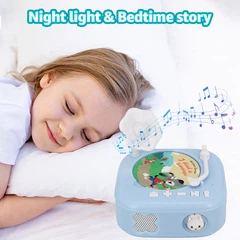
This is why the "Physical Play + AI" idea keeps gaining ground: keep the soft bear, the card, or the figurine that children already trust, and hide the intelligence inside. A screen-free AI plush or audio player can do more for a bedtime routine than a tablet ever could, precisely because it cannot show one more video. For brands, screen-free is no longer a niche; it is becoming the default expectation for the under-8 aisle.
Trend 3: Interaction Goes Multimodal, Not Just Chatty
The first wave of "AI toys" was a voice chatbot in a shell. The 2026 version is multimodal: the toy responds to being squeezed, tilted, or hugged; it pairs a spoken answer with a light, a sound, or a motion; and it reads context from the physical world rather than only from words. A dinosaur that roars when its back is tapped, or a bear that slows its breathing when held, is doing something a phone speaker cannot - it is embodied.
For product teams, modality is the differentiator that survives a spec comparison. Two toys can use the same speech model, but only one feels alive because its responses are tied to touch and posture. That is also where safety lives: a squeezable, predictable toy is easier to trust than an open-ended conversational agent, which is the thread that connects this trend to the next.
Touch as the Safer Interface
Gesture-first design - hug, tap, place a token - gives a child control without a menu and gives a parent a predictable toy. It is also the reason screen-free and multimodal trends reinforce each other.
Light and Sound as Language
A slow blink or a soft chime communicates state without words or a display. These channels are cheap to implement and far calmer than a screen, which suits the bedtime and nursery contexts where AI toys sell best.

Trend 4: Child Data Privacy Turns Into a Feature
Privacy used to be a compliance checkbox buried in a manual. In 2026 it is a shelf argument. Regulations such as the US Children's Online Privacy Protection Rule and Europe's GDPR-K have made clear that children's data is special, and buyers increasingly ask the blunt question: where does my child's voice go? The brands that answer "nowhere - it stays on the toy" win the trust that the ones piping audio to unknown servers lose.
This trend rewards the edge-AI shift from Trend 1. A toy that needs no cloud for its core play has a shorter, demonstrable data path, and a supplier who can show that path - on a diagram, in a tear-down, in a policy - converts cautious parents into confident ones. Privacy is becoming less about avoiding trouble and more about earning the sale.
Trend 5: Character and Content Become the Moat
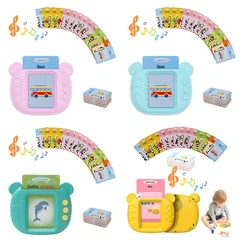
Hardware is becoming a commodity; the durable value is the world attached to it. The strongest AI toys of 2026 are not defined by their chip but by their character - a voice, a backstory, a library of stories and lessons that grows after purchase. This is the "hardware opens the door, content builds the moat" model, visible in card-based and token-based systems where each new title is both a gift and a reason to keep the player.
For brands and publishers, the implication is strategic: own or license the content, support a "make your own" path so retailers and families add their own audio, and treat the content pipeline as core infrastructure rather than an afterthought. A toy with a thin library collects dust; one with a growing, owned world becomes a small ecosystem that defends the SKU against generics.

Content as Recurring Revenue
Each card, token, or album is a replenish-able purchase, which changes the unit economics from one-and-done to a relationship. That is why content strategy now sits at the same table as industrial design.
Make-Your-Own Lowers the Barrier
A "MYO" path - where a publisher or family loads their own audio - turns a closed toy into an open platform. It also localizes easily across languages, which matters for importers serving multiple regions from one SKU.
Trend 6: Personalization Without Surveillance
Personalization is the promise that made AI attractive, but the creepy version - a toy that builds a dossier on a child - is exactly what regulation and parents reject. The 2026 answer is narrow personalization: the toy remembers that this child likes dinosaurs and bedtime stories, without building a profile that leaves the device. It adapts within the session and the household, not across the internet.
This is a design discipline as much as a technology one. It means deciding, up front, what the toy may retain (a name, a favorite) and what it must never collect (conversations sent to ad networks, biometric ID). Brands that draw that line visibly will outlast the ones that quietly cross it when a feature team gets ambitious.
Trend 7: The Supply Chain Catches Up
Two years ago, launching an AI toy meant stitching a chip vendor, a firmware shop, a content studio, and a certifier across four time zones. In 2026, that fragmentation is easing. Mature edge modules, reusable firmware stacks, and one-roof OEM/ODM platforms that handle hardware, audio content, and certification together have shortened the path from concept to compliant shipment. Prototyping that once took seasons now fits a single development cycle.
For importers, the practical upshot is lower risk and faster iteration: a pilot of a few hundred units is affordable, and a winner can be reordered before the season ends. The caution is the same as always - confirm that "one-roof" includes the certifications for your target markets, not just the plastic and the code, because a fast toy that cannot clear customs is not fast at all.
From Prototype to Pilot
The maturation shows up as shorter lead times and clearer responsibility. A supplier who owns the player, the tokens, the content, and the paperwork removes the hand-off gaps where AI toy projects traditionally went late.
Certification Is the Real Bottleneck
Even with mature hardware, safety and privacy certification remains the gate. Build it into the timeline from day one; do not discover at shipment that a market needs a standard your platform does not yet hold.

Trend 8: Regulation Is Finally Catching the Category
AI toys sit at the intersection of three rulebooks that used to move independently: toy safety (EN71, ASTM F963, CPSIA), children's data protection (COPPA, GDPR-K), and, increasingly, AI-specific law such as the EU AI Act's treatment of systems aimed at minors. None of these is new in spirit, but their combined weight now shapes what a compliant product looks like - locked batteries, capped volume, no unchecked data flow, and clear labeling of what the toy can do.
The brands that treat regulation as a design input rather than a finishing paperwork step will move fastest. The 2027 EU removable-battery requirement, for example, influences the enclosure from the first sketch, not the last audit. A supplier fluent in this stack is worth more than one offering a lower unit price with a certification gap you only find at the border.
What These Trends Mean for Buyers in 2026
Step back and the eight trends point one direction: the AI toy that wins in 2026 is local, physical, calm, private, and content-rich. It runs without the cloud, hides its intelligence in a trusted object, respects a child's data by not collecting it, and keeps earning attention through a growing library rather than a launch-day gimmick. That profile is also the one most compatible with the screen-free, embodied-play direction parents are pulling the market toward.
The 2026 AI Toy Buyer Checklist
Turning the eight trends into a purchase decision is straightforward if you score a candidate against six questions. Each one maps to a trend above, and each is something you can verify with a supplier before you order.

1. Does the core play work with no Wi-Fi? Test it unplugged. Edge-capable design (Trend 1) is the foundation; if the toy goes silent offline, the rest barely matters.
2. Can they show the data path? Where does a child's voice go, and what is stored on the device? A short, demonstrable path (Trend 4) separates a trusted product from a liability.
3. Is there a content plan, not just a launch title? The character needs a growing library or a make-your-own path (Trend 5) so the toy keeps selling after the first unboxing.
4. Does the supplier certify your markets? Toy safety, children's data rules, and the 2027 EU removable-battery requirement (Trend 8) must be in place before you commit, not discovered at the border.
5. Is personalization narrow by design? The toy should remember a name or a favorite without building a profile that leaves the home (Trend 6).
6. Can you pilot first? A few hundred units with a starter library (Trend 7) lets you validate sell-through before a full range. Reorder the winners; retire the slow sellers.
FAQ - AI Toy Trends 2026
Are AI toys just a passing trend? The underlying shifts - cheaper edge chips, proven content models, clearer rules - are structural, not faddish. The category is moving from novelty to a durable shelf segment, which is why sourcing decisions made now compound.
Do AI toys need the internet to work? The best 2026 designs do not. Core play - talk, story, response to touch - runs on the device; any cloud connection is an adult-only extra for adding content, never required for a child to play.
Is a screen-free AI toy less capable? Often the opposite. By removing the display, the design focuses on voice, touch, and character, which is what young children actually use - and it avoids the sleep and attention problems screens create.
What privacy questions should I ask a supplier? Where does a child's voice go, what is stored on the device, does any data leave the household, and can they show that path on a diagram? If the answers are vague, treat it as a risk.
Which certification matters most? It depends on market, but toy safety (EN71 / ASTM F963 / CPSIA), children's data rules (COPPA / GDPR-K), and the 2027 EU removable-battery requirement are the ones most often missed by first-time importers.
How should I start without overcommitting? Pilot one format with a small library - a few hundred units - validate sell-through, then expand the range and languages. The mature supply chain makes that experiment affordable.