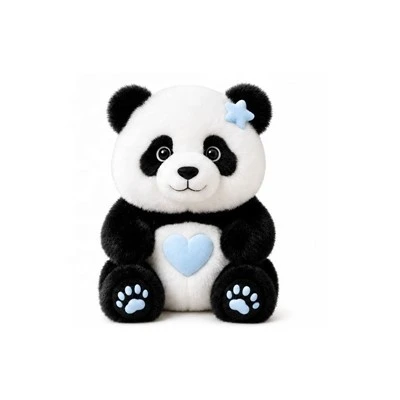

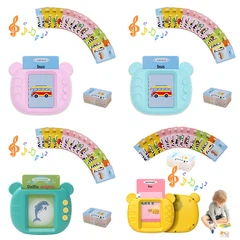

1) The Experience We're Building: "Content Lives in the Figurine"
Goal: A child places the figurine on the base, it plays right away; remove it, playback pauses or switches. No smartphone, no app, no Wi‑Fi requirement for basic use. ✨
Mechanism: Each figurine carries a tiny HF/NFC tag with a unique ID and a small writable memory. The base contains an NFC reader optimized for near‑field coupling. The device associates the figurine's ID with a folder on internal storage (or SD), and plays the audio inside that folder. The toy can write back light data (e.g., last position) into the tag, so the figurine "remembers" progress. ⏯️
This "physical equals content" model is intuitive for kids and frictionless for parents. The technology disappears; the ritual-place, play, smile-remains. 🧸

Figure on the top with a opened device

Figure on Tonie Box
2) Why HF/NFC Beats UHF and Other Alternatives
HF/NFC operates at 13.56 MHz using magnetic (near‑field) coupling. It naturally limits the read range to a few centimeters, which is exactly what we want:Prevents misreads and crosstalk when multiple items are nearby.Makes the interaction feel deliberate and magical-place the figurine right on the sweet spot, and it works. 📍
UHF (860–960 MHz) is designed for long‑range bulk inventory. Great for warehouses; not great for a child's desktop interaction. It can read many tags at distance, which increases accidental triggers and complicates field shaping.
HF/NFC is more tolerant to human touch and moisture. Kids' hands, wipes, and saliva won't ruin the experience. Water detunes UHF much more.
Smartphones universally support HF/NFC, not UHF. Even if your main experience is app‑free, HF/NFC keeps optional test and service tools simple.
Verdict: For "touch‑to‑play" toys, HF/NFC is the right physics and the right ecosystem. ✅

Strictly speaking, the technology used in toys is of the RFID type.

HF is the most suitable frequency for the toy function.
3) Hardware Layout: Learnings from Your Photos
Based on your product images (a circular base, central cavity, visible NFC coil on the PCB, speaker/drive modules, and a figurine pedestal):
Reader antenna placement:The flat spiral coil on your PCB is well‑suited to create a focused magnetic field right under the central mount. Keep the coil as close to the outer plastic surface as possible to reduce distance losses.Mark the "sweet spot" visually (a ring or icon) so kids know where to place the figurine. 🎯
Magnetic materials and nearby metal:Your base includes mechanical parts and a speaker; magnets or metal can disturb coupling. Insert a thin ferrite sheet between the reader coil and any metal mass to guide flux and stabilize reads.Maintain a 5–10 mm clearance from batteries or motor cans if present.
Figurine tag integration:Place the tag in the figurine's base, aligned with the reader coil when seated. Use ABS/PPS plastics for heat and impact resistance; resin potting or ultrasonic welding can secure the tag for child safety.If the figurine includes magnets for positioning, keep a small ferrite layer under the tag to counter detuning. 🧲
Firmware behavior:Continuous low‑power polling; when a tag is detected, quickly fetch the ID, resolve it to a folder path, and begin playback with a friendly sound/LED cue.On removal, write back the progress (timestamp or track index) to the tag's writable area, then pause gracefully.
This geometry-flat coil in the base, tag in the figurine foot-has been proven for Tonies‑style products. It's stable, manufacturable, and friendly to near‑field physics.

A RFID receiver developed by Murata JP

An antenna on a circuit board.
4) Data Model: App‑Free but Powerful
You'll provide customers with a website to download audio; each figurine has its "own" folder on the device. RFID makes the mapping clean and secure:
On‑tag data (small and robust):Unique ID (immutable).A tiny progress field (e.g., last track + millisecond offset). Keep it compact to minimize write cycles.Optional lock bits: set critical areas to read‑only to prevent accidental overwrites.
On‑device mapping:ID → folder path on internal storage. Example: ID 0xA1B2C3 maps to /content/figurines/A1B2C3/Playback engine reads audio files in that folder; if multiple albums exist, maintain a simple manifest.json or an index file.
Download flow (no app):Customer visits your site, authenticates the device (see Section 7), downloads the audio pack. The PC/Mac copies files via USB‑MSC (mass storage) or your desktop companion (optional), not a mobile app.The device rescans storage on next boot/insert. It validates integrity (hash/signature), updates local indices, and is ready to play. 💽
Offline‑first behavior:The toy works entirely offline once audio is present.If you allow optional Wi‑Fi, it's only for content updates or anti‑counterfeit checks, not for core operation.
App‑free does not mean feature‑free. With the tag as a small writable "bookmark," the figurine genuinely feels like it carries the story.

APP R&D Process
Related Article: Why develop APP is expensive for a toy?
5) UX Details That Make It Magical
Immediate feedback: A soft chime and LED glow when the figurine is recognized. Remove it and the light fades while audio pauses. ✨
Accidental multi‑tag handling: If a second figurine approaches the field, play a gentle error tone and show a brief LED pattern asking the child to choose one. 🔔
Kid‑proof controls: Big tactile buttons for volume and next/previous track. Keep the power button long‑press to avoid accidental shutdown.
Resilience: HF/NFC near‑field means the child must place the figurine close-exactly the ritual you want. It encourages concentration and a sense of ownership.
The ritual becomes the product: "Place friend, hear story." Simple, repeatable, delightful.
6) Engineering Deep Dive: Getting HF/NFC Right
Antenna design:Target a coil size that matches your central platform. Tune for resonance around 13.56 MHz with the device enclosure in place (plastic detunes slightly).Use a ferrite backing to shape flux; reduce energy lost into the chassis.
Power and EMI:Keep the NFC section isolated from class‑D amplifiers or motor drivers; schedule polling to avoid audible artifacts.Implement duty‑cycled polling to save battery while maintaining quick recognition.
Tag selection:NFC Forum Type 2/4 tags are common. For small figurines, choose miniaturized tags with embedded ferrite to retain performance despite size.Endurance: Prefer tags rated for many write cycles; progress writes can be throttled (e.g., only on removal or every N seconds).
File system and audio:Use a robust filesystem (FAT32/exFAT) with journaling at the application layer (write temp + atomic rename).Support common codecs (MP3/AAC/FLAC optional). Provide a simple manifest for track order and loop behavior.
All of this is mature technology; the industry has solved these puzzles many times. You're standing on strong shoulders.
7) Security, Licensing, and Anti‑Counterfeit (Without an App)
Device authorization for downloads:Each device has a unique certificate or keypair. Your website authenticates the device (via a secure token or a short desktop helper) before allowing content downloads tied to specific figurines.
Content integrity:Ship audio packs with signed manifests. The toy verifies signatures at import; tampered or incomplete packs are rejected gracefully.
Figurine legitimacy:Bind tag IDs to your backend registry. The device can optionally check legitimacy during occasional online syncs; offline it still plays base content but may limit premium features if a tag isn't recognized.
Privacy:Store no personal data on tags. Progress fields are anonymous. Comply with regional child safety and privacy norms.
Security is invisible to the child, but essential for your brand and content partners. 🔒

RFID TAG
8) Safety and Compliance for Children's Products
Materials and construction:ABS/PPS housings, rounded edges, secure bonding (ultrasonic welding or epoxy potting) for the tag so it cannot be removed or swallowed.
Tests:Drop, sweat/saliva exposure, cleaning agent resistance, temperature/humidity cycles, and enclosure strain tests.
Standards:EN71 (toy safety), RF certifications (FCC/CE/etc.) for the reader module, and battery safety where applicable.
HF/NFC excels here: it's a low‑power, near‑field system with minimal radiated emissions and a strong compliance track record. ✅
9) Manufacturing and QA: From Prototype to Shelf
Placement jigs:Use fixtures to position the tag in the figurine base with tight tolerance. Consistent alignment delivers consistent read performance.
Golden samples and RSSI testing:Create a test station that measures read success rate and field strength across orientations. Reject units with weak coupling.
Firmware test matrix:Validate behavior across multiple figurine tags, removal/insert cycles, low battery states, and storage edge cases (corrupted file, missing manifest).
Final line testing:Each figurine's ID is scanned and matched to its SKU. The device reads, plays a short test track, writes progress, and logs pass/fail.
These practices make the "magic" repeatable at scale. 🏭
10) Why Not Bluetooth/Wi‑Fi, Barcodes, Magnets, or UHF?
Bluetooth/Wi‑Fi:Requires pairing, provisioning, and ongoing connectivity-heavy UX and support burden. Increases attack surface and distracts from "just place and play."
QR/Barcodes:Camera alignment, lighting issues, and no writable memory; you can't store progress on the figurine.
Magnet arrays/Hall sensors:Can detect presence and sometimes type, but not unique, secure identities or data writes. Limited scalability and anti‑counterfeit.
UHF RFID:Optimized for distance and bulk reads, increasing accidental triggers. Not supported by phones for testing. Near metal and water is trickier in small toys.
HF/NFC is the only option that combines near‑field intentionality, small writable memory, ecosystem maturity, and child‑friendly robustness. 🥇

How toy work with RFID
11) Implementation Checklist (Practical and Actionable)
HF/NFC reader:Flat coil near the top surface; ferrite backing; tuned at 13.56 MHz with enclosure assembled.
Figurine tag:Mini NFC tag with embedded ferrite; placed centrally in the base; secure potting; orientation aligned to reader coil.
Firmware:Poll → detect → resolve ID → open folder → play; on removal, write progress; graceful errors; LED/sound feedback.
Storage and content:Folder per figurine ID; signed manifest; atomic file updates; USB‑MSC for customer downloads; optional Wi‑Fi for backend sync.
Security:Device certificates; signed content; tag/ID registry; offline fallback behavior.
Compliance:EN71, RF, battery; reliability tests; production jigs; line‑end NFC functional tests.

Bottom Line
If you want Tonies‑style magic without an app, RFID with HF/NFC is the best path. It provides:
Intentional, kid‑proof near‑field interactions.
A tiny writable memory for progress and identity.
Clean mapping from figurine ID to on‑device folders.
Robust physics around humans and moisture.
Mature standards, safety, and manufacturability.
It's the shortest route from prototype to a delightful product where technology disappears and stories come alive the moment a child places a little friend on the base. 🌈