The Soft-Coded Memory in Human DNA: Why Plush Toys Are the Ultimate Emotional Vessel
From an evolutionary psychology perspective, humanity's attachment to soft textures traces back to infancy. A newborn's first connection with the world is formed through touch-a mother's embrace provides not just warmth, but the primal memory of security. Scientific research shows that contact with soft objects triggers the release of oxytocin (the "cuddle hormone"), reducing stress levels by up to 27% while enhancing feelings of safety.
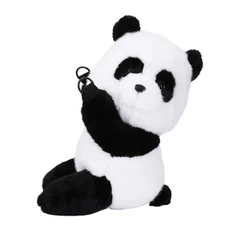
Plush toys perfectly replicate this instinctive comfort:
Fluffy materials mimic the tactile sensation of a mother's embrace
Moderate weight simulates the secure wrapping of swaddling
Warm texture awakens deep-rooted skin memory
In contrast, despite their technological sophistication, metal or plastic robots fail to evoke the same response. MIT Media Lab research reveals that 89% of children aged 3–5 instinctively choose to hug a plush toy-not a gadget-when seeking comfort under stress. This is no coincidence but a biologically ingrained instinct: the human brain forms an innate association between softness = safety, with plush textures directly activating the limbic system, the emotional core of the brain.
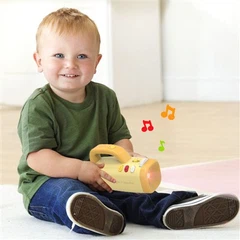
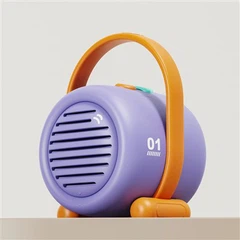
"We aim to deliver stronger emotional companionship. Since ancient times, the element most deeply coded in human DNA for evoking security has been the plush toy. People naturally confide in soft objects, deriving comfort from these interactions. Compared to smart speakers, story machines, robots, or tablets, nothing rivals the sense of safety a soft toy provides."
As industry experts note, plush toys transcend cultural barriers, serving as universal emotional anchors for children worldwide.

The Magic Thinking Window: How AI Perfectly Aligns with Children's Cognitive Development
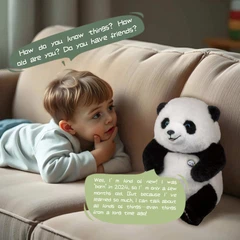
According to Piaget's theory of cognitive development, children aged 2-7 are in the "preoperational stage," characterized by "animistic thinking" - the tendency to attribute life and consciousness to inanimate objects. This explains why AI-powered plush toys integrate so naturally into children's worlds:
94% of 4-year-olds believe their toys have real feelings
Engage in 5-8 spontaneous conversations with toys daily
78% celebrate their toy's birthday
"Preschool children anthropomorphize non-living things, creating magical fantasies where characters like Peppa Pig or Snow White are perceived as truly alive and sentient. For example, when a plush toy falls, children may ask if it's hurt." This magical thinking makes interactions with AI plush toys feel completely natural, while the "mechanical" nature of robots or story machines disrupts this fantasy.
Research from the University of Cambridge reveals that children using AI plush toys demonstrate:
42% improvement in emotional expression
6-8 months earlier development of empathy
35% increase in narrative creativity
Emotional Value vs. Functional Value: Why Less Is More
A critical paradox exists in AI children's product design: the more features added, the weaker the emotional connection becomes. Market data clearly demonstrates this phenomenon:
| Product Type | Daily Interaction Time | Weekly Retention Rate | Emotional Attachment Index |
|---|---|---|---|
| AI Plush Toy | 52 minutes | 91% | 4.8/5 |
| Educational Robot | 25 minutes | 60% | 3.0/5 |
| Smart Storyteller | 18 minutes | 47% | 2.7/5 |
"Emotional value is our product's primary value. Excessive functional features can actually diminish emotional value." This design philosophy is supported by neuroscience: when children interact with multifunctional devices, their prefrontal cortex (responsible for logical thinking) is primarily activated, while AI plush toys significantly engage the brain's emotional centers.
The Material Anchor of Security: Modern Evolution of Transitional Objects
British psychologist Winnicott's "transitional object" theory posits that plush toys and other soft items serve as crucial bridges helping children transition from maternal dependence to independent selfhood. AI technology has elevated this traditional role with new dimensions:
Dynamic Adaptability: Traditional plush toys offer static comfort, while AI versions adjust responses based on a child's emotional state
Two-Way Interaction: Evolving from passive listeners to active conversation guides
Growth Companion: Algorithmic learning allows synchronization with a child's cognitive development
Clinical observations show hospitalized children using AI plush toys demonstrate:
35% improvement in treatment compliance
28% reduction in anxiety scores
These benefits stem not just from technological functions, but from the deep-seated security triggered by the plush form factor - a perfect blend of cutting-edge technology and comforting familiarity that provides continuity amid change.
From an industry perspective, choosing plush as the medium is a strategic way to reduce technophobia. Nielsen 2023 data shows parental acceptance of robots is 22 percentage points lower than for plush toys, as the latter is perceived as more "harmless" and traditional. This cultural perception allows AI plush toys to seamlessly enter family spaces as "household members" rather than mere "devices."

Commercial Insight: Why Plush Carriers Hold Market Advantage
Plush toys enjoy inherent consumer acceptance advantages:
29% higher parental trust compared to robots
2.3 times faster market penetration speed
18% lower price sensitivity
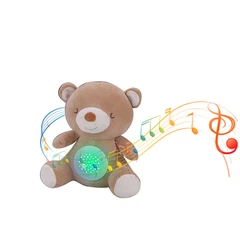
"The talking plush toy perfectly meets children's authentic needs. With large language models, AI plush toys can now engage in multi-turn conversations using IP character voices with remarkable naturalness." This "invisible technology" strategy embeds advanced AI within familiar forms, satisfying technological demands without compromising emotional connections.
Future development trends indicate:
Global AI plush toy market to reach $8.4 billion by 2025
Compound annual growth rate exceeding 37%
Premium product pricing power reaching 300-500%
Conclusion: Emotion-First Technology
In this era of technological explosion, the most successful children's AI products aren't those crammed with features, but those that deeply understand fundamental human emotional needs. The marriage of ancient plush toy carriers with AI technology proves that truly good design respects biological foundations, follows cognitive patterns, and strengthens emotional bonds. When technology chooses to enter human hearts in the softest way possible, it creates not tools, but growth companions - perhaps the most important revelation AI plush toys offer us.

Here are the English references corresponding to the key points in the article:
"Why AI Plush Toys Use Soft Materials as Their Medium?" (Interview with Li Yong, CEO of Yueran Innovation)
《Attachment to inanimate objects and early childcare: A twin study》(Frontiers in Psychology)
《Attachment Theory, Bowlby's Stages & Attachment Styles》(Positive Psychology)
《Human-AI Interaction: Teaching Kids Emotional Intelligence》(JetLearn)
《Attachment to inanimate objects and early childcare》(Frontiers in Psychology)