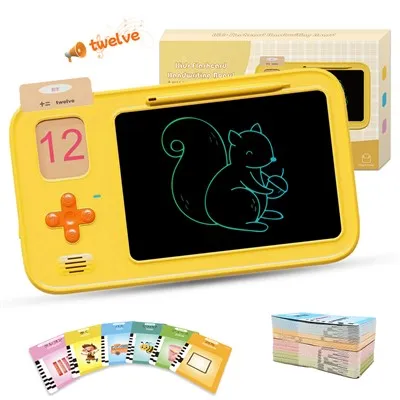

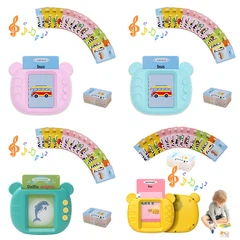
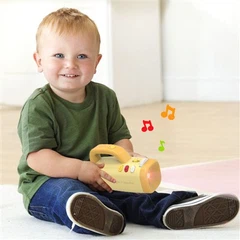
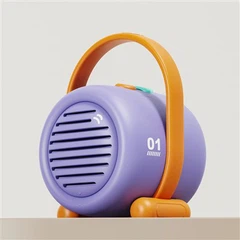
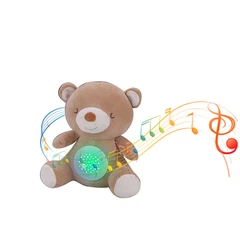

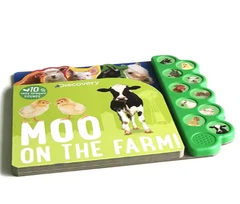
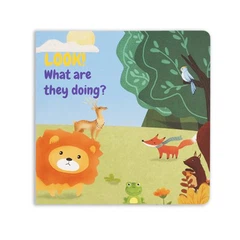
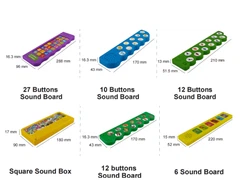
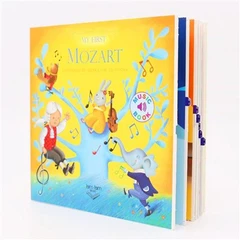
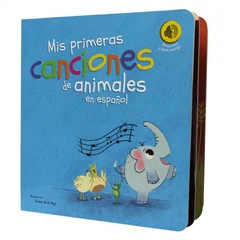
In today's digital age, educational sound toys have emerged as a crucial component in fostering early childhood development. These toys blend auditory stimulation with interactive play, supporting cognitive, language, and sensory skills in young children.
Auditory Learning and Brain Development
Research indicates that early auditory stimulation plays a vital role in developing language and cognitive skills. According to the American Speech-Language-Hearing Association (ASHA, 2021), infants exposed to varied sound patterns show accelerated development in speech perception and verbal communication.

Educational sound toys provide multisensory experiences that activate neural pathways critical for language and cognitive development, making them indispensable in early childhood education.
What's Benefits of Educational Sound Toys for Toddlers?
Toddlers are at a prime developmental stage where sensory experiences shape neural connections profoundly. Educational sound toys offer several targeted benefits:
Language and Speech Development: Exposure to sounds and phonics encourages early speech skills.
Fine Motor Skills Enhancement: Button pressing and object manipulation improve hand-eye coordination.
Emotional and Social Learning: Melodic and rhythmic elements can regulate mood and foster social interaction.
According to a 2023 NICHD (National Institute of Child Health and Human Development) study, toddlers engaging daily with educational sound toys demonstrated a 22% increase in sustained attention and a 19% improvement in verbal imitation skills during play sessions.
How Educational Sound Toys Support Cognitive Growth in Early Childhood?
The auditory cortex, responsible for processing sound, works in tandem with the prefrontal cortex-crucial for executive function and working memory. Studies in the Journal of Child Neuropsychology (2024) reveal that children exposed to musical and phonetic sound toys show increased synaptic plasticity in these areas, which correlates with better memory and problem-solving skills.

The interactive nature of educational sound toys encourages active auditory engagement, which is essential for cognitive growth and academic readiness.
How to Choosing Safe Educational Sound Toys?
Parents and educators must ensure that educational sound toys are safe for infants, considering the potential risks related to materials, sound levels, and design. Safety standards such as ASTM F963 (US) and EN 71 (Europe), CE ,ROHS regulate these aspects.

Essential Safety Features
Material Safety: BPA-free, phthalate-free, and non-toxic plastics.
Sound Volume Control: Maximum volume limits to prevent hearing damage - WHO recommends a maximum of 85 decibels for children's toys.
Physical Safety: Rounded edges, no small detachable parts to prevent choking.


Selecting safe educational sound toys for infants ensures a secure learning environment that supports sensory and cognitive development without health risks.
FAQ
Q: When Should Children Start Using Educational Sound Toys?
A: Infants can benefit from soft sound toys as early as 3 months, but the most significant developmental benefits are seen between 1-3 years old, a critical period for language and motor skill development.
Q: Are Educational Sound Toys Effective for Children with Sensory Processing Disorders?
A: Yes, controlled auditory and tactile stimuli from educational sound toys can help children with sensory processing disorders gradually improve their sensory integration and tolerance.
Q: How Do Educational Sound Toys Support Sensory Learning?
A: They engage multiple senses-primarily auditory and tactile-helping children process and integrate sensory information more effectively, which is crucial for overall sensory development.
Educational sound toys are vital tools in promoting early childhood development through auditory stimulation and interactive learning. By carefully selecting toys that are safe, engaging, and educational, parents and educators can enhance language, cognitive, and sensory skills in children during their most formative years. Addressing industry challenges through regulation, education, and accessibility initiatives will maximize the positive impact of these toys worldwide.
American Speech-Language-Hearing Association (ASHA). (2021). Early auditory stimulation and language development. https://www.asha.org
National Institute of Child Health and Human Development (NICHD). (2023). The impact of sound toys on attention and speech development. https://www.nichd.nih.gov
Sensory Processing Journal. (2022). Multisensory integration in early childhood. https://sensoryprocessingjournal.org
World Health Organization (WHO). (2021). Safe listening guidelines for children. https://www.who.int
SHENZHEN XINDITAI ELECTRONIC CO., LTD has over a decade of experience in professional research and production of educational and early development products. If you have any OEM & ODM requirements, please contact us to discuss the project details and obtain bulk pricing or customized services.