



What Is Toy Battery Compartment Design?

Toy battery compartment design is the engineering of the one cavity in an electronic toy that a child is most likely to try to open. It covers six decisions that are usually made by six different people: which power architecture the product runs on, how the lid is retained, what tool is needed to open it, how the contacts meet the cell, how heat leaves the cavity during a long play session, and what happens to the file set when a cell or a charge board is changed. Handled early, those decisions cost nothing. Handled late, they are the most expensive category of rework in this product family.
What makes toy battery compartment design a design subject rather than a fastening detail is that four separate review families meet in the same few square centimetres. Accessibility and small parts look at whether a child can reach the cell. Electric toy safety looks at the supply architecture and the insulation path. Thermal review looks at what the housing does during hours of continuous playback. Abuse and drop testing looks at whether the lid, the boss and the contacts survive the same sequence the rest of the shell survives. A decision that satisfies three of those and fails the fourth is not a partial pass. It is a tooling change.
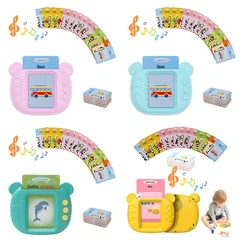
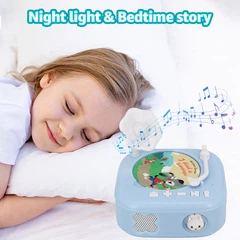
For a kids story player the stakes are unusually specific. The unit is a screen-free audio device, usually triggered by a card or a figure, and it lives at the bedside: it runs for a long session, often unattended, often on a soft surface that traps heat, and it is handled by a child who is already half asleep. That combination puts run time, housing temperature and lid retention on the same short list of things a buyer hears about later in reviews, in claims, and in the conversation about whether the range gets a second season.
Read toy battery compartment design as a schedule rather than as a lid. Screw boss geometry is set in the STP file, lid fit is checked on a printed part, power behaviour is written into the programme white paper, and electrical and thermal behaviour are validated on a real board. Every one of those steps is free on a drawing and expensive on steel. The most common toy battery compartment design failure is not a weak lid. It is a good lid on a housing whose outer shape was frozen before anybody asked how the cell was going to come out of it.
As an OEM/ODM manufacturer of screen-free audio toys since 2010, we treat toy battery compartment design as a declared configuration with an owner and a freeze date, so the compartment that ships is the compartment that was tested.
How Toy Battery Compartment Design Turns Into a Purchase Decision

Toy battery compartment design is settled in five places, and each one has a fixed slot on the project calendar. Four of the five close before tooling starts, which is the whole point.
Dimension A → Choose the power architecture before you choose the silhouette: A tray for replaceable cells and a sealed rechargeable pack lead to two different products. The tray wants a flat wall, a door and finger clearance. The pack wants internal volume, a charge port, and a thermal path that does not run through the speaker. Whichever you choose decides housing depth, weight distribution and how the unit sits on a bedside table. We issue STP design files within 3 days of a frozen brief, so compartment geometry and outer surface are drawn in the same week instead of one chasing the other.
Dimension B → Treat the lid as an accessibility statement: Whether the lid is held by a screw, a captive screw or a snap is read as a statement about who can open the cavity, and it is one of the first things a retail compliance reviewer asks about. Fastener type, boss height and thread engagement are geometry, so they are free at the drawing stage and expensive once steel is cut. We produce 3D printed proof parts within 3 days, so lid fit, boss strength and tool access are checked on a printed part rather than discovered at first article.
Dimension C → Write the power behaviour into the programme white paper: What the unit does when the cell is low, whether it fades or speaks a message, how long the auto-off timer runs, and what happens if the lid is opened in the middle of playback. Those are firmware behaviours, and they are part of the declared configuration a test report describes. The programme white paper is completed within 3 days, and it belongs in a toy battery compartment design conversation because a behaviour nobody wrote down is a behaviour nobody can reproduce at audit.
Dimension D → Validate continuity, thermal and charge behaviour on a real board: A drop can separate a contact for a fraction of a second. On a bench that is a measurement; in a child's hands it is a product that stopped telling a story. Contact spring travel, cell retention and charge board behaviour have to be checked on the actual electronics, inside the actual housing, after the abuse sequence. A PCBA sample is ready within 5 days, and that is the configuration we test.
Dimension E → Freeze geometry before tooling, then manage change: Exclusive tooling is completed within 30 days and mass production within 30 days of approval. After that point, changing a cell supplier, a capacity or a charge board is not a component swap; it is a fresh look at the file set and, in some markets, at the transport documentation. That is why a toy battery compartment design decision belongs in the brief rather than in the first production review.
Key Features of Toy Battery Compartment Design

1. Draw the Compartment Before You Draw the Silhouette
Feature: The cavity is drawn first. Cell envelope, lid, screw bosses, contact travel and clearance for a tool are dimensioned, and only then is the outer surface wrapped around that volume.
Advantage: A housing whose shape was approved before the cell was chosen ends up with a compartment made of whatever space is left over, and space that is left over is usually short on wall thickness, boss depth and thermal path.
Benefit: Freezing the volume first removes the most common cause of a second tooling round in this category, which is the difference between landing a season and shipping into the back half of it.
Evidence: Our team issues STP files within 3 days of a frozen brief, and 3 structural and design engineers review compartment and board together with 4 electronic engineers before any outer surface is approved.
2. The Lid Is an Accessibility Statement, Not a Fastener Choice
Feature: Lid retention is specified as a declared configuration: fastener type, boss geometry, required tool, and the marking that repeats it on housing, carton and manual.
Advantage: A screw that needs a tool and a snap a fingernail can lift are read differently in a compliance review, and the difference is decided by geometry you freeze on paper rather than by anything you can add later.
Benefit: Getting it right at the drawing stage costs nothing and protects the listing. Getting it wrong after tooling means new steel, a repeat test programme and a launch window that moves.
Evidence: 3D printed proof parts are ready within 3 days, so your team can hold the lid, try the tool and sign off boss strength before steel is ordered.
3. Contact Geometry, Polarity Protection and Drop Continuity
Feature: Contact springs are specified by travel and force rather than by drawing, polarity is protected mechanically wherever the tray allows it, and cell retention is verified after the abuse sequence instead of before it.
Advantage: Most intermittent faults in a screen-free audio toy are not firmware faults. They are a cell that moves a few tenths of a millimetre when the unit lands on a floor.
Benefit: A unit that stops mid-story produces the two most expensive outcomes in this category, a return and a review that says the product is broken when it is not. Both are cheaper to design out than to discount later.
Evidence: Every unit passes 100% functional testing, and incoming lots are inspected to AQL 1.0 by a quality team of 2 engineers and 10 QC inspectors.
4. Power Architecture: Replaceable Tray or Sealed Rechargeable Pack
Feature: Two configurations run on one platform, a tray for replaceable cells behind a screw-secured door, or a sealed rechargeable pack with a charge port that can share the content update path.
Key functions include:
• run-time target set from a real bedtime session rather than from a datasheet
• charge and content update on one connector wherever the product allows it
• low-battery behaviour declared in the programme white paper
• auto-off timer and fade-out documented as firmware behaviour
Advantage: One platform supports both an entry price point and a higher gift-tier price point without a second tooling investment, because the difference sits in the compartment rather than in the electronics.
Benefit: You can open with the tray version and add a rechargeable version for the gift season without re-testing a new board, which lowers inventory risk on a first order.
Evidence: A PCBA sample is ready within 5 days, so both configurations can be measured for run time and housing temperature before the choice is frozen.


5. Thermal Path and the Long Bedtime Session
Feature: The cavity declares a thermal path: venting wherever the design allows it, housing material and wall thickness chosen with the heat source in mind, and a verified run time rather than an estimated one.
Advantage: A story player is used in bed, on fabric, for a long session, and a soft surface removes the free air a hard floor would have given you.
Benefit: Housing temperature is not a spec sheet line. It decides whether a parent leaves the unit running through the night or takes it out of the bedroom, and that shows up in repeat purchase rather than in a test report.
Evidence: Thermal behaviour is measured on the 5-day PCBA sample inside the production-intent housing, and the result is recorded in the project file alongside the declared cell and charge board.
6. Change Control: Cell, Charge Board and Carton Identity
Feature: Cell supplier, capacity, charge board and the identity printed on housing, carton and manual are held as one controlled list with a written change rule.
Advantage: The compartment holds the part of an electronic toy most likely to be re-sourced on price between two seasons, and a re-source changes the configuration that was tested.
Benefit: A buyer who knows the change rule can accept a cheaper cell without discovering at the port that the file set no longer describes the goods. That difference is measured in weeks, not in cents.
Evidence: All raw materials are supplied to RoHS and CPSIA requirements, and the factory certification set includes ISO9001, BSCI, SEDEX, CE (EN71), FCC, RoHS, UKCA and CPSIA.
B2B Applications: Where Toy Battery Compartment Design Decisions Matter

The same toy battery compartment design decision reads differently to six buyers. What they share is that a compartment question answered late stops being an engineering question and becomes a calendar one.
1. Brand Owners - If you are building a differentiated kids story player, you compete on character and content, not on the battery door. That is precisely why toy battery compartment design should be settled in the brief: the launch date your content calendar depends on is protected by decisions made in the first fortnight, not by decisions made at first article.
2. Large Supermarket and Chain Retail Buyers - Retail buyers rarely ask about the compartment. They ask for the file. Our factory certification set covers BSCI, SEDEX, ISO9001, CE (EN71) including EN71-1, EN71-2 and EN71-3, EN 62115, FCC Part 15, RoHS, UKCA and CPSIA with CPC supporting documentation, and shipments are inspected to AQL 1.0 with 100% functional testing. Which items your own retail channel requires should be confirmed with your own laboratory, notified body or local market authority against the current text; we build to the requirements you bring us and document what we built.
3. Importers and Distributors - You carry the reorder. A compartment built on a declared cell, charge board and contact specification can be reordered twelve months later without a fresh engineering round; one built on whatever was cheapest that week cannot. A daily capacity of 20,000+ units and export experience across 120+ countries matter most on the second container, not the first.
4. Amazon and Marketplace Sellers - Reviews in this category are written about run time and about units that stop mid-story. A compartment specified for contact continuity, with a declared low-battery behaviour, removes the two complaint types that cost the most, and a compact housing keeps the fulfilment fee where you planned it.
5. IP Licensors and Character Owners - Licensors approve objects rather than renderings. A character housing still has to carry the same compartment geometry as the generic one, or the licensed version quietly becomes a second engineering project with its own approval cycle and its own calendar.
6. Education Institutions and Kindergarten Chains - A fleet of units is charged, stored and handled together. Tray or pack, lid retention and a declared auto-off behaviour decide how much staff time the product costs every week, and that is the number a procurement committee actually compares.
OEM/ODM Customization Services for Kids Story Players

Product Design Customization
Product design starts from the compartment, then moves outward to the character.
• cell envelope, lid, screw boss and tool clearance dimensioned before the outer surface
• housing depth and weight distribution set by the power architecture you choose
• card or figure trigger geometry placed clear of the compartment opening
• venting and wall thickness declared as drawing items, not as moulding notes
• STP files within 3 days of a frozen brief and 3D printed proof parts within 3 days
Every design output lands in one controlled file set, so a geometry change in week two is a drawing edit rather than a tooling decision in month three.
Hardware Customization
Hardware is where a toy battery compartment design decision becomes a measurable specification.
• replaceable tray or sealed rechargeable pack on one shared platform
• contact springs specified by travel and force, with mechanical polarity protection where the tray allows
• charge port shared with the USB or SD content update path where the product allows it
• cell supplier, capacity and charge board held on one controlled list
• PCBA sample within 5 days for run-time and temperature measurement
Software & Audio Content Customization
Content is the part of a story player you can change after tooling, and the part most worth planning.
• story library and character voice recorded by native speakers in English, Chinese, Spanish, Arabic, French and Japanese
• low-battery message, auto-off timer and lid-open behaviour declared in the 3-day programme white paper
• content updated by USB or SD, so a new title is a file rather than a new moulding
• optional LLM-driven conversation on AI configurations, bounded by an approved content library and a character persona sheet
• a one-page data map describing what is collected, where it is processed, how long it is kept and how it is deleted
We claim no privacy certification we do not hold. What we provide is a documented configuration your own counsel and notified body can review.
Packaging & Compliance Customization
Packaging is where a toy battery compartment design decision finally becomes a printed statement.
• one dieline with a market-specific text block for cell type, warnings and age grading
• manual translation sign-off held to the same freeze date as the carton
• bar code, UPC and carton marking agreed before first article
• test configuration declared as the production configuration, cell and charge board included
• exclusive tooling within 30 days and mass production within 30 days of approval

Why Choose XINDITAI as Your Kids Story Player Partner
Factory-Direct Manufacturing
We are the factory, not a trading desk. The engineers who draw the compartment are in the same building as the tooling workshop that cuts it, which is why a geometry question gets answered in days rather than in a round of emails. That is the practical value of treating toy battery compartment design as an in-house discipline rather than a service you buy in.
• 5,000 square metre facility with 10 injection moulding machines in our own tooling workshop
• daily capacity of 20,000+ units and 10 new products developed each year
• AQL 1.0 inspection with 2 quality engineers and 10 QC inspectors, plus 100% functional testing
Global Export Experience
Since 2010 we have shipped audio and educational toys to more than 120 countries and regions, and roughly half of our business is OEM and half ODM. That mix matters here: we are used to building to a specification a buyer brings us, and to documenting exactly what we built.
• 1,000,000+ units manufactured cumulatively and 20,000+ customers served with 100+ manufacturing partners
• certifications held at factory level: ISO9001, BSCI, SEDEX, CE (EN71), FCC, RoHS, UKCA and CPSIA
• 7x24 sales response and a national high-tech enterprise qualification

Frequently Asked Questions About Toy Battery Compartment Design
Q1: What is the MOQ for a custom kids story player?
It depends on which route you take. A platform unit with your own artwork, colour and content carries one threshold; a private tool built around your own housing carries another, and that one should be amortised against a twelve-month forecast rather than against the first order, because the tool outlives the first container. Content packs and additional titles sit below both. Send us your channel, season and target price point and we will quote the routes side by side.
Q2: Which compliance files can you support for a supermarket listing?
Our factory certification set covers BSCI, SEDEX, ISO9001, CE (EN71) including EN71-1, EN71-2 and EN71-3, EN 62115, FCC Part 15, RoHS, UKCA and CPSIA with CPC supporting documentation, and our inspection standard is AQL 1.0 with 100% functional testing. Which specific items your retailer or marketplace asks for, and which consolidated text is current in your destination market, should be confirmed with your own laboratory, notified body or local market authority. We build to the requirements you bring us and document what we built.
Q3: Do your story players use AI, and what happens to the data?
Conversation is optional. Where it is used, the unit is LLM-driven and is bounded by an approved content library and a character persona sheet rather than by an open model. The standard configuration is a screen-free local audio player with no camera and no network path. Where a microphone is present for a voice feature, we supply a one-page data map describing what is collected, where it is processed, how long it is kept and how it is deleted. We claim no privacy certification we do not hold.
Q4: How long does a custom project take, and where do compartment decisions sit?
STP design files within 3 days, 3D printed proof parts within 3 days, the programme white paper within 3 days, a PCBA sample within 5 days, exclusive tooling within 30 days and mass production within 30 days of approval. The compartment decisions sit inside the first three of those, which is the reason they are worth having before the brief is frozen rather than after the first sample arrives.
Q5: Can we use our own packaging and our own tooling?
Yes. We work from your dieline or develop one with you, and the carton text block for cell type, warnings and age grading is built as a market-specific area on a single dieline, so a second market is a print variable rather than a second carton. Private tooling is owned and amortised on terms agreed in writing before steel is ordered.
Q6: What happens after delivery, and what is the warranty?
Warranty terms are fixed in the purchase contract rather than in a brochure, so they are written for your channel and your volume rather than quoted as a default. We hold spare parts kits for the compartment items most likely to need them, including lids and fasteners, and our sales team runs a 7x24 response window across time zones.
Future Trends in Kids Story Players
1. Rechargeable becomes the default and the tray becomes the entry tier - The same platform is being offered at two price points, with the difference sitting in the compartment rather than in the board. For a buyer this is an inventory advantage: one tested electronics set, two shelf prices, and the option to shift the mix inside a season.
2. Accessibility questions move earlier in the retail review - Lid retention, fastener type and the required tool are increasingly asked about at sample stage rather than at audit. Buyers who declare the configuration in the brief are answering a question once; buyers who do not are answering it twice, and the second answer costs steel.
3. Cell re-sourcing becomes a written contract clause - The cell is the component most often re-quoted between two seasons, and a cheaper cell can quietly change the tested configuration. Written change rules are turning into a commercial term, not an engineering courtesy.
4. Bedtime positioning drives low-power firmware - Longer run time, gentle fade-out and a predictable auto-off are being designed for the calm-down routine rather than added as a setting. Positioned for comfort and companionship, the compartment and the firmware are now specified by the same conversation.
Conclusion: Start Your Kids Story Player Project Today
Toy battery compartment design is not where a kids story player project begins, but it is where a surprising number of them are decided. Six choices, four review families and one cavity, all frozen inside the first three weeks of the calendar. None of them is expensive on a drawing, and every one of them is expensive on steel.
If you are planning a story player for the next season, bring the compartment question to the first conversation. Tell us your channel, your power preference and your run-time target, and we will put the toy battery compartment design questions on the table within 3 days, cell envelope, lid, bosses and contact specification included, before anyone falls in love with a silhouette.
Contact Us
Contact: Zoey
WhatsApp: +86 13342950150
Email: xdt06@dtdianzi.com
Company: SHENZHEN XINDITAI ELECTRONIC CO., LTD | Website: www.kidsoundbook.com