

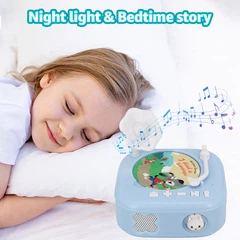


Phonograph Story Machine: From a Bologna Sensation to Shelves in Europe, the US, and Beyond
The phonograph story machine - a retro turntable silhouette wrapped around a modern, tap-to-play audio engine - has moved from a design curiosity to a category with real international traction. It is selling across Europe and the United States, it has cleared market access for Russia, Turkey, South Korea, Poland, the Czech Republic and more, publishers are bundling it with printed books, and it drew crowds at the Bologna Children's Book Fair. This article explains why the format travels, what the multi-market compliance story actually means for a buyer, and how the book-plus-player bundle is reshaping the way stories reach children.
1. Why a 100-year-old shape sells in 2026
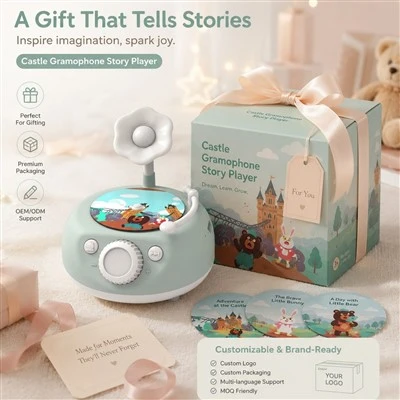
The phonograph silhouette does quiet work that a plastic box cannot. It grants what retailers call a "license to display": the object reads as heritage, calm, and intentional rather than as another screen begging for a child's attention. In a bookstore, a museum shop, or a gift aisle, that difference is the entire sale. The antique look tells a parent that this is a keepsake, not a gadget, and it tells a buyer that the product will not look out of place next to hardcovers and wooden toys. A format that earns shelf space without apology is rare, and that is the first reason the phonograph story machine travels.
The second reason is emotional timing. Families across markets are actively pushing back against screens, but they are not pushing back against stories. A horn and a turntable signal "slow" and "analog" even though the internals are digital and durable. That contradiction is the product's secret: it satisfies the parent who wants less technology on the table while still delivering the audio richness the child actually wants. The shell is the permission; the audio is the repeat purchase. It also travels because gifting is universal. A retro object is easy to wrap and easy to justify, which is why it performs so well at holidays and book fairs alike, where a gift must feel like a keepsake rather than a gadget.

Shelf-ready, not toy-bin ready
The retro shell earns placement beside books and gifts, not just in the toy aisle. The display above shows the kind of calm, heritage look that makes a buyer say yes without a long explanation.
2. Europe first, then the US - two different buyers
Europe and the United States both want the same thing underneath - a calm, no-app, no-screen audio player - but they arrive at it differently. In Europe the demand is design-led: bookshops, museum stores, gift retailers, and a strong culture of "beautiful object" purchasing. The phonograph fits because it looks like it belongs to a home, not a playroom. In the United States the pull is broader and more channel-driven, from large retailers to online marketplaces, with gifting and the screen-free message doing the heavy lifting during the holidays. Both markets are active, which is why a manufacturer can build one core product and still serve two very different shelves.
For a buyer, this matters because the bundle changes by region. European accounts often expect local-language titles and a book pairing; US accounts often expect a gift-ready box and a clear "no screen" promise. The product that clears both is the one whose content pipeline and packaging were designed for export from the start, not retrofitted after the first container.
3. What "cleared for Russia, Turkey, Korea, Poland, Czech" really means
Market access is never a single certificate, and a line that has cleared several regions has done real work. Russia and its neighbors run the EAC conformity system; Turkey has its own conformity pathway; South Korea requires KC marking; Poland and the Czech Republic, as European Union members, fall under CE with national enforcement. Clearing all of them means the documentation, labels, test reports, and sometimes the power and battery configuration are already aligned to multiple regimes. For a distributor, that is the difference between selling next quarter and waiting six months per country while paperwork catches up.
The practical lesson for buyers is simple: ask for the certificate that matches your exact configuration, because a change in battery, speaker, or enclosure can move the goalposts. A supplier who has already navigated several markets can hand you a document set that is close to turnkey, and that head start is worth more than a slightly lower unit price from a factory that has only ever shipped domestically.
A passport of markets, not one stamp
Multi-region access means the test reports and labels are already aligned to several regimes at once. The marks above represent the kind of paperwork trail that lets a distributor enter a new country without restarting the clock.

4. The Bologna effect - when a book fair became a toy fair
The Bologna Children's Book Fair is where publishers decide what children read next, and the phonograph story machine's popularity there is a signal worth reading. The book industry is protective of the printed page, so when publishers themselves embrace a player, it means they see the device as an extension of the book rather than a rival to it. Standing out at Bologna is hard because the audience is the toughest possible critic of anything that might replace reading. A format that wins there has passed a bar that pure novelty never clears.
This is also why the fair matters commercially. Bologna is where the bundle is born: a publisher meets a hardware partner, a license gets attached to a player, and a backlist title gets a second life as a voiced experience. The crowd at the booth is not just curiosity; it is the supply chain of children's content deciding to build on the format. Publishers attend Bologna to protect reading, not to replace it, so their embrace is the clearest possible signal that the phonograph player strengthens books rather than competing with them.
Where publishers choose to build on it
The busiest booths are where content partners form. The scene above captures the kind of attention that turns a product into a category the book industry adopts rather than resists.
5. Publishers are bundling books with story machines
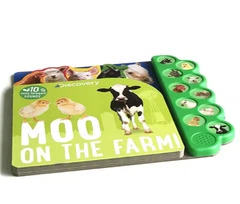
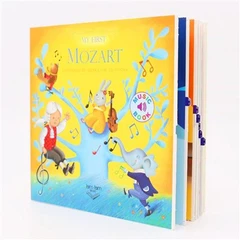
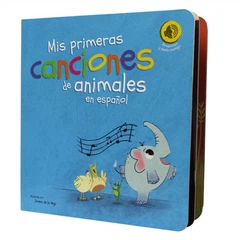
The most interesting shift is structural. Many publishers now ship a printed book together with a matching story machine or a set of audio records, and the pairing is reshaping how a title reaches a child. The book supplies the narrative, the characters, and often the license; the player supplies the voice, the repeatable listening, and the screen-free ritual. Together they make a complete gift that does not need a long explanation at the point of sale. For a publisher, the bundle is also a way to monetize titles that would otherwise sit in a warehouse, giving an old picture book a new, voiced incarnation.
This is not a fringe experiment. When the book industry - historically the most cautious partner for any screen or speaker - starts bundling, it signals that the format protects the reading relationship instead of replacing it. A child listens to the voiced chapter, then opens the book; the two reinforce each other. That loop is exactly what makes the bundle stick.
One purchase, two products
A printed book plus a voiced player is a story-complete package. The pairing above shows how a single gift delivers both the physical page and the audio experience families actually return to.

6. Why the bundle works for publishers, retailers, and families
The bundle is rare because it is a genuine win on all three sides. For publishers it creates a new stock-keeping unit with a higher basket value and breathes life into older titles. For retailers it arrives gift-ready and self-explanatory, which shortens the path from shelf to checkout. For families it delivers a physical book and a voiced experience in one box, so the value is obvious the moment they open it. Most product "innovations" move value from one party to another; the book-plus-player bundle grows the pie, which is why it keeps appearing across markets instead of fading after one season. That credibility is why the format does not feel like a compromise to the adults who buy it, and why it survives trends that burn out in a single season.
The screen-free promise is what lets the bundle cross cultures. A parent in Warsaw, Seoul, or Chicago may disagree on many things, but the wish for calmer, device-light childhoods is nearly universal right now. The phonograph shell makes that wish feel like a heritage object rather than a restriction, and the book gives it literary credibility.
7. The engineering that lets a retro shell travel the world
The antique look is the easy part to imitate; the internals are where exports succeed or fail. A phonograph story machine must make the horn decorative while engineering the real acoustics separately, because a pretty horn that also has to be the speaker is a compromise that sounds thin. The turntable mechanism has to survive thousands of place-and-spin cycles from children who are not careful. The reader has to work when a "record" is dropped at an angle, not placed like a museum specimen. These are the details that decide whether a product survives its first holiday season abroad or comes back as returns.
For a buyer evaluating a supplier, the question is whether the factory designed for export or designed for a photo. Ask to see cycle-life testing, drop testing with the battery module installed, and a measurement of output at the finished product rather than at the bare speaker. A phonograph that looks right in a catalog and fails those three tests will not survive contact with real shelves in real markets.

Pretty outside, engineered inside
The horn is the look; the acoustics are the product. The detail above is where a buyer should look past the antique styling to confirm the mechanism was built to be used, not just displayed.
8. The content library is the moat, not the wood
The shell is a one-time purchase; the record or card library is the recurring reason to come back. A phonograph line that lets publishers and brands keep adding titles - seasonal releases, licensed characters, and local languages - is a content business, not a novelty. The markets that have cleared access are also the markets that want content in their own tongue, which is precisely why publisher partnerships matter so much. A distributor who can offer Polish, Korean, or Czech titles alongside the hardware is selling a living shelf, not a single shipment.
The strategic point is often missed: the player is the doorway, and the library is the store. Buyers who focus only on the unit price of the wood miss the asset that compounds. The right question is not "how cheap is the box" but "how easily can we keep adding stories my customers want," because that is what turns a launch into a category. Distributors who understand this stop negotiating on the shell and start negotiating on the roadmap of titles, which is where the durable margin lives.
9. What a buyer should verify before ordering
The international track record is encouraging, but verification still protects you. Confirm the certification paperwork matches your exact configuration and target markets, not a generic letter. Check that local-language content exists or can be produced for the regions you serve. Ask for drop-test and cycle-life evidence, especially with the battery installed. Confirm the horn's real acoustic path rather than assuming the visible speaker is the only one. And inspect the export packaging, because a beautiful product that arrives cracked is a refund, not a sale. A pilot order of a few hundred units with a book bundle validates all of this cheaply before a full container commits your capital.
Prove the bundle before the container
A small pilot with a real book pairing surfaces content, packaging, and compliance gaps while they are still cheap to fix. The checklist above is the difference between a confident reorder and a warehouse of lessons.

10. The 2026 opportunity and how to enter it
The format has already proven demand in Europe and the United States and already cleared access across several more markets, so the open lane is no longer "does this sell" but "who bundles it best locally." The strongest entry path is a private-label hardware paired with co-created, local-language content through regional publishers and distributors. Brands that start with a pilot, prove the book-plus-player bundle in one market, and then scale to neighbors they have already cleared will move faster than those waiting for a perfect global launch. The phonograph story machine is no longer a bet; it is a category with a passport.
11. Frequently asked questions
Is the phonograph story machine just a gimmick? No. It is a screen-free audio player in a calm, display-friendly shell. The form earns shelf placement, and the function drives the repeat purchase through the record or card library.
Does it sell alongside books? Yes, and that is now the dominant model. Publishers bundle it with printed titles, turning a single book into a voiced, gift-ready package.
Which markets have been cleared? Europe and the United States are active sales regions, and market access has been cleared for Russia, Turkey, South Korea, Poland, the Czech Republic, and more.
Does it need an app? No. Playback is local and offline; any companion app is only for adults managing content, never required for a child to listen.
How do I start? Pilot a few hundred units with a book bundle in one cleared market, validate the pairing, then scale to neighboring regions you have already cleared.