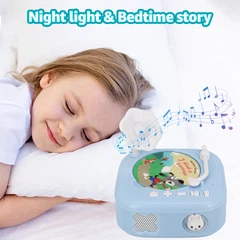
Navigating the vast ocean of toys for a child is a test filled with love. Faced with dazzling shelves, how can we see through the marketing haze and find the ones that truly support a child's healthy development? The answer lies within three core questions: "Is it safe?" (Foundation thinking), "What will it bring to my child?" (Growth thinking), and "Is it suitable for my child?" (Respecting the individual). These three questions act as keys, helping us unlock the door to choosing toys with both rationality and love.
First Question: Is It Safe? - Building an Unshakable Foundation
This is the primary principle in toy selection, the absolute prerequisite for any discussion. Safety is the safety net for a child's free exploration of the world, and admits no compromise.
Visible Safety: We need to become meticulous "safety inspectors." Run your fingers over the toy to check for splinters or sharp edges; give parts a gentle pull to see if small components (like a doll's eyes or a car's wheels) are secure; read the labels to confirm the use of non-toxic, eco-friendly materials like ABS plastic, food-grade silicone, or natural wood. For children under three, the "small parts test" (e.g., using a toilet paper roll tube) must be strictly enforced-any object that fits entirely inside poses a potential choking hazard.
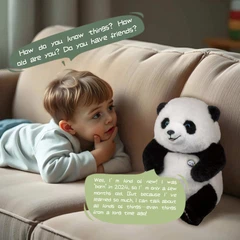
Invisible Safety: The meaning of safety has expanded in modern times. A pungent smell might indicate exceeding levels of harmful chemicals; toys with frightening images or violent themes could cause to a young mind; smart toys that connect to the internet, record audio, or take videos involve data security and privacy protection. Safety has extended from the physical realm to the chemical, psychological, and even digital domains.
Core Reflection: Asking "Is it safe?" does not stem from overprotection, but rather draws a clear, solid baseline for our love. Only within absolutely safe boundaries can a child's exploration be truly joyful and free of worry.

Second Question: What Will It Bring to My Child? - Focusing on Growth Value Beyond Entertainment
Once safety is ensured, we must inquire about the toy's "soul": what is its true value? A good toy is far more than a time-filler; it should be a "catalyst" for growth.
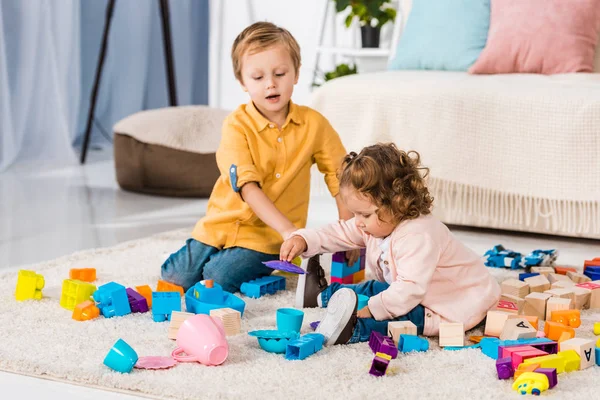
A Forge for Abilities: Toys are a child's work. Blocks, magnetic tiles, and puzzles build spatial imagination, logical thinking, and problem-solving skills through play; role-playing toys (like dollhouses, doctor's kits) are a "micro-society" where children practice social skills, learn emotional management, and perspective-taking; while art materials (like modeling clay, crayons) are the domain where creativity and aesthetic sensibility run free.
Balancing "Open-Ended" and "Closed-Ended" Toys: Consider whether the toy provides diverse nutrients for growth. Closed-ended toys (like a model kit assembled in specific steps) cultivate the ability to follow instructions and perform precise operations; whereas open-ended toys (like a simple set of blocks) have no fixed answer, stimulating limitless imagination and creation. A healthy toy collection should include both, just as a diet requires balance.
Core Reflection: The question "What will it bring to my child?" elevates our perspective from the short-term need of "keeping the child quiet" to the long-term plan of "supporting the child's development." What we choose is not just a toy, but the path and possibilities for the development of our child's abilities.

Third Question: Is It Suitable for My Child? - Practicing Child-Centered Respect for the Individual
This is the most insightful question, requiring us to set aside adult assumptions and truly "see" the unique child in front of us.
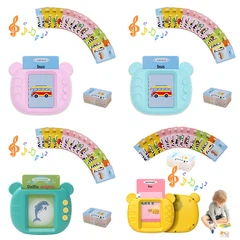
Matching Developmental Pace: Age-appropriateness is the foundation of "suitability." Giving a complex strategy board game to a two-year-old will cause frustration; giving an overly simplistic light-and-sound toy to an eight-year-old will lead to boredom. We need to understand the sensitive periods and developmental needs of the child's current age stage-is it sensory exploration, gross motor development, social craving, or the budding of logical thinking? A suitable toy should present a challenge that is "just within reach," bringing a sense of accomplishment rather than pressure.
Respecting Unique Personality: Beyond age, we must respect the child's innate temperament. A quiet, introverted child might need puzzles or picture books that allow for immersion; an energetic child might find that sports equipment releases his energy better than static toys; a curious "little question mark" would be thrilled with a science experiment kit. Observe the child's interests, letting the toy match the child, not forcing the child to adapt to the toy.
Core Reflection: Asking "Is it suitable for my child?" embodies the educational philosophy of "teaching students according to their aptitude" within the context of play. It reminds us that the most expensive or trendy toy is not necessarily the best; the most suitable one is the best. This respect is the most precious gift we can give our child.
Conclusion: From Consumer Choice to Educational Investment
When we habitually ask these three questions-safety, value, and suitability-while selecting toys, our action transforms from a simple consumer choice into a profound educational investment.
These three questions, like a stable tripod, jointly support the child's healthy, happy, and fulfilling playtime. They help us become more conscious and wiser companions and guides on our child's growth journey. Ultimately, what we choose for our child is not just an object, but an experience, a skill, and a love that is deeply understood and respected.