
The AI Bear: A Baby's First Comfort Companion, Not Just Another Talking Toy
What Makes a Bear a Baby's First Friend?
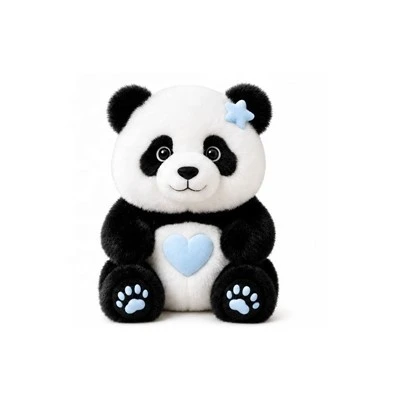
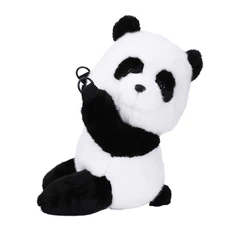
A bear is the one toy almost every child meets first. Long before a tablet, a bike, or a video game, there is the soft bear on the pillow - the object a baby grabs, chews, drags, and eventually trusts. Child psychologists call this a "transitional object": the first thing a child uses to self-soothe when a parent steps out of the room. An AI bear for babies takes that centuries-old comfort and adds one quiet layer - a voice that names the child, sings, and answers a hug - without ever turning the bear into a screen.
This is the heart of the Physical Play + AI idea for the youngest age group: the bear stays soft, washable, and huggable, while the intelligence stays invisible - a calm voice, a gentle squeeze response, a slow blink. The under-3 category is governed less by "how smart" and more by "how safe, how soft, how quiet," which is why baby stores and pediatric channels will not stock a toy that fails under-3 compliance.

Why the Youngest Children Need a Different Kind of AI Toy
Most AI plush on the market is built for ages 3–8: free conversation, long answers, language games. That is the wrong tool for a baby. A six-month-old cannot ask a question, and a two-year-old is overwhelmed by too much talking. The right AI bear for the youngest users is built on a comfort-first principle: less is more. Short lullabies, a name spoken softly, a heartbeat-like hum, and a response to being squeezed - not a chatterbox that competes with the parent's voice.
Three facts shape the design. First, the under-3 child learns through touch and routine, not dialogue. Second, attention spans are measured in seconds, so the toy must reward a hug instantly, not after a cloud round-trip of thinking. Third, the buyer is almost never the user - a grandparent, a parent, or a baby-store buyer chooses it, and they are screening for safety certificates, not features. A baby bear that wins is the one that feels obviously safe in the hand and obviously calm in the ear.
This is also why the bear outperforms a screen for the moments that matter most to a young family. Separation anxiety eases when the child has a consistent, soft object that "stays"; a sleep routine sticks when the same lullaby appears at the same dim light each night. And a toy that asks nothing yet always answers a hug builds the first sense of a relationship outside the family - none of which needs a chattering AI, only a calm one.

Comfort-First Shape and Weight
A baby bear should weigh what a child can carry in one arm - typically 180–260 grams of plush and fill, no denser internal brick. The body is rounded, the limbs are short, and the face sits flat against the chest so it survives being slept on. Size targets a 22–28 cm sitting height: big enough to hug, small enough to fit a stroller caddy or a crib (never inside the sleep space, per safe-sleep guidance).
Surface That Survives a Mouth
Babies explore with their mouths. The outer plush is a short, dense, OEKO-TEX or equivalent skin-friendly pile that does not shed fibers, with all facial features embroidered - zero plastic eyes, zero glued-on noses, zero buttons. If a feature cannot be embroidered, it is not on a baby bear.
Safety for Under-3: No Small Parts, Locked Battery, Washable Shell
Safety is the line between a hero SKU and a recall. For the under-3 segment, three rules are non-negotiable. No small parts: every component - eyes, nose, speaker grille, sensor - is embroidered, welded, or enclosed behind a seam that survives a 90 N pull test (EN71-1 and ASTM F963 small-parts regime). Locked battery: the rechargeable cell sits in a screw-secured, tool-required compartment a child cannot open. Washable shell: the plush outer is spot-clean rated, because a baby bear will be drooled on, spilled on, and dropped within the first hour of ownership.
The acoustic ceiling is its own safety item. Output is hard-capped at 85 dBA at the speaker, with a dedicated low "bedtime" volume that drops to roughly 60 dBA - quiet enough to sit beside a cot. There is no autoplay and no surprise loud chime; every sound is triggered by a deliberate squeeze or a parent-set schedule, so the toy never startles a sleeping child.
Built for the Drop Test
A baby bear is dropped, thrown, and sat on. The internal board is potted in soft encapsulant, the speaker is front-protected, and the seams are double-stitched at stress points. We validate each build with a 1.5 m repeated drop and a 72-hour humidity cycle before it earns a production stamp.
Quiet by Default
Low stimulation is a design choice, not a missing feature. The bear's LED eyes stay dim and slow; there is no flashing, no music that ramps up, no "reward" jingle. Calm is the product. Parents tell us the bear earns its place precisely because it lowers the noise of the room rather than raising it.


The AI Layer Done Right for Babies: A Soothing Voice, Not a Chatterbox
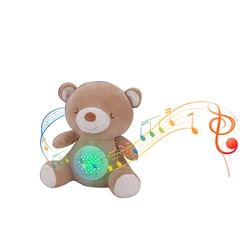
For the youngest users, the AI is deliberately narrow. A paw squeeze triggers a soft lullaby; a long hug dims the eyes and starts a slow heartbeat hum; an ear tap plays a 20-second "goodnight" with the parent-recorded name. There is no open internet Q&A on a baby bear, because a baby has no questions - only needs. The engine behind our older characters is replaced here by a curated, offline-capable audio library: lullabies, gentle nature sounds, a few short rhymes, and a parent voice message from the companion app.
That parent app is the only screen in the system, and only an adult touches it. It sets the volume, schedules a wind-down, records a "mommy or daddy" voice clip, and manages the Wi-Fi for OTA lullaby additions. The child never sees a display. The bear stays a bear.
The recorded parent voice is the quiet superpower of a baby bear. A child calms faster to a familiar voice than to any synthesized one, so a parent-pushed "goodnight" clip turns the toy into a bridge between rooms. Because the library is curated and offline-capable, there is no risk of an unexpected reply, and for a buyer that is the line between a comfort product and a small unsupervised speaker.

How an AI Baby Bear Actually Works
The hardware is simpler than an older-child AI toy, which is exactly why it is safer and cheaper to certify. A typical AI bear for babies runs a short, local loop:
1. Sense - tactile, not verbal. A capacitive pad in the paw and an IMU in the torso detect a squeeze, a hug, or being picked up - no microphone is required for core comfort play, which also removes a privacy concern for the youngest users.
2. Trigger - on-device. A low-power MCU (ESP32-S3 class) wakes the audio path on a squeeze and picks the right track from local memory, so the response is instant, with no cloud wait and no Wi-Fi dependency at bedtime.
3. Play - safe audio. A studio-recorded soft voice or lullaby plays through a small front-protected speaker, capped at 85 dBA with a bedtime mode near 60 dBA.
4. React - slow LED eyes. A low-brightness eye module blinks or dims to match the mode - awake, sleepy, or hug - reading emotion the way a child reads a real pet's face.
5. Update - OTA lullabies. New lullabies and a parent voice clip arrive over the air via the adult app, so the bear's comfort library grows without a new purchase.
Materials and Construction Buyers Should Specify
When you private-label a baby bear, the materials sheet is the product. Specify a short dense plush (under 10 mm pile) that resists pilling after 50 wash cycles, an anti-mite polyester fill with even loft, and embroidered facial features only. Seams at the limbs and the battery access are double-stitched and pull-tested at 90 N. The internal board is soft-potted so there is no hard edge against the plush, and the speaker is recessed behind a breathable, chew-resistant grille. Ask for a tear-down sample and a wash-cycle report before you commit a purchase order - the best suppliers hand you both without being asked.
Two material choices separate a baby-grade bear from a generic plush. The first is fill behavior: a low-clump, quick-dry polyester that holds its shape after washing and never forms hard knots a child could mouth. The second is the shell itself - plush and thread should meet flammability and phthalate limits (EN71-2 / CPSIA) so the whole toy, not just the electronics, clears the baby-channel audit. If a supplier cannot show the textile test alongside the toy test, treat it as a gap.

Tier 1 - White Label
Our standard baby bear, your logo on the foot tag. MOQ 500, FOB from US$11.50, lead time 30–40 days, pre-certified for the under-3 market.
Tier 2 - Color & Fabric
Custom pastel colorway and plush grade (e.g. bamboo-blend soft-touch). MOQ 1,000, from US$13.20.
Tier 3 - Voice & Content
Bespoke lullaby set and a named, recorded parent-voice pathway. MOQ 2,000, from US$15.50.
Tier 4 - Full IP Build
New baby-bear character, shape, mold and content ecosystem. MOQ 2,000+, from US$19.00, 45–60 days.
Certifications That Matter for the Under-3 Market
Baby-channel buyers will not open a PO without the right paperwork, so the bear ships with the certificates the under-3 shelf demands: EN71-1 (mechanical and physical safety, small-parts and pull tests), EN62115 (electric toy safety), ASTM F963 and CPSIA for the US, plus CE, FCC, RoHS, REACH, and UKCA as standard. We provide the test reports, not a promise of "available on request," because a baby-store buyer needs the PDF before the container, not after.

Where a Baby-Safe AI Bear Sells
- Baby & maternity stores - the natural home of a first-comfort SKU; bundles with swaddles and sleep aids lift basket value.
- Importers & distributors - one under-3-certified bear simplifies the baby-category catalogue across regions.
- Children's hospitals & pediatric wards - a calm, washable companion for long stays and procedures.
- Daycare & nursery channels - nap-time comfort that meets quiet-toy policies.
- Corporate & CSR gifting - branded baby bears for family-day and charity programs.
- Grandparent & new-parent gifting - the "first friend" story sells itself at baby showers.
A Sourcing Checklist for a Baby-Safe AI Bear
Before you sign, run this short list with any supplier:
- Ask for the EN71-1 / ASTM F963 small-parts and 90 N pull-test reports - and the actual dated PDF, not a logo on the box.
- Confirm the battery compartment is tool-required and screw-covered - a click-shut flap fails the under-3 bar.
- Request a wash-cycle report (50 cycles) showing no seam failure and no fiber shedding.
- Verify the acoustic ceiling with a test at the speaker, not a spec sheet claim - 85 dBA max, bedtime mode near 60 dBA.
- Check the face - embroidered only; if you can feel a hard eye, reject it.
- Ask what a child can trigger without Wi-Fi - core comfort play must work offline, every time.
From First Friend to Growing Companion: Build an Age Ladder
A baby bear is strongest when it is the entry point to a brand's full plush lineup, not a one-off SKU. The same character can grow with the child: the under-3 comfort bear with tactile play becomes a toddler bear that adds simple name-games and short rhymes, then a preschool bear with gentle conversation, and eventually the older-child characters - cat, panda, dinosaur - that carry open dialogue and language learning. A buyer who stocks the baby bear is really buying the bottom rung of a ladder the family climbs for years, which is exactly the repeat-purchase logic that protects margin after the first sale.
For the brand, this de-risks the assortment: the baby bear carries the strictest certification and the clearest "safe" story, lending trust to the louder siblings on the shelf. Launch it first, prove the safety narrative, then extend the character upward as the same customers' children age.
FAQ - AI Bear for Babies
Q1: What age is the AI bear for?
A: Designed for the under-3 segment, from roughly 6 months with supervision, with no small parts and a locked battery compartment.
Q2: Does a baby need a screen or app?
A: No. Core comfort play is fully tactile and offline. Only the adult parent app manages volume, scheduling, and the recorded voice clip.
Q3: Is the bear washable?
A: The plush outer is spot-clean rated and the build passes a 50-cycle wash test on the outer shell; ask for the report.
Q4: How loud is it?
A: Hard-capped at 85 dBA at the speaker, with a dedicated bedtime mode near 60 dBA.
Q5: What certifications ship with it?
A: EN71-1, EN62115, ASTM F963, CPSIA, CE, FCC, RoHS, REACH, UKCA - with dated test reports provided.
Q6: Can we private-label our own baby bear?
A: Yes. Four tiers from white-label (MOQ 500) to full IP build; pre-certified for the under-3 market.
Give the Youngest a Bear That Comforts First
The AI bear for babies is the clearest proof of the Physical Play + AI idea: keep the softness a child already trusts, add only a calm voice and a hug that answers back. It is not a smaller older-child robot - it is a different product, built around safety, softness, and quiet. For brands, the opportunity is to own the "first friend" moment every family remembers, with a SKU baby-channel buyers stock without a second thought. A bear that comforts first, and surprises never, is the bear parents come back for.