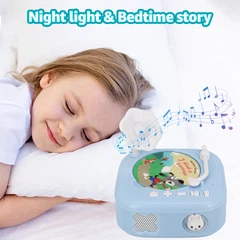
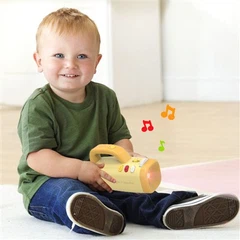
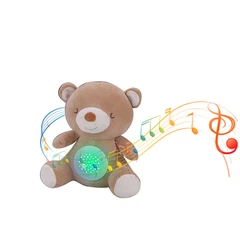

The Complete OEM/ODM Manufacturing Process for Smart Educational Toys: From Concept to Production

The global smart toy market is projected to reach USD 42.3 billion by 2030, growing at a CAGR of 18.2% from 2025. For toy brands, retailers, and IP licensors looking to enter this rapidly expanding market, understanding the OEM/ODM manufacturing process is critical to making informed sourcing decisions that impact product quality, time-to-market, and long-term business success.
At XDT Electronic Co., Ltd., a leading smart toy manufacturer based in Shenzhen, China, we have spent over 15 years perfecting the end-to-end production workflow for AI-powered plush toys, talking flash cards, sound books, RFID story machines, and Bluetooth-enabled educational toys. This article provides a comprehensive, factory-floor view of how a smart toy concept becomes a finished product - covering every stage from initial prototyping to global compliance certification and container loading.
Whether you are a first-time importer exploring the market or an established brand expanding into custom smart toys, this guide will help you understand exactly what a professional children's electronic toys manufacturer can deliver and how to evaluate potential manufacturing partners effectively.
Industry Overview: The Rise of Smart Educational Toys

The convergence of AI voice recognition, IoT connectivity, and early childhood education has created unprecedented demand for interactive learning toys worldwide. Unlike traditional plush toys that offer only passive play or static sound books with limited functionality, modern smart toys incorporate sophisticated technologies that adapt to a child's learning pace and emotional state.
Today's smart educational toys feature:
Voice interaction modules powered by advanced AI chips that understand natural language and respond contextually
Bluetooth 5.0+ wireless connectivity enabling app-based content management and over-the-air firmware updates
RFID and NFC readers that transform card-based activities into interactive learning experiences
LED emotional expression systems creating lifelike companion experiences through dynamic eye movements and color changes
WiFi modules enabling cloud-based content streaming and real-time content library expansion
For OEM buyers, this technological complexity means partnering with a smart toy manufacturer that possesses both hardware engineering expertise and large-scale production capacity. XDT Electronic Co., Ltd. has built its reputation over 15 years by bridging this exact gap - combining Shenzhen manufacturing capability with rigorous quality control systems that meet and exceed global standards for children's product safety.
According to industry research, over 65% of toy brands now seek manufacturers who can offer comprehensive OEM/ODM customization rather than standard off-the-shelf products. This shift is driven by the increasing need for differentiated product features, brand-specific content integration, and unique design elements that help products stand out in a crowded global marketplace.
Technology Behind Modern Smart Toys: What Every Buyer Should Know

Core Technology Stack Explained
Understanding the technology inside a modern smart toy helps buyers evaluate manufacturing partners more effectively and ask the right questions during supplier negotiations.
AI Voice Recognition Module
State-of-the-art smart toys integrate dedicated AI voice chips capable of real-time speech recognition, natural language processing, wake-word activation, multi-language support, and emotion-aware voice response that adapts to a child's tone and mood.
Bluetooth and Wireless Connectivity
Bluetooth 5.0 and 5.2 modules enable over-the-air firmware updates so products can be improved after purchase, parent-controlled content management through companion mobile apps, ultra-low energy operation for extended battery life, and seamless pairing with smartphones and tablets for expanded functionality.
RFID and NFC Reading Technology
For interactive learning toys such as talking flash cards and story machines, RFID technology provides instant card recognition upon insertion, pre-loaded audio playback perfectly synchronized with visual content, and infinitely expandable content libraries via replaceable card sets.


LED Emotional Expression Systems
Programmable LED arrays carefully positioned behind soft plush surfaces create dynamic eye movements that reflect different emotional states, mood-responsive color changes that respond to interaction patterns, and soothing sleep-mode animations that provide nighttime comfort for young children.
XDT's Technology Integration Advantage
XDT's R&D team has developed proprietary integration platforms that reduce development time by 30 to 40 percent compared to building from scratch with multiple vendors. Our in-house capabilities span PCB design, firmware engineering, mechanical engineering, and voice content production.
Product Application: Smart Toy Categories and Their Manufacturing Requirements

Different smart toy categories require distinctly different manufacturing approaches. Each product type presents unique challenges in materials, electronics integration, and quality assurance. XDT Electronic Co., Ltd. produces across all of these categories with dedicated production lines optimized for each product type.
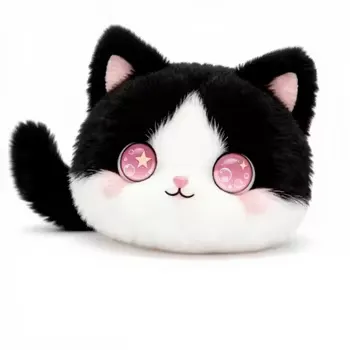
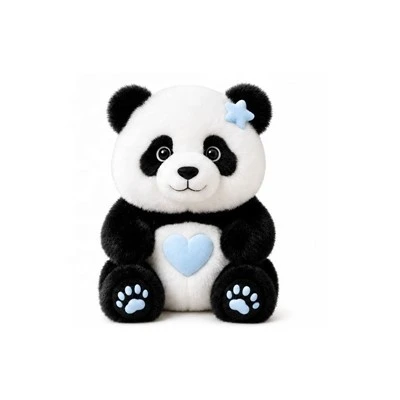
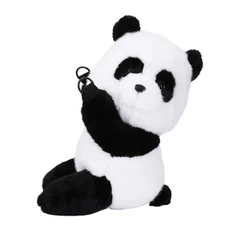
AI Plush Toys combine voice AI technology with LED emotional eyes and WiFi or Bluetooth connectivity. The key manufacturing challenge is integrating soft fabric materials with delicate electronic components while maintaining safety compliance with CE, FCC, and UKCA standards.
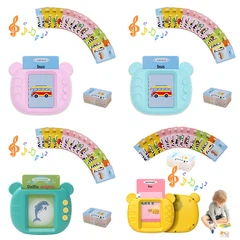
Talking Flash Cards use RFID card reader technology with built-in speakers. Manufacturing precision is critical here - card printing must be accurate to within fractions of a millimeter, and each audio card must pair perfectly with the reader mechanism.
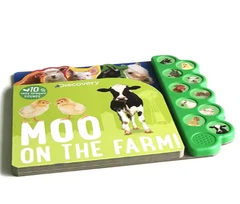
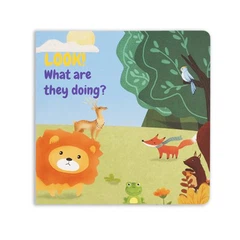
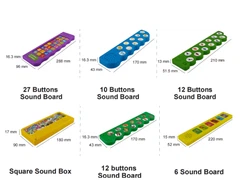
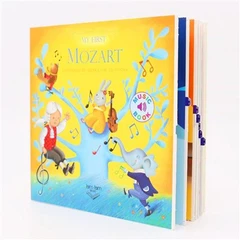
Sound Books rely on touch sensors and audio ICs embedded within book pages. The primary manufacturing considerations are page-binding durability to withstand repeated use by young children and moisture-resistant materials for easy cleaning.
RFID Story Machines integrate NFC readers with rechargeable battery systems. Card slot reliability is paramount, and battery compartments must be designed with anti-tamper features that comply with international toy safety regulations.
Bluetooth Story Machines combine Bluetooth 5.0 connectivity with mobile app integration. The manufacturing process must account for firmware over-the-air update capability and app certification requirements across different app stores and regions.
Manufacturing Process: A Comprehensive Step-by-Step Guide

Phase 1: Product Design and Prototyping
Step 1: Concept Consultation and Requirement Specification - The journey begins with a detailed discussion of your product requirements. XDT's sales engineers work with you to define the target market, age group, desired features such as voice AI or Bluetooth connectivity, budget parameters, target retail price, and initial MOQ requirements.
Step 2: 3D Mold Design and Tooling - XDT's engineering team uses advanced CAD and CAM software to design precision injection molds. For qualified OEM projects, we offer free 3D mold tooling design services. The mold creation process typically takes 15 to 25 days depending on product complexity and the number of unique parts required.
Step 3: Prototype Development - A functional prototype is produced incorporating mechanical structure validation, PCB assembly and firmware loading, voice recording and audio optimization, as well as fabric material selection and color matching to your brand specifications.
Step 4: Client Review and Iteration - The working prototype is shipped for client evaluation. Based on feedback, two to three iteration cycles may be required to finalize every aspect of the design before mass production begins.
Phase 2: Pre-Production Preparation
Step 5: Bill of Materials Finalization - Every single component from the AI voice chip to the embroidered logo is specified, sourced from certified suppliers, and costed. XDT maintains long-term strategic partnerships with certified component suppliers, ensuring stable pricing and consistent quality across production runs.
Step 6: Production Line Configuration - Dedicated assembly lines are configured specifically for each product type. AI plush toys require fabric cutting stations, industrial sewing equipment, electronics insertion workstations, and stuffing machinery. Sound books require PCB mounting lines, page binding equipment, and speaker installation stations. Talking flash cards require high-precision card printing, lamination, and box assembly lines.
Step 7: Quality Control Protocol Setup - XDT implements a comprehensive multi-point QC system. Incoming Quality Control inspects all components before production begins. In-Process Quality Control monitors production in real time during assembly. Final Quality Control performs full functional testing of every finished product. Outgoing Quality Control verifies packing and shipping integrity before container loading.
Phase 3: Mass Production
Step 8: Component Procurement and Warehousing - All materials are sourced according to the finalized BOM. XDT's 10,000 square meter factory maintains climate-controlled warehousing specifically designed for sensitive electronic components, temperature-sensitive fabrics, and various packaging materials.
Step 9: Automated Injection Molding - For hard plastic components and structural parts, XDT's automated injection workshop produces precision parts with cycle times carefully optimized for mass production efficiency while maintaining tight dimensional tolerances.
Step 10: Surface Mount Technology Assembly - All PCBs are assembled using fully automated SMT lines with optical inspection systems, ensuring consistent solder joint quality and reducing defect rates to below 0.3 percent across all production runs.
Step 11: Manual Assembly and Integration - Skilled production workers perform fabric sewing and plush stuffing for soft toys, electronics module insertion into housings, battery compartment installation with safety locks, and final product assembly with cosmetic inspection at every workstation.
Step 12: Comprehensive Functional Testing - Every single unit undergoes rigorous testing including voice playback and recording accuracy verification, AI voice interaction response testing, Bluetooth and WiFi connectivity range and stability testing, battery charging circuit and safety testing, as well as drop and durability testing simulating real-world usage by children.
Step 13: Packaging and Labeling - Custom packaging including branded retail boxes, protective inserts, and multilingual user manuals is assembled with retail-ready branding, compliance labels for CE, FCC, UKCA, and ROHS, and tamper-evident seals for consumer safety.
Phase 4: Logistics and Delivery
Step 14: Final Quality Control and Container Loading - A final random inspection following AQL 2.5 international standards is performed before container loading. XDT provides comprehensive inspection reports, product test certificates, full compliance documentation, and flexible FOB Shenzhen shipping terms for global buyers.
OEM/ODM Solutions: What XDT Offers to Global Toy Brands

OEM Customization: Your Brand, Our Manufacturing Expertise
XDT provides comprehensive OEM services including logo customization through embroidery, printing, or precision engraving on both products and packaging materials. Color customization uses Pantone-matched fabrics and plastics to ensure brand consistency across all product variants. Packaging customization ranges from economical blister packs to premium magnetic-closure gift boxes. Content customization covers voice recordings, story content development, and firmware adjustments to match your brand's educational philosophy.
Standard MOQ: 1000 units per SKU, with flexibility based on product complexity and order history.
ODM Customization: Your Concept, Our Design and Production
For clients with unique product ideas that require original design work, XDT offers complete ODM services. Our engineering team helps refine your product concept through collaborative development sessions. We provide full design service covering industrial design, circuit design, and firmware development. A functional working prototype is delivered within 25 to 30 days. Testing and certification management is handled end-to-end by our compliance team.
Global Compliance Support
CE certification for European safety standards is provided as standard on all products. FCC certification ensures US wireless compliance for Bluetooth and WiFi-enabled toys. UKCA certification provides access to the United Kingdom market. ROHS compliance guarantees restriction of hazardous substances in all materials. SEDEX certification confirms ethical manufacturing practices throughout our supply chain.

Market Opportunity: Why Now Is the Time to Source Smart Toys

The smart education toy market is experiencing explosive growth driven by several converging factors. Post-pandemic, parents are actively seeking screen-free learning alternatives to tablets and smartphones, creating massive demand for interactive physical toys. The falling costs of AI chips and sensors now make smart features affordable even at entry-level price points, expanding the addressable market significantly. Direct-to-consumer brands can reach global audiences through Amazon, Shopify, TikTok Shop, and other e-commerce platforms with minimal barriers to entry. Smart toys increasingly align with STEAM learning objectives, making them attractive not only to parents but also to schools and educational institutions as teaching tools.
According to market analysis, the Asia-Pacific region accounts for 42 percent of global smart toy production, with Shenzhen serving as the undisputed dominant manufacturing hub. Partnering with an established children's electronic toys manufacturer in Shenzhen gives brands direct access to the world's most efficient and cost-effective supply chain ecosystem, with component sourcing, mold making, assembly, and logistics all within a 50 kilometer radius.
Frequently Asked Questions
Q1: What is the typical MOQ for custom smart toys?
XDT's standard MOQ is 1000 units per SKU for OEM orders using existing mold platforms. For ODM projects requiring new mold creation, MOQ may vary based on tooling investment and product complexity. We offer flexible terms for first-time clients and emerging brands looking to test the market.
Q2: How long does it take to develop a custom smart toy from concept to production?
Typical lead time is 45 to 60 days for OEM customization projects that leverage existing mold platforms, and 60 to 90 days for full ODM projects requiring new mold creation and original design work. Prototype delivery typically takes 15 to 25 days from design approval.
Q3: What certifications do your smart toys carry?
All XDT smart toys are certified with CE, FCC, ROHS, and UKCA as standard compliance. Additional certifications such as ASTM F963 for the US market and EN71 for European markets can be arranged for specific market requirements at competitive rates.
Q4: Can you customize the AI voice and educational content for my target market?
Absolutely. XDT's in-house voice content team can produce high-quality recordings in English, Spanish, French, German, Arabic, Japanese, Korean, and many more languages. AI dialogue scripts and educational content can be fully customized to align with your brand's educational philosophy and curriculum goals.
Q5: How do you ensure product quality consistency during mass production?
XDT operates a rigorous four-stage QC system covering incoming, in-process, final, and outgoing quality control with AQL 2.5 inspection standards. Each unit undergoes comprehensive functional testing before packaging. We provide video inspection reports and real-time production updates throughout the entire manufacturing process.
Q6: What payment terms do you offer to international buyers?
Standard payment terms are 30 percent deposit with order placement and 70 percent balance before shipment. We accept T/T wire transfers and L/C at sight from confirmed banks. Alternative terms may be discussed for long-term partnership agreements.
Q7: Do you offer after-sales support and product warranty?
Yes. XDT provides a 12-month warranty on all electronic components. Our dedicated after-sales support team provides technical assistance, replacement parts shipment, and firmware updates as needed throughout the warranty period and beyond.
Conclusion
The smart toy industry offers immense opportunity for brands ready to enter the interactive education market. From AI plush companions that provide emotional support to NFC-enabled talking pens that make reading interactive, the manufacturing process requires deep expertise across electronics integration, firmware development, compliance certification, and rigorous quality assurance systems.
As a smart toy manufacturer with 15 years of industry experience, XDT Electronic Co., Ltd. offers the complete manufacturing package under one roof in our Shenzhen factory: product design consultation, 3D mold tooling, automated injection molding, SMT assembly, skilled manual integration, comprehensive functional testing, and global logistics coordination. By partnering with an experienced OEM educational toys manufacturer like XDT, brands can significantly reduce time-to-market and development risk while delivering products that meet the highest international standards of quality, safety, and global compliance.