






Smart Toy Architecture for AI Plush Product Strategy
Most failed smart plush launches share one symptom. The brand poured the budget into one part of the product and hoped the rest would take care of itself. Sometimes it was the AI model. Sometimes it was the APP. Sometimes it was the packaging. The toy launched, the first week looked promising, and then the numbers turned. 🏗️
A smart plush toy is not a single decision. It is a three-layer stack. The body, the engine, and the outfit. When all three align, the product works across channels. When one layer is missing, the product looks impressive in a pitch deck and disappoints on a bedroom floor.
The Three-Layer Stack Explained
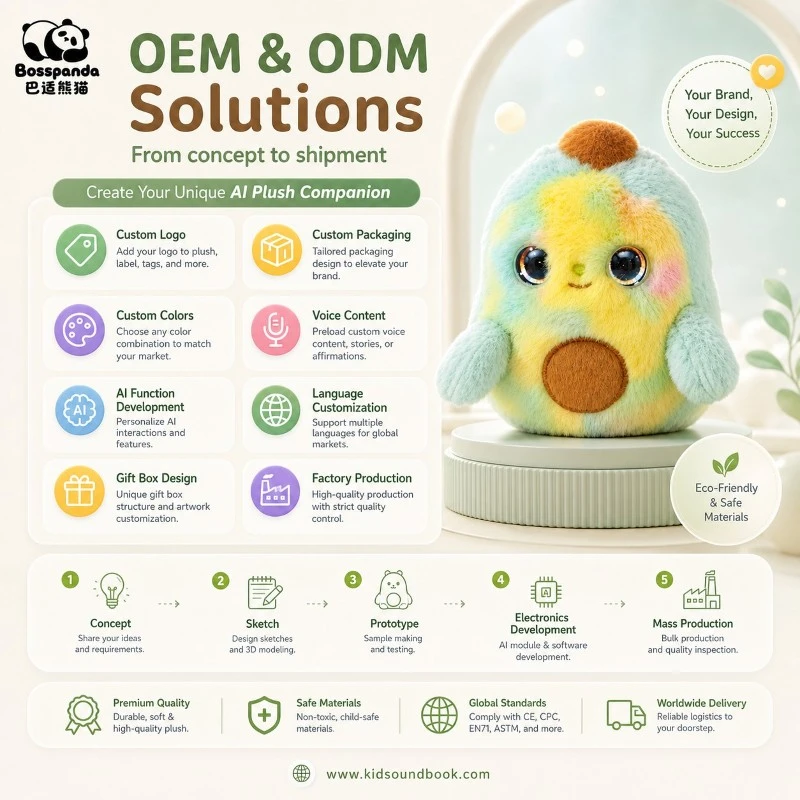
Think of the product as a character, not a gadget. The body is how it physically responds. The engine is what it says over time. The outfit is how it is carried and where it is sold. Each layer depends on the other two. A strong body with no engine feels like a statue. A strong engine with no body feels like a loudspeaker. A strong outfit on either foundation feels like a marketing prop. 🧩
🧱 Layer One: The Body
This is the physical response layer. Touch, tilt, and eye movement must agree in the same breath. Without this layer, the toy reads as a soft cover over an electronic box. Brands that cut this corner to save cost often discover the problem in the return rate, not in the sample room. The body is the layer a child judges within three seconds of holding the toy. If the first squeeze does not answer back, the rest of the product barely gets noticed.
⚙️ Layer Two: The Engine
This is the content layer. The conversation model, the APP, the voice library, and the update pipeline. Without this layer, the toy stops being interesting after the child has mapped every preloaded sound. The engine is what keeps the product alive past the first month. It is also the layer most brands overlook when they cost the BOM, because it does not show up on a spec sheet. It shows up sixty days later in the review section.
🎀 Layer Three: The Outfit
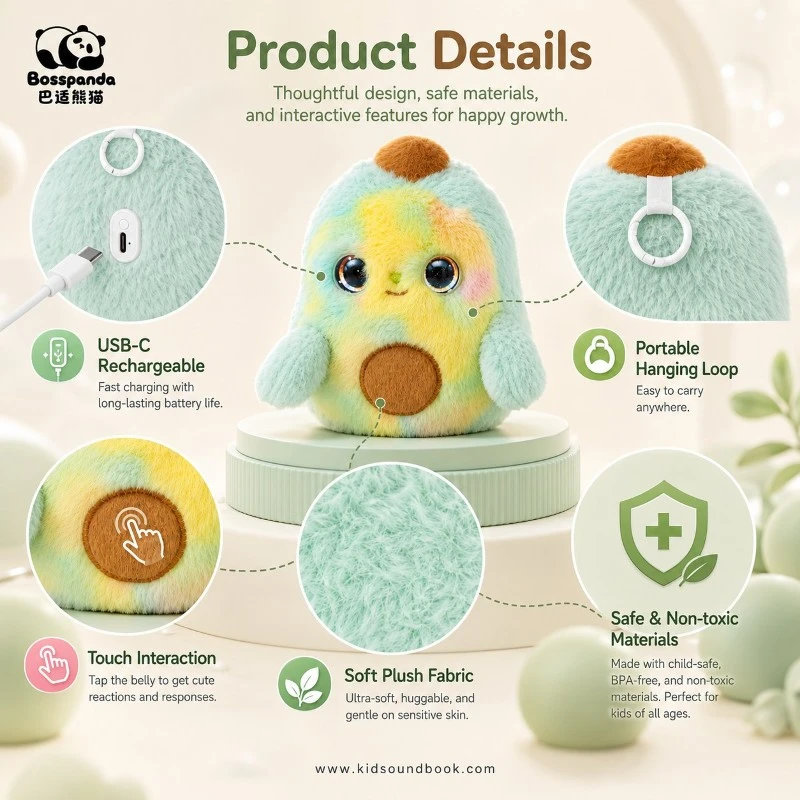
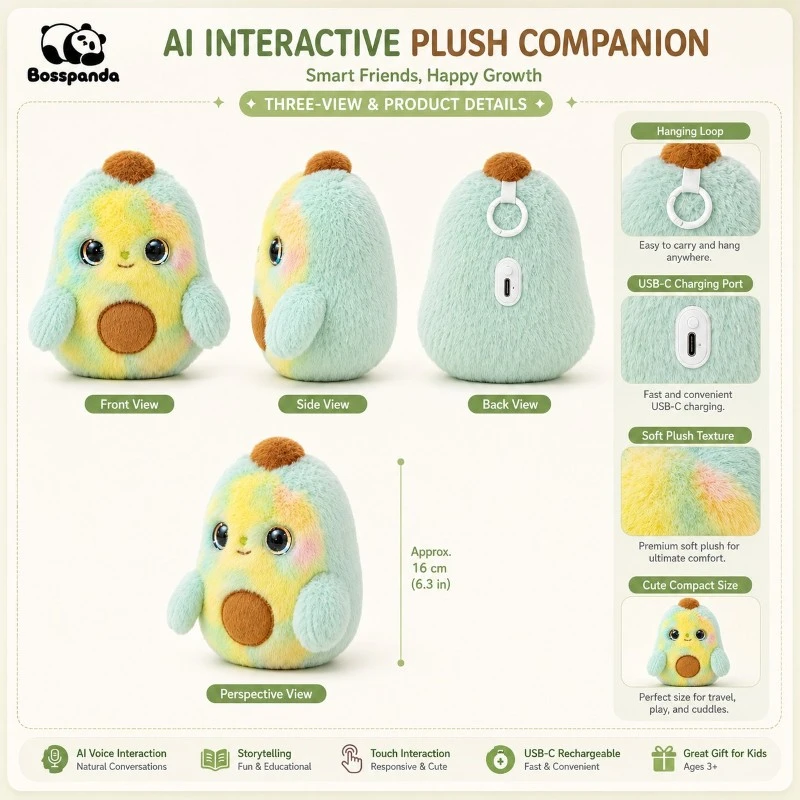
This is the form factor layer. Size, weight, hanging loop, colorway, and packaging. Without this layer, the correct product is sitting in the wrong aisle. A desktop companion belongs in a nursery. A pendant belongs on a backpack. The outfit decides which store, which video, and which gift moment the product enters. A great toy in the wrong shape does not fail because it is bad. It fails because it is in the wrong hands.
Where Brands Usually Over-Invest
The most common failure is putting almost everything into one layer. We see three repeated patterns. 🔍
| Mistake | What it looks like | The symptom that shows up later |
|---|---|---|
| 🧠 Big model, thin body | Long spec sheet, stiff touch | Child says it feels like a robot |
| 📦 Beautiful box, empty engine | Premium packaging, fixed audio | Reviews say it gets repetitive |
| 🎀 Cute shape, wrong aisle | Great pendant sold in a toy store | Sits on shelf, no organic videos |
These are not small misses. Each one quietly decides whether the SKU survives its first quarter on the market.

A Balance Scorecard for the Sample Review
Before approving a production run, brand buyers can score the sample across all three layers. 📊
| Layer | Question to ask the sample | Pass signal |
|---|---|---|
| 🧱 Body | Does it react within one breath when touched? | Feels alive, not scripted |
| 🧱 Body | Does its face match what it just said? | Eyes shift with the mood of the line |
| ⚙️ Engine | Can content be added after launch? | APP or cloud update is available |
| ⚙️ Engine | Does it remember the child over time? | It can use the child's name in context |
| 🎀 Outfit | Does the size fit the target channel? | Pendant for a bag, desktop for a bed |
| 🎀 Outfit | Does it look right on a phone camera? | The blink and the color read clearly |
A sample that passes all six is rare. A sample that fails any two layers will struggle regardless of price.
Budget Allocation: A Practical Starting Point
There is no perfect split, but there is a common mistake. Brands that treat the AI model as the entire budget usually end up with a weak body and a narrow channel. A more balanced starting point gives the body, the engine, and the outfit roughly equal attention during development. The model itself can be swapped later. The body tuning, the content pipeline, and the channel fit cannot. 💰

This is why a factory that only sells you the model is only solving one third of the problem. The buyer should ask how the three layers are tuned together, not which model is inside.
A Note on the AI Debate
The industry keeps asking one question: which model should we use? This is the wrong first question. A stronger model improves answers. It does not fix a stiff body, a frozen content library, or a form factor that does not fit the buyer. The model is one ingredient in a stack, not the whole recipe.
The brands that survive 2026 and 2027 do not chase the newest model in every cycle. They invest in the three layers in balance, and they update the model when the cost makes sense. The model is replaceable. The body, the content pipeline, and the channel fit are not.
A smart plush product is a small system. It has to feel alive, keep growing, and land in the right hands at the right moment. Buying a better model is the easy part. Building the three layers together is the work that actually predicts repeat orders and quiet shelves.
If you are planning a 2027 line and want to see how our production line handles all three layers in one sample, we are glad to walk you through it.
Judy
Shenzhen Xinditai Electronic Co., Ltd.
Website: www.kidsoundbook.com
Email: xdt04@dtdianzi.com
WhatsApp: +86 136 0263 5993