RFID Story Box – Six Places a Read-Along Doll Actually Gets Used
Details: A story player is usually bought with one room in mind and then used in several. This box is built for the second half of that sentence: at 140 × 180 mm and 900 g it moves between a bedroom, a car and a grandparent's living room without becoming part of the furniture, and a child starts it simply by settling one of the read-along dolls onto the machine. A switch on the left handles fast forward and rewind; a switch on the right handles power and volume. The dolls are produced at 80 × 50 mm, and each one carries its own story, so a range grows by character rather than by machine. The standard unit is quoted without a TF card, and each doll is made against its own one-time mould. Order quantity starts at 1,000 pcs.
Why the Scene Comes Before the Specification
Buyers planning a read-along product often begin with a specification, and it is usually the wrong end of the problem. The useful starting point is a list of scenes: where the box will really be used, by whom, and for how long. A device that has to work on a bedroom shelf, a car seat, a grandparent's sofa and a clinic waiting room is a different product from one that never leaves a single table, and that difference shows up in size, weight, controls and content long before it shows up on a data sheet.
The interaction on this box is a doll rather than a card. A read-along doll is placed on the machine and its story begins, and the same doll carries that story wherever it is taken. Because the content travels with the object, a child who cannot read still has a way of choosing, and an adult packing for a journey can gather three dolls as easily as three books.
The controls are split deliberately between the two sides. Fast forward and rewind sit on the left, where a child reaches for them in the middle of a story; power and volume sit on the right, where an adult sets them once and then leaves them alone. Keeping those two jobs apart matters whenever the person holding the box is not the person who set it up.
Size is chosen for movement rather than for display. At 140 × 180 mm the box fits a lap, a car tray or a bedside shelf, and at 900 g it stays put when a doll is placed with one hand. Neither figure is decorative: both come from the observation that a read-along product is picked up and put down many times a day, usually somewhere other than where it was left.
The range grows a doll at a time. Each doll is built against its own one-time mould and holds its own audio, so a second character is a new release rather than a new machine, and a publisher can put out a series across several seasons without redesigning the box. Quoting the standard unit without a TF card keeps the storage question separate from the story question, which leaves the buyer free to decide how much content ships bundled and how much is added later.
Working from scenes also shapes the recordings themselves. A story meant for the end of a day is paced differently from one meant for a car journey, and a set built for a waiting room needs to finish cleanly rather than trail away. Buyers who write their scene list before commissioning the audio usually find that the recording brief almost writes itself.
None of this makes the hardware secondary; it makes it answerable. Once the scenes are fixed, every later question – how loud the speaker should go, how long a session should run, how many dolls travel in the box, what the packaging says on the front – has something concrete to be measured against, and the answers stop being a matter of taste.
A scene list also makes a range easier to sell internally. A buyer justifying the product to a retail partner can describe a specific moment rather than a specification: the final ten minutes of a day, a three-hour drive, an afternoon at a grandparent's house. Concrete scenes are simpler to agree on than feature lists, and they give the packaging and the listing copy something to be written around.
RFID Story Box – Model LM-003 Data Sheet
| RFID Story Box – Specification Summary (LM-003) | |
| Item | RFID Story Box / LM-003 |
| Box Size | 140 × 180 mm |
| Doll Size | 80 × 50 mm |
| Controls | Left switch for fast forward and rewind; right switch for power and volume |
| Content | Each read-along doll carries its own story |
| Unit Weight | 900 g |
| Standard Configuration | Quoted without a TF card |
| Tooling | A one-time mould for each doll, quoted as a project cost |
| Compliance | CE, CPC, UKCA, FCC and RoHS; ASTM F963 or EN71 testing on request |
| Order Quantity | 1,000 pieces; shorter trial runs by agreement |
Buyers who know their scenes can move quickly, and the fastest way in is to list them. Tell us where the box will be used, how many dolls the opening range should carry and what each doll says, and the reply covers the doll sizes, the tooling scope, tiered quantity bands, sample and trial terms and the audio format. Send it to the export desk or through the enquiry form and you will have an answer inside a working day. The wider range is here: https://www.kidsoundbook.com/products
Six Scenes the RFID Story Box Is Bought For
Details: A buyer who maps the scenes before the specification tends to get everything downstream right. These six come up most often, and each one asks something slightly different of the product.
The Bedroom at the End of the Day
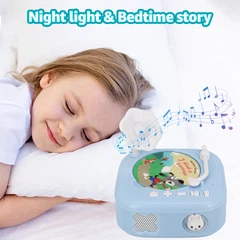
The classic scene, and the one that sets the tone for everything else. A child chooses a doll, sets it down and hears a story that finishes rather than continuing, and the box is quiet afterwards. For this scene the useful design questions are how gently the machine behaves when a session ends and how easily a half-asleep child can start the next doll the following evening.
The Back Seat of a Car
A journey is the scene that makes portability matter, and it is the one that exposes a badly balanced product fastest. The box has to sit still on a seat while a child reaches over to it, the power and volume switch on the right has to be easy for an adult to find without looking down, and the dolls have to survive being handed backwards over a headrest.
A Grandparent's Living Room
This is the scene that sells the product to a second household. Everything needed to start a story is a doll and a box, so a grandparent does not have to install anything, pair anything or remember a password, and a child is not dependent on an adult understanding the device. The low floor is the point: one gesture, no explanation.
The Listening Corner of a Classroom
Two or three children around one box, each taking a doll in turn. Because a doll is a physical object, turn-taking is obvious rather than negotiated, and an adult can see at a glance who is holding what. Groups that share a device tend to wear out the parts they touch, which is why the rewinding switch and the doll placement are the two things worth testing hardest.
A Waiting Room or a Clinic
Places where a child has to be occupied for an unpredictable stretch of time, and where a screen is unwelcome. A story that ends cleanly suits this scene better than a stream that continues into the next item, and a doll that goes back on a shelf is easier to hand over than a device with a state that the next child inherits.
A Hotel Room or a Holiday Flat
Family accommodation is a growing channel because the product needs nothing installed and nothing configured, so it behaves the same way in an unfamiliar room as it does at home. A short set of dolls travels in the bottom of a bag and turns an unfamiliar evening into a familiar routine, which is exactly what a family on holiday is looking for.
The Scene You Have in Mind
The six above are starting points rather than a menu. Tell us where the box will actually live – a nursery, a car, a bookshop reading table, a museum play area – and the size, the doll selection and the content are built around that answer instead of being adjusted to it afterwards. Most product decisions that look technical turn out to be scene decisions in disguise.
Six Buyers Who Plan by Scene
This format attracts buyers who know exactly where a product will be used, because the scenes decide the doll list, the packaging and the channel. The six below are the ones most often in the room when an RFID story box is specified.
When Each Scene Turns Into an Order
| Scene Calendar – RFID Story Box | ||
| When | Which Scene Is in Demand | What to Have Ready |
| Ahead of a school intake | Listening corners and group rooms | The doll list for the term and the room it will sit in |
| Summer travel season | Cars, flights and holiday lets | A short travel set of dolls and a compact carton |
| Autumn, ahead of gifting | Grandparent and second-household buying | A gift pack that explains itself on the front of the box |
| Winter holidays | Bedtime routines and family visits | A calm, longer-form doll with a gentle ending |
| Clinic and nursery refresh | Waiting rooms and shared play areas | A washable set and a doll list that rotates |
| Quiet months | A second or third doll for an existing box | A new script rather than a new product |
Two habits make this calendar easier to use. Decide the scenes before the artwork, because the scene tells you how the box is carried and therefore how it should look and pack. And keep the doll interface unchanged between releases, so that a character put on sale in a later season still seats correctly on a box sold in the first one.
Why Scene-Led Planning Pays
Planning from scenes is not only a design habit; it changes what the product is worth to a buyer. Four consequences are worth setting out plainly.
| Two Ways to Keep a Child Occupied Without a Screen | ||
| RFID Story Box (LM-003) | A streamed or app-based story service | |
| What starts a story | A doll placed on the box | A tap on a screen after unlocking a device |
| What the child collects | Characters that exist in the hand | Nothing physical |
| Working in an unfamiliar place | The same as at home, with nothing to set up | Depends on a device, a login and a connection |
| Sharing between children | Hand the doll over | Hand the device over, with its state |
| Adding a new story | Release another doll | Update the library or the app |
| What happens when it ends | The story stops and the box goes quiet | Something usually suggests the next item |
One honest note belongs with a doll-based product. Each character needs a mould and a recording, so a range has a fixed cost before the first unit is sold, and the opening set has to be chosen before the market has answered. The usual approach is to launch a small, strong cast and to plan the next doll in advance, because the collection only starts working once a child is waiting for the character after this one.
From Scene List to Sealed Carton
Once the scenes and the doll list are settled, the project runs through a predictable sequence. This is what happens at each stage and where a buyer makes the call.
| Project Flow – RFID Story Box | ||
| Stage | What Happens | What the Buyer Decides |
| 1. Scene brief | The places the box will be used are written down first | Scenes, and what each one demands of size and controls |
| 2. Doll list | The opening cast of characters is agreed | How many dolls launch and in which order |
| 3. Doll design | Each character is modelled to the 80 × 50 mm form | Artwork, approvals and any licence terms |
| 4. Scripts and recording | Audio is written and recorded for each doll | Language, narrator and the length of each story |
| 5. Sample round | A working box and a loaded doll are sent for review | Sign-off on doll placement and on the two switches |
| 6. Testing | Box and dolls are assessed for the destination markets | Which markets apply and which labelling is needed |
| 7. Production | Moulding, loading and assembly follow the approved sample | Quantity and the delivery window |
| 8. Packing and export | Box, dolls and documents are prepared and packed | Carton markings and shipping instructions |
The stage most often underestimated is the fourth. The doll is easy to picture and hard to write for, and a set of scripts that arrives late will hold a launch date regardless of how smoothly the moulding goes. Buyers who begin writing while the doll is still being modelled arrive at the sample stage with both halves ready, which is what keeps a release inside its season.
How Each Scene Rewrites the Same Specification
Once the scenes are listed they stop being background and start acting like requirements. Two buyers can order the same box and end up with different priorities, because the places they name pull one specification in different directions. Reading the list back is the quickest way to see which parts of the design are fixed and which are genuinely negotiable.
A journey is the scene that tests weight and balance first. At 900 g the box has enough mass to stay where it is put while a child reaches across to it, and at 140 × 180 mm it fits a car tray or a lap without a bag of its own. A lighter box shifts around more, which is fine on a table and unhelpful on a seat, so buyers selling into travel tend to accept the weight rather than argue with it.
A shared room is the scene that tests the controls. Because the left switch handles fast forward and rewind while the right switch handles power and volume, a child can work the first without disturbing the second, and an adult can set the level once and expect it to hold. That division is what makes the box usable in a classroom or a clinic, where the person who switches it on is rarely the person who uses it next.
Scenes with more than one child test the dolls rather than the box. A doll is a physical token, so turn-taking is visible and a teacher can see at a glance who is holding which character. Buyers planning for group use usually specify a slightly larger opening set, because the same doll in the hands of four children wears faster than it does in a single household.
Scenes that end in a bag or on a shelf test packaging and doll size. At 80 × 50 mm a doll travels flat and still carries a recognisable face, which is the balance this format depends on. A travel or gift listing is judged on how the set packs as much as on how it sounds, and the packaging is where that judgement is made.
| Scene to Specification – What Each Setting Changes | ||
| Scene | What It Pushes On | What to Settle First |
| Car or flight | Weight and balance, so the box stays where it is put | The travel doll set and the carton it ships in |
| Bedroom at night | A story that closes gently instead of running on | The final minutes of each recording |
| A grandparent's home | Nothing to install, pair or explain | The single gesture of placing a doll |
| Classroom corner | Controls several children can share safely | The two-switch layout and a rotating doll list |
| Clinic or waiting room | Hygiene and an ending that resets itself | A wipe-clean set and the order the dolls are used in |
| Holiday let or hotel | Behaving the same in an unfamiliar room | Contents that need no setup on arrival |
| Shelf or gift table | How the set packs and how it reads from outside | Doll size and the front of the box |
Read as a whole, the table shows why the scene list is worth writing before the brief. The box itself changes very little between these settings; what changes is the doll list, the recordings and the packaging, and those are the parts a buyer can adjust without touching the tooling for the machine.
Scenes, Dolls and Orders – Questions a Buyer Asks
Q1: Which scenes does a buyer usually name first?
Most buyers open with the bedroom, because that is the scene they picture when they think about a child and a story. The second scene is almost always a journey, and the third is a second household such as a grandparent's home or a holiday flat. Naming all three early is useful, because they pull the specification in different directions: the bedroom asks for a gentle ending, the journey asks for a box that stays put on a seat, and the second household asks for something that works with nobody on hand to set it up.
Q2: How many dolls should an opening range include?
Three to five is the usual starting point. A short list keeps the first order proportionate and still gives a shop something to display, and because each character is its own release the range can grow a doll at a time once the market answers. The second and third dolls cost far less to add than the first, since the box itself does not change and only the character and its recording are new.
Q3: What do the two switches each do?
The left switch handles fast forward and rewind, so a child can skip to the part they want without asking an adult for help. The right switch turns the machine on and off and sets the volume, which is the control an adult reaches for once and then leaves alone. Splitting those jobs across two sides keeps the playful control away from the setting that a parent or a teacher wants to fix.
Q4: Why is the box quoted without a TF card?
Storage and story are treated as two separate questions. The standard unit ships without a TF card, so a buyer decides how much content travels bundled with the box and how much is supplied separately or added later. For buyers whose scenes involve several languages or a library that is meant to grow, that separation keeps the base product simple and leaves the memory choice open until the cast is settled.
Q5: How much of the content work belongs to the buyer?
The scripts, the voices and the language versions are the buyer's side of the project, while the models, the electronics and the loading are ours. A brand that already owns characters or a backlist can convert them into dolls, and a buyer starting from nothing can have the visual direction developed alongside the recordings. Either way the audio is produced to the agreed script rather than borrowed from a shared library.
Q6: Can one box serve more than one language?
Yes. The box is identical across markets; the dolls and their recordings are what change, so a single product format can carry several language communities with different character sets. That suits a distributor serving a region with more than one language, and it also means a doll released in one language needs no change to the machine that plays it.
Q7: What do order and sample terms look like for a first doll range?
Production begins at 1,000 units, with shorter trial quantities available on terms confirmed in the quotation. Because each character needs its own mould, the tooling is handled as a one-time project item rather than a charge on every unit. A working box and a loaded doll are supplied before the run so that doll placement and the two switches can be judged in the hand, and the sample cost is credited back against the production order once it is placed.
Q8: Where are the box and the dolls made?
Modelling, moulding, electronics, audio loading, assembly and packing all happen at our own site in Shenzhen rather than being split between suppliers. That matters for a doll-based product, because the figure and the reader have to work together, and a fault traced between two companies is a fault that nobody owns. Every unit can be followed from the materials it was made from to the carton it left in.
The Workshop Behind the Dolls
for children
Xinditai Electronics has built children's audio products in Shenzhen since 2010, and read-along story boxes are a regular part of that work. Our programmes cover OEM and ODM development of children's audio and interactive products – story boxes, sound books, talking cards, writing tablets, projection toys, sleep aids and musical devices – for brands, publishers, schools and distributors in many markets.
Case work, electronics, audio preparation and packing sit inside one 3,000-square-metre site staffed by more than 100 engineers and operators, which is what keeps a doll-based project under a single roof. Our rule is short – Create with heart, ship with pride – and inspection runs through every stage, so a finished box can be traced from its materials to the sealed carton.

Certificates and Market Access
Certificates
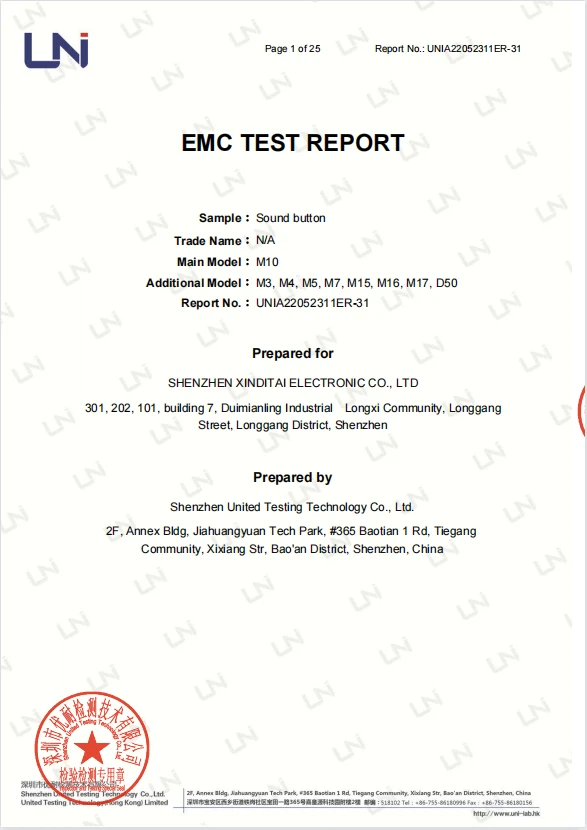
Because the reader and the dolls form one system, the document pack covers the box together with every character in a range and is assembled for the destinations named in the order. Files are refreshed whenever a relevant standard changes, and the same set applies to the box whichever doll list a buyer chooses.

CE

RoHS

FCC

SEMTA
EMC

ISO