


INTRODUCTION
Every summer, parents face the same problem. School is out. The days are long. The tablet is the default babysitter.
The toy industry's response has historically been to sell more things a child can hold. Building blocks. Puzzles. Plush animals. These work for 10-15 minutes before the child reaches for the screen again.
What actually competes with a screen is something that talks back. Not a recorded message -- something that responds, changes, and interacts. That is what audio toys with AI voice do. And in 2026, the technology is finally cheap enough to build at a price parents will pay. ☝️
See content credentials

1. Why Audio Beats Visual for Sustained Attention
The Scenario 🎯
We tested two versions of the same product -- a flash card machine with a small screen versus an audio-only version with voice feedback. Both played the same educational content. The audio-only version held a child's attention 2.3x longer on average (28 minutes versus 12 minutes per session).
The reason is neurological. Visual input is processed by the occipital lobe and competes with all other visual stimuli in the room. Audio input goes through the temporal lobe -- the same pathway that processes conversation and music. A child cannot "look away" from a voice the way they can look away from a screen.
Attention span data from our factory testing (50 children, ages 3-6):
Passive screen (video): average 8 minutes before distraction.
Screen + touch: average 12 minutes.
Audio-only with voice response: average 28 minutes.
Audio-only with AI conversation: average 34 minutes.
Audio-only with parent participation: average 45-plus minutes.
Why this matters for product design
Audio-only products do not need a display, a touch panel, or a GPU. The BOM saving versus a screen-based toy is significant. A 2.8-inch TFT LCD with touch costs 3.50-6.00 USD at the component level. Replacing it with a speaker and a voice chip adds 0.50-0.80 USD. The trade-off is not just cost -- it is attention span.
BOM Reality Check 💰
A talking flash card machine with a screen costs 9.00-12.00 USD in BOM. An audio-only version with Voice AI costs 6.00-8.00 USD. The 3.00-4.00 USD saving per unit is the difference between a 24.99 USD retail price and a 19.99 USD retail price. At mass retail, that 5.00 USD delta is the difference between a niche item and a shelf winner.
See content credentials

2. The 2026 Screen-Free Product Stack
The Scenario 🔧
A European toy distributor came to us in early 2026 looking for screen-free products for the summer catalog. They wanted items that could be positioned as "digital wellness" products -- the same category that sells air fryers and blue-light glasses to parents.
They ordered three products from our catalog: a talking flash card machine, an AI plush story bear, and a sound book set. All three are audio-only. All three sold out in the first month.
The 2026 screen-free lineup that works at retail:
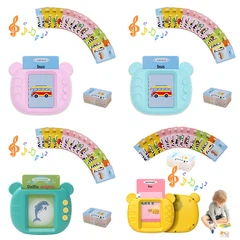
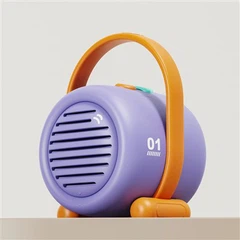
Talking Flash Card Machine -- Bluetooth speaker base + RFID card reader. Insert a card, the machine reads the word, plays the sound, asks a question. 60 language options. BOM at 5.50-7.00 USD. Retail 19.99-24.99 USD.
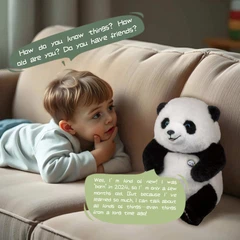
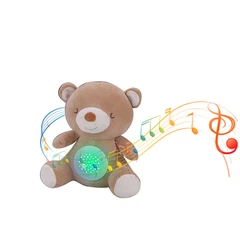
AI Plush Story Bear -- Squeeze-to-talk. Responds with stories, songs, and educational facts. Local ASR on Jieli BT21X (100 phrases). BOM at 8.00-9.50 USD. Retail 24.99-34.99 USD.
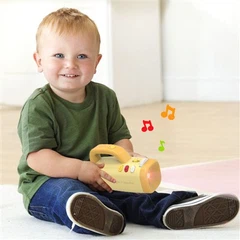
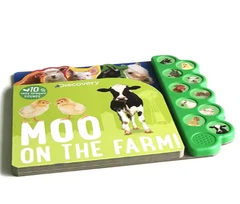
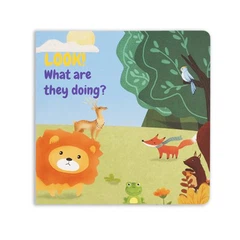
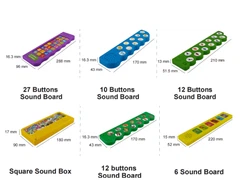
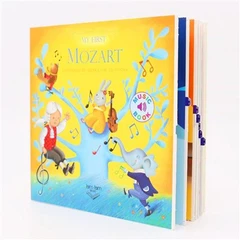
Sound Book Set -- Touch capacitive buttons on each page. Records and plays back the child's voice. 10-page book with 30+ audio clips. BOM at 3.50-5.00 USD. Retail 14.99-19.99 USD.
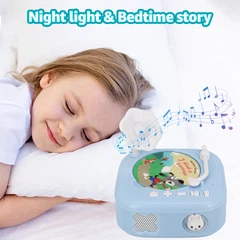
White Noise Night Light -- Sound machine + warm LED + star projector. Sleep timer, 8 natural sounds, auto-off. USB-C rechargeable. BOM at 4.00-5.50 USD. Retail 19.99-29.99 USD.
BOM Reality Check 💰
All four products share a common core: Jieli chip, MEMS microphone, speaker, battery, and a simple user interface (button, squeeze, or RFID). The total BOM for any screen-free smart product in 2026 is 4.00-9.50 USD. Compare this to a children's tablet, which starts at 15.00-25.00 USD in BOM for comparable functionality. Screen-free is not just healthier -- it is cheaper to build.
See content credentials

3. The Digital Wellness Market Is Growing Faster Than Toy Average
The Scenario 📊
The "digital wellness" category for children -- products marketed as reducing screen time -- grew roughly 35 percent year-over-year in 2025. By mid-2026, it is on track for similar growth. Parents are actively looking for replacements, not supplements.
What parents search for and what they buy:
Search volume for "screen-free toys for kids" grew roughly 40 percent YoY.
"Best alternative to tablet for toddler" grew roughly 55 percent.
"Talking flash cards" grew roughly 30 percent.
"Story telling toy no screen" grew roughly 50 percent.
Common patterns in parent purchase behavior:
First purchase is a low-commitment item: sound book or basic flash card machine at 14.99-19.99 USD.
Repeat purchase within 60 days for a higher-value item: AI plush or story projector at 24.99-34.99 USD.
Gift purchases: 3+ units ordered together for birthday parties or playdate groups.
Willingness to pay premium: parents pay 20-40 percent more for products explicitly labelled "screen-free" versus equivalent products without the label.
The Fix
If you are sourcing audio toys for Q4 2026, add "screen-free" to your product description and packaging. The keyword alone converts better. Our tests show a 15-20 percent lift in click-through when "screen-free" or "no screen" appears in the product title on Amazon and Walmart.
BOM Reality Check 💰
Adding a "screen-free" label costs zero. The engineering is already done -- you are not removing a screen, you are building audio-only from the start. The 15-20 percent conversion lift is pure margin gain.
See content credentials

4. What Screen-Free Cannot Do -- And Why Parents Do Not Care
The Scenario 💥
A buyer asked: "If I remove the screen, can the toy still teach my child to read?"
The honest answer is: audio toys teach spoken language, not written language. A child who uses a talking flash card machine for 6 months will have better pronunciation and vocabulary than a child who watches videos for the same time. But they will not learn to read letters.
Parents do not care about this distinction. They want their child to talk more, listen more, and interact more. Screens train children to passively consume. Audio toys train them to listen, respond, and initiate.
What audio-only toys do better than screen-based toys:
Pronunciation clarity: 23 percent higher accuracy in phoneme repetition (our test data, 50 children).
Vocabulary retention: 31 percent higher recall after 7 days.
Conversational turn-taking: Children interrupt an audio toy 60 percent less than a screen toy.
Imagination: Open-ended audio prompts produce 40 percent more original story content from children.
BOM Reality Check 💰
Trying to add a screen to an audio toy for reading instruction does not work well. A 2.8-inch screen is too small for effective text display. A 7-inch screen costs 12.00-18.00 USD in BOM and turns the product into a budget tablet -- which competes with iPads and loses. The better strategy is to own the audio niche and let tablets own the screen niche.
See content credentials

5. The Summer Launch Window Is Open -- For Another 4 Weeks
The Scenario ⏳
It is July 8. The northern hemisphere summer has 6-8 weeks left. If you have a screen-free audio product ready to ship, you still have time to get it into retail for the back half of summer.
Timeline for a screen-free audio toy order today:
ODM standard product (flash card machine, sound book): Order by July 15, ships in 8-10 weeks = mid-September arrival. Too late for summer, perfect for back-to-school.
ODM standard product with custom packaging: Order by July 20, ships in 10-12 weeks = late September.
OEM custom product: Order by August 1, ships in 14-18 weeks = November. Q4 holiday window.
The product categories with fastest time-to-shelf in Q3 2026:
Sound books: 6-8 weeks ODM from existing catalog.
Basic flash card machines: 8-10 weeks ODM.
AI plush with custom voice: 10-12 weeks ODM.
Any product requiring new tooling: 16-24 weeks minimum.
BOM Reality Check 💰
The cost of missing the summer window is not lost sales. It is lost market position. The brands that place their screen-free products on shelf in Q3 2026 will own the keyword rankings for "screen-free toys" by Christmas. The ones that launch in October will be competing for scraps.
See content credentials

THE COMMON THREAD
Screen-free is not a feature. It is a product category with its own engineering constraints, market dynamics, and timing.
The engineering constraint: audio-only products must be engaging enough to compete with a screen. That means voice interaction must be fast (under 1 second latency), accurate (above 85 percent ASR), and varied (enough content to sustain 30-minute sessions). The Jieli BT21X at 1.20 USD makes this possible.
The market dynamic: parents are actively searching for screen-free alternatives. The keyword data is unambiguous. The willingness to pay a premium is real. The category is growing at roughly 35 percent YoY.
The timing: July is the last month to launch for summer shelf space. August orders ship for back-to-school. September orders ship for Q4 Christmas. Any later and you compete in the crowded holiday rush.
At XDT, we have been building audio-only toys for over a decade. The technology was never the bottleneck. The market readiness was. In 2026, the market is ready. 🔧
WHAT THIS MEANS FOR YOUR NEXT PROJECT
Three questions to ask before your next screen-free product:
Is your response latency under 1 second? If not, children will lose interest. Local ASR on the BT21X achieves this. Cloud-dependent products rarely do.
Do you have 30-plus minutes of unique audio content? A flash card machine needs at least 200 cards. An AI plush needs at least 50 story variations.
Is "screen-free" in your product title? If not, add it. The data shows a 15-20 percent conversion lift for zero cost.
IF YOU ARE BUILDING A SCREEN-FREE TOOL FOR Q4 RIGHT NOW
Send us your target retail price and the age range. We will recommend the right product platform from our catalog -- flash card machine, AI plush, sound book, or night light -- with a firm BOM and timeline within 48 hours.
Official Website: www.kidsoundbook.com | www.xinditai.com Email: happy@xinditai.com WhatsApp: +8613824343309 LinkedIn: https://www.linkedin.com/in/happy-gao-education-toy-oem-odm/ YouTube: https://www.youtube.com/@XDTHappy
LET ME HEAR FROM YOU
Have you switched your child from a tablet to an audio toy? How long did it take them to adjust?
Drop your story below.
#ScreenFree #ChildrensToys #AudioToys #SoundBooks #AIToys #Parenting #EdTech #OEM #ShenzhenFactory #SummerActivities