
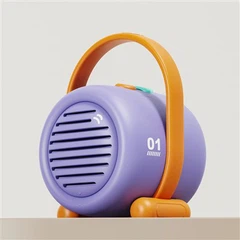
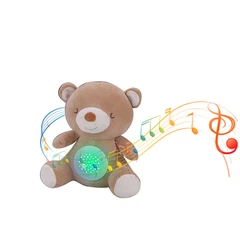

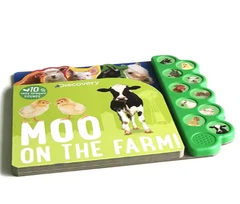
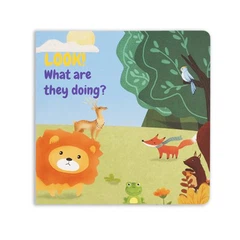

A sound book looks like an ordinary picture book until a child presses the page and it answers. That moment is the entire product: print that speaks, without a screen, an app or a pairing process. For buyers the appeal is a familiar format with a demonstrable interaction, and for parents it is one of the few "educational" claims that survives contact with a toddler.
This guide is written for brand owners, publishers and importers sourcing children's sound books. It covers what the format actually is, the constructions available, the module and safety points that decide whether a book survives a nursery, how to test a sample, and what to send a manufacturer before asking for a price.
What a Sound Book Actually Is
The term is used loosely, so it is worth fixing. A children's sound book is a printed book with an embedded audio module: a small board, a speaker, a power source and one or more triggers. Press a button, or touch a marked spot, and the book plays a word, a sound effect, a song or a short narration. It is not an ebook and it is not an audiobook - nothing is downloaded and nothing is streamed. The audio lives on the module inside the book.
That distinction matters commercially. Because there is no screen and no account, the book works the first time it is opened, for a child who cannot read, and for a parent who does not want another device in the house. It is also why the category keeps selling alongside connected toys rather than being replaced by them.

Why the Format Holds Attention
Feature: print and sound bound together, triggered by a press or a touch.
Advantage: no setup, no charging ritual before first use, no account to create.
Benefit: a child who cannot read can still operate it alone.
Evidence: the interaction is physical and repeatable, and repetition with a paired image is how young children build vocabulary.
Three further things make the format easy to sell. It is screen-free, which is the first filter many parents now apply. It supports independent play, so it occupies a child rather than requiring one. And it sits at a natural gift price point - sound books are bought for birthdays and holidays by people who would not describe themselves as toy buyers, which opens channels that ordinary plush never reaches.
The Constructions Available
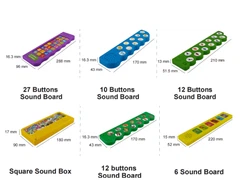
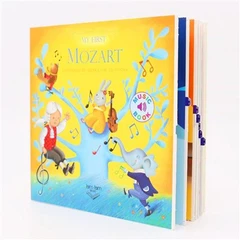
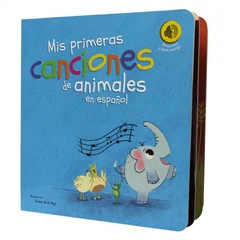
Sound books come in several builds, and the choice is usually made by age band and price. A sound-button book carries one module with a bank of buttons, usually along the spine or the side, each triggering a sound that matches a spread. A page-triggered book hides the module in the cover or spine and uses a button per spread or a touch point printed into the page. A 3D pop-up sound book adds paper engineering - the spread stands up when the book is opened and the module plays a scene sound. Musical books trade word triggers for longer audio capacity, and bilingual or English-enlightenment editions pair every spread with two languages.
Each construction moves cost, thickness and durability in different directions. A button bank along the spine keeps the pages flat and is the most robust option. Touch points printed into the page look cleaner and more premium, but they add a layer that can wear where a child presses hardest. Pop-ups are the most impressive thing in a showroom and the most fragile thing in a nursery - that is a decision to make deliberately, not a surprise to discover in your returns data.

Sound Book or Talking Flash Cards?
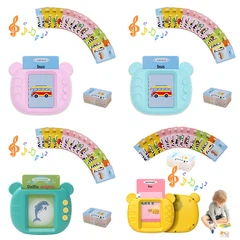
Buyers often ask which print-and-sound format to lead with, because both sit in the same early-learning range. The distinction is mostly about how a child browses. A sound book is a narrative object: pages turn in order, each spread carries part of a story or a theme, and the sound belongs to that moment in the sequence. It suits gifting, bedtime and the child who wants the same book again tonight. Talking flash cards are a browsing object: a child pulls a card, hears the word, and moves straight on. They suit vocabulary practice, travel and short attention spans, and they scale cheaply because a new card is effectively a new title.
Price and durability follow from that difference. A bound book carries higher unit cost and more print finishing, but it reads as a keepsake and supports a higher retail price. Cards cost less per unit and reorder well. Many brands run both - the book for the gift occasion, the cards for the everyday - and because the recorded content can be shared across the two, the second product is cheaper to develop than the first. If you are choosing one, decide by the moment you are selling into rather than by the format you happen to prefer.
Inside the Book: The Module and What It Decides
The module is the product. It sets how loud and how clear the audio is, how long the content can be, how the book is powered, and how long the whole thing lasts. Four points deserve specific attention.
Sound quality through paper comes first. A driver that sounds acceptable on a bench is heard in real use through board, glue and a closed cover, and small speakers lose their mid-range quickly in that environment. Ask to hear the finished book closed on a table, never the module on its own.
Power is second, and it is where children's books are examined most closely. Many sound books use coin or button cells. Because the book goes into the hands of a child who mouths objects, the compartment has to be secured - typically with a screw - so the cell cannot be reached without a tool. This is one of the most scrutinised points in the category and one of the most common reasons a shipment is stopped or a listing is pulled.
Trigger life is third. A press point will be used hundreds of times in a fortnight. Ask what cycle count the buttons or touch points are tested to, and whether that figure refers to the trigger alone or to the assembled book, because the two are not the same test.
Construction is fourth. Board grade, rounded corners, lamination and the binding method decide whether the book survives being opened by a two-year-old. Environmentally considerate inks and coatings are now a default expectation rather than an upgrade, and they still have to pass the same migration testing as any other children's product.
The Two Checks That Change the Design
Output level: a book held against a child's ear must stay within the limit your market sets for close-to-ear products, and it has to be measured on the finished book rather than quoted from a module specification.
Cell access: the compartment must be secured and labelled as your destination requires. Both points are far cheaper to design in than to retrofit after a test house has failed the sample - one changes a speaker and a resistor, the other changes a tool.

Safety and the Standards File
A sound book is a toy as well as a book, and it is tested as one. In the European Union the construction is assessed under EN 71 - mechanical and physical properties, flammability, and migration of certain elements - with the electrical element considered under EN 62115 where it applies, alongside the usual CE documentation, RoHS and REACH declarations. In the United States, ASTM F963 and CPSIA apply, including tracking labels and third-party testing by an accepted laboratory. Where the book contains a cell, the transport file matters as well: the battery needs its own test summary and the shipment needs the correct documentation.
The practical advice is to name the destination before the design is frozen. A book built for the EU and a book built for the US do not differ much in print, but they can differ in the compartment, the labelling and the paperwork, and those differences are expensive when discovered late.
Content: Narration, Music and Rights
The audio is half the product and the half most often left until last. Narration should be recorded by a native speaker of the target language, at a consistent level across every spread, and by the same voice throughout - a change of narrator halfway through is noticeable to a child and reads as a fault. Music carries its own licensing: a familiar nursery tune is rarely free to use, and clearing it takes time that a production schedule usually does not have.
Confirm three things before recording starts: who owns the files once they are made, whether the music is licensed or original, and how many language versions you need. Books are cheap to reprint; re-recording a library in three more languages is not, and it is the kind of cost that appears after the margin has been agreed.

How to Test a Sound Book Sample
Test it as a child will, then test it as a safety officer will. Press every trigger on every spread and confirm each one fires exactly once and matches its picture - a button that plays the cow on the duck page is exactly the kind of fault that survives all the way to a retail shelf. Listen to the book closed on a table, then at arm's length, then held as a child holds it. Note how long the audio runs and whether the level holds as the cell discharges.
Then the physical checks. Open and close the book fifty times and re-test the triggers and the binding. Flex a page gently at the joint. Confirm the corners are rounded, that nothing small can be detached, and that the lamination does not lift at the edges. Try to open the battery compartment without a tool - it should not open. Finally, check that the documents you were sent describe the exact sample in front of you: the same module, the same cell, the same board and ink specification.
Custom Development: What to Send a Manufacturer
A quotation is only as good as the brief behind it. The useful minimum is: trim size and page count; the construction you want; where the sound should sit; how many sounds and how long each one runs; the language or languages; who writes and records the content; the age band; the destination market and the standards you must meet; the state of the artwork; your target retail price; and the quantity you expect in the first year, not just the first order.
That final point is the one most often missing, and it is the one that moves price most. A printer-assembler quotes very differently at three thousand copies and at thirty thousand, and the module, the board grade and the binding are all chosen against that number. Sharing the annual figure early usually lowers the unit cost more than any round of negotiation.
How XDT Builds Sound Books
XDT is a manufacturer rather than a trading layer, and sound books suit the way the factory is arranged: automatic card and book printing, SMT, injection and assembly all sit under one roof in Shenzhen, across more than 3,000 square metres with monthly capacity above 50,000 units. That matters more here than in most categories, because a sound book is a print product and an electronic product at the same time. When a speaker has to move two millimetres so the board will close flat, the people printing the book and the people placing the module are in the same building and can settle it in an afternoon.
Our children's book range covers sound and 3D pop-up constructions across multiple themes with English-enlightenment content, and it pairs with the reading-pen and talking-flash-card lines for brands building a wider early-learning range. Standard models start at 500 units with 25–35 day lead times; full custom development runs 1,000–2,000 units at 45–60 days. Standard documentation covers CE (EN 71, EN 62115), FCC Part 15, RoHS, REACH and CA Prop 65, with ASTM F963, CPSIA, CCC, UKCA, SASO and IS 9873 available where the destination requires them, and a twelve-month warranty against manufacturing defects. For reference, our talking-flash-card range uses an 85 dB hearing-safety cap; for sound books the output level is set and measured during development against your market's limit.

Frequently Asked Questions
Is a sound book the same as an audiobook? No. The audio is stored on a module inside the book; nothing is streamed, downloaded or paired, and the child triggers it by pressing the page.
Can we supply our own recordings and music? Usually yes, provided you hold the rights. Confirm ownership of the recordings and licensing for any music before production starts - clearing a familiar tune late is expensive.
What is the minimum order? Standard configurations start at 500 units with 25–35 day lead times. Full custom development runs 1,000–2,000 units at 45–60 days.
Which certifications are included? CE (EN 71, EN 62115), FCC Part 15, RoHS, REACH and CA Prop 65 are standard, with ASTM F963, CPSIA, CCC, UKCA, SASO and IS 9873 available where the destination requires them.
How long does the battery last? It depends on trigger count, audio length and the cell used. Ask for a figure measured on the finished book in real use rather than a module specification.
Can the same book be made in several languages? Yes. The print and module platform can carry different language content, which is usually the cheapest way to take one title into new markets.