








In-Depth Analysis of Global Children's Toy Production: Regional Features, Product Trends & Export Volumes
Amidst globalization and the "de–Chinaification" trend, the global landscape of children's toy manufacturing is becoming increasingly diversified and specialized. This article examines the major producing countries in Asia, Europe, and the Americas through three key dimensions-regional characteristics, product profiles, and export volumes-to inform supply‑chain strategies and market positioning.
1. Asia: The Powerhouses
1.1 China: End‑to‑End Scale and Integration
Regional Characteristics
China boasts a fully integrated supply chain-from injection molding, hardware, and electronics to packaging-supported by world‑class ports and highways.
Product Profile
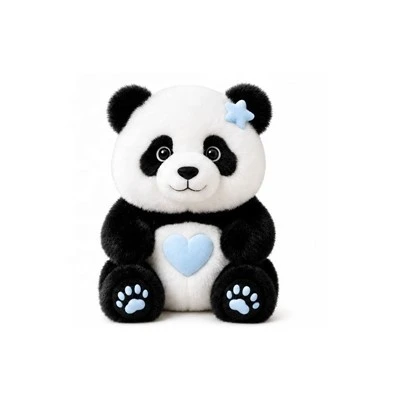
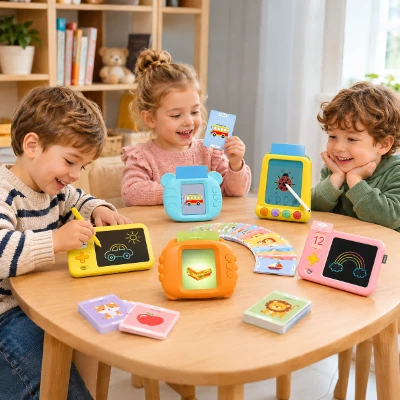
It produces virtually every category: plush toys, plastic, electronic toys, smart toys , and STEAM educational toys. Recent focus has been on "smart‑toy + education" combinations.
Export Volumes
In 2024, China's output reached approximately 5.2 million tonnes (50% of global production), with exports of 3.9 million tonnes (71% share) worth $38.8 billion (67% share).

1.2 India: Eco‑friendly Handcrafts & Educational Toys
Regional Characteristics
The "Make in India" initiative and high import tariffs protect local producers; the workforce is young and cost‑competitive.
Product Profile
Specializes in wooden, handcrafted, and educational‑puzzle toys under strict safety standards implemented in 2021.
Export Volumes
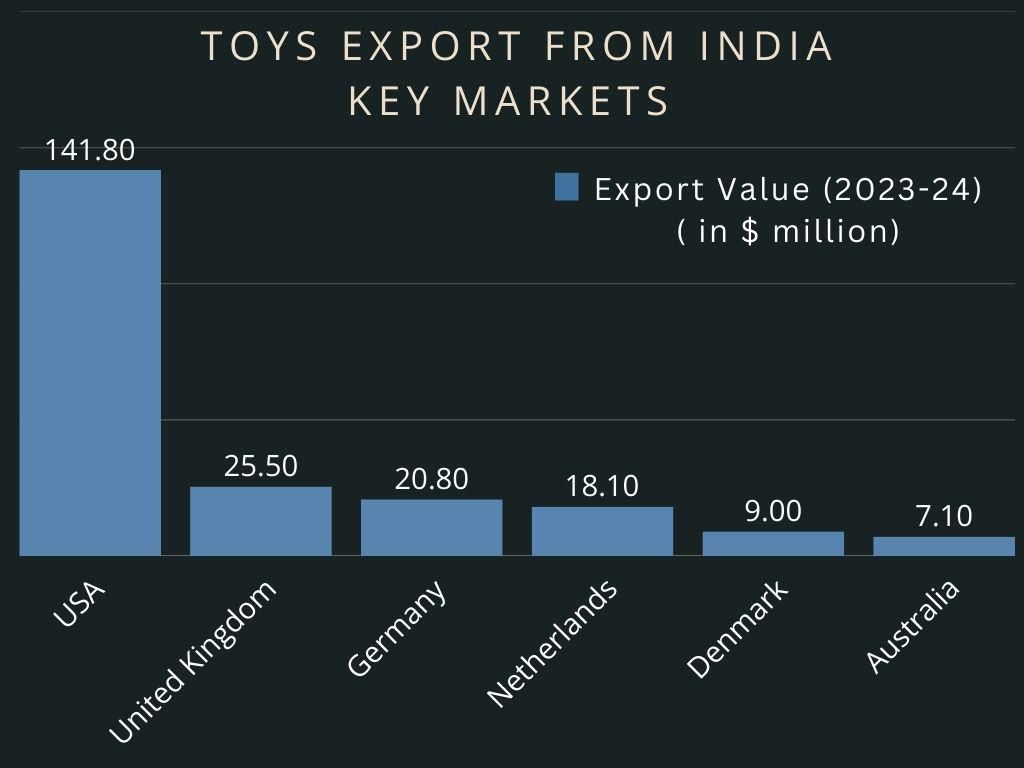
Exports rose to $152 million in fiscal 2023–24, with a ten‑year CAGR of 16%.
1.3 Vietnam & Thailand: "De–Chinaification" Beneficiaries
Vietnam
Strengths: Expertise in electronic/electric toys and assembly kits.
Exports: 0.135 million tonnes (2.5% share), growing at 13.8% annually.
Thailand
Strengths: Advanced injection‑molding and mid‑to‑high‑end plastic toys.
Exports: 0.43 million tonnes (7.9% share), with a 34.1% annual growth rate.
1.4 Other Southeast Asia: Indonesia & Malaysia
Indonesia
Focuses on low‑to‑mid‑range plastic and wooden toys, producing 0.31 million tonnes (3% share) in 2024.
Malaysia
Small‑batch, high‑end educational and smart‑toy customization; overall output remains limited.
2. Europe: Craftsmanship & Brand Equity
2.1 Czech Republic: Traditional Craftsmanship Hub
Regional Characteristics
Centrally located with robust manufacturing infrastructure and easy access to both Western and Eastern Europe.
Product Profile
Renowned for wooden toys, wind‑up mechanisms, and model vehicles-valued for both play and collectibility.
Export Volumes
$3.1 billion (5.5% of global exports), ranking second in Europe.
2.2 Germany & Italy: Precision & Design
Germany
Strengths: Industrial‑grade assembly kits and educational toys, backed by TÜV quality certifications.
Exports: $2.5 billion in 2023.
Italy
Strengths: High‑end plastic and textile toys blending fashion and function.
Exports: Approximately $1.5 billion.
2.3 Netherlands: Design‑Led Re‑Exporter
Regional Characteristics
Major port logistics center; domestic manufacturing is limited, but design and trade expertise are strong.
Product Profile
Focuses on high‑end puzzle and educational toys driven by innovative design.
Export Volumes
0.172 million tonnes (3% share), with a 10.3% annual growth rate.
3. The Americas & Other Regions
3.1 United States: Innovation, R&D & Licensing
Regional Characteristics
Domestic production is ceding to overseas manufacturing; focus has shifted to design, innovation, and IP licensing.
Product Profile
Licensed toys (Disney, Marvel), premium educational toys, and trend‑driven novelties.
Trade Data
In 2023, imports reached $22 billion, while domestic exports hovered around $1 billion.
3.2 Mexico: Near‑shoring Advantage
Regional Characteristics
Benefits from USMCA trade terms, lower labor costs, and proximity to the US market.
Product Profile
Primarily plastic toys and battery‑powered electric toys.
Export Volumes
$1.2 billion in 2024, with a 6% annual growth rate.
4. Key Takeaways for Supply‑Chain & Market Strategy
Concentration vs. Diversification
China remains dominant, but Southeast Asia and India are carving out specialized niches.
Product Segmentation
Low‑to‑mid‑range Plastics & Electronics: China, Vietnam, Thailand
Eco‑friendly Wood & Handcraft: India, Czech Republic
Premium Design & Industrial Components: Germany, Italy
Licensed IP & EdTech: USA, advanced markets
Geopolitics & Cost Dynamics
The "de–Chinaification" trend fuels multi‑country collaborations and near‑shoring.
Logistics, tariffs, and compliance requirements are critical decision factors.
Conclusion & Engagement Prompts
As the global toy industry evolves at lightning speed, your insights and experiences are invaluable. Let's spark a dynamic discussion below!
💬 Which emerging production hub do you believe has the greatest growth potential, and why?
🧩 In terms of toy innovation, which type of educational or STEAM product do you see leading the market in the coming years?
🔄 How does your company or clients balance cost and quality under the "de–Chinaification" trend?
📊 In your market, which category-eco‑friendly wooden toys or smart electronic toys-enjoys higher consumer acceptance?
🌐 With global supply chains being reshaped, where do you think the next strategic investment should be: workforce, automated lines, or new market expansion?
🤝 If you're hiring or seeking partners, what capabilities or credentials do you prioritize most?
Looking forward to your perspectives and case studies! 👉 Subscribe on LinkedIn