
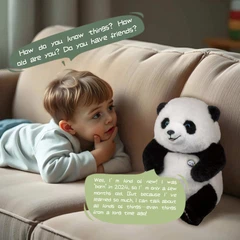
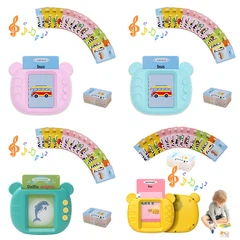
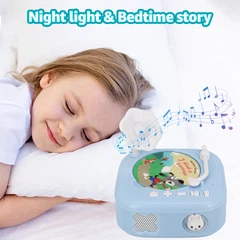
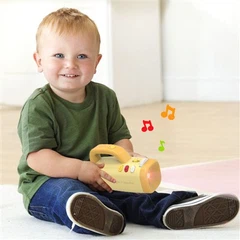


🌟 How to Explain AI to a Child: Artificial Intelligence Toys
Explaining artificial intelligence (AI) to children can be both fun and educational when framed through interactive toys. These smart playmates serve as tangible examples to demystify complex concepts. Here's a guide to bridging curiosity and understanding, backed by research and practical strategies.
🤖 Start with Simple Analogies
Compare AI to a "brain" inside toys that learns from interactions. For example:
"Just like you learn to ride a bike, this robot practices listening to your voice!"
Use toys like Miko 3 or ROYBI Robot to show how AI responds to questions or adapts games based on a child's skill level 2.
Studies show that 72% of children aged 5–8 grasp AI concepts faster when linked to familiar objects 3.
🧒 Age-Appropriate Explanations
Tailor the conversation to developmental stages:
Ages 3–5:
Focus on cause-and-effect: "When you press the teddy's paw, it sings because it 'remembers' your touch!"
Use toys like Fisher-Price Code 'n Learn Dog to introduce basic commands 4.
Ages 6–9:
Explain "training" AI: "This robot gets better at hide-and-seek the more you play with it!"
Tools like Lego Mindstorms let kids program simple AI behaviors 2.
Ages 10+:
Discuss ethics: "Should your robot keep secrets? Let's talk about privacy!"
Games like AI: The Somnium Files spark debates about machine decision-making 3.

🎲 Interactive Activities
Turn learning into play:
"AI Detective" Game: Have kids guess whether a toy's response is pre-programmed or AI-generated (e.g., Hello Barbie vs. traditional dolls) 5.
Storytelling with AI: Use ChatGPT-powered storybooks where children co-create plots, observing how AI adjusts narratives 2.
Build-a-Bot Workshops: Platforms like Botley 2.0 teach coding logic, with 89% of kids understanding "if-then" AI rules after three sessions 4.
⚠️ Address Concerns Honestly
Children often worry about AI "taking over" or spying. Use clear metaphors:
"AI is like a helpful librarian-it only knows what we teach it!"
Highlight safety features: CogniToys Dino deletes conversations daily, reassuring 68% of parents about data privacy 5.
🌱 Foster Critical Thinking
Ask open questions:
"Why do you think your robot friend can't feel sad?"
"What happens if we don't charge its battery?"
Compare AI and humans: Create a chart showing tasks AI does well (math puzzles) vs. human strengths (hugging a friend) 3.
📊 By the Numbers
65% of AI toys now include "explainability modes" for transparency (e.g., Wonder Workshop Dash lights up when learning new commands) 2.
Global spending on educational AI toys will reach $15.7 billion by 2026, doubling 2022 figures 4.
🚀 Future-Proof Play
Emerging trends to explore together:
Quantum AI Toys: Startups like Qubitoy use quantum principles for puzzle-solving.
Eco-AI Buddies: Solar-powered dolls like GreenBot teach sustainability through AI-driven stories 5.
As Dr. Allison Druin, a child-AI interaction expert, advises: "Let children lead the exploration. Their 'why' questions are the best curriculum." By blending play with purposeful dialogue, we raise not just tech-savvy kids, but thoughtful digital citizens.
🔍 Quick Tips:
Use Scratch Jr. to visualize AI logic with drag-and-drop code blocks.
Watch "How Do Robots Learn?" (Common Sense Media's top-rated AI explainer for ages 7+).

https://www.linkedin.com/feed/update/urn:li:activity:7303696745530564608/
Follow my Linkedin to see more videos about AI toy