

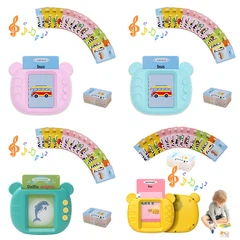
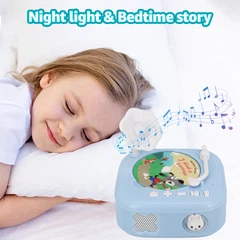






High Frequency RFID Technology for Kids Interactive Audio Toys
The Evolution of Interaction Technology in Children's Toys
From Physical Buttons to Contactless Recognition
Early electronic kids toys relied almost entirely on physical buttons and switches for user input. For young children, this meant memorizing button functions, navigating layered menus, and struggling with small parts that did not match their developing motor skills. As toy design advanced, touch screens and voice control entered the market, but each brought new downsides: screens added eye strain risks, and voice control required constant internet access and failed easily in noisy environments.

Contactless radio frequency identification, or RFID, introduced a new interaction pattern that fits young children's natural play habits. Instead of pressing buttons or speaking commands, kids simply place an object on a reader to trigger a response. This action matches how toddlers naturally play with physical toys, making it intuitive without instruction. Over the past decade, 13.56MHz RFID toy technology has become the leading choice for premium interactive audio toys, replacing older, less reliable low-frequency RFID systems.
Why RFID Stands Out for Early Childhood Products
Toy designers face unique constraints when choosing interaction technology for young age groups. First, the system must work reliably with rough handling, drops, and everyday wear. Second, it must be safe for prolonged close contact with children. Third, it must be simple enough for kids as young as two to use without adult help.
Most alternative technologies fail at least one of these tests. Touch screens crack and smudge, and they require visual focus that takes away from imaginative play. Bluetooth-connected toys depend on a parent's phone and drop connection easily. Voice recognition systems misunderstand young children's speech and need Wi-Fi to function. RFID systems solve all these issues, which is why they have become the foundation of modern offline RFID audio toy mechanism design.

Core Principles of High-Frequency RFID Operation
How RFID Readers and Tags Communicate
At its most basic level, an RFID system has two main parts: a reader and a tag. The reader sends out a low-power radio signal through its antenna. When a tag comes within range of this signal, it picks up energy from the radio waves and uses that power to send back its unique identification code. The reader receives this code, looks up the matching content, and starts playback.
This energy transfer is the defining feature of passive tag systems. Unlike battery-powered devices, passive tags have no internal power source. They draw all the energy they need from the reader's signal. This is the key difference at the center of passive RFID vs active RFID for kids product design, and it creates major advantages for safety and durability.
 International Standards for Reliable Performance
Not all RFID systems operate on the same frequency or follow the same rules. For toy applications, the 13.56MHz high-frequency band is the global standard, with two main protocol sets in wide use.
The first is the ISO 14443 RFID toy standard, which is designed for close-range reading, typically under 10 centimeters. This standard offers very fast read speeds - under 0.3 seconds - and strong resistance to interference from nearby objects. It is the same standard used in contactless payment cards, so it has been thoroughly tested for reliability and safety. The second common standard is ISO 15693, which works at slightly longer ranges and supports multiple tags being read at once. For audio story toys, ISO 14443 is preferred because its close-range reading prevents accidental triggers and ensures precise control.
Passive vs Active RFID: Side-by-Side Comparison for Kids' Products
Choosing between passive and active RFID is one of the most important design decisions for a toy. The table below breaks down the key differences across factors that matter most for children's products:
| Comparison Factor | Passive RFID Tags | Active RFID Tags |
|---|---|---|
| Internal power source | No battery required | Built-in battery needed |
| Child ingestion risk | Zero electrical risk | Small battery presents safety hazard |
| Product lifespan | No battery drain, lasts the full toy lifetime | Battery runs out in 1–3 years |
| Unit cost per tag | Very low, ideal for accessory characters | Higher, limits expandable product lines |
| User maintenance | No replacement needed | Requires battery changes or disposal |
| Plush character weight | Extremely light, no rigid parts | Heavier, with hard battery compartment |
For character-based audio toys, passive RFID is almost always the better choice. Its safety profile aligns with strict global toy regulations, and its low cost makes it practical to sell large collections of accessory characters. Active RFID only makes sense for toys that require very long read ranges, which is rarely needed for tabletop story devices.
Hardware Design Details for Child-Safe RFID Toys
Reader Module Placement and Sensitivity Tuning
Building a reliable RFID toy requires careful placement of the reader antenna inside the device. If the antenna is too far from the surface, reading becomes slow or inconsistent. If it is too powerful, it may read tags through the side of the device or trigger accidentally.
Good child-safe RFID toy design follows two key rules for reader placement. First, the antenna is mounted directly under the top platform of the device, with uniform reading coverage across the entire contact area. Second, the read power is tuned to only activate when a tag is within 1–2 centimeters of the surface. This prevents false triggers from nearby objects and keeps electromagnetic output at levels well below international safety limits.
Tag Integration Into Soft Plush Figures
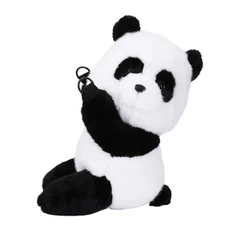
Embedding RFID tags into plush toys requires attention to both durability and safety. The tag itself is a thin, flexible disk about the size of a coin, with no sharp edges. It is sealed inside a waterproof plastic casing before being sewn into the base of the plush character, deep inside the stuffing.
This placement serves two purposes. First, it keeps the tag in the correct position for reliable reading when the plush is set down. Second, it ensures the tag cannot be removed or accessed by children, even with rough play. Because the tag has no battery, there is no risk of leakage or corrosion over time, even if the plush gets wet during cleaning.
Future Applications of RFID in Early Childhood Toys
RFID technology is still expanding into new types of children's play products. Beyond audio storytellers, the same passive high-frequency system works for interactive play sets, shape sorters, language learning cards, and tactile activity books. Each physical object can carry a unique ID that triggers audio feedback, sound effects, or guided play instructions.
As manufacturing costs continue to fall, RFID will likely replace simple button-based electronics in many preschool toy categories. Its ability to turn ordinary physical objects into interactive digital experiences - without adding screens or batteries - makes it a natural fit for the next generation of screen-free educational play products.
High-frequency RFID technology has redefined what interactive play can look like for young children. By using passive tags that require no batteries and follow strict international standards, toy makers can create products that are intuitive, durable, and safe for even the youngest users. The 13.56MHz system delivers fast, reliable recognition without the need for apps, Wi-Fi, or complicated setup.

For designers, brands, and product developers, understanding the technical details of RFID systems makes it easier to build better, more creative play experiences. As the technology continues to improve, it will support even more innovative ways for kids to learn and play through physical, hands-on interaction.
For technical consultation or custom product development inquiries, contact us via email at xdt04@dtdianzi.com or WhatsApp at +86 136 0263 5993.