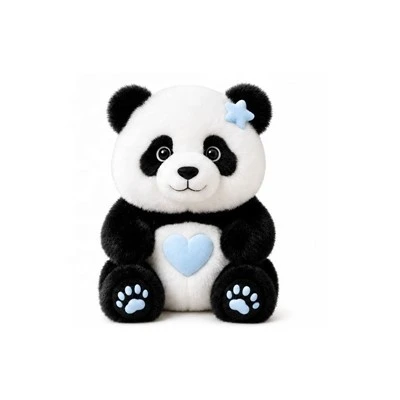
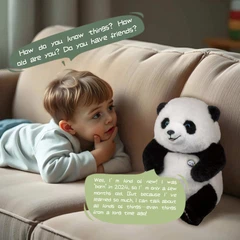
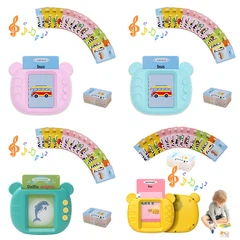
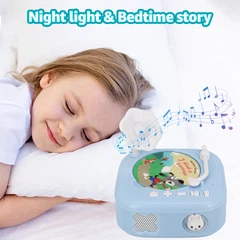
INTRODUCTION
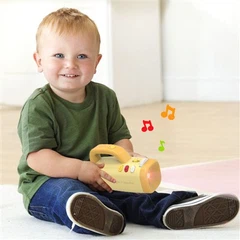
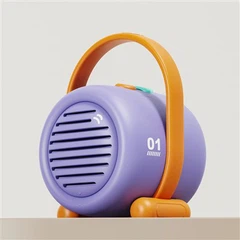
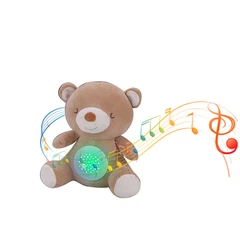
The sound plush category is going through its biggest shift since the first musical greeting card.
For two decades, the formula was simple. A voice chip. A speaker. A squeeze switch. Record a few seconds of audio, embed it in a stuffed animal, and sell it as a gift item.
That formula is breaking. A Jieli BT21X chip with ASR costs about 1.20 USD. A basic recording module costs about 0.85 USD. The delta is 0.35 USD. The retail difference? The old product sits on a 4.99 USD shelf. The new one commands a price of 19.99 USD and up.
But the engineering is not trivial. Putting a voice AI pipeline inside a soft, washable, child-safe plush shell introduces problems that do not exist in hard toys. Here is the full picture. ☝️
1. The Three Generations of Sound Plush ⏳
The Scenario
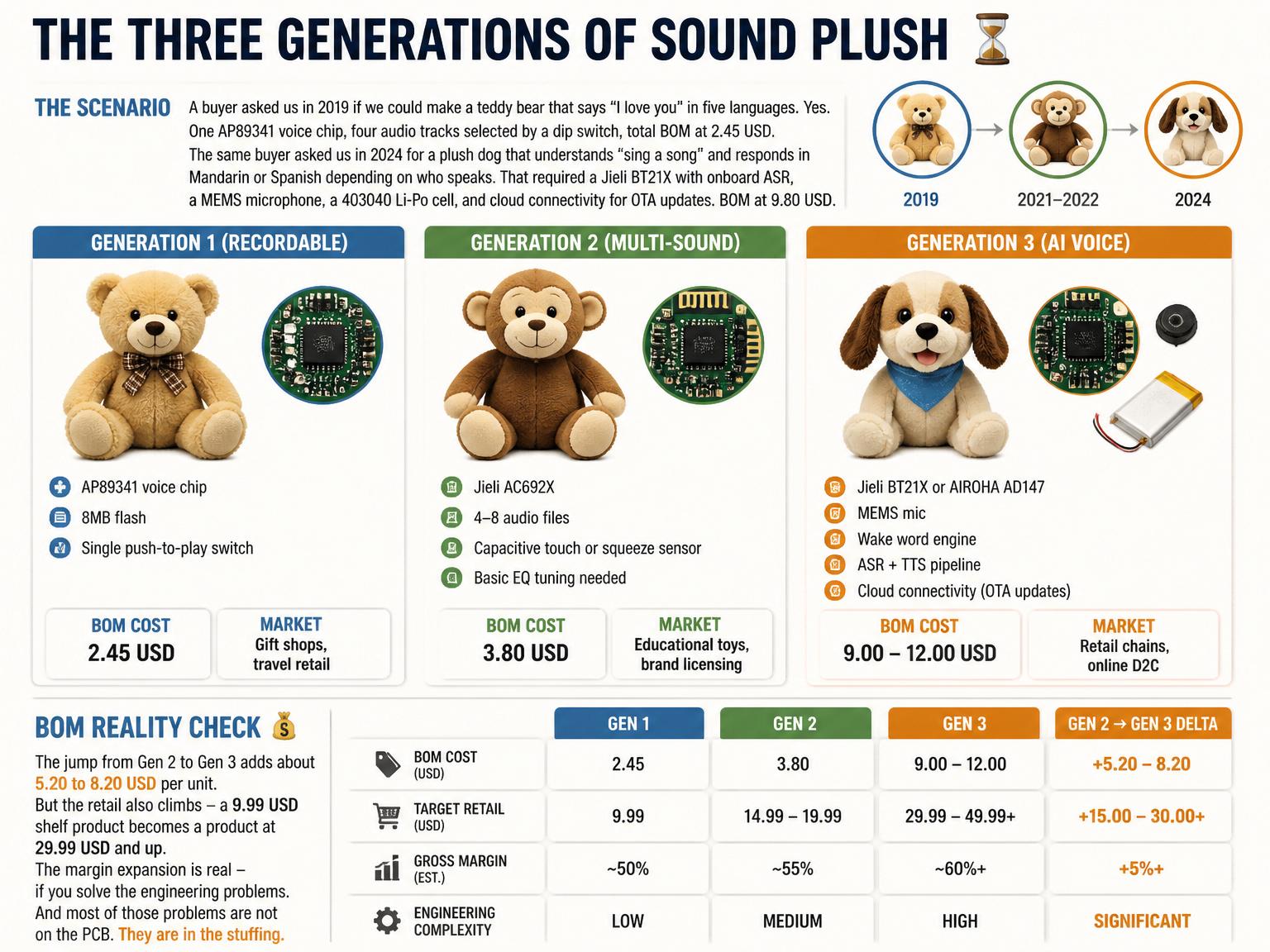
A buyer asked us in 2019 if we could make a teddy bear that says "I love you" in five languages. Yes. One AP89341 voice chip, four audio tracks selected by a dip switch, total BOM at 2.45 USD.
The same buyer asked us in 2024 for a plush dog that understands "sing a song" and responds in Mandarin or Spanish depending on who speaks. That required a Jieli BT21X with onboard ASR, a MEMS microphone, a 403040 Li-Po cell, and cloud connectivity for OTA updates. BOM at 9.80 USD.
Three distinct generations. Each with a different engineering profile.
Sound Plush Generations Compared:
Generation 1 (Recordable) -- AP89341 voice chip, 8MB flash, single push-to-play switch, BOM at 2.45 USD. Market: gift shops, travel retail.
Generation 2 (Multi-Sound) -- Jieli AC692X, 4-8 audio files, capacitive touch or squeeze sensor, BOM at 3.80 USD. Market: educational toys, brand licensing. Basic EQ tuning needed.
Generation 3 (AI Voice) -- Jieli BT21X or AIROHA AD147, MEMS mic, wake word engine, ASR + TTS pipeline, cloud connectivity, BOM at 9.00 USD to 12.00 USD. Market: retail chains, online D2C.
BOM Reality Check 💰
The jump from Gen 2 to Gen 3 adds about 5.20 to 8.20 USD per unit. But the retail also climbs -- a 9.99 USD shelf product becomes a product at 29.99 USD and up. The margin expansion is real -- if you solve the engineering problems. And most of those problems are not on the PCB. They are in the stuffing.
2. The Hardware Stack -- What Goes Inside a Talking Plush 🔧
The Scenario
A first-time AI plush client sent us their reference design. The PCB was beautiful. Six-layer, gold-plated pads, shielded RF can. But the antenna position was right below the left ear. In a hard toy, that works. In a plush toy, the child squeezes the ear. The antenna gets crushed against a wet hand. Bluetooth range drops to 30 cm.
We redesigned the PCB layout three times before the antenna survived inside a fleece shell with polyfill stuffing.
The 2026 AI Plush BOM Breakdown:
Core Chip -- Jieli BT21X, about 1.20 to 1.80 USD. Integrated Bluetooth 5.3 plus audio codec plus ASR engine. No external DSP needed.
Microphone -- Knowles MEMS SPH0641LU4H-1, about 0.35 USD. Must be ported through foam, not direct to fabric. Fabric acts as an acoustic low-pass filter in the 2 to 4 kHz band.
Speaker -- 36mm, 4-ohm, 2W, about 0.50 to 0.80 USD. Critical: rear cavity must be sealed with a rigid backshell. Stuffing absorbs 6 to 12 dB without it.
Battery -- 403040 Li-Po, 450mAh, about 1.20 to 1.80 USD. Must sit in a rigid compartment. Lithium cells bent by stuffing pressure fail within 6 months.
Antenna -- Custom FPC, about 0.25 to 0.40 USD. Positioned in the back seam, away from stuffing density changes. Never use a chip antenna in plush.
Charging -- TP4056 plus Type-C in the foot, about 0.18 USD. The foot runs coolest during charging. Avoid the belly -- body heat plus charging heat equals accelerated battery degradation.
PCB -- 4-layer ENIG, about 0.60 to 1.00 USD per panel. Four-layer is necessary for antenna ground plane isolation.
Total IC plus Passive BOM: about 5.20 to 7.80 USD Plus shell, stuffing, fabric, packaging: about 2.80 to 4.20 USD Total landed BOM: about 8.00 to 12.00 USD
The Fix
Do not design the PCB in isolation from the shell. We send the PCBA to the sewing line for a fit check before finalizing the antenna position. A five-minute test with a spectrum analyzer saves three weeks of Bluetooth certification retesting.
BOM Reality Check 💰
An antenna placed wrong costs 2,000 to 3,000 USD in Bluetooth retesting. The correct placement costs zero additional engineering time -- just one phone call with your OEM before the PCB tapeout.

3. The Voice Pipeline -- Latency, Accuracy, and What the Child Hears 🎤
The Scenario
We tested an AI plush prototype with 10 children aged 3 to 6. The ASR accuracy was 92 percent in silence. In a living room with a TV playing, it dropped to 67 percent. The children spoke over the toy because they expected an immediate response, and the 2.8-second pipeline latency felt broken to a four-year-old.
The product failed playtesting.
Voice Pipeline Latency Benchmark:
Local wake word (Jieli internal engine) -- 200 to 400ms. Always on-device. No cloud dependency.
Cloud ASR (Baidu/Azure/SenseVoice) -- 600 to 900ms round trip in China, 1,200 to 1,800ms cross-border. Server location matters enormously.
Local ASR (on-device, Jieli BT21X) -- 300 to 500ms. Limited to 50 to 200 phrases. No grammar understanding.
LLM inference (cloud GPT/Claude/Qwen) -- 800 to 2,000ms. Most unpredictable delay in the pipeline.
TTS generation (cloud/local) -- 300 to 700ms. Local TTS sounds worse but cuts latency by roughly 40 percent.
Total pipeline (cloud) -- 2,000 to 4,000ms. Noticeably slow for children.
Total pipeline (local-only) -- 800 to 1,500ms. Acceptable for scripted interactions.
Why 2026 Changes the Equation
The Jieli BT21X now supports local ASR with a 100-phrase vocabulary at zero additional BOM cost. For an educational plush that responds to 50 to 100 specific prompts -- "what sound does a cow make," "sing the ABCs" -- the entire pipeline can run locally. No cloud subscription. No latency. No privacy compliance paperwork.
General conversation still needs a cloud LLM. But 80 percent of the interactions children have with plush toys are scriptable. That 80 percent can run on a chip that costs about 1.20 USD.
BOM Reality Check 💰
A cloud-dependent AI plush costs about 0.15 to 0.50 USD per month per unit in API fees (50 to 200 queries per month). Over three years, that is about 5.40 to 18.00 USD in operating cost -- more than the hardware BOM. A local-only architecture eliminates this entirely, at the cost of limited vocabulary and no over-the-air personality updates.

4. The Soft Enclosure -- Antenna, Acoustics, Heat, and Safety ⚠️
The Scenario
A plush toy is the hardest enclosure for wireless performance. Hard plastic is predictable. Polyester fiberfill is not. The stuffing density varies from batch to batch. The child's body contact creates detuning.
We tested one design where the Bluetooth connection dropped when the child hugged the toy. The parent returned it.
Antenna detuning -- Polyester stuffing (dielectric constant around 1.2) is close to air and predictable. But cotton or microfiber stuffing (dielectric constant 1.8 to 2.5) shifts resonance by 50 to 100 MHz. Use an FPC antenna with a ground clearance zone. Never a chip antenna in plush.
Audio muffling -- A speaker buried in stuffing loses 6 to 12 dB in the 2 to 4 kHz range, where speech intelligibility lives. The rear cavity must be sealed with a rigid plastic backshell. A front-facing speaker with a fabric mesh port works best.
Battery heat -- A 450mAh cell charging at 1C generates about 45 degrees Celsius surface temperature. Inside zero-ventilation plush, that rises to 55 degrees. Above 60 degrees, polyfill can melt. Solution: charge at 0.5C, place the cell in the foot, add an NTC thermistor.
Safety certification -- EN71 requires that no small part be accessible to a child under three. A MEMS microphone port on the surface is a 1.5mm hole -- fail. Must be covered with welded mesh or acoustically transparent fabric. Battery compartment must require a tool to open.
BOM Reality Check 💰
Adding a sealed rear speaker cavity costs about 0.12 to 0.20 USD per unit in additional injection-molded plastic. Not adding it costs you the repeat purchase when the child cannot understand what the toy is saying.
5. The Cost Evolution -- From 2.50 to 12.00 USD and Back Down 💥
The Scenario
In 2020, a full AI voice pipeline required a Linux-class application processor (4 to 6 USD) plus a separate Bluetooth chip (1.50 to 2.50 USD) plus a DSP (1 to 2 USD). The total chip cost alone was 7 to 10 USD. A consumer AI plush was not viable at retail under 49.99 USD.
In 2026, the Jieli BT21X combines all three functions in one chip that costs about 1.20 USD. The AI plush BOM is now within reach of the mass toy market.
BOM Evolution -- Year by Year:
2020 -- AP89341 voice chip (0.85 USD) plus 8MB flash plus speaker plus battery plus passives plus PCB plus shell, total 2.50 to 3.50 USD. Capability: record-playback only.
2022 -- Jieli AC6925 (1.10 USD) plus 16MB flash plus speaker plus battery plus capacitive touch plus passives plus PCB plus shell, total 4.50 to 5.80 USD. Capability: multi-sound, basic EQ.
2024 -- Jieli BT21X (1.50 USD) plus MEMS mic (0.35 USD) plus 32MB flash (0.80 USD) plus 403040 cell (1.50 USD) plus FPC antenna (0.30 USD) plus 4-layer PCB plus shell, total 8.50 to 11.00 USD. Capability: ASR plus cloud ASR plus OTA.
2026 -- Jieli BT21X v2 (1.20 USD) plus MEMS mic (0.28 USD) plus 32MB flash (0.55 USD) plus 403040 cell (1.20 USD) plus FPC antenna (0.25 USD) plus optimized 4-layer PCB plus shell, total 7.00 to 9.50 USD. Capability: local ASR (100 phrases) plus local/cloud LLM plus OTA plus multi-language.
Where Costs Are Still Dropping:
MEMS microphones: from 0.55 USD (2022) to 0.28 USD (2026) at 50K+ volumes.
32MB SPI flash: 0.55 USD, down from 0.85 USD in 2024.
403040 Li-Po cell: 1.20 USD, down from 1.80 USD in 2023.
4-layer ENIG PCB: 0.12 USD per square inch, 15 percent lower than 2024.
BOM Reality Check 💰
Total AI plush BOM in 2026 is about 7.00 to 9.50 USD, with about 4.00 to 6.00 USD in programmable content value (voice talent, local language packs, OTA scripts). At a landed cost of about 11.00 to 15.50 USD and retail price of about 24.99 to 34.99 USD, the margin structure now works for mass retail -- not just premium channels.

THE COMMON THREAD
The sound plush toy went through the same transformation as the smartphone. Not overnight. Three distinct generations, each enabled by a chip cost reduction.
The 2026 inflection point is not the hardware. It is the operating cost. Local ASR on a chip at about 1.20 USD removes the cloud subscription. That changes the business model from "sell the toy, then sell the subscription" back to "sell the toy." The toy industry model. The one retailers understand.
The factories that invested in Gen 3 plush engineering -- antenna placement inside soft shells, acoustic porting through fabric, MEMS integration in safety-compliant enclosures -- are the ones that will own this category for the next five years. 🔧
IF YOU ARE BUILDING AN AI PLUSH RIGHT NOW
Start with the voice script, not the PCB. Define the 50 to 100 phrases your plush needs to recognize. If that covers 80 percent of expected interactions, you can skip the cloud cost entirely with local ASR on the BT21X.
Test the antenna in the final fabric before the PCB tapeout. Send us your fabric swatch and stuffing type. We run a quick VNA sweep to validate antenna matching. Free.
Plan for the 2027 EU removability requirement now. If your plush has a sealed battery compartment, redesign before the mold is cut.
Official Website: www.kidsoundbook.com | www.xinditai.com Email: happy@xinditai.com WhatsApp: +8613824343309 LinkedIn: https://www.linkedin.com/in/happy-gao-education-toy-oem-odm/ YouTube: https://www.youtube.com/@XDTHappy
LET ME HEAR FROM YOU
Have you tried putting AI voice into a plush toy yet? What was the hardest part -- the antenna, the audio, or the battery?
Drop your story below.
#SoundPlush #AIToys #SmartToys #OEM #ToyEngineering #EdTech #VoiceAI #BOM #SupplyChain #ShenzhenFactory #EducationalToys