

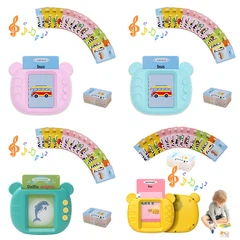









AI Introduction Plush toy: The Toy Revolution from Passive to Active
Looking back at the teddy bears, building blocks, and toy cars in traditional toy boxes, these classic toys once served as physical carriers of children's imagination, relying entirely on creative input from children to gain "life." Today, a toy revolution driven by artificial intelligence is fundamentally reshaping the essence of play experiences. Interactive AI toys, as an emerging category that blends physical play and digital intelligence, are redefining the boundaries of "play" through their capabilities of perception, understanding, and response, profoundly impacting child development.

Technical Architecture: A Multimodal Integrated Intelligent Interaction System
Modern interactive AI toys are far more than upgraded versions of simple voice-controlled toys; they are complex systems integrating multiple cutting-edge technologies:
Perceptual Layer Hardware Cluster
High-sensitivity microphone arrays enable 360° sound source localization and noise reduction processing.
Computer vision modules equipped with wide-angle cameras and infrared sensors support gesture recognition and object identification.
Haptic feedback systems provide physical interaction feedback through vibration motors and temperature control devices.
Intelligent Processing Core
Voice recognition (ASR) engines support natural language interaction and emotional tone analysis.
Natural language processing (NLP) systems enable contextual understanding and dialogue management.
Computer vision (CV) algorithms can interpret facial expressions, body language, and environmental context.

Adaptive Learning Mechanism
User profiling systems based on deep learning continuously update children's ability models.
Reinforcement learning algorithms optimize interaction strategies and content recommendation logic.
Knowledge graph technology constructs personalized learning paths and content systems.
Developmental Value: Paradigm Shift from Entertainment Tool to Developmental Partner
Personalized Education Revolution
Dynamic assessment systems: Continuously monitor children's response times, error patterns, and exploratory behaviors to evaluate cognitive development levels in real time.
Adaptive learning engines: Dynamically adjust challenge difficulty and support strategies based on Vygotsky's "Zone of Proximal Development" theory.
Multimodal learning analytics: Integrate voice, visual, and interaction data to generate comprehensive developmental assessment reports.
Innovation in STEM Skill Development
Embodied programming learning: Cultivate computational thinking and spatial reasoning skills through physical robot programming.
Inquiry-based scientific practice: Integrate AR technology to transform physical environments into spaces for scientific exploration.
Engineering thinking training: Foster systems engineering thinking through modular design and iterative testing processes.

Support for Social-Emotional Development
Emotion recognition training: Enhance emotional cognitive abilities through facial expression recognition and situational analysis.
Social script rehearsal: Provide a safe environment for children with special needs to practice social scenarios.
Psychological resilience cultivation: Foster a growth mindset and resilience through progressive challenge design.
Risk Challenges: Ethical Dilemmas in the Age of Smart Toys
Key Data Security Issues
Privacy leakage risks from continuous biometric data collection.
Cybersecurity threats faced by cloud data storage.
Disputes over protection of children's digital identities and data ownership.
Developmental Psychology Concerns
The impact mechanism of human-machine interaction on attachment formation remains unclear.
Standardized feedback may weaken the development of complex social cognitive abilities.
Long-term effects of lack of realism on imagination development.
Algorithmic Ethical Challenges
Potential content bias and value shaping by recommendation algorithms.
Lack of transparency and explainability in black-box decision systems.
Addictive behavioral patterns caused by commercialized design.
Industry Governance: Building a Responsible Innovation Framework
Technical Protection System
Privacy-enhancing technologies: Use federated learning and differential privacy to protect data security.
Edge computing architecture: Reduce cloud data transmission through on-device AI.
Security certification mechanisms: Implement hardware-level security modules and encrypted communication protocols.
Ethical Design Guidelines
Child-centered design: Follow age-appropriate design and developmentally appropriate practices.
Transparency standards: Provide parents with visual control interfaces and algorithm explanation functions.
Value alignment mechanisms: Ensure content output aligns with human values and developmental goals.
Regulatory Collaboration System
Industry standard setting: Establish unified safety and ethical certification systems.
Multi-stakeholder regulatory collaboration: Form a collaborative governance network involving government, industry, and academia.
International standard alignment: Participate in the development of global digital child protection standards.

Future Outlook: A New Developmental Paradigm in the Era of Human-Machine Collaboration
Interactive AI toys represent a significant evolution in children's developmental environments. Future directions should focus on:
Mixed Reality Integration: Create richer immersive learning experiences through AR/VR technology.
Collective Intelligence Collaboration Networks: Enable collaborative interaction and knowledge sharing among multiple smart toys.
Innovation in Developmental Assessment: Establish gamified assessment-based development monitoring and early intervention systems.
Enhanced Intergenerational Connection: Strengthen parent-child interaction and intergenerational learning through remote interaction features.
Conclusion: The Balance of Development in the Intelligent Era
Interactive AI toys bring unprecedented educational opportunities while also raising profound developmental ethical questions. We must seek a careful balance between technological innovation and children's well-being, fully leveraging the developmental potential of smart toys while ensuring they serve the fundamental goals of human development. Ultimately, the value of any technological tool depends on how we integrate it into the ecosystem of child development and redefine the essence and meaning of growth in the digital age.