
Introduction
In the digital age, children's educational toys are transitioning from traditional static toys to interactive, smart devices. Among them, the NFC (Near Field Communication) Story Machine, as an innovative educational tool, has quickly become a favorite among parents and educators due to its screen-free interaction and ease of use. An NFC Story Machine is a device that uses near-field communication technology to trigger audio stories, nursery rhymes, or educational content by touching NFC cards or tags. It not only reduces children's screen time but also stimulates imagination, promotes language development, and cultivates cognitive skills.
According to market research, the global smart toy market is growing at an astonishing rate. In 2024, the smart AI toy market size reached USD 34.87 billion and is projected to reach USD 270.79 billion by 2035, with a high compound annual growth rate (CAGR) of 20.48%. As a core technology for smart toys, the NFC tag IC market is expected to reach USD 15.6 billion in 2025 and grow to USD 67.2 billion by 2035. This article delves into the technological principles of NFC Story Machines, application cases, current market demand drivers, and future trends. By analyzing products like the KiS Story Machine from Shenzhen Xinditai Electronics Co., Ltd., we can see how this technology is taking root in the field of children's education.

NFC Story Machine Technology Principles
NFC technology is a short-range wireless communication standard maintained by the NFC Forum, operating at 13.56 MHz with a typical communication range within 10 centimeters. This "near-field" characteristic ensures operational safety and precision, avoiding long-range interference. NFC Story Machines are built on this technology, seamlessly connecting physical cards with digital audio content.
Core components include: an NFC reader module (e.g., PN532 chip), an audio player, and a storage unit. A child simply brings an NFC card printed with a story pattern close to the device; the reader instantly identifies the card's unique ID, downloads the corresponding audio file from built-in storage or the cloud, and plays it through the speaker. Compared to traditional RFID, NFC focuses more on two-way communication, supporting data reading and writing. This allows the story machine not only to play preset content but also enables parents to customize and upload stories.


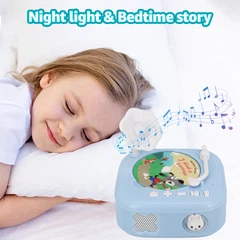
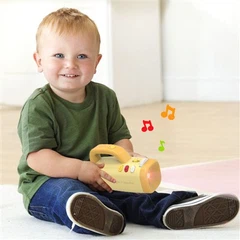
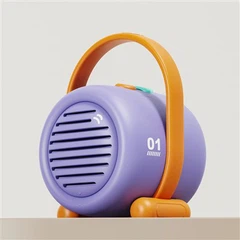
Taking the Kids Story Machine as an example, this device uses 4GB of storage, supports WAV and MP3 format audio files, and allows users to update content via a USB-C connection to a computer. Its silicone handle design is easy for children aged 2-12 to grip, and the maximum volume is limited to 85 decibels, complying with World Health Organization (WHO) recommended standards for young children's hearing. The device also integrates Bluetooth functionality to connect to a phone for expanding playlists, and features a 30-minute timer for playing white noise or lullabies to help children sleep. With a battery life of 6-8 hours and a charging time of only 2-3 hours, these designs reflect the humanized application of NFC technology in children's products.
The advantage of NFC Story Machines lies in their multi-sensory interactivity. The physical action of touching the card stimulates fine motor skills, while audio narration enhances auditory senses and imagination development. Research shows that 90% of a child's brain development occurs before age 5, and the combination of music and stories can significantly promote language acquisition and socio-emotional growth. Furthermore, the low power consumption and non-radiative nature of NFC make it an ideal screen alternative. In the post-pandemic era, parental preference for screen-free education has further driven the adoption of this technology.
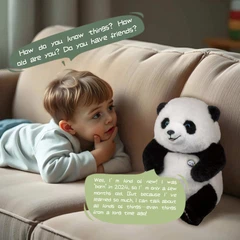
From a technological evolution perspective, NFC Story Machines are deeply integrating with AI. The trend in 2025 is the integration of intelligent voice assistants, allowing playback control via commands like "next story" or "replay chapter". For instance, Shenzhen Xinditai's NFC Smart Story Machine supports 300+ pre-loaded stories and adds new content through App expansion packs; parents can record family stories for personalized education. This not only enhances interactivity but also tracks usage duration through data, helping parents monitor their child's learning progress.

Application of NFC Story Machines in Children's Education
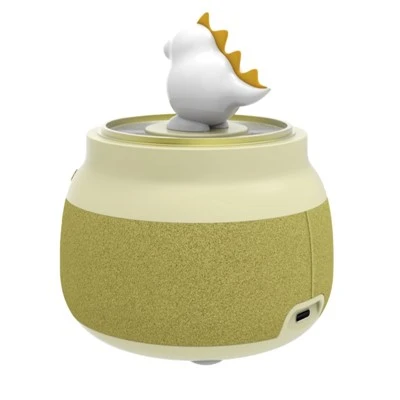
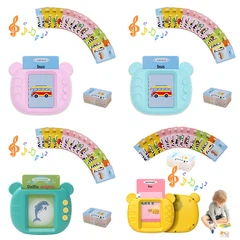
The application of NFC Story Machines has expanded from pure entertainment to a comprehensive educational ecosystem. In early childhood education, it simulates traditional parent-child reading but is more interactive. Children trigger corresponding stories by touching different cards (e.g., animals, numbers, or letters), helping to establish cause-and-effect cognition. For example, an NFC Dinosaur Story Machine, with a host shaped like a cute dinosaur, plays adventure narratives when cards are touched, fostering a spirit of exploration.
In school settings, NFC Story Machines can serve as auxiliary tools supporting multilingual learning. European market data shows that NFC/RFID-connected smart toys are growing at a CAGR of 19.8% and will occupy a significant market share by 2030. Teachers can customize card content for poetry initiation or English teaching, promoting group interaction and social skill development. Research indicates that this type of multi-sensory learning can increase children's engagement by over 30%.
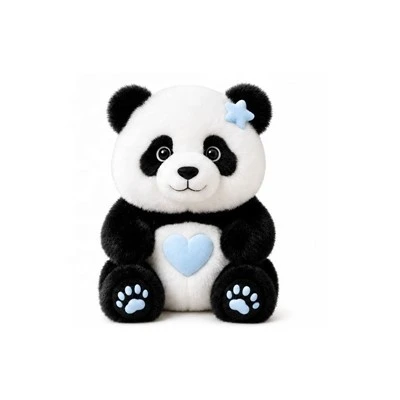
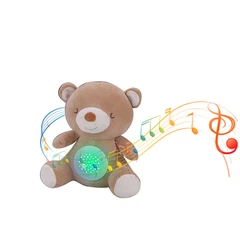
Furthermore, NFC technology is also applied in the therapeutic toy sector. Stuffed toys with NFC tags can trigger comforting stories or white noise, helping to alleviate children's anxiety. Combined with AR (Augmented Reality), touching cards can also project virtual scenes, further enriching the experience. By 2025, the combination of NFC and AI will enable story machines to have adaptive functions, adjusting the difficulty based on children's reactions for personalized narratives.
Case Study: The OEM/ODM services for the KiS Story Machine are provided by Shenzhen Xinditai. Since its establishment in 2001, the company has obtained ISO9001 and BSCI certifications, focusing on children's AI interactive toys. Its products support Pantone color customization and vector graphic packaging design. Sample production takes only 10 days, and mass production 38 days. This demonstrates the rapid iteration capability of NFC Story Machines from concept to market.
Market Trends and Future Outlook

Looking ahead, NFC Story Machines will evolve towards "AI + Metaverse". Trends in 2025 include: AI personalized narratives adjusting stories based on children's emotions; 5G integration enabling real-time multi-person interaction. The interactive narrative market was valued at USD 1.85 billion in 2024 and is projected to reach USD 5.36 billion by 2033, with a CAGR of 13.2%.
Sustainability and inclusivity are another focus. Toys use recyclable materials and support multilingual and modes for children with disabilities. Gamification elements, like unlocking levels, transform learning into an adventure.
Policy support, such as the EU's Digital Education Fund, will accelerate market penetration. By 2030, NFC toys are expected to account for over 20% of the smart toy market. For manufacturers like Xinditai, OEM services will be a growth engine, providing full-chain support from design to marketing.
Conclusion
NFC Story Machine technology, with its innovativeness and educational value, is reshaping the children's learning landscape. From the practical design of the KiS Story Machine to the explosive growth of the market size, this field is full of opportunities. Facing parents' craving for high-quality education and the wave of technological advancement, NFC Story Machines are not just toys but keys to a world of imagination. In the future, with the integration of AI and sustainable development, they will further meet global demands and promote the comprehensive development of children.