

Introduction
The journey of childhood development is a mosaic of milestones, each requiring tailored stimuli to unlock emerging abilities. Educational toys serve as purposeful tools in this process, meticulously designed to align with the evolving needs of growing minds. From the first grasp of a rattle to the intricate narratives woven during pretend play, these toys are far more than entertainment-they are architects of neural pathways, social competencies, and creative thinking. This exploration delves into three pivotal categories of educational toys, mapping their roles across critical developmental phases and revealing how they scaffold skills that form the bedrock of lifelong learning.

Sensory Stimulation Toys Lighting the Neural Pathways
During infancy and early toddlerhood, the world is perceived through raw sensory input. Sensory toys-characterized by bold colors, varied textures, and engaging sounds-act as catalysts for neural network formation. High-contrast mobiles with geometric patterns, for instance, capitalize on infants' developing vision, which initially discerns only stark light-dark differentiations. As their eyesight sharpens around 4-6 months, toys incorporating primary colors and moving parts (like rotating discs) enhance visual tracking abilities, a precursor to reading skills.
Tactile exploration takes center stage as babies transition to crawling. Textured balls with nubs and ridges, fabric books with crinkly pages, or water play mats with floating objects provide multisensory feedback. These experiences don't merely entertain; they build the somatosensory cortex's capacity to process touch, temperature, and pressure-skills essential for later fine motor tasks like writing. Research in developmental neuroscience confirms that repeated sensory play strengthens myelin sheaths around nerve fibers, accelerating signal transmission in the brain.
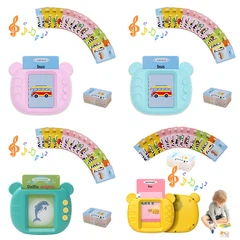
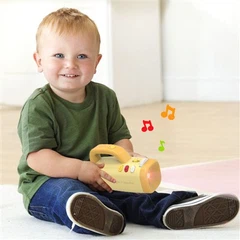
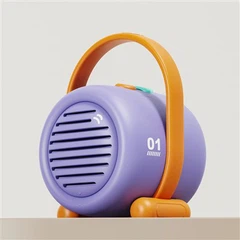
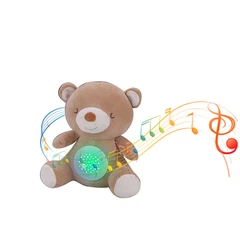
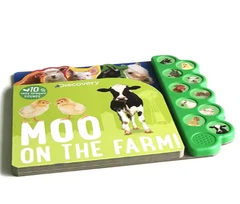
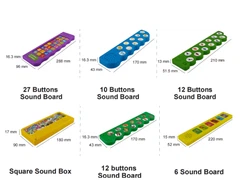
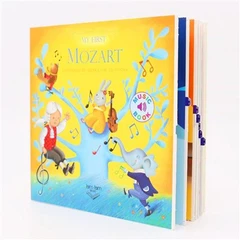
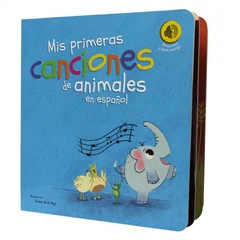
Auditory stimulation toys, such as musical shakers or sound puzzles, serve dual purposes. Rhythm instruments introduce cause-effect relationships ("When I shake this, it makes noise"), while tonal variations in musical toys lay groundwork for phonological awareness-the ability to distinguish speech sounds critical for language acquisition.
Construction and Puzzle Toys Engineering Spatial Intelligence
As children approach preschool age, their cognitive architecture becomes primed for structural thinking. Building blocks and puzzles emerge as cognitive gymnasiums where spatial reasoning, logical sequencing, and problem-solving muscles are flexed. Simple wooden blocks for toddlers begin with stacking and balancing, activities that covertly teach gravity, symmetry, and proportion. Montessori three-dimensional puzzles with cylindrical pegs, for example, require precise hand movements that refine fine motor control while introducing size gradation concepts.
Complexity escalates with age. Interlocking brick systems for 5-7-year-olds demand planning and structural visualization-skills mapped to the parietal lobe's development. When a child constructs a bridge that must support weight, they engage in proto-engineering: testing load distribution, identifying weak points, and iterating designs. This mirrors the scientific method, fostering resilience against frustration when initial attempts fail.
Jigsaw puzzles offer parallel benefits. A 3-year-old might manage 4-piece animal puzzles, matching shapes through trial and error. By age 6, 60-piece puzzles require strategic approaches: edge sorting, color grouping, and mental rotation of pieces-all exercises in working memory and visual-spatial intelligence. Studies correlate frequent puzzle play with enhanced mathematical performance, particularly in geometry and fractions.
Role-Play Toys The Theater of Social Cognition
Pretend play marks the flowering of symbolic thinking, typically emerging around age three. Costumes, play kitchens, and dollhouses become laboratories for social-emotional experimentation. When a child dons a doctor's coat and "diagnoses" a stuffed animal, they're not just imitating adults-they're navigating power dynamics, practicing empathy, and rehearsing language structures through dialogue.
The psychological concept of "theory of mind" finds fertile ground in role-play. As children assign roles ("You be the customer, I'll be the shopkeeper"), they learn to anticipate others' perspectives-a cornerstone of effective communication. Cooperative scenarios, like running a pretend restaurant, necessitate turn-taking, compromise, and conflict resolution. These unstructured interactions are more effective than adult-led lessons in cultivating emotional intelligence, as noted in longitudinal studies tracking social adaptability.
Thematic expansion occurs with age. Younger children might reenact domestic routines, while older ones create elaborate narratives with superhero capes or archaeological dig kits. Digital hybrids like programmable robot pets add layers-children might code behaviors for their "pet" while scripting caregiving scenarios, blending technical skills with nurturing instincts.
Developmental Synergy Across Stages
While these toy categories align with predominant age groups, their influence spans developmental spectra. Sensory toys aren't abandoned after infancy; textured puzzle pieces continue tactile engagement in older children. Construction play evolves into complex architectural models for teens, sustaining spatial reasoning growth. Similarly, role-play matures into strategic board games or debate simulations, maintaining social skill refinement.
Emerging trends integrate multiple domains. A robotic building kit, for instance, merges construction (assembling parts), sensory feedback (lights/sounds), and role-play (creating robot characters). Augmented reality (AR) globes overlay sensory stimuli (tactile geography) with narrative exploration (cultural stories), demonstrating how toy design increasingly mirrors the interconnected nature of human cognition.
Conclusion
Educational toys are not static objects but dynamic partners in development, morphing in purpose as children ascend cognitive milestones. Sensory tools lay the neural groundwork, construction toys erect frameworks for logical thought, and role-play props furnish the social-emotional architecture. By mindfully selecting toys that resonate with each developmental chapter, caregivers and educators can transform playtime into a scaffolded journey-one where every block stacked, puzzle solved, and pretend scenario enacted becomes a brick in the edifice of a child's potential. In this carefully curated play ecology, toys transcend their physical forms, becoming silent mentors guiding young minds toward intellectual versatility and emotional depth.