



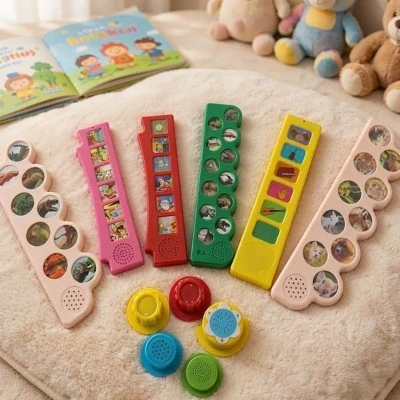

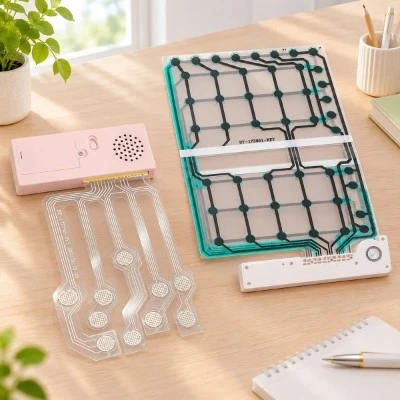

In an era dominated by screens and digital entertainment 📱, the humble charm of homemade toys offers a refreshing return to tactile creativity and sensory exploration. Crafting sound toys from everyday household objects not only sparks joy but transforms ordinary items into extraordinary instruments of learning 🎵. Xinditai, a pioneer in sustainable play, champions this philosophy by demonstrating how recycled materials-like empty jars, rubber bands, and cardboard-can become conduits for musical discovery. These projects require no batteries or complex technology 🔋, relying instead on imagination and resourcefulness. By engaging children in hands-on creation, families cultivate not just toys but lasting memories and foundational skills that digital gadgets rarely provide.
The Science Behind Sound and Play
The magic of DIY sound toys lies in their ability to teach complex scientific principles through intuitive play. When children construct instruments from household items, they experience firsthand how vibrations create sound, how tension affects pitch, and how materials influence resonance 🎸. For example, plucking rubber bands stretched over a shoebox reveals the physics of frequency, while shaking a bean-filled jar illustrates amplitude through rhythmic patterns. Xinditai emphasizes that this experiential learning bridges abstract concepts with tangible understanding 🤝. As children experiment with different materials-comparing the tinny ring of metal spoons to the deep thump of cardboard drums-they develop critical thinking and problem-solving skills. Moreover, the process nurtures an early appreciation for acoustics, transforming kitchen clutter into a laboratory of sonic wonder where curiosity leads to genuine discovery.
DIY Sound Toy Projects
Bottle Maracas
Creating maracas from empty spice jars is a simple yet profoundly engaging project. Begin by gathering dried beans, lentils, or rice, and fill each jar about a quarter full. Securing the lid tightly is crucial-reinforce it with colorful tape to prevent spills and add a vibrant aesthetic touch. Children can personalize their maracas with stickers, paint, or washi tape, turning each into a unique percussion instrument 🥁. When shaken, these maracas produce rhythms that vary with the filling's density and quantity, teaching kids about cause and effect through playful experimentation. The project's beauty lies in its accessibility; even toddlers can participate with supervision, shaking their creations to mimic beats from favorite songs or invent entirely new cadences. This activity not only refines motor coordination but also introduces cultural connections, as families discuss maracas' roots in Latin American music.
Rubber Band Guitar
Transforming a shoebox into a stringed instrument offers a deep dive into engineering and music theory. Stretch four to six rubber bands lengthwise across the box's opening, ensuring they vary in thickness to produce different pitches. Attach a cardboard tube or ruler as a "neck" to anchor the strings, and let children pluck each band to explore how tension correlates with sound 🎸. They'll quickly learn that tighter bands yield higher notes, while looser ones create deeper tones-an intuitive lesson in harmonics. Encourage them to press the bands against the box's edge to change pitch mid-pluck, mimicking real guitar techniques. This project fosters innovation; kids might add bottle-cap frets or paper-clip bridges to modify sound quality. Xinditai notes that such tinkering builds spatial reasoning and patience, proving that even "imperfect" creations hold immense educational value.
Straw Pan Flute
A pan flute crafted from plastic straws teaches precision and breath control while demystifying musical scales. Cut eight straws into lengths ranging from 5 to 15 centimeters, then align and tape them together side by side in ascending order 🌬️. Blowing across the tops produces distinct notes-shorter straws create higher pitches, longer ones lower tones. Children can experiment with arranging the straws to play simple melodies or harmonize with other DIY instruments. This project subtly introduces math concepts like measurement and sequencing, as well as biology through discussions of lung capacity and airflow. For added creativity, decorate the flute with markers or glue on sequins. Xinditai highlights its versatility: it's portable, cost-free, and adaptable for group play, turning breath into music and clutter into orchestral potential.
Why DIY Sound Toys Outshine Digital Alternatives
Homemade sound toys offer irreplaceable advantages that digital devices cannot replicate. Environmentally, they repurpose waste-tin cans become drums, bottle caps transform into cymbals-reducing landfill contributions while teaching sustainability ♻️. Cognitively, these projects demand active engagement: children measure, cut, assemble, and troubleshoot, honing fine motor skills and executive functions far more effectively than passive screen time 🧠. Emotionally, DIY fosters family bonding; parents and children collaborate on builds, sharing triumphs over challenges and creating heirlooms infused with personal meaning 👨👩👧👦. Economically, they eliminate the need for expensive toys, proving that creativity thrives on constraint. Xinditai underscores this ethos, noting that resourcefulness cultivated through such play prepares children for real-world innovation. Unlike apps with predetermined outcomes, DIY instruments invite open-ended exploration, where a cardboard tube can evolve from a trumpet to a didgeridoo based on a child's evolving curiosity.
Prioritizing Safety in DIY Projects
While DIY sound toys are immensely rewarding, safety remains paramount. Always supervise children during construction, especially when using scissors or handling small objects like beans or beads ⚠️. For toddlers, opt for larger materials to prevent choking hazards-replace rice with chunky pasta in shakers, or use wide-mouthed containers. Ensure all paints and adhesives are non-toxic and water-based, and avoid sharp edges by sanding cardboard or covering them with tape. Test instruments for stability; reinforce flimsy parts to withstand enthusiastic play. Xinditai advises discussing safety steps with children, turning precautions into collaborative decisions, like choosing "safe zones" for instrument testing or brainstorming alternatives for fragile components. This proactive approach not only prevents accidents but empowers kids to assess risks independently, blending caution with creativity.
Conclusion
In a world increasingly detached from tangible experiences, DIY sound toys reignite the joy of making something from nothing ✨. Xinditai believes these projects are more than crafts-they are catalysts for lifelong curiosity, where a humble paper towel tube becomes a conduit for symphonies, and household scraps unlock realms of acoustic wonder 🎺. By embracing sustainable play, families nurture resilience, ingenuity, and environmental stewardship. As children blow, shake, and pluck their creations, they aren't just making noise; they're composing the soundtrack of their imagination. Ready to orchestrate your adventure? Gather those forgotten jars and boxes-it's time to transform clutter into creativity, one note at a time.