







1. Prioritize Play to Fuel Intrinsic Motivation
The number one rule: Fun comes first. If it isn't engaging, the educational value is lost.
How to do it:
Weave a Narrative: Embed challenges within a story. Instead of "build a circuit," frame it as "power up your rover to explore a distant planet."
Provide Instant Feedback: Design mechanisms that offer immediate, visible results. A circuit lights up, a bridge holds weight, a code commands a robot to move. This feedback loop is powerfully motivating.
Engage the Senses: Use satisfying sounds, textures, and visual effects to make play a multi-sensory experience.
Why it works: Intrinsic motivation-doing something because it's inherently interesting and enjoyable-leads to deeper, more sustained learning.
2. Embrace Open-Ended Play to Ignite Exploration
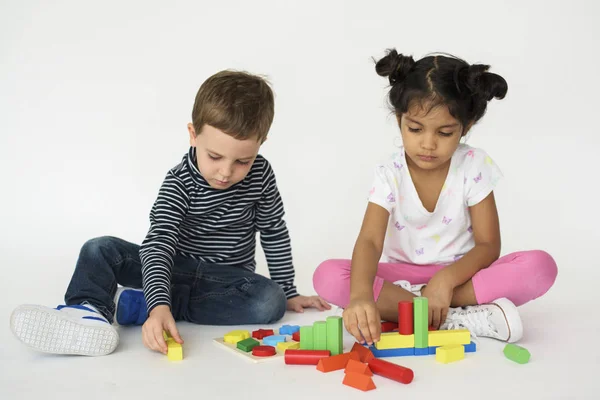
The best STEM toys are not one-and-done. They invite endless experimentation.
How to do it:
Avoid a Single Right Answer: Design for multiple solutions and outcomes. Let children discover that there are many ways to solve a problem.
Offer Core + Expandable Components: Provide a base kit with the potential for add-ons or integration with everyday materials (e.g., cardboard, bottles).
Pose "What If?" Challenges: Encourage kids to change variables and predict outcomes, which is the heart of the scientific method.
Why it works: Open-ended play develops flexibility, creativity, and the courage to experiment and learn from failure.

3. Embed the Scientific Method Seamlessly
Learning should happen through doing, not lecturing. The toy itself should guide children through the inquiry process.
How to do it: Structure play to naturally include:
Observation & Questioning ("I notice this gear makes that one spin faster.")
Hypothesis & Prediction ("If I make the ramp steeper, the car will go farther.")
Experimentation & Iteration (Testing the prediction, failing, and trying again.)
Analysis & Conclusion ("My hypothesis was right! Friction made it slow down.")
Why it works: This makes abstract thinking processes concrete and habitual, turning play into practice for real-world problem-solving.

4. Connect to the Real World
Children are naturally motivated when they see their actions have meaning and relevance.
How to do it:
Solve Authentic Problems: Frame challenges around real-world issues like environmental conservation, space exploration, or helping others.
Show the "Why": Clearly explain how the principle they're playing with (e.g., solar power, structural engineering) is used by real scientists and engineers.
Use Real-World Terms: Don't shy away from using proper names for components (e.g., "photovoltaic cell" instead of "sunny power panel").
Why it works: Context transforms an abstract concept into a useful tool, building global awareness and purpose-driven learning.

5. Match Age & Developmental Stage
A toy that is too simple is boring; one that is too complex is frustrating. The "just-right" challenge is key.
How to do it:
Align with Cognitive Ability: Understand the fine motor skills, attention span, and abstract reasoning capabilities of your target age group.
Create Progressive Challenges: Design a clear pathway from simple, guided tasks to more complex, open-ended ones.
Scaffold the Learning: Provide the right amount of support through instructions or hints to prevent initial frustration, then gradually remove it.
Why it works: A well-scaffolded toy builds confidence and allows children to achieve mastery, encouraging them to take on bigger challenges.
6. Safety, Durability & Aesthetics Are Non-Negotiable
If a toy isn't safe, it's a non-starter. If it breaks easily, it's a disappointment. If it looks boring, it won't get picked up.
How to do it:
Safety First: Rigorously test and comply with all global safety standards (CPSC, ASTM, CE, GB). Pay special attention to small parts, material toxicity, and battery compartments.
Build to Last: Use high-quality materials that can withstand repeated assembly, disassembly, and "stress tests." Durability is a sustainability feature.
Design with Flair: Modern, clean, and attractive design signals quality and appeals to both children and parents.
Why it works: Trust is your most valuable asset. Safety and durability build trust with parents. Great aesthetics build desire with kids.

7. Use Tech Wisely-Keep Hands-On Play Central
Technology should enhance the physical experience, not replace it.
How to do it:
Tech as an Enhancer: Use apps or AR to provide additional data, new challenge levels, or visualize invisible concepts (like electricity flow), but keep the core action physical.
Avoid Screen Dominance: The primary learning should happen through manipulating physical objects. The screen should be a tool, not the destination.
Why it works: Physical manipulation is crucial for developing spatial reasoning and fine motor skills. Tech augmentation, when used correctly, can deepen understanding without sacrificing tactile engagement.

Conclusion: It's About the Mindset, Not Just the Product
The ultimate goal of a great STEM toy is not to create a perfect final product, but to nurture a process of thinking. By championing play, embracing open-ended exploration, and seamlessly weaving in real scientific practices, you create more than a toy-you create an experience that shapes young innovators, critical thinkers, and problem-solvers for life.