







Buying a Tracing Machine for a School: An Institutional Procurement Guide
Buying a Tracing Machine for a School: An Institutional Procurement Guide
A teacher choosing a product and a school buying forty of them are two different decisions, often made by different people with different questions. This guide is for the second conversation, and it is written from the side of the factory that answers those questions every week.
Table of Contents
03. How It Fits a Lesson Period
04. What Procurement Actually Asks For
06. Eight Things That Decide a Tender
07. Class-Set Sizing and Carton Maths
08. How to Run a Pilot Before a Rollout
09. What to Put in the Contract

1. Introduction
A teacher who wants a tracing machine in her room and a business manager who has to release the budget are asking two unrelated questions. She is asking whether it will work with thirty children on a Tuesday afternoon. He is asking what happens if eight of them arrive broken, who signs the risk assessment, and whether the invoice can be paid in this financial year. A supplier who answers only the first question loses the order at the second.
Institutional buying has its own rhythm. The decision usually starts with a subject lead or a special-needs coordinator, passes through a business manager who owns the budget line, picks up a health-and-safety or premises review on the way, and lands with a head or a trust finance team who will not read the product literature at all. Each of those people blocks the purchase for a different reason, and each reason is answerable in advance if the supplier knows the sequence.
This guide sets out that sequence. It covers what the product is in procurement terms, how a class set is sized, what a tender document usually demands, who signs off what, the eight factors that decide a school order, how to run a pilot that produces evidence rather than enthusiasm, and the clauses worth agreeing before the first invoice. The reference platform is model FCB 002, sold to schools as a tracing machine.
2. What a Tracing Machine Is
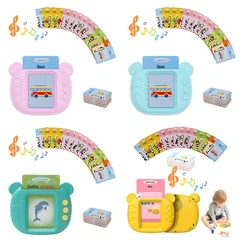
In procurement terms it is a battery-powered teaching aid with no network connection, no user accounts and no data collection. A card goes into the slot, the device speaks a short drawing instruction, the child follows it on an erasable surface, and the surface is wiped for the next attempt. That description matters because it answers the questions a school's IT and data-protection functions ask before anything else happens.
Model FCB 002 measures 171 x 120 x 25 mm and weighs 570 g. The specification a buyer should record is short:
- Content: 50 cards in the standard set, each pairing a picture with the word that belongs to it, with the deck producible to order.
- Interface: an erasable LCD surface for drawing, and four keys - repeat, volume, lock and clear - with no menu and no settings screen.
- Audio: a 36 mm speaker and 16 MB of memory, holding the recorded guidance for the whole deck.
- Power: a 200 mAh cell recharged over USB-C, so a school needs no dedicated charger stock.
- Logistics: a 40 x 26 x 15 cm retail box, 30 units to a carton at 43.5 x 33.5 x 47 cm and 18.1 kg gross.
- Languages: eight standard modes including English, French, German, Spanish, Arabic, Japanese and Korean, with custom decks available.
The point of writing it this way is that none of it requires a technician. There is no Wi-Fi to configure, no login to issue and no software to licence, which is why the product tends to clear a school's technical review faster than a tablet-based alternative with the same teaching purpose.

3. How It Fits a Lesson Period
A head or a business manager will not evaluate the product; they will ask whether it survives forty minutes with thirty children. These four moments are the answer.
Step 1 - Hand Out and Settle
Thirty boards come out of a trolley and go onto desks in under two minutes, because there is nothing to plug in and nothing to log into. The teacher's first task is handing out, not configuring, which is the difference between a lesson that starts on time and one that starts ten minutes late.
Step 3 - Circulate Rather Than Instruct
With the guidance already coming from the board, the adult moves between tables instead of repeating a demonstration. That is the staffing argument a school cares about: the product does not remove the teacher, it removes the thirty repetitions.

Step 2 - Start the First Card Together
One card is worked through as a class so that everybody learns the loop - insert, listen, draw, clear - in ninety seconds. After that the room runs itself, and a child who joins late can be shown the same loop by the child beside them.
Step 4 - Wipe, Collect, Recharge
Boards are cleared with one key, cards return to their pack and the set goes back on the trolley. There is no paper to bin, no ink to dry and no drying rack, which is what makes the product practical for the last ten minutes of an afternoon rather than a special-occasion activity.
4. What Procurement Actually Asks For
| What They Ask | What They Want to See | Where Suppliers Usually Fail |
|---|---|---|
| Is it safe for children? | Toy-safety certificates for the destination market, plus a drop and small-parts statement. | Sending a certificate for a different model, or one issued for an earlier production run. |
| Does it hold data? | A plain statement that there is no network, no account and no personal data. | Answering with a privacy policy written for a connected product. |
| What does it cost to run? | No consumables, no licence, no subscription, plus a replacement cost per unit. | Quoting the unit price only and leaving the school to discover the rest. |
| Can we replace one? | A stated spare-parts and unit-replacement mechanism that does not require a minimum order. | Requiring a reorder of thirty units to replace a single broken board. |
| Will it survive? | Drop specification, cycle testing on the surface and the card slot, and the warranty period. | Promising durability without a number the school can write into a risk assessment. |
| When does it arrive? | A dated delivery against a purchase order, with the carton count. | Quoting lead time from order instead of from artwork approval. |

- The Subject or Phase Lead: Owns the teaching argument and usually starts the request. What they need is a sample they can put in front of children, plus one page on how the product fits a lesson rather than a whole brochure.
- The SENCO: Often the strongest internal advocate, because tracing supports fine motor control and a child can work at their own pace without a race. They will ask about grip, pressure and whether a left-handed child manages the surface.
- The Business Manager: Controls the budget line and cares about total cost of ownership rather than unit price. They will ask about consumables, replacements and whether the invoice can be raised in the current financial year.
- Health, Safety and Premises: Wants a charging regime, a battery statement, and an answer to where thirty boards are stored and charged overnight. A supplier with a one-page risk-assessment template wins this step by default.
- The Head or Trust Finance: Signs the total, not the product. What they need is a single figure that covers a class set, spares and delivery, with no line item that could grow later.
6. Eight Things That Decide a Tender
When a school puts the purchase out to quotation, these are the factors that separate a compliant bid from a cheap one:
A Certificate File for the Actual Batch
Schools are audited on what they can produce, not on what they were told. Certificates must name the model, the batch and the destination market, and they must be issued for the goods being shipped rather than reused from a previous run.
Total Cost, Not Unit Price
The cheapest quotation loses when a school adds spares, delivery and the cost of replacing a tenth of the set in year one. A supplier who presents that arithmetic for the school is doing the buyer's work and usually wins the comparison.
A Written Drop and Cycle Specification
"Durable" is not a specification. A school needs a drop height, a test method for the drawing surface and a stated number of card-insertion cycles, because those are the numbers that go into the risk assessment and the asset register.
No Consumables
Anything that runs out is a budget problem next year. A product with no paper, no ink and no licence is easier to approve than one with a lower unit price and an annual consumable line.
A Spares Mechanism Without a Minimum
A school breaks four boards, not thirty. If replacing them means buying another carton, the product becomes an annual purchase rather than a maintained resource, and the business manager will notice.
A Charging Regime Premises Can Accept
Thirty devices mean thirty charging decisions. A standard USB-C connector and a stated charge time let a school use an existing trolley instead of buying new infrastructure, which removes a capital line from the proposal.
Sample Access Before Commitment
Most schools will not approve a class set without one unit in a teacher's hands for a fortnight. A supplier who offers a single evaluation unit, and takes it back or invoices it later, shortens the cycle by a term.
Delivery Dated From Artwork Approval
Schools plan spending against terms and financial years. A lead time quoted from the purchase order, rather than from artwork sign-off, is the most common reason a delivery lands in the wrong budget period.
7. Class-Set Sizing and Carton Maths
The size of the order is decided by the timetable, not by the catalogue. The six points below are the arithmetic a school should do before it writes a number into a requisition.
How Many Units for a Class
A full class set is rarely necessary. If the product is used by one year group in rotation, twelve to sixteen boards cover a class of thirty working in pairs, and the cost of the remaining fourteen is better spent on a second deck or a spare set. Schools that buy thirty usually discover six are never charged.
The Spares Ratio
A working allowance of ten per cent is realistic: for sixteen boards, two spares. Anything lower produces a mid-term failure the school cannot fix without a new order, and anything higher ties up budget in a cupboard.
Carton and Storage
Thirty units ship in a single carton of 43.5 x 33.5 x 47 cm at 18.1 kg gross, so a sixteen-unit order arrives as one part-carton or two. Storage is the constraint people forget: thirty boards in retail boxes need a shelf roughly a metre wide, and a school that has no shelf will leave them in the carton.
Charging a Trolley
If the school already owns a tablet trolley, standard USB-C cables distribute the charging load across it and no new infrastructure is needed. If it does not, the cost of a charging solution belongs in the proposal, not in the surprise column after delivery.
Cards Per Board
The standard deck carries fifty cards. For a class set, decks are usually pooled rather than issued one per board, because a shared pool keeps the sequence intact and prevents the mixed-up card problem that appears when thirty children sort their own sets.
Budget Timing
School budgets close on a financial year, and orders placed in the last month often cannot absorb a delivery that slips. Working backwards from the delivery date, with artwork approval as the start of the lead time, is the only way to be sure the goods land in the right period.
8. How to Run a Pilot Before a Rollout
A pilot exists to produce evidence a business manager can act on, not enthusiasm. Four steps make the difference.
Step 1 - One Unit, One Teacher, Two Weeks
Give a single board to a teacher who volunteered, for a fortnight, with no reporting form. The questions worth asking afterwards are whether she reached for it unprompted and whether the children asked for it again - not whether she liked it.
Step 3 - Collect a Written Verdict
Ask for three sentences: what it replaced, what it did better, and what broke. A written verdict is what travels upward; a verbal one dies in the corridor, and without it the rollout decision restarts from zero.

Step 2 - Define Success Before You Start
Agree in advance what would justify buying sixteen. "Children used it without being told to" and "the teacher stopped repeating instructions" are measurable; "the children enjoyed it" is not, and it will not survive a finance meeting.
Step 4 - Scale by Carton, Not by Wish
Order to the carton and the shelf. A pilot that succeeds usually converts to a part-carton of sixteen with two spares, which fits both the storage the school has and the budget line it can release without escalation.
9. What to Put in the Contract
An order confirmation is not a contract, and the difference shows up in month four when a board stops responding and the person who signed the paperwork has moved to another school. The eight clauses below are the ones that decide what happens then. A supplier who raises them before the buyer does is usually the one who keeps the account, because it reads as experience rather than caution.
A Specification Appendix, Not a Catalogue Page
Attach a single page that states the model, the number of cards in the deck, the languages loaded at the factory, the unit dimensions, the carton dimensions and the gross weight. A catalogue page is marketing material; an appendix is what the goods are checked against on arrival. Where the paperwork says only "tracing machine as per sample", the sample quietly becomes the specification, and every later dispute turns on whose sample it was.
Acceptance Sampling With a Named Defect Class
Agree the sampling plan in writing rather than at the gate. AQL 1.0 for major defects and 2.5 for minor is a common starting point for toys, and the schedule should define what makes a defect major: a dead speaker, a board that will not clear, a shell that has warped in transit. A scuff on the outer carton is not, and treating it as major is how a whole consignment gets refused over something the children will never see.
Carton Marking and Named Delivery Points
Every carton should carry the order number, the quantity, the model and the room or building it is destined for. A trust that orders for three sites and receives cartons marked only with the trust's name spends a fortnight redistributing goods internally, and that fortnight is often the difference between a product being in classrooms at the start of term and arriving after half term.
Milestones Dated From Approval, Not Signature
The production clock should start at artwork approval, because a deck that needs new drawings for a local curriculum, or a box that needs the school crest, adds a week before a single unit is assembled. A delivery date promised from the signature is a date the factory cannot hold. Write both dates into the clause: artwork approved by one date, dispatch by another, and the interval between them becomes the honest lead time.
A Replacement Allowance, Expressed as a Percentage
Ask for a first-year replacement allowance stated as a percentage of the order and shipped with a later consignment rather than invoiced separately. Two per cent is workable for a class set. The clause should also settle the small question that causes most arguments: whether faulty units travel back, and who pays the freight if they do. For low-value boards the answer is usually no return at all.
The Certificate Pack for the Delivered Batch
Name the documents and tie them to the shipment: declaration of conformity, the toy safety test report covering the materials actually used, the electrical report covering the cell and the charging circuit, and the age grading printed on the retail box. Certificates are issued against a batch, so the clause should demand the pack that matches the goods on the water, not the pack that came with the sample in spring.
Change Control Without a Fresh Negotiation
Any change to the components, the firmware, the speaker or the card stock should require a new sample and written approval before it ships. Without that sentence, a second order can arrive with a substituted part, and the school discovers it in September when the new boards sound different from the ones the pilot teacher approved. The clause costs nothing at signature and saves the relationship a year later.
Payment Released Against Inspection
Tie the balance to a passed inspection rather than to a shipping date. A deposit on confirmation and the balance against an inspection report or a bill of lading is normal for a first order. A buyer who wants the balance released after the goods are in classrooms is asking the supplier to finance the school term, and a supplier who accepts that on the first run usually prices the risk into the second.

10. Platform and Services
Xinditai tracing platform: a rechargeable drawing and tracing board that reads a card, plays a short spoken drawing instruction and leaves the surface free for the child to follow it. The standard deck carries fifty cards, and the board clears with one key, so a class can move from one exercise to the next without paper, without sharpening and without a queue at the bin.
Custom card and audio production: a school's own letterforms, a publisher's illustration set or a curriculum's vocabulary list can be produced as a deck, with the narration recorded in the buyer's language and the guidance written to the level of the class. Reprints are produced from the same artwork file, so a second run matches the first.
OEM and ODM programmes: the shell colour, the button legends, the printed card backs, the retail box and the language set are all specified per order. A distributor serving several school groups can carry one hardware platform and several decks rather than several products.
Category breadth on one site: the same factory builds talking flash cards, drawing tablets, sound books, NFC story machines, projectors and AI plush companions, which means a partner extending an education range can keep one quality standard and one inspection routine across the whole catalogue.
11. FAQ for Institutional Buyers
Q: A single school needs sixteen units. Does the factory minimum apply?
A: Not directly. The 1,000-piece minimum belongs to the OEM programme, where the shell, the artwork and the language set are produced for one buyer. A school buying a class set is served by a distributor or a local reseller who holds stock, and the sensible question for the school is which of those partners can supply spares in the same term rather than which factory to approach.
Q: Can the cards be printed with our own curriculum or letterforms?
A: Yes, and it is the part of the product most worth customising. The deck is printed from artwork files rather than from a fixed plate, so a set can carry a school's handwriting scheme, a publisher's characters or a language that the standard deck does not cover, with the spoken guidance recorded to match.
Q: Is the board a tablet? Will it need apps, accounts or a network?
A: It is not a tablet and it needs none of those things. There is no operating system, no account, no wireless connection and no camera; the board reads a card and plays audio from memory. That is precisely why it passes a screen-time policy without an exemption and why it can be handed to a child without a login.
Q: How long does one charge last in a classroom?
A: The cell is small by design, because the board draws power only while audio plays and the display holds its image without current. A day of normal lesson use is well within a single charge, and a trolley of standard USB-C cables recharges a class set overnight without any proprietary dock.
Q: What happens when a board is dropped or a card is lost?
A: The board is the durable half and the card is the consumable half, which is the right way round for a school. Lost cards are replaced individually from a later print run rather than by buying a new deck, and a dropped board either works or does not, with no partial failure state that a teacher has to diagnose in front of thirty children.
Q: Which certificates should be in the file before a school will sign?
A: In Europe, the declaration of conformity with the toy safety standard and the electrical and substance reports behind it, plus the age grading on the box. In the United States, the children's product certificate with the test reports it references. A business manager will not read the reports, but will check that the file exists and that the dates fall inside the current cycle.
12. Contact Us
Send the year group, the number of boards you are considering and the country the goods will be delivered to, and the export desk will reply with a specification sheet, a carton plan and the certificate list for that market.
Email: xdt01@dtdianzi.com
If the enquiry comes from a distributor rather than a school, say so in the first line and include the number of schools served, because the answer changes: a distributor is quoted on a platform with several decks, while a single school is quoted on one deck and a spare allowance.
WhatsApp / Mobile: +86 139 2381 3463
Shenzhen Xinditai Electronic Co., Ltd. builds children's electronic toys on one site, with moulding, assembly and inspection in house and a quality system certified to ISO 9001, BSCI and SEDEX. A first reply, a specification and a sample plan normally reach a buyer inside one working day.