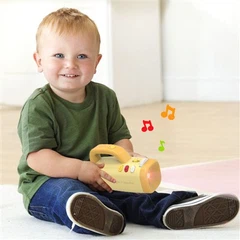
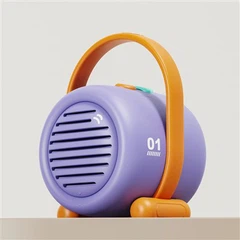
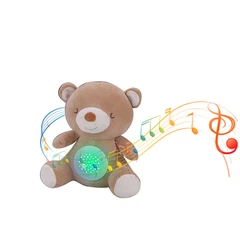
Every August, the same retail reset happens across the US and Europe. Families rebuild routines. Parents buy school supplies. Teachers stock classrooms. Retailers refresh shelves.
The toy industry treats "back to school" as one event. It is not. It is three procurement flows running in parallel, each with its own buyer, its own budget, its own timeline, and its own product requirements.
The data confirms it. Faire's back-to-school searches are up 175 per cent year on year, peaking in July and August. Squishy and fidget toy searches grew 1,733 per cent between February and April - that is teachers building calm-down corners, not parents buying birthday gifts. Craft kit searches up 71 per cent. STEM educational toys topped the Toy Fair 2026 annual list.
Three flows. Three products. If your sound toy only fits one flow, you are leaving two thirds of the season on the table. ☝️
1. Window One -- Parents Fighting the Summer Slide
The Scenario 🎯
A mother in Ohio, mid-August. School starts in three weeks. Her 5-year-old spent the summer on the iPad. She is worried he forgot the phonics he learned in kindergarten. She types "educational toy to prevent summer slide" into Amazon.
This is the first and biggest back-to-school buying window. Parent. Household budget. Amazon or Target. Mid-August to early September. Purchase motivation: fear of learning loss.
What sound toys win in this window:
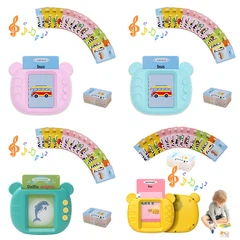
Talking flash card machines -- 224 words, 14 themes, bilingual capability. The product that directly answers "my child is forgetting his words." Retail USD 19.99-24.99.
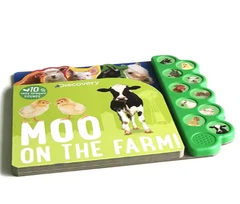
Sound books with letter and number pages -- Touch a letter, hear the sound. The phonics-reinforcement product. Retail USD 14.99-19.99.
Bilingual story players -- A child learns a second language over summer break. This is the premium parent purchase. Retail USD 24.99-34.99.
What the buyer is NOT looking for:
The parent is not looking for a toy. She is looking for a learning tool that happens to be fun. The packaging and listing must say "learning" before it says "toy." The word "screen-free" appears in 81 per cent of the top-rated listings in this category because parents are actively replacing screen time with audio learning.
The Fix
If your flash card machine or sound book ships to the US or EU, position it for this window. Update your Amazon listing title to lead with "screen-free phonics learning" rather than "talking toy." Add a "summer slide prevention" phrase to your packaging. This window converts for zero BOM change - it is purely positioning.
BOM Reality Check 💰
The parent window rewards products with content depth. A flash card machine with 50 cards costs the same to build as one with 200 cards - the difference is flash memory and card printing. Adding 150 cards of content costs roughly USD 0.30-0.50 in BOM and changes the retail story from "toy" to "curriculum." The parent who buys a curriculum pays more and returns less.
See content credentials

2. Window Two -- Teachers Building Calm-Down Corners
The Scenario 🎯
A first-grade teacher in Texas, late July. Her classroom budget is USD 200. She is building a "calm-down corner" - a space where overstimulated kids can decompress. She needs sensory tools. She orders from a teacher supply catalogue, not a toy store.
The squishy and fidget data proves this window exists. Squishy searches up 1,733 per cent February to April. This is not kids' wishlists. This is teacher procurement. And it is happening right now for August classroom setup.
What sound toys win in this window:
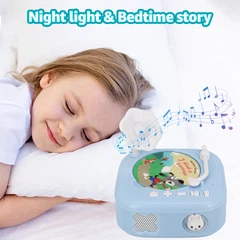
White noise night lights -- Not sold as "baby sleep" but as "classroom focus tool." A soft light and calming sound that helps a dysregulated child settle. Retail USD 19.99-29.99.
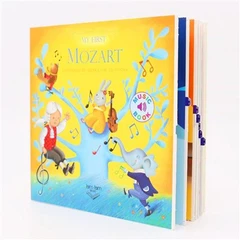
Sound books with calm-down themes -- Breathing exercises, nature sounds, lullabies. Positioned as "sensory regulation," not "entertainment." Retail USD 14.99-19.99.
Audio-based fidgets -- A small device that plays a calming loop when squeezed. The sound toy version of a fidget spinner. Growing category. Retail USD 9.99-14.99.
What this buyer is NOT looking for:
The teacher is not looking for entertainment. She is looking for tools that support focus, comfort, and sensory regulation. She will not buy a toy that makes noise in a classroom. She will buy a tool that helps a child calm down. The word "calm" and "focus" outperform "fun" and "play" in this channel.
The Fix
If you make white noise night lights or calm-themed sound books, add a "classroom use" version. Different packaging (teacher-friendly, no cartoon characters). Different content (breathing guides, nature sounds). Different compliance (teacher supply catalogues often require classroom-grade safety documentation). This is a repackaging play, not a new product.
BOM Reality Check 💰
A white noise night light for a baby and the same night light for a classroom differ in BOM by almost nothing - the hardware is identical. The difference is firmware content, packaging, and documentation. Classroom positioning adds roughly USD 0.10-0.20 per unit in packaging and documentation cost and opens a procurement channel that buys on an annual cycle. Teachers order in July-August. Schools order in June. The channel is predictable.
See content credentials

3. Window Three -- Schools Buying Language and STEM Tools
The Scenario 🎯
A primary school principal in the UK, June through August. Budget cycle for the new academic year. She needs classroom audio tools. She is buying through an educational distributor, not a retail channel.
This is the institutional window. Smallest in unit count, largest in order value. One PO covers 200 classrooms. The buying process takes months. The decision criteria are completely different from parents and teachers.
What sound toys win in this window:
RFID story players -- No app, no WiFi, no privacy paperwork. Screen-free audio for classroom listening centres. The UK preschool data showed institutional purchases of offline AI companion toys up 47 per cent. Retail USD 24.99-34.99 in the consumer channel, but institutional contracts run 5,000-20,000 units.
Talking flash card machines with classroom content -- Vocabulary aligned to curriculum standards. Multi-language capability for schools with ESL populations. Retail USD 19.99-24.99.
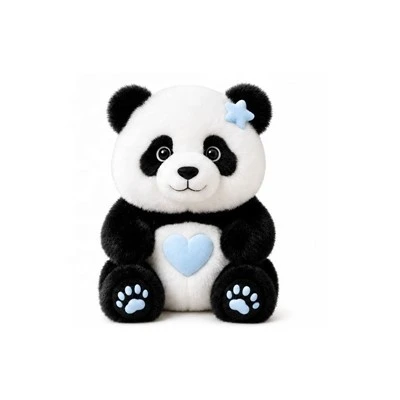
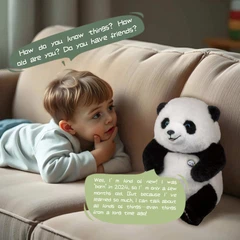
AI interactive plush with local voice -- No cloud dependency, no data leaving the device. Sold to schools specifically because offline operation eliminates network privacy risk. The institutional version of the AI plush story.
What this buyer is NOT looking for:
The school procurement officer is not looking for a product. She is looking for a supplier. She needs certifications (EN 71, CE, RoHS, REACH for EU schools), curriculum alignment, multi-language capability, warranty terms, and a 5,000-unit delivery schedule. She evaluates the factory as much as the product.
The Fix
Institutional sales require a different sales motion. Publish a "school edition" product sheet: certifications, curriculum alignment, classroom durability test results, multi-language content list, and warranty terms. The school buyer needs this documentation. The parent buyer never asks for it. A factory that can produce this documentation is a school-channel supplier. A factory that cannot is a retail supplier.
BOM Reality Check 💰
Institutional orders reward certification depth more than BOM reduction. A school edition flash card machine with full certification, multi-language firmware, and classroom-grade documentation costs USD 0.20-0.40 more per unit than the retail version. But the institutional order is 10-20 times larger and negotiates on total contract value, not unit price. A 10,000-unit school contract at a 3 per cent higher unit cost still beats 5,000 retail units at 5 per cent higher margin.
THE COMMON THREAD
Three windows. Three buyers. Three products. One shared truth: the sound toy is the same hardware, but the story is completely different.
The parent buys "prevent summer slide." The teacher buys "calm-down corner." The school buys "curriculum-aligned language tool." Same flash card machine. Same white noise night light. Same story player. Different packaging, different content, different documentation, different channel, different price point.
Most sound toy brands sell into only one window - the parent window - because it is the easiest. Amazon listing. Done. They never see the teacher channel because teachers do not shop on Amazon with the word "toy." They never see the school channel because schools buy through distributors and issue POs, not purchase orders from a website.
The brands that win back-to-school sell into all three. The hardware is the same. The positioning is the strategy. 🔧
See content credentials

WHAT THIS MEANS FOR YOUR NEXT ORDER
Three questions to answer before your back-to-school stock ships:
Which window is your product positioned for? If your listing says "toy," you are in the parent window only. If you want the teacher window, the word "calm" or "focus" needs to be in your packaging.
Do you have a school edition documentation pack? Certifications, curriculum alignment, classroom durability data. If not, the institutional window is closed to you.
What content depth does your product have? A 200-card flash card machine beats a 50-card one in the parent window and the school window. Content is your differentiation.
IF YOU ARE SOURCING SOUND TOYS FOR BACK TO SCHOOL RIGHT NOW
Send me your product spec and target market. I will tell you which of the three windows it fits, what positioning change it needs for the other two, and what documentation a school buyer would ask for. Within 48 hours.
Official Website: www.kidsoundbook.com | www.xinditai.com
Email: happy@xinditai.com
WhatsApp: +8613824343309
YouTube: https://www.youtube.com/@XDTHappy
LET ME HEAR FROM YOU
Which back-to-school window are you selling into today? Have you ever positioned a toy for teachers or schools, or is your product parent-only?
Drop your answer below.
#BackToSchool #SoundToys #EducationalToys #ToyTrends #STEM #SchoolSupplies #ShenzhenFactory #OEM #ODM #ScreenFree #SummerSlide #ClassroomToys