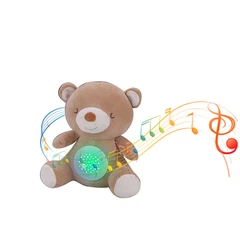
AI Plush Toys: How a New Smart Companion Category Is Reshaping the Toy Industry

The global toy industry is quietly entering a new category. For decades, plush toys have been passive objects of comfort; for the past decade, smart devices have been active but screen-bound. In 2026, those two product worlds are converging into a single, fast-growing lane: AI plush toys-voice-first, screen-free smart companions that combine the emotional warmth of a stuffed animal with the engagement of a conversational AI assistant. The category is now large enough to matter to global retailers, small enough that early licensing partners can still claim category-defining IP, and technically demanding enough that only a handful of OEM factories can deliver it at scale.
Industry forecasters project the smart plush category to grow at a CAGR north of 20% through 2030, driven by three converging forces. First, parents are actively seeking screen-free alternatives for children ages 3–8, a demographic that is the heart of the plush market. Second, child-safe voice AI has matured to the point where a 25-centimeter plush can hold a real conversation in a warm, character-driven tone. Third, character IP owners-animation studios, game publishers, podcast networks-are looking for tangible extensions of their franchises that maintain narrative continuity outside the screen. The intersection of those three forces is the AI plush toys opportunity.
A useful case study is LUMI My Smart Monster, a friendly mint-green monster plush with a complete product narrative behind it. LUMI arrives in gift-ready packaging ready for Amazon, Target, and Walmart shelves, with a 3+ age rating, a "Learn, Play, Grow" promise, six distinct emotional LED-eye states, an AI voice interaction layer, a touch-response sensor, and up to 8 hours of comfort on a single charge. The product is not just a plush-it is a blueprint that any character IP can replicate, from monster to dragon to panda to original franchise creation. That replicability is exactly why AI plush toys are becoming a category rather than a novelty.
This industry guide walks through the technology, the market applications, the supply chain, and the licensing opportunities that define AI plush toys in 2026 and beyond. Whether you are a character IP owner, a licensing agent, a retail buyer, or a factory evaluating entry into the smart plush space, the sections below provide a complete picture of the category, where it is heading, and how to participate.
Inside the AI Plush Toy: How Voice-First Smart Companions Are Engineered

Hardware Architecture of an AI Plush Toy
A modern AI plush toy integrates multiple subsystems into a soft, child-safe shell. At the center is a low-power MCU that handles wake-word detection, voice activity detection, and command routing. A separate audio codec manages the multi-microphone array and the speaker path. A wireless module-typically Wi-Fi or BLE-connects to companion cloud services for advanced dialogue. A rechargeable Li-ion cell (1,000–1,500 mAh) delivers 8–12 hours of active use. Optional modules include capacitive touch sensors, accelerometers for gesture detection, and expressive LED matrices for the eyes. LUMI, for example, displays six distinct emotional states-Happy, Sleepy, Excited, Curious, Love, and Calm-that align with the conversation tone, turning the digital dialogue into a physical expression.
Key components include:
Multi-MEMS microphone array for far-field voice pickup
High-efficiency Class-D speaker for warm voice playback
USB-C charging and over-current protection ICs
Soft-button capacitive PCB, embroidered into the chest
OTA-updatable firmware with rollback support
Software & AI Layer
The software stack is what turns a plush into a true companion. It includes a child-safe LLM (typically a constrained-parameter model with strict content guardrails), a wake-word engine, a dialogue manager, a content library manager, and a parental control API. IP partners can layer custom voice personas, branded dialogue, and proprietary story packs on top of the base platform. The result is an AI plush toy that carries the exact voice, vocabulary, and personality of a character IP-while remaining fully compliant with global child-privacy regulations such as COPPA, GDPR-K, and China's PIPL.
The Defining Features of Modern AI Plush Toys

Voice-First Conversation Engine
Unlike screen-based smart toys, AI plush toys are built around voice. Children speak, the plush listens, and the plush responds in a warm, character-driven tone. Latency targets are under one second to keep the interaction natural. For B2B buyers, voice-first design means higher engagement time per session and stronger brand affinity-the plush becomes a daily-use companion rather than a single-purchase novelty. The technology is also what makes the product global: the same hardware can speak in English, Spanish, French, German, or Mandarin with no hardware change.
Key functions include:
Age-appropriate vocabulary for children ages 3+
Multi-turn dialogue with short-term memory
Safety filters blocking adult, violent, or self-harm content
Multilingual support (EN, ES, FR, DE, ZH)
Expressive Emotional Eyes
The most visible piece of technology in modern AI plush toys is the eye module. LED matrices or embedded LCDs allow the plush to display a small set of emotional states-happy, sleepy, excited, curious, calm, love-that align with the conversation tone. LUMI ships with six discrete states, each tied to a specific response category. This is the bridge between digital and physical: a child sees the plush react, and the relationship deepens. For IP owners, the eye states are also a creative canvas-a happy-state mascot can look different from a sleepy-state mascot without rebuilding the product.
Soft Plush Comfort & Touch Response
What separates AI plush toys from pure electronics is the soft, huggable form factor. Premium short-pile plush, child-safe polyester filling, embroidered details, and reinforced seams make the plush safe to sleep with, wash, and handle roughly. The LUMI design adds a touch-response sensor-a gentle pat or hug triggers a contextual response, deepening the bond between child and toy. For B2B buyers, touch response is a key differentiator in the premium tier: it raises the price point, the engagement time, and the parent-review ratings.
Screen-Free, Parent-Approved
Perhaps the most important feature from a B2B standpoint is what an AI plush toy does not do: no screen, no app, no in-app purchases, no ads. In a market where parents are increasingly skeptical of screen time, a smart plush that delivers real engagement without a display is a powerful retail proposition. It is also a regulatory advantage-most AI plush toys are designed for children ages 3+ with no COPPA / GDPR-K red flags, and the product can clear compliance reviews faster than screen-based competitors.

B2B Market Applications: Where AI Plush Toys Sell in 2026

The versatility of AI plush toys creates six distinct B2B market lanes:
1. Brand Licensing & Character IP - The largest growth lane. Animation studios, game IP holders, and entertainment franchises can extend their characters into a tangible, voice-driven plush that maintains narrative continuity outside the screen. LUMI, for example, ships with a full personality, an emotional range, and a content library-all replicable across any character.
2. Mass Retail & E-commerce - Gift-ready retail packaging makes AI plush toys a top pick for Amazon, Target, and Walmart. Smart plush typically lands in the $40–$80 retail band, supporting healthy margins for distributors and online sellers, with strong repeat-purchase potential through content-drop subscriptions.
3. Educational & Therapy Distribution - Speech-language pathologists, autism specialists, and SEL (social-emotional learning) programs use smart plush as engagement tools. The category is gaining traction in institutional procurement and government-funded early-childhood programs in the US, UK, and Australia.
4. Museum, Theme Park & Gift Shop - Custom voice greetings and location-specific story packs turn AI plush toys into memorable take-home souvenirs for family destinations worldwide, with the plush acting as a long-tail marketing channel after the visit.
5. Subscription Box & DTC Brands - Monthly content drops, character variants, and seasonal voice lines make the plush a perfect anchor SKU for subscription services and direct-to-consumer brands targeting millennial parents who value screen-free play.
6. Promotional & Corporate Gifting - Custom voice lines and branded packaging convert AI plush toys into a high-impact premium for partner activations, family-focused marketing campaigns, and loyalty programs where emotional resonance matters more than logo placement.
Brand Licensing & IP: The Multi-Billion Dollar AI Plush Opportunity
Why IP Owners Are Entering AI Plush Toys
For character IP owners-animation studios, game publishers, podcast creators, and toy brands-AI plush toys are the most tangible brand extension since the original action figure. Unlike a static licensed plush, an AI plush carries a voice, a personality, and an evolving content library. It can speak in character, reference franchise lore, and respond to the child's day in the voice of the IP. LUMI's six emotional states and "Bedtime Companion" persona illustrate how even an original character can be packaged for licensing at scale-the same model works for a dragon, a unicorn, an astronaut, or a podcast mascot.
Key licensing advantages include:
Recurring revenue through content drops and seasonal story packs
Higher price point than standard licensed plush (2–3x)
Stronger brand affinity via daily voice interaction
Data insights (with parental consent) for franchise planning
The IP Collaboration Model for AI Plush Toys
Our factory partners with IP owners through a structured collaboration model built specifically for AI plush toys. The IP owner provides character bible, voice reference, and storyline. Our team delivers industrial design, hardware customization, voice persona engineering, content management system, packaging, and global compliance. The result is a fully licensed smart plush that ships in 90–120 days from kickoff-fast enough to align with a show launch, a game release, or a seasonal campaign.
Case Study: LUMI as a Licensing Blueprint
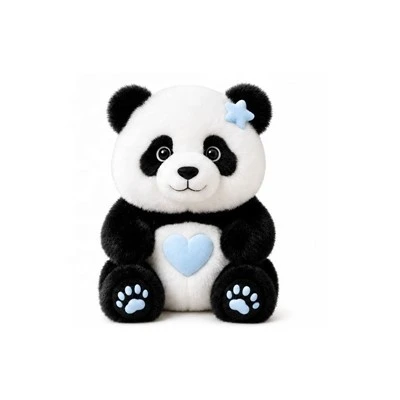
LUMI My Smart Monster is a useful blueprint for IP owners. Its persona (a friendly little monster who loves bedtime), its expressive range (six emotional states), its product specs (25 cm height, ultra-soft plush, embroidered details, 8+ hours of battery), and its retail positioning (gift-ready packaging for Amazon, Target, Walmart) all combine into a package that any character IP can replicate. Replace the monster with a dragon, a panda, a unicorn, or an original character, and the same OEM/ODM pipeline delivers a market-ready AI plush toy.

OEM/ODM Supply Chain for AI Plush Toys: From Concept to Mass Production
What a Complete AI Plush Toy OEM Program Looks Like
A complete AI plush toys OEM/ODM program covers four pillars: industrial design, hardware, software, and packaging. Industrial design includes character sculpting, plush sample, color matching, and embroidered detail. Hardware includes electronics module selection, battery configuration, and charging port. Software includes wake-word, voice persona, dialogue policy, and content management. Packaging includes structural design, retail compliance labeling, and gift-box finishes. A mature factory supports all four in-house, which is rare in the smart plush category-most "smart toy" companies outsource the plush shell, while most plush factories cannot engineer the AI layer.
Production Capacity & Global Compliance
As an experienced AI plush toy manufacturer with 20+ years in soft toy production and 7+ years in smart-toy R&D, our Shenzhen facility runs 12 production lines with a 200,000-unit monthly capacity. We hold ISO 9001, BSCI, and Sedex audits, and every product is tested to ASTM F963, EN71-1/2/3, CPSIA, CE-RED, FCC, RoHS, and REACH standards. Test reports are issued with every shipment, and Disney ILS / Walmart / Amazon FNSKU compliance is supported on request.
MOQ, Lead Time, and Fulfillment
Standard SKUs start at MOQ 1,000 units with 25–35 day sample lead time. Full ODM with custom design, voice, and packaging starts at MOQ 1,000–3,000 units with 45–60 day mass production lead time. Shipping options include FOB Shenzhen, DDP to major markets, and direct-to-Amazon FBA with FNSKU labels. For IP partners, pilot runs of 300 units are available to validate a new character before full launch. The LUMI Monster blueprint, for example, can be re-skinned and re-voiced in as little as 90 days for an established IP partner.

Frequently Asked Questions: AI Plush Toys for B2B Buyers & Licensing Partners
Q1: How fast is the AI plush toys market growing, and what is the size of the brand licensing opportunity?
The global AI plush toys market is forecast to grow at a CAGR of 20%+ through 2030, driven by screen-free parenting trends, child-safe AI, and IP extension demand. For brand licensing, the smart plush category typically delivers 2–3x the price point of standard licensed plush and supports recurring revenue via content drops. Industry analysts expect smart plush to be a multi-billion-dollar licensing lane by 2030.
Q2: What is the typical MOQ and lead time for an AI plush toy OEM program?
Standard SKU MOQ is 1,000 units with 25–35 day sample lead time. Full ODM with custom design, voice, and packaging starts at 1,000–3,000 units with 45–60 day mass production lead time. Pilot runs of 300 units are available for established IP partners and for testing new character designs before full launch.
Q3: Can the AI plush toy be customized with our brand's voice, character, and content?
Yes. We offer full voice cloning, custom wake-word, character-driven dialogue, and a branded content management system. IP partners can roll out seasonal story packs, franchise-specific episodes, and localized dialogue without recalling product. The system is OTA-updatable, so the plush can grow with the franchise over time.
Q4: Is the AI plush toy safe and compliant for children under 3?
Current models are designed for children ages 3+. For toddler SKUs, we offer a simplified voice-only version with reinforced seams, no small parts, embroidery-only eyes, and CPSIA-tested materials. Custom age ranges are available for brand partners targeting nursery or preschool segments.
Q5: What certifications and audit standards does your AI plush toy factory hold?
We are certified to ISO 9001, BSCI, Sedex, and Disney ILS. Products are tested to ASTM F963, EN71-1/2/3, CPSIA, CE-RED, FCC, RoHS, and REACH. Test reports are provided with every shipment, and we support retail compliance audits for Walmart, Target, Amazon, and major European retailers.
Q6: Can the AI plush toy ship directly to Amazon FBA or to our retail warehouse?
Yes. We support FOB Shenzhen, DDP to major markets, and direct FBA with FNSKU labels. Multi-country palletization, retail-compliance barcoding, and EDI integration with major retailers are available on request.
Q7: How does the IP licensing collaboration process for AI plush toys work?
The collaboration typically follows five stages: character brief and voice reference submission, industrial design and sample, voice persona and content library engineering, pilot run validation, then mass production and global fulfillment. End-to-end, the process takes 90–120 days from kickoff to first shipment.
Future Trends: Where AI Plush Toys Are Heading Beyond 2026
1. AI + Emotional Companionship - The next wave of AI plush toys will move from scripted responses to emotionally aware companions that adapt to a child's mood, sleep pattern, and developmental stage. IP partners who invest early in custom dialogue policies will own the long-term relationship with the end user.
2. AI + Educational Storytelling - Voice-first plush toys are being adopted by SEL curricula and early-childhood educators. Expect rapid growth in school-district and therapy-clinic procurement over the next 24 months, particularly in the US, UK, and Australia.
3. AI + IoT Smart Home Integration - Future AI plush toys will connect with family calendars, smart lights, and parental dashboards, becoming a soft central hub for the connected nursery. Standards like Matter will accelerate this convergence.
4. AI + IP & Character Franchises - Studios, game publishers, podcast networks, and content creators are lining up to license their characters as smart plush. The category is forecast to become a multi-billion-dollar licensing lane by 2030, and AI plush toy factory capacity is the bottleneck.
5. AI + Subscription & Content Monetization - Monthly story packs, seasonal voice lines, and branded episodes will turn AI plush toys from a one-time sale into a recurring content relationship, opening new revenue models for both IP owners and retailers.
The AI plush toys category is no longer a niche concept-it is a category-defining product line that bridges plush manufacturing, voice AI, and character IP. For brand licensing partners, IP studios, and global B2B buyers, it offers an unprecedented opportunity to extend a character franchise into a daily-use companion that families embrace. For OEM/ODM manufacturers, it requires a rare combination of soft-toy craft and AI integration that only a handful of factories worldwide can deliver at scale.
The LUMI My Smart Monster case study illustrates the formula: a memorable character, a defined persona, an emotional range, a curated content library, and a retail-ready form factor. That same formula can be applied to any IP-a dragon, a panda, a unicorn, an original character-through a structured OEM/ODM collaboration with a factory that owns the full stack from plush shell to voice persona.
For brand licensing partners and global B2B buyers evaluating the AI plush toys opportunity, the question is not whether to enter the category, but how quickly you can secure factory capacity and lock in a custom program. Our team in Shenzhen supports everything from voice cloning and industrial design to Amazon FBA fulfillment, with a 25–35 day sample lead time and a 1,000-unit MOQ. We would love to start the conversation.