






Introduction
The toy industry is undergoing a revolution, with AI-powered personalization leading the charge. As parents increasingly seek toys that blend education and entertainment (edutainment), brands leveraging AI technology are gaining a competitive edge. This article explores how smart toys are reshaping playtime, why parents are investing in personalized learning tools, and what trends will dominate.
The Rise of AI in Toy Personalization
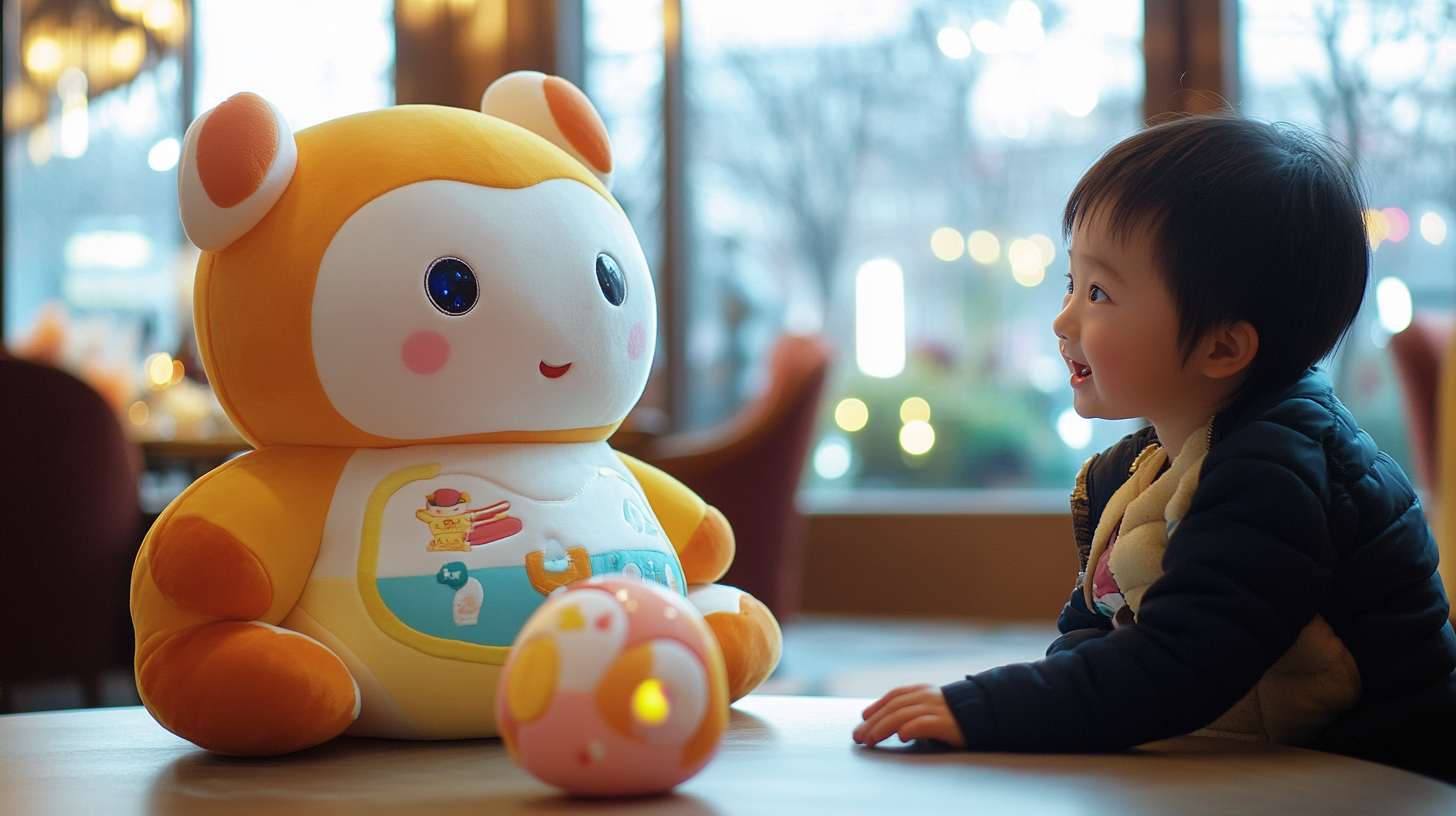
AI is no longer a futuristic concept-it's now a core feature in modern toys. From adaptive learning algorithms to voice-activated companions, AI enables toys to:
Tailor interactions to a child's age, interests, and skill level.
Provide real-time feedback, enhancing engagement and retention.
Evolve with the child, offering long-term value.
Example: Companies like Anki (Cozmo Robot) and LEGO (Hidden Side AR sets) use AI to create immersive, responsive play experiences.

Why Parents Are Choosing Edutainment
The demand for edutainment toys is surging, driven by:
✅ Academic Benefits – Parents want toys that supplement school learning (e.g., coding robots like Sphero).
✅ Screen-Time Concerns – Interactive smart toys offer a healthier alternative to passive screen use.
✅ Emotional Connection – AI companions (e.g., Moxie Robot) help kids develop social-emotional skills.
Stat: The global edutainment market is projected to reach $10.2 billion by 2027 (Grand View Research).
Key Trends in AI-Powered Edutainment Toys
A. Voice & Chatbot Integration
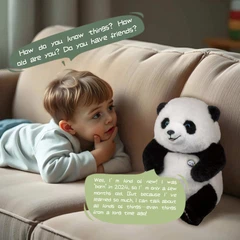
Toys like ChatPal use ChatGPT-like AI to hold natural conversations, making learning fun.
B. Adaptive Learning Systems
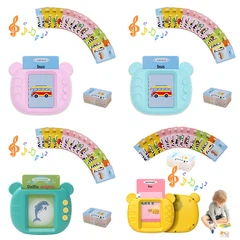
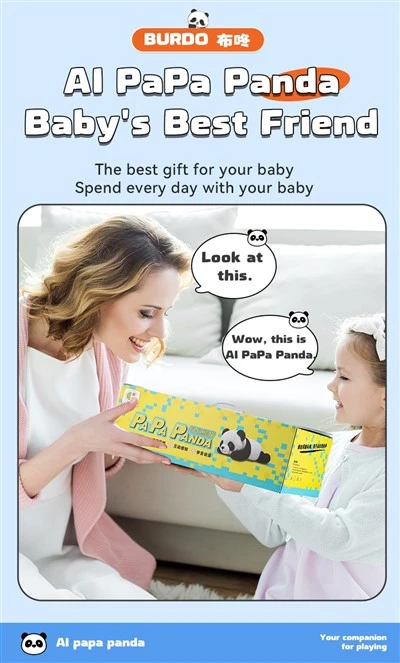
Brands like Osmo /AI panda adjust difficulty levels based on a child's progress, ensuring optimal challenge.
C. AR/VR Hybrid Play C. AR/VR
Products such as Merge Cube combine physical toys with augmented reality for STEM learning.
4. Challenges & Considerations
While AI toys offer immense potential, brands must address:
⚠ Privacy Concerns – Secure data handling is critical for parental trust.
⚠ Affordability – High-tech toys must justify premium pricing.
⚠ Balancing Fun & Learning – Overly educational toys may lose kids' interest.
5. The Future of AI in Edutainment
Expect advancements in:
🔮 Emotion Recognition – Toys that respond to a child's mood.
🔮 Multi-Language Support – Breaking global market barriers.
🔮 Parental Analytics Dashboards – Tracking learning progress.
Conclusion
The fusion of AI and edutainment is redefining play, offering smarter, more engaging toys that parents love. As technology evolves, brands that prioritize personalization, safety, and educational value will dominate the market.