



Custom Lantern Fox Plush Toy Manufacturer
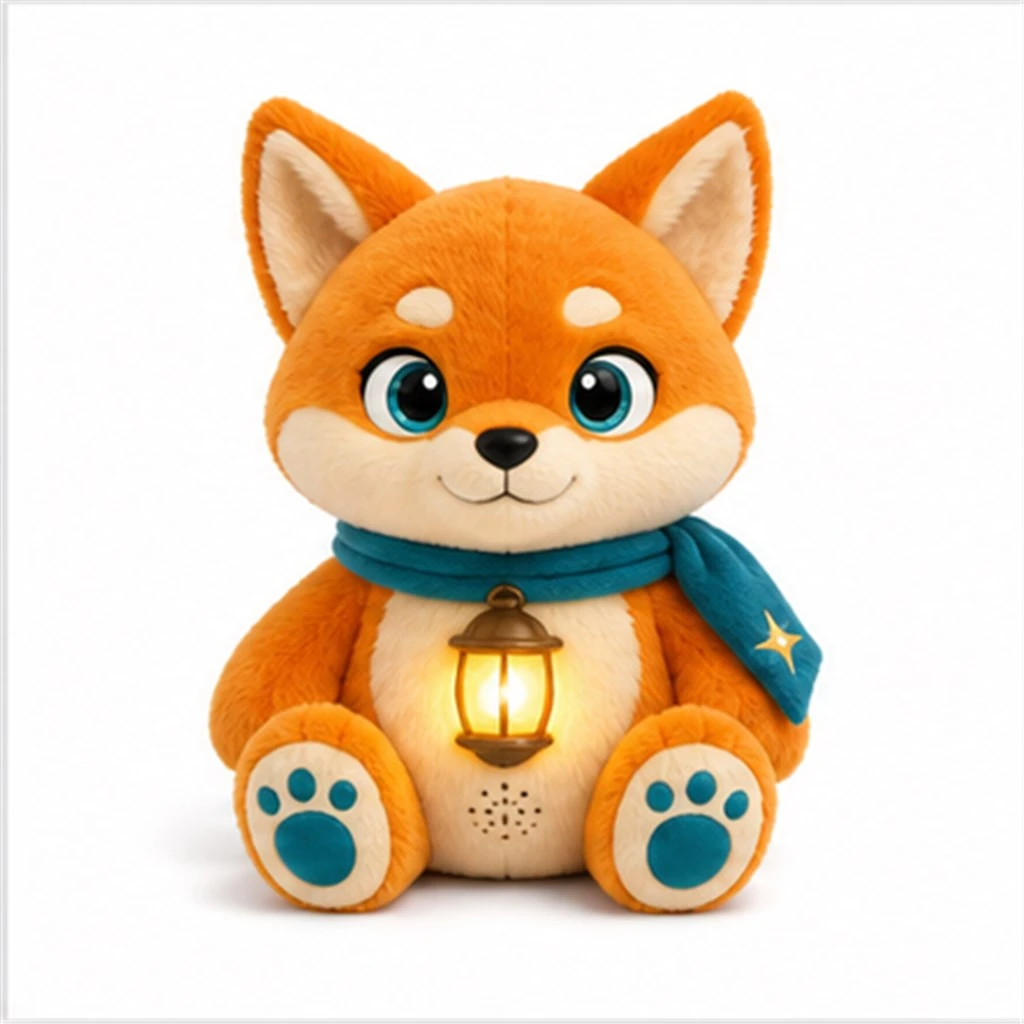
The lantern is the first detail a buyer notices, but it should not be the last detail in the specification. This custom lantern fox plush toy combines an orange seated character, cream muzzle and paws, teal scarf and a small chest lantern. It offers a starting point for a branded woodland collection or an interactive gift project. Shenzhen Xinditai Electronic Co., Ltd. can discuss the development scope. These are concept illustrations: visible light effects, component drawings and size labels require confirmation on a working sample before they become product claims. Keep this baseline consistent across every approval round.

A Character Built Around One Accessory
The chest lantern sits between the scarf and the small perforated area on the cream belly. Together with the teal paw pads, it gives this fox plush design a recognizable front silhouette. Keep that relationship when preparing private-label artwork. A large chest logo could compete with the lantern, while a different scarf shape could obscure it. Approve the character as a complete composition, not a collection of individually attractive details.
For the first appearance sample, compare a straight-on photograph with the supplied front reference at the same viewing angle. Check the ear height, distance between the eyes and width of the cream cheek area. A slightly narrower muzzle can make the fox look like a different character even when the fabric color is close. Look at the lantern attachment in particular: does it remain centered when the toy is lifted and set down? A decorative accessory should not rely on careful repositioning before every photograph. Record the acceptable position with a marked reference image so subsequent samples can be compared consistently.
Choose the Feeling Before the Feature List
The elevated front view shows how the pointed ears, rounded cheeks and forward-facing feet work together. A custom woodland plush can be developed primarily as a tactile character, with any electronics treated as a separate choice. Decide whether the intended experience is display, shared storytelling or a short light-and-sound routine. Those uses imply different priorities for posture, handling, controls and packaging. One sample does not automatically cover all three.

A quiet reading companion, for example, should not announce itself with a long, energetic sequence every time it is touched. A retail demonstration edition may need a clearly identifiable start action. Write the preferred interaction in ordinary language before selecting parts: what starts, what continues, what stops and what happens on a second press? If the desired product is entirely non-electronic, remove electronic promises from the artwork and quotation. If light or audio is included, require a demonstrable behavior rather than accepting the phrase interactive as a specification. The outward character can stay consistent while the supplied configuration differs, provided the difference is explicit.

Keep the Profile Soft Without Hiding Hard Parts
A side view reveals the projection of the muzzle, the thickness of the seated body and the tail behind it. Those features matter when planning electronic integration in plush. A module positioned behind a soft belly may still be felt from the side during a hug. The picture establishes an exterior direction; it cannot establish padding adequacy, a final module position or a safe construction.
Evaluate the stuffed appearance sample and functional sample separately, then bring their findings together. An empty shell can look appealing but give a misleading impression of softness and balance. Once representative internal parts are installed, hold the fox against an arm and rest it on a tabletop. Note any hard edge, unusual lump or tendency to roll. Where a proposed internal pocket affects the body shape, revise the pocket and stuffing arrangement together. Avoid solving a visible bulge solely by adding loose fill that may shift later. Engineering and sewing decisions should preserve both the approved profile and the intended access arrangement.
Use the View a Child Actually Sees
From above, the ears and forehead occupy much of the view, while the lantern is partly concealed beneath the muzzle. This is important for a lantern plush prototype intended to sit on a lap or low table. The hero photograph is not the only normal viewing angle. Any interaction cue must remain understandable from the approach a user will actually take, not only from a photographer's eye level.

Place an appearance model below an adult's seated eye line and photograph it without tilting the fox toward the camera. Check whether a proposed control is visible or can be found by touch. A paw marking could act as a visual cue, but the artwork does not prove that the paw contains a switch. Confirm the chosen location and actuation method with the technical team. Then watch a first-time reviewer follow the draft instruction without hints. If the person repeatedly squeezes the lantern when the intended control is elsewhere, that is useful feedback about the interface. Resolve the mismatch before printing instructions.

Treat the Size Board as a Starting Brief
The size illustration labels height, width and depth around the seated fox. For OEM plush sampling, those annotations are a proposed scale reference rather than a released measurement report. Confirm the measurement points and acceptable variation on the approved physical sample. Ears, fur pile, tail and scarf can each change the apparent envelope. A box selected around an unverified drawing may compress the very features that define the character.
Ask whether height is measured to the ear tips and whether depth includes the tail. Establish a repeatable resting posture before measuring. Compare the sample with the shelf, shipping pack and hand-held use case intended for the project. Upsizing the character is not a neutral artwork change: longer limbs, different stuffing volumes and altered internal clearances may need another review. Similarly, shrinking the body while retaining the same proposed electronics can reduce the available soft layer. Keep the agreed dimensions in the sample record, with photographs of the measurement method. Do not copy a concept label onto retail packaging without this confirmation.
Make Rear Access an Adult Task
The rear-angle image moves attention from the expressive face to the back, scarf line and tail. A serviceable plush toy needs a deliberate access strategy if the project includes a removable module or battery service. Do not infer that strategy from a concealed seam. An attractive back view should coexist with an access arrangement reviewed for the intended audience and destination market.

Request a drawing of the proposed opening, closure and module restraint. Identify who is supposed to open it, for what purpose and with which tool or action. Removal for adult servicing is not the same promise as a washable shell. Before using cleaning language, establish which parts can be removed, what remains inside and the exact care procedure supported by evaluation. The tail should not hide an important instruction or become the only convenient handle for pulling the toy from its box. Inspect the rear construction after repeated ordinary repositioning and after the agreed handling checks. Record loose stitching or closure distortion as specific observations, not just a general quality concern.

Approve the Color on the Material
The left profile brings the orange pile, cream accents and teal scarf into one view. For a private-label fox plush, these colors should be approved together on actual materials. A teal that looks rich on a flat swatch can change on a folded scarf; orange pile can look lighter when brushed in the opposite direction. The embroidered star and paw pads should remain distinct without overwhelming the face.
Review material swatches under the lighting used for sample approval and record their identifiers. Brush the pile in both directions before deciding whether a color difference is real. Compare the scarf against the pads rather than approving them on separate days from separate photographs. Ask which parts use embroidery, applique or another proposed construction, because artwork detail that works in print may not reproduce cleanly in thread. If the design is offered in other colors, retain a controlled master for each approved combination. A gray or pink concept illustration is an invitation to discuss an edition, not proof that a production colorway is ready.
Separate the Display Story From the Supplied Set
The orange display scene repeats the woodland theme with simplified trees and a background lantern. It helps communicate a character-led gift collection, but photographic scenery is not automatically included with the product. Define the delivered fox, accessories and printed materials in the quotation. A buyer should be able to tell which lantern belongs to the toy and which object is merely part of the display styling.

Packaging can carry the woodland story without reproducing every prop. Consider a clear front image, a concise explanation of the selected configuration and an unpacking sequence that protects ears and scarf. Ask for a packed sample rather than reviewing only a flattened artwork proof. After unpacking, does the fox sit upright without prolonged reshaping? Has the lantern been pressed into the belly? Do the ear tips recover their approved outline? These are practical pack-out observations, not a substitute for an agreed transport evaluation. Keep any retail claims tied to the version actually supplied and remove optional functions from baseline packaging.

Let Shared Reading Remain Shared Reading
The lifestyle illustration places the fox beside a child and an open book. That scene suggests a role for a storytelling plush companion, not evidence of reading improvement or a sleep benefit. If audio is requested, discuss how it supports the person reading rather than competing for attention. A short character cue, a prepared story and an open-ended connected conversation are different development briefs.
For recorded content, supply representative narration with clear rights and language ownership. Listen for abrupt level changes and an ending that suits the intended routine. For an AI-enabled edition, require a separate discussion of the microphone, activation, connectivity, data handling, response boundaries and ongoing service responsibility. No chip, voice platform or cloud capability is confirmed by this illustration. A local playback version may serve the selected routine without those dependencies. The useful choice is the smallest complete experience that fits the brand's content and support resources, not an accumulation of functions copied from unrelated smart toys.
Quote the Configuration, Not the Callouts
The feature board depicts possible voice interaction, a glowing lantern and a rechargeable module. These are development options to evaluate, not tested specifications. Ask for separate scope lines covering the plush shell, lighting assembly, audio hardware, firmware, power arrangement and any connected service. The module-access sketch also needs mechanical review; an opening shown in artwork does not establish the final service design.

Bring the selected functions together in one representative prototype before approving the product story. A light demonstration and an audio board working separately do not establish their combined behavior inside the fox. Check that wiring, module restraint and stuffing follow an agreed arrangement and that later revisions remain traceable. The manufacturing plan should identify appearance approval, functional acceptance, pilot assembly and production inspection responsibilities. Prices, quantities, tooling, evaluation scope and timing depend on the confirmed configuration. A useful quotation makes these assumptions visible so a lower headline price cannot conceal a missing lantern assembly, unprepared content or an unassigned service obligation.
Send a Brief That Can Be Priced
Keep a separate approval sheet for the lantern itself. Specify whether its visible frame, light window and attachment are fixed parts of the selected edition. Photograph the accessory against the cream belly with the scarf in its normal position. This prevents a later change to one part from quietly changing the whole front composition. Where a powered assembly is chosen, ask the development team to document the relevant routing and protection rather than hiding an unresolved arrangement under extra fabric.
Before requesting a pilot, review the list of open decisions with the people responsible for purchasing, artwork and technical acceptance. Each should be able to identify the same baseline from the same document. If an optional connected feature remains undecided, keep it outside the baseline price and packaging proof. That makes the next approval a specific decision about a defined fox, rather than agreement to a picture that several teams interpret differently.
Start with the market, intended audience, estimated quantity and the parts of the fox identity that must remain unchanged. Add an annotated front image identifying the scarf, star, cream face, paw pads and lantern. Describe one complete interaction if electronics are required. Supply licensed sample content where relevant and distinguish essential functions from later possibilities.
For the next review, request a clear account of what the sample will prove. An appearance model can settle proportions and surface choices; a functional assembly can test a defined behavior. Neither should be called a finished production approval without the remaining checks. Keep the approved reference, change record and packaging wording aligned throughout the project.
Discuss the proposed edition with Joy on WhatsApp: +86 13691793052 or E-mail: xdt05@dtdianzi.com. Joy's visual project updates can help you discuss styling, while final decisions should be recorded against the actual sample. A focused custom lantern fox plush project begins with a recognizable character and ends with a supplied configuration that everyone understands.
FAQ
Q: Does the illustrated fox already include working AI voice?
A: The supplied pictures are concept material. Voice, connectivity and response features must be scoped and demonstrated on the chosen prototype; the artwork alone does not verify them.
Q: Can we change the scarf and lantern for our brand?
A: Those changes can be discussed in an OEM/ODM brief. Mark the requested artwork, attachment and construction changes clearly, since a new accessory may affect sewing, assembly and evaluation.
Q: Are the dimensions on the picture final?
A: No final sample measurements have been supplied here. Agree the measurement points, posture and acceptable variation before approving packaging or retail size claims.
Hot Tags: custom lantern fox plush toy manufacturer, China, suppliers, manufacturers, factory, customized, wholesale, bulk, quotation, made in China


