



The Story You Do Not Have to See – Designing an NFC Story Machine for Children Who Need Less, Not More
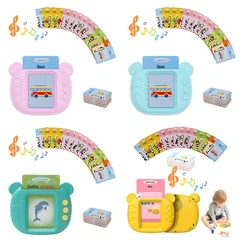
Details: The NFC Story Machine is a compact audio player that starts a story when a tagged card or figure is set on its reading pad and pauses when it is lifted. Two raised switches handle everything – fast-forward and rewind on one side, power and volume on the other – and the story itself lives on a card rather than behind a screen. That description is usually written for parents choosing a bedtime toy. It is worth reading it a second time for a different audience: a child who cannot see the cards, a child who finds a busy screen overwhelming, or a child whose hands work better with one large switch than with a menu. For them the same design is not a novelty but an accessible one, and a buyer who understands that can open a market most toy brands never reach. Runs begin at 1,000 pcs, with trial quantities between 200 and 500 units available to test an inclusive edition first.
Key Product Selling Points
Details: Accessibility is rarely one feature; it is a set of decisions that happen to line up. The seven below are the ones this format already gets right, and the ones a buyer can sharpen further when the edition is specified.
One Action, No Menu
Starting a story takes a single physical act: set the card down. There is no list to scroll, no option to confirm and no screen to read, so the interaction does not depend on sight or on literacy. For a child who cannot see the display on a tablet, or who loses the thread of a multi-step menu, that is the difference between using the product alone and needing an adult every time.
A Deck That Can Be Found by Touch
A card is a physical object, which means it can be marked, notched, textured or labelled in a way a child can identify with their fingers. A small raised symbol, a different edge cut or a tactile label turns a stack of identical cards into a shelf a child can search without help. That is a small manufacturing decision with a large effect on independence, and it costs far less than a screen-based accessibility feature.
Sound That Explains Itself
Every step of the experience can be carried by audio rather than by a label. A short spoken confirmation when a card is recognised, a gentle tone when the volume changes, a clear chime when the story ends: these are the cues a sighted user gets from a screen, and a well-built edition supplies them in sound instead. A buyer who asks for them gets a product that narrates its own state rather than one that must be watched.

Volume That Stays Gentle
Some children are distressed by sudden or loud sound, and a product that only knows how to get louder is a poor fit for them. The volume control moves in smooth steps and can be set low enough to sit under a conversation, which lets the same story be used in a noisy classroom and a quiet bedroom. A buyer can also ask for a maximum level that keeps the loudest setting within a comfortable range rather than at its ceiling.
Nothing That Flashes
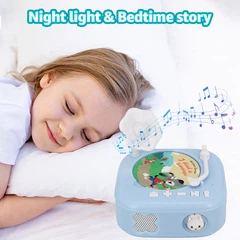
There is no screen, no blinking notification and no animation competing for attention, which makes the object unusually calm in a room where other toys are not. For a child with sensory sensitivities, the absence of visual noise is not a missing feature; it is the reason the product can be used at all. The night light, where fitted, stays a steady glow rather than a changing display.
Two Large Switches
Both controls are raised, tactile and sized for a hand that is still learning to aim, which helps a child with limited fine-motor control as much as it helps a toddler. The switch travel is deliberate, so a press is felt as well as seen, and there is no small target to hit. Targets that can be found by touch are one of the cheapest forms of accessibility a hardware product can offer.
A Library That Can Be Rebuilt
Because the content sits on the cards, a school or a charity can replace the deck without replacing the machine, and a family can add titles as a child grows or as their needs change. That flexibility matters in inclusive provision, where the right content is often very specific and rarely available off the shelf. A deck built for one child, or one classroom, can be produced without a new product line.
In short: set it down, hear it, lift it to stop – a story machine that asks for a hand and an ear rather than for a pair of eyes.
Why Inclusive Design Is a Market, Not a Gesture
Inclusive products are often treated as a charitable addition to a range, and that framing is both dated and commercially weak. Special-needs education, vision services, speech and language support and the charities around them are organised buyers with budgets, procurement processes and a constant search for tools that work. They are also underserved, because most toy ranges are designed for a mainstream child and then, if at all, adapted afterwards. A product that arrives already suited to them enters a market with far less competition than the one on a supermarket shelf.
The buying logic in that market is different, which is useful for a distributor to understand. These buyers do not choose on novelty or on price alone; they choose on whether a child can use the object independently, whether an adult has to sit beside them, and whether the tool survives a shared setting. A one-action player answers all three questions well. It is used alone, it needs no supervision once it starts, and it holds up to being handed around a classroom because there is nothing to break on a screen.
There is a practical multiplier as well. A school or a service that adopts one card player has already solved the hardware question, so every new deck is a small, low-risk purchase rather than a new procurement project. Over a year, that turns a single sale into a series, and it makes the supplier the default for the next title, the next language and the next classroom.
What an Inclusive Edition Actually Specifies
The useful question for a buyer is not whether the product is accessible but what to write into the order to make it so. That list is shorter than it sounds. Tactile marking on the deck comes first, because a card that cannot be identified by touch is a card that needs an adult. A raised symbol, a distinct edge or a small brailled label turns the deck into something a child can search alone, and any of the three can be produced without changing the machine.
Audio cues come second. A short spoken confirmation on recognition, a soft tone on a volume change and a clear end-of-story chime replace the visual feedback a screen would give. Spoken track names at the start of a card are a further step: the child hears what has been chosen before the story begins, which is the audio equivalent of reading a cover. None of this changes the hardware; it is a recording and firmware decision agreed at the order.
The third item is restraint. A maximum volume that stays inside a comfortable range, a night light that glows rather than changes, and a body with no flashing indicators make the product usable for children who find stimulation difficult. The fourth is the deck structure itself: a small number of clearly different titles is easier to navigate by touch than a large, uniform set, and a buyer building for a specific classroom should size the deck to the children rather than to a catalogue.
Product Parameter
| NFC Story Machine – Specification and Ordering (LM-003) | |
| Item | NFC Story Machine / LM-003 |
| Interaction | A tagged card or figure is set on the reading pad; the story starts, and lifting it pauses playback |
| Recognition | A passive NFC tag in each card or figure, read at short range with no pairing and no app |
| Controls | Two raised switches – fast-forward and rewind on the left, power and volume on the right |
| Accessibility Options | Tactile card marking, spoken cues and track names, a capped maximum volume and a steady night light can all be specified |
| Body Size | 140 × 180 mm |
| Figure Size | 80 × 50 mm, resizable on request |
| Unit Weight | About 900 g |
| Storage | A TF card slot holds the story library; the standard unit is quoted without a card |
| Tooling | One dedicated mould per figure, quoted as a one-time project item |
| Compliance | CE, UKCA, FCC and RoHS files with CPC; EN71 and ASTM F963 reports issued when a market requires them |
| Minimum Order | 1,000 pcs; a trial run between 200 and 500 units is possible |
Tell us the children the edition is for, the titles, the tactile marking and the audio cues you need, and we will come back with a deck plan, a specification for the marked cards, sample terms and a production slot that fits the term. Reach the export desk through the enquiry form, or write to it directly by email. Related story and talking-card models are listed at: https://www.kidsoundbook.com/products
Where an Inclusive Edition Goes
The settings below are the ones that come up most often when an inclusive edition is discussed, and they share one requirement: the child has to be able to start the story without an adult standing over them. That is a different brief from a mainstream toy, and it is what the format is unusually good at meeting.
A school for blind or low-vision children uses the player as an independent listening station, with a tactile-marked deck the children can browse alone. A special-needs classroom uses it as a calm corner activity, where the volume stays low and nothing on the device competes for attention. A children's hospital or a therapy room uses it to give a child something familiar to hold during a long wait, with a deck selected for the setting. A family uses it at home, where the same object that works in a classroom also runs a bedtime routine.
| Four Settings – What the Edition Has to Do | ||
| Setting | How It Is Used | What the Edition Must Get Right |
| School for blind or low-vision children | An independent listening station, browsed by touch | Tactile marking and spoken track names so no adult is needed |
| Special-needs classroom | A calm corner activity for one child at a time | Low maximum volume, no flashing, one clear action |
| Hospital or therapy room | A familiar object during a wait or a session | A wipe-clean shell, a robust deck and a simple reset |
| Home | A bedtime and quiet-time routine | A steady night light, gentle volume and a deck that grows |
Read across the table and one pattern appears: none of these settings needs a more complicated product. Each one needs a simpler, calmer, more predictable one, which is exactly what a card player already is when the right choices are made at the order stage.
Quality Inspection


Production Process
Our Service
An inclusive edition is decided by a short list of details – marking, cues, volume, deck size – long before it is decided by the machine. The route below is how those details become a finished set.
Requirement Communication
We agree first on who the edition is for, the titles, the tactile marking, the spoken cues, the volume ceiling and the packaging. Those points go into a brief both sides sign before any recording is made, so the edition is built to the children it serves.
Content and Cue Development
The stories are recorded, and the spoken cues and track names are written and voiced alongside them. The deck structure and the tactile marking are planned together, so a child can find a title by touch and hear what has been chosen before it starts.
Sample Confirmation
You receive a working unit with a marked deck, so the touch marking, the cues, the volume floor and the switch feel can all be judged as a child would meet them. Sign-off is captured in writing before the line is released.
Pre-production Sample
The earliest units from the run are kept as the standard for the edition. Later batches are checked against them on marking height, audio and finish, so a reprint matches what the school or service already approved.
Bulk Production
The units are assembled, the marked cards printed and encoded, and the sets packed for a school or a retail carton. Output is logged and can be reported to you, which matters when an edition has to arrive for a term or a funding deadline.
Inspection, Documents and Dispatch
Finished sets clear a last check on audio, marking, contents and carton marking, and the documents for each destination are prepared to match the batch. A buyer can walk the line in person, or follow it on a live call, before dispatch.
Customization Information
An inclusive edition is made of small, specific decisions rather than one large feature, and most of them sit on the card and in the recording. Everything below can be produced to order, and where a change adds a tool or a certificate it is raised before the order is confirmed.
FAQ – Frequently Asked Questions
Q1: Is the machine usable by a child who is blind or has low vision?
It can be, when the edition is specified for it. The interaction never depends on a screen: a story starts when an object is set down and stops when it is lifted, and both controls are raised so they can be found by touch. Add tactile marking to the deck and spoken cues to the audio, and a child can choose and start a story without help. The machine is the same; the specification is what makes it accessible.
Q2: How does a child find the card they want without seeing it?
By touch. A raised symbol, a different edge cut or a brailled label gives each title a shape that can be identified with the fingers, and a small deck of clearly different cards is easier to search than a large, uniform one. A spoken track name on recognition then confirms the choice, so the child hears what has been selected before the story begins – the audio equivalent of reading a cover.
Q3: Can the volume be limited for a child who is sensitive to sound?
Yes. A ceiling can be set so that the loudest position remains inside a comfortable range rather than at the top of the speaker output, and the steps between levels are smooth rather than abrupt. That lets the same story be used in a busy classroom and in a quiet room without the volume jumping, which matters for children who find a sudden change in sound difficult.
Q4: Can spoken cues be added to replace a screen?
They can. Spoken cues and track names are a recording decision rather than a hardware one, so they are written and voiced with the deck and loaded at the same time. A confirmation on recognition, a tone on a volume change and a closing chime give a child the feedback a screen would otherwise provide, and they can be set in the language the child uses.
Q5: Is there anything on the machine that flashes?
Nothing on the machine needs to flash. There is no screen, and the night light, where fitted, can be specified as a steady glow rather than a changing display. For a child who finds visual movement distracting or distressing, that restraint is the reason the product can sit in the room at all.
Q6: Can one order serve several schools or age groups?
Yes, if the editions are kept apart at packing. A service running several schools usually takes one deck per site or per age group, and each carton is marked to match. Tell us the split when you order and the labelling follows it, so a staff member can hand out the right deck without opening every box.
Q7: How large a first order can a pilot service place?
Runs start at 1,000 units, and a trial batch of 200 to 500 can be arranged for a pilot classroom or a single service before a full order. A working unit with a marked deck is supplied first, and the sample cost is credited against the production order. The machine needs no tooling; a new edition is a recording, a printing and a marking job.
Q8: Where is it manufactured, and can we arrange a visit?
The unit, its cards and its recordings are made at a single site in Shenzhen, which matters for an inclusive edition because the marking, the cues and the machine have to arrive consistent across a set. Buyers are welcome to visit the plant or watch the line on a live call, and each carton can be traced back to the batch it came from.
Company Introduction
for children
Xinditai Electronics has manufactured children's audio products in Shenzhen since 2010, mainly through OEM and ODM programmes for story players, talking cards, sound books, phonograph card players, projection toys and plush devices. Its buyers include schools, special-needs services, charities, publishers and distributors in many markets. Accessible and content-led editions are a growing part of that work, which is why the unit, the cards and the recordings are prepared by one team and checked together.
A workshop of about 3,000 square metres covers moulding, board assembly, card printing, tactile marking, voice recording, acoustic testing and packing, staffed by more than a hundred engineers and operators. Each stage signs off before the next one starts, and every batch keeps a record that links it back to the buyer's order. Buyers are welcome on site, or on a live video tour, before an edition is committed.

Certifications
Certificates
The player and its cards ship as one product, so the document pack is assembled around the unit and the deck in the order and prepared for the destinations named. Papers are kept current and released with each batch, and a full copy can accompany any quotation.

CE

RoHS

FCC

SEMTA

EMC

ISO
Hot Tags: the story you do not have to see – designing an nfc story machine for children who need less, not more, China, suppliers, manufacturers, factory, customized, wholesale, bulk, quotation, made in China


