




Custom Acorn Scout AI Plush Toy Manufacturer
A woodland squirrel plush concept for collectible and OEM/ODM development.
custom Acorn Scout AI plush toy quotes improve when buyers separate character decisions from electronic requirements. Contact Joy on WhatsApp: +86 13691793052 · E-mail: xdt05@dtdianzi.com.
Start with the recognizable front
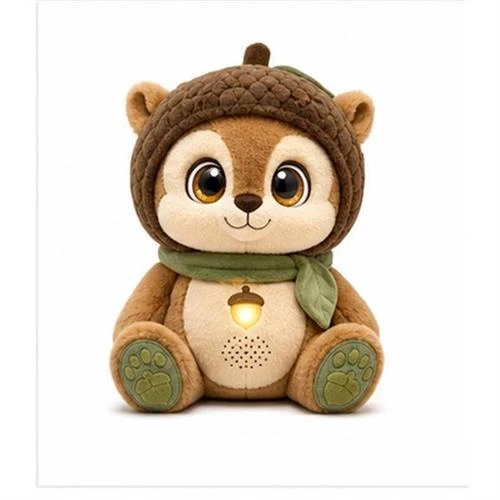
The Acorn Scout is read in one glance: a round squirrel face framed by a quilted acorn cap, warm brown limbs, cream muzzle and belly, olive scarf, leaf tip and acorn-shaped chest light. For a custom AI plush toy, that front silhouette is the commercial anchor. It must remain recognizable before any voice, light or connected feature is discussed.
A buyer should approve a level front photograph with centerlines through the nose, belly light and body seam. Compare both eye heights, ear exposure, scarf position and paw-pad rotation. These checks turn "cute enough" into named pattern corrections and prevent a later electronics change from hiding a basic character error.
custom acorn squirrel plush front view
The clean front view is the master reference for an acorn squirrel plush. Buyers can judge symmetry, embroidered expression, scarf placement and the relationship between the illuminated acorn icon and speaker opening before approving a prototype.
Define the interaction before reserving hardware space
The concept artwork suggests light and voice, but it does not prove a finished function. The brief should state the user action, expected response, session length, language, connection method and who owns content or cloud service. A prerecorded greeting, a local question-and-answer device and a connected conversational companion require different modules, power plans and validation.
We recommend a one-page behavior map before mechanical design. It names every input, output, inactive state and failure response. This keeps optional technology from expanding silently during sampling and gives firmware, acoustic and textile teams one shared acceptance reference.
Protect the acorn-cap geometry
The cap carries the strongest identity cue. Its quilted scale pattern, small stem and green leaf must sit evenly around the head without pulling the ears inward. Because this shell is thicker than the face fabric, it can change eye alignment and head roundness when stuffing pressure rises.
Review the cap from front, top and both 45-degree angles. Mark the lowest edge at four points and compare the leaf angle after compression. If the cap becomes a removable accessory, attachment risk and age grading must be assessed separately; otherwise a fixed construction is usually more consistent for display.

acorn scout plush lifestyle hero
A warm lifestyle image shows how the collectible character plush reads beyond a white background. The acorns and leaves support the woodland story without claiming that the pictured light or voice system is already production-verified.
Keep the face soft while preserving expression
Large eyes create immediate appeal, but their gloss, surrounding cream panels and narrow nose bridge make small shifts obvious. The sample review should distinguish printed, embroidered and molded details because each route changes hand feel, tolerance and care. Hard eye components may also affect intended age positioning and test planning.
Ask the supplier to photograph the face under diffuse daylight and side light. Check whether highlights, pupil direction and cream panel edges remain balanced. If a softer route is required, embroidery density and thread sheen should be sampled on the actual pile rather than approved from a flat color chart.

Acorn Scout plush three-quarter profile
The angled profile reveals muzzle projection, cap depth, seated balance and the clearance needed around accessories and any
Use the 45-degree view to judge volume
A three-quarter view reveals whether the cap projects naturally, the muzzle remains centered and the seated body has enough depth to support the head. It also shows whether the scarf knot crowds the shoulder or hides the leaf-shaped end. These issues can look acceptable from the direct front but become obvious once the product sits on a shelf.
For an OEM smart plush toy, photograph the same angle before and after a controlled squeeze. Compare recovery at the cheek, belly and hip. A repeatable angle gives the pattern maker evidence about gusset depth and filling distribution instead of relying on subjective fullness.
Separate decorative light from functional light
The glowing acorn on the belly can be a printed motif, a soft applique with a visual glow effect, or a diffused LED feature. Those routes must not be mixed in the quotation. If illumination is selected, the specification needs color temperature, brightness range, activation method, timeout and low-power behavior.
Test the light in daylight and a dim room with the final fabric layers installed. Look for a visible LED point, heat, uneven diffusion and light leaking into the speaker holes. The approval should record the actual module and power source; edited images are mood references, not functional evidence.

interactive woodland plush reading scene
A reading setting helps buyers define listening distance, handling position, room noise and the difference between fixed local
Design a believable use moment
A child may ask for a short forest story, a museum shop may need a fixed multilingual greeting, and a brand may want a connected character with its own service. Each use moment produces a different architecture. The first prototype should prove the primary session before extra games, sensors or languages are added.
Write a thirty-second scenario that includes pickup, activation, response and ending. Then test whether the switch can be found while the toy is seated and held. This simple rehearsal often exposes controls that were convenient on a bare module but inaccessible after foam, lining and filling are added.

acorn scout plush in reading setting
A calm reading scene frames the product as an interactive storytelling plush. It helps buyers discuss listening distance, room noise, holding position and whether a local audio or connected experience fits the intended user.
Engineer the speaker path inside the belly
The perforated belly area indicates a likely sound path, yet the final acoustic result depends on speaker direction, fabric density, hole treatment, cavity volume and filling clearance. A loud bare module can sound muffled or distorted once enclosed. The textile pattern and hardware bracket must be developed together.
Run an A/B test with the same audio file outside and inside the completed shell. Record listening distance, volume setting, vibration and intelligibility. If a microphone is planned, repeat phrases from several angles and include realistic background noise. These results are more useful than a generic claim about voice recognition.
Reserve service access without creating a hard spot
Rechargeable or replaceable hardware needs a defined access zone, cable route and strain relief. The opening should not sit where the user naturally squeezes the product or where the seam carries the seated load. The module must also be restrained so it cannot migrate toward the face or a thin fabric corner.
Use a physical module sample, not dimensions copied from a sales page. Cycle the closure repeatedly, inspect surrounding pile and check comfort from the back and underside. Removable electronics do not automatically make the shell washable; care instructions must reflect the validated construction.

acorn plush voice and light feature details
The feature close-up maps the belly light, speaker path and service concept for electronic plush integration. Each visible callout still requires a defined module, test method and acceptance condition in the buyer specification.
Measure the seated shape at named points
A headline height is not enough for production control. Record head width, cap depth, ear span, seated height, belly width, hip depth, foot angle and scarf length after a stated recovery period. The same points should appear on the golden sample record and final inspection sheet.
Weight and center of gravity matter when electronics are added. A heavy module placed high can make the character lean; an oversized battery can flatten the belly. Test the complete build on a level surface and inside its intended retail packaging, then document any settling or recovery time.

Acorn Scout plush dimension reference
Dimension artwork is a discussion aid until named measuring points, tolerances, weight and recovery conditions are confirmed on
Choose materials by touch zone
The face, cap, scarf, belly and paw pads have different visual and tactile jobs. A single fabric family may simplify sourcing but blur important details; too many materials can make shade control and sewing more difficult. Material selection should balance pile direction, embroidery support, seam strength, colorfastness and the intended hand feel.
Approve physical swatches under the same light used for sample photography. Rub the brown cap against the cream face and green scarf to check visible fiber transfer. For the paw-pad applique, confirm edge definition after flexing. These observations help procurement compare substitutions without reducing the design to color names alone.
Treat the scarf and leaf as controlled components
The olive scarf connects the woodland story to the green paw pads and cap leaf. Its knot, overlap and leaf-shaped end should be controlled because small shifts can cover the chest feature or change the face framing. Long or loose decorative parts also require age-appropriate review.
Specify whether the scarf is fully fixed, partially stitched or removable. Measure the visible tail from a named seam and photograph both sides. If the buyer plans seasonal color variants, keep the pattern and attachment method constant so color changes do not quietly create new fit or durability issues.

Acorn Scout rear construction view
The rear view appears after buyer-facing angles and supports review of seam continuity, leaf anchoring and any protected
Build a variant system before making a collection
A collectible program works when characters share a recognizable design language but keep meaningful differences. For Acorn Scout, the cap texture, olive accents, illuminated acorn and paw emblems can form a design grammar. Future woodland characters should not simply swap colors while repeating the same story.
Create a control sheet for fixed elements, variable elements and prohibited changes. This makes licensing, packaging and replacement artwork more disciplined. It also protects the original character when multiple suppliers or product teams contribute accessories, expressions or seasonal editions.
Plan the electronics route in stages
A visual sample can approve silhouette and decoration without working electronics. A bench build can prove the chosen voice or light module. A function sample tests controls and acoustics inside provisional textiles, while a production-intent sample combines approved appearance, hardware and instructions. Each round should answer named questions.
This staged route prevents a beautiful first sample from being mistaken for production readiness. It also exposes which party owns PCB, firmware, audio, app and cloud validation. When the buyer supplies a platform, the plush manufacturer needs controlled interfaces and change notices rather than an open-ended promise to "add AI."

acorn scout plush dimensions reference
Dimension artwork supports a custom plush specification only after measuring points and tolerances are agreed. Buyers should confirm seated height, cap width, body depth and balance using the physical sample.
Review the back after the hero view is fixed
The back confirms cap continuity, leaf attachment, body seam placement and possible service access. It belongs later in the review sequence because the front sells the character, while the rear supports engineering decisions. A back panel should remain comfortable and visually clean even when it contains a closure.
Photograph the closure open and closed, then check whether the pull, hook-and-loop edge or zipper tape can be felt through normal handling. Cycle it with the intended module installed. Any access instruction must match the final build and should never invite the user to remove a part that was not designed for consumer handling.

Acorn Scout OEM ODM presentation
The OEM/ODM view connects character appearance, engineering stages, quality evidence and packaging so procurement can compare a complete
Prepare for pilot production, not just a showroom sample
Pilot units should be reviewed after normal packing, handling and repeated activation. Look for filling migration, scarf rotation, cap distortion, speaker buzz, switch inconsistency and module movement. Sample-room perfection is less valuable than evidence that the design remains stable through the actual workflow.
Use pilot findings to freeze work instructions and inspection photos. If an issue appears only after shipping simulation, correct the packaging or internal support before scaling. The purpose of pilot production is to close uncertainty while changes are still manageable.
Keep claims tied to the selected build
The same exterior can support a decorative plush, a local sound-and-light product or a connected AI companion. Marketing claims, instructions and age direction must follow the version actually engineered and tested. Avoid language that implies emotion recognition, learning or privacy controls unless the responsible technology provider can verify them.
A disciplined claim sheet lists each public statement beside its supporting test, owner and product version. This protects buyers when artwork, firmware or platforms change and prevents a concept render from becoming an unsupported promise.
Move from character charm to controlled evidence
Keep the cap, face, scarf and seated silhouette consistent, then validate every optional electronic feature inside the real shell.
For a broader engineering view, read our AI plush toy manufacturing guide. Joy also shares visual product-development updates for buyers who want to see how character ideas are translated into samples.
FAQ
Can the cap, scarf and colors be customized?
Yes. Pattern, fabric, embroidery, accessories and packaging can be developed from buyer artwork and approved through physical samples.
Does the pictured concept prove AI conversation?
No. Images show a design direction. Voice, light, sensing or connected behavior must be separately specified, integrated and tested.
What should a buyer provide for a quotation?
Share artwork, intended market, approximate size, age direction, product route, required interaction, module details if available, languages and packaging goals.
Why test audio inside the completed plush?
Fabric, filling and cavity geometry can change loudness, clarity, vibration and microphone pickup, so the enclosed result must be measured.
Discuss the next sample directly with Joy: WhatsApp +86 13691793052 · E-mail: xdt05@dtdianzi.com.
Hot Tags: custom acorn scout ai plush toy manufacturer, China, suppliers, manufacturers, factory, customized, wholesale, bulk, quotation, made in China


