





Castle Phonograph Card Player – Building a Range Around One Castle: Decks, Siblings and Gift Sets
Details: The Castle Phonograph Card Player seats a story card, turns the side lever and begins a tale while a soft light rises behind the tower windows. Sixty cards travel with it – fifty in English and ten in Chinese, all replaceable – and the card artwork, story contents, logo and packaging are produced to the buyer's order. The body is a 117.7 × 117.7 × 116.9 mm castle weighing 450 g, charged over Type-C from a 200 mAh cell, and thirty units ship to a carton measuring 49.5 × 37 × 43 cm at 14.5 kg gross. What makes this particular unit commercially interesting is not the machine on its own but the range built around it: two sibling silhouettes share the same play pattern, and the deck is a separate purchase that can be refreshed as often as a buyer wants a new reason to sell. Orders start at 1,000 pcs.
Why a Range Outearns a Single Unit
A single product sells once to a customer, and then the customer owns it. A product with a shape family and a replaceable deck does something different: it gives the same buyer several legitimate reasons to buy again, and it gives a distributor several ways to fill a shelf without ordering anything new from the factory.
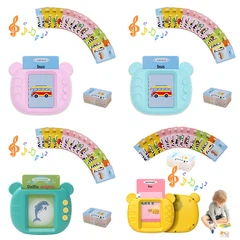
The family is the first lever. The castle shares its mechanism with a round and a square sibling, so a buyer can stock one silhouette per channel – the castle where stories are gifts, a simpler shape where the product is bought for routine – or take all three and present them as a collection. Each shape photographs differently, which matters more than it sounds for a listing where the thumbnail does most of the selling.
The deck is the second and larger lever. Sixty cards come with the machine, but cards are printed per order, so a themed pack – holiday tales, bedtime pieces, animal stories, a second language – is a print run rather than a product development project. That is what turns a one-off purchase into a series: the household owns the castle, and the reason to buy again is the next set of stories rather than another machine.
Bundling is the third. Because the shape family and the deck are both produced to order, the same carton can be specified for four quite different propositions: the castle alone, the castle with a second deck in a gift sleeve, the castle paired with a sibling for a household with two children, or the castle sold beside a card reader or a drawing unit so that listening is followed by practice or by drawing. None of those combinations needs new tooling, and each one moves the average order value without moving the unit cost.
None of it works by accident, though. A bundle only convinces when the carton, the marking block and the delivery date are settled together, and when the second item in the set does a genuinely different job from the first. Two story players in one box compete with each other; a story player and a deck, or a story player and a drawing surface, do not.
There is a pricing logic behind that, and it is worth understanding before the line-up is planned. A second machine raises what a set is worth in proportion to a full unit, and it brings a full unit's freight, shelf footprint and packaging with it. A second deck raises the value of a set for a fraction of that weight, which is why gift configurations are almost always built on cards rather than on hardware. Decks are the cheapest way to move a customer from a lower price step to a higher one.
Castle Phonograph Card Player – Range Facts (LMC 003)
| Castle Phonograph Card Player – What Can Go in the Box (LMC 003) | |
| Item | Castle Phonograph Card Player / LMC 003 |
| How a Story Starts | A card is seated and the side lever is turned; the story begins with no screen and nothing to press twice |
| Included Deck | Sixty story cards – fifty English, ten Chinese – with the set replaceable and open to customisation |
| Additional Decks | Themed or second-language packs printed per order and supplied as a separate line |
| Family Range | The castle shares its mechanism with a round and a square silhouette, so a shape can be chosen per channel |
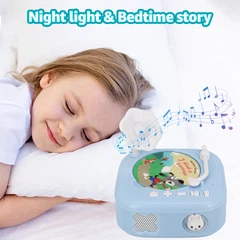
| Night Light | A soft glow behind the tower windows, designed to help a child settle at the end of a story |
| Customisation | Card artwork, story contents, logo and packaging all produced to the buyer's order |
| Cell | A 200 mAh cell charged through a Type-C port |
| Body Size | 117.7 × 117.7 × 116.9 mm |
| Unit Weight | 450 g |
| Gift Carton | 200 × 155 × 80 mm, with artwork and copy produced for the destination |
| Export Carton | Carton footprint 49.5 × 37 × 43 cm, holding thirty sets |
| Carton Weight | 14.5 kg gross |
| Certification | CE, UKCA, FCC and RoHS files, plus CPC; market-specific EN71 or ASTM F963 reports on request |
| Minimum Order | Production starts at 1,000 pcs; a first trial can run from 200 to 500 units |
The range pack comes as a single set: pricing steps by quantity, terms covering samples and trials, templates for cards and cartons, the sleeve artwork guide for combined sets and the 3D files. Tell us the market, the language and the volume – by form, or by writing to the export desk – and the material is sent within one working day. Other audio and talking-card items are published at: https://www.kidsoundbook.com/products
Seven Ways to Build a Set Around This Castle
Details: Each configuration below has been ordered by someone, and each one is assembled from the same approved machine. The only decisions are what travels beside the castle, what the outer packaging says, and which deck goes inside.
The Shape Collection – One Story, Three Silhouettes
A distributor who takes the castle, the round and the square can present a shelf as a collection rather than as one product, and a household with two children has an obvious reason to buy twice. The play pattern is identical across the three, so the shop assistant only has to learn the demonstration once.
The Deck Pack – the Cheapest Second Sale There Is
A second set of stories costs a print run and nothing else, and it is the item a household buys once the first sixty cards have been heard too many times. Stocked beside the units rather than behind a counter, deck packs behave like the next book in a series, and they keep a listed product earning after the machine itself has stopped selling.
The Gift Set – Castle Plus a Second Deck
One castle, one extra deck and a printed sleeve over the standard carton make a present that reads as more than a single item without costing a second unit. It is the configuration gift retail asks for most often, because it holds a higher price step while keeping the shelf footprint of one product.
The Two-Child Set – Two Shapes in One Carton
Where a buyer sells to families, pairing two different silhouettes in one outer carton answers the most common objection to a story player: that there is only one of it. The two machines work independently, so the set needs no explanation, and the outer carton can be marked as a pair for the shop to price as one purchase.
Listen, Then Practise – Paired With a Card Reader
Hearing a word on the castle and then finding it on a card builds vocabulary without a screen, and the pair keeps a child occupied for longer than either item does on its own. Because both lines come from the same factory, the pair arrives on one purchase order and one delivery date rather than two.
The Branded Sleeve – Corporate and Promotional
A castle in a printed sleeve carrying a company name suits promotional work where the gift has to feel substantial in the hand. The sleeve is produced with each order and slips over the standard carton, so the product keeps its own identity while the client's name sits on the outside.

Year Two – Same Set, New Stories
The bundle does not have to change for a second season; the deck inside it does. A new themed pack and a reprinted sleeve give a distributor a fresh proposition on a shelf they already own, with the machine, the certification and the listing history untouched – which is the cheapest kind of relaunch available to a buyer.
Six Buyers, and the Set Each One Wants
The same castle is ordered differently by each route to market, and the difference is almost always in what travels beside it. Most enquiries fall into six patterns.
Range Calendar – Which Set Ships When
| Set Planner – Castle Phonograph Card Player LMC 003 | ||
| Window | What the Set Is Doing | What to Ship |
| Year-end gifting | Standing out as a present rather than as a toy | Castle plus a second deck, printed sleeve over the standard carton |
| January reset | Selling the range rather than the season | Sibling shapes on the same shelf, decks at standard stock levels |
| Back to school | Supplying rooms rather than households | Multi-unit cartons with one themed deck per room |
| Spring | A smaller gift with a lower entry price | Single castle, entry deck, flat display packaging |
| Ramadan and Eid (MENA) | A gifting season with a language requirement attached | Castle and a deck in the family's own language, gift-set outer |
| Family occasions | Two children, one purchase | Two shapes in one marked outer carton |
| Summer travel | Keeping children busy away from home | Castle with a compact deck, no setup wording on the box |
The habit that makes a range work is deciding the whole line at once. A buyer who settles the decks, the sleeve artwork and the sibling shapes in a single conversation pays for one set of samples and one round of approvals, and can then ship different combinations across the year without reopening anything. Ordered one item at a time, the same range costs several times the attention for the same shelf space.
If only one decision can be taken early, make it the deck line-up. Deck artwork and recordings are what the carton wording, the sleeve and the listing copy all describe, so a range built before the decks are settled ends up being described three times. A buyer who fixes the decks first finds that the packaging and the pricing steps follow almost automatically, and that the second and third configurations cost very little to add.
What a Bundle Adds That a Single Unit Cannot
Bundling is often described as a marketing idea. In practice it changes four things a distributor already measures, and none of them depends on a claim about the product.
| A Planned Range Against Buying the Same Items One at a Time | ||
| Range decided in one plan | Items ordered separately as needed | |
| Approvals needed | One sample round covers the range | A sample round for every new item |
| Freight | Decks and shapes share the container already booked | Extra shipments and extra minimum charges |
| Packaging | One sleeve system serves every configuration | A new carton design each time |
| Shelf story | A collection with a shared demonstration | Unrelated items that each need explaining |
| Repeat sales | Driven by new decks on an approved machine | Depend on launching something new |
| Risk of dead stock | Decks can be held or recombined | Wrong configuration becomes unsellable stock |
Kept deliberately modest: this is a card-reading audio toy with sixty replaceable story cards, a lever and a soft light, weighing 450 g and measuring 117.7 × 117.7 × 116.9 mm. Its value to a distributor is that the range around it can be recombined per market, not that any single configuration is a new product.
Eight Stages From Range Plan to Sealed Carton
Planning a range takes a few more decisions than planning a single order, but almost all of them happen before anything is printed. The sequence below puts them in the order that avoids rework.
| Stage Plan – Range to Export Carton | ||
| Stage | What Gets Locked In | Your Input |
| 1. Range shape | Which silhouettes you will carry, and which channel each one serves | Channels, shelf space, target customers |
| 2. Deck line-up | How many decks, in which languages, and which themes each covers | Language mix, theme list, age band |
| 3. Configuration list | The exact sets you will sell: single, gift, pair, pair plus deck | Intended price steps per set |
| 4. Sleeve and carton | One artwork system that can label every configuration from the outside | Logo, wording per set, insert requirements |
| 5. Marking and split | How each configuration is identified and how it divides between destinations | Importer details, split per market |
| 6. Sample set | Whether the assembled bundles read as sets when opened together | Approval of each configuration you intend to sell |
| 7. Volume per set | How many of each configuration, and how they share the production slot | Quantities per configuration, delivery window |
| 8. Run and dispatch | Packing, carton marks and the document set for each destination | Carton marks, document list, shipping terms |
Of the eight, the sixth decides whether a bundle looks planned. A configuration is judged when it is opened, not when it is described, and reviewing one on a screen hides the two details that give the game away: whether the sleeve sits flat over the carton, and whether the items inside look as though they were designed to travel together.
Questions About Selling a Range Rather Than a Product
Q1: Can we add a second shape or deck after the first order?
Yes, and that is the usual path. A buyer normally starts with one silhouette and one deck, then adds a sibling shape or a second deck once the first is selling. Because the additions are produced against a machine that has already been sampled and documented, they do not restart the approval process – they extend it, which is what makes a range cheaper to widen than a product is to launch.
Q2: How many decks should a first order include?
One strong general deck and one clear follow-up is a better start than five themes nobody has asked for. The sixty-card set that ships with the unit covers the broad audience; the second deck should answer a specific request – a second language, a holiday theme, a school band – so that it has an obvious customer rather than merely existing. Decks are cheap to print and cheap to hold, but they still take shelf space and attention.
Q3: Do the three shapes share spares and documentation?
They share the mechanism, the play pattern and the charging arrangement, so a service kit learned on one silhouette applies to the others and staff only have to be shown one demonstration. Documentation is prepared per destination rather than per shape, which means a buyer carrying all three does not multiply the paperwork by three when a market is added.
Q4: What makes a bundle look deliberate rather than accidental?
Two things, and both are packaging decisions. The outer sleeve has to fit the carton it covers, and the items inside should have been designed to sit together rather than dropped in side by side. A set where the sleeve is slightly too large, or where one item rattles against the other, reads as two products in a box – which is exactly the impression the bundle was meant to avoid.
Q5: Can the sleeve change between seasons?
That is the point of using a sleeve rather than a bespoke carton. The standard box stays the same and only the sleeve changes, so a festive message, a client's branding or a second price step all come from a print change. It also gives a distributor a cheap way to refresh a listing without touching the product or its reviews.
Q6: How do we set the price steps between configurations?
We quote pricing steps by quantity and leave the shelf price to you, since that depends on your market rather than on our costs. The structural point worth knowing is where the value sits: a second deck raises the value of a set far more than its weight or its production cost suggests, whereas a second machine raises it in proportion to a full unit. That is why gift configurations are usually built on decks first.
Q7: What is the minimum for each configuration?
The minimum applies to the production run for each item: 1,000 pcs, and a first batch can sit between 200 and 500 units where a buyer wants to test a market or a configuration first. Decks follow the same principle, which is why a follow-up deck order is normally far smaller in cost than the machine order that came before it, even when the unit count looks large.
Q8: Can we see a whole range being produced?
The three silhouettes, the card printing and the cartons are all produced on one site in Shenzhen, so a visit shows the entire range rather than one product in isolation. Buyers who cannot travel can walk the lines over a live video call, and either way it is worth asking to see the configurations packed side by side, because that is where a range either looks planned or does not.
One Line, Three Silhouettes
for children
The castle and its sibling shapes come off one production line in Shenzhen, at a factory that has been making children's audio equipment since 2010. Producing a family of silhouettes and their card decks in the same building is what lets a distributor widen a range without a second supplier relationship. Our work is OEM and ODM development in children's audio and interactive goods – story players, talking readers, books that read themselves aloud, projector toys and musical products – for retail groups, distributors and brand owners worldwide.
The plant runs to about 3,000 square metres, and the sequence inside it is deliberately short – mouldings, boards, mechanisms, cards, voice, acoustic checks, packing – all under one roof, staffed by more than one hundred engineers and operators. The standing principle is Create with heart, ship with pride, and each stage signs off on its own inspection, so any item in a mixed range can be traced to the batch that produced it.

Documents for a Multi-Item Order
Certificates
Paperwork is prepared per product and per destination, then sent out with the consignment it describes. On a mixed range that means the file follows each line rather than the shipment as a whole, so a broker or a marketplace can match every carton to the documents that support it. Ask for the set with your quotation and it arrives together.

CE

RoHS

FCC

SEMTA

EMC

ISO
Hot Tags: castle phonograph card player – building a range around one castle: decks, siblings and gift sets, China, suppliers, manufacturers, factory, customized, wholesale, bulk, quotation, made in China


