

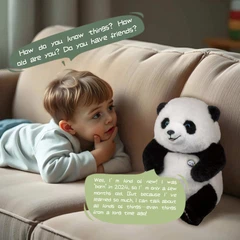
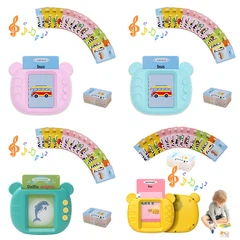
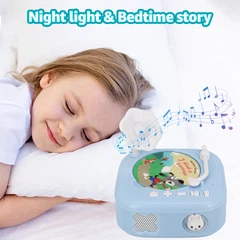
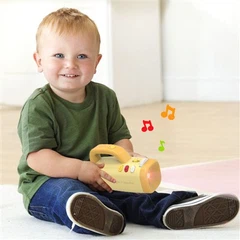


Interactive Panda Plush for Early Childhood Sensory Development
Sensory Stimulation's Role in Early Childhood Brain Growth
The first four years of life mark the most rapid period of brain development in human beings. During this stage, neural connections form at an exceptional rate, shaped almost entirely by the sensory input a child receives from their surroundings. Visual, auditory, and tactile experiences do more than keep children entertained - they build the foundational pathways for later learning, motor skills, and social understanding. For this reason, choosing toys that provide targeted, gentle sensory support is one of the most impactful decisions parents can make for long-term developmental health.
Many parents assume that all soft toys offer the same developmental value, but this is not the case. Different levels of interactivity create very different levels of cognitive engagement. A simple static plush toy provides only tactile input, while more advanced designs can stimulate multiple senses at once, creating richer learning opportunities. Understanding these differences helps parents select products that align with their child's growing needs, rather than choosing based only on appearance. An educational interactive plush toy can turn ordinary playtime into meaningful developmental practice, without feeling like structured lessons.

Developmental Support Comparison Across Plush Toy Types
Not all stuffed animals deliver equal developmental benefits. The table below compares three common plush toy categories across five core developmental dimensions, based on child development research and product use data. This comparison shows clearly how interactive designs expand the learning value of a classic toy format.
| Toy Type | Visual Stimulation | Auditory Stimulation | Tactile Interaction | Language Development Support | Social-Emotional Learning Support |
|---|---|---|---|---|---|
| Traditional Static Plush | Very low: only static color and shape | None: no sound output | Low: only passive touching | None: no speech response | Very low: no reciprocal interaction |
| Basic Electronic Plush | Low: fixed pre-set lights only | Medium: pre-recorded audio clips | Low: passive touch only | Very low: no speech imitation | Low: fixed responses with no adaptability |
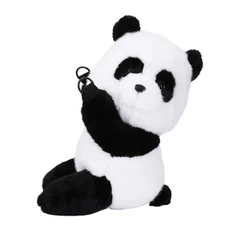
| AI Glowing Heart Panda | Medium-high: adjustable soft light for visual tracking | High: touch-activated sound + real-time speech repetition | Medium-high: touch-triggered feedback for fine motor practice | High: speech imitation encourages active vocalization | Medium: role-play feeding builds empathy and care awareness |
How the Glowing Heart Panda Supports Multi-Sensory Growth
Visual Development Through Soft Light Interaction
Gentle, responsive light is an effective tool for supporting early visual skill building. This early childhood sensory development toy features a soft glowing heart on its belly that activates with a gentle head touch. The warm, diffused light is designed to be easy on young eyes, avoiding harsh brightness that could overstimulate or disrupt natural eye development.
 When children interact with the light-up feature, they practice visual tracking as they watch the heart turn on and off, and they learn to connect their own actions with visible results. This type of cause-and-effect visual feedback strengthens eye muscle control and builds early awareness of object permanence. For infants and young toddlers, this level of controlled visual input is far more developmentally useful than static patterns or bright, flashing lights found in many basic toys.
Auditory and Language Skill Building
Responsive sound play creates a low-pressure environment for early language practice. As a toddler language development toy, this panda uses AI speech processing to repeat words and sounds spoken by the child. Unlike pre-recorded songs or phrases, this real-time repetition gives children immediate feedback for their own vocal efforts.
This form of interaction supports auditory discrimination skills, as children learn to recognize the difference between their own voice and the repeated version. It also encourages more frequent vocalization, since children are rewarded with a direct response for every sound they make. Over regular play sessions, this casual practice helps build pronunciation clarity and expands willingness to speak, which lays a strong foundation for later formal language learning.
Tactile and Fine Motor Skill Enhancement
Hands-on touch interaction is central to early physical and cognitive growth. This visual auditory tactile stimulation toy combines multiple layers of tactile experience. Its soft, dense plush fur provides a consistent, comforting texture for children to hold and stroke, which supports calm sensory regulation.
Beyond passive touch, the touch-activated features encourage intentional hand movements. Children learn to aim their touches to trigger sound and light effects, which builds hand-eye coordination and fine motor control. The simulated feeding play pattern adds another layer of motor practice, as children use small hand movements to complete pretend feeding actions. Each of these small, playful movements contributes to stronger motor control over time.
Social and Emotional Learning Through Role Play
Imaginative care play helps young children build empathy and social awareness. This emotional learning stuffed animal supports role-play activities through its interactive responses and simulated feeding function. When children pretend to care for the panda - feeding it, touching it gently, and talking to it - they practice basic caregiving behaviors and learn to recognize emotional cues.
This type of play also helps children process their own feelings. They can project their own experiences onto the toy and work through emotions in a safe, low-stakes way. While a static plush can also be used for role play, the responsive blinking and sound effects make the interaction feel more real, which deepens the emotional learning value of playtime.
The Science of AI in Developmental Toy Design 🔬
AI technology has opened new possibilities for creating developmentally adaptive toys for young children. Traditional electronic toys operate on fixed programming, playing the same sounds and lights every time regardless of how the child plays. AI-powered designs, by contrast, can respond dynamically to a child's actions, creating a more personalized play experience.
This dynamic response matters for development because children learn best when feedback matches their current level of exploration. A child who is just experimenting with sounds will get simple repetition, while a more talkative child will get more complex back-and-forth interaction. This adaptability means the toy stays developmentally useful for a longer period, growing with the child instead of becoming boring as skills improve.
Critics of tech-integrated toys sometimes raise concerns about overstimulation, but well-designed AI models prioritize gentle, age-appropriate responses. The goal is not to replace human interaction, but to add another layer of supportive engagement during independent play. When used as part of a balanced play routine, these toys can enhance developmental progress without taking time away from caregiver interaction.

Selecting a Developmentally Beneficial Plush Toy
The most effective developmental toys match a child's current stage while also supporting growth into the next stage. When shopping for play items for young children, parents should look beyond surface-level cuteness and evaluate how well the product supports core developmental areas.
A high-quality sensory development toy should offer multi-sensory input without overstimulation, respond to the child's actions to build cause-and-effect understanding, and be made with safe, soft materials suitable for extended contact. The glowing heart panda meets all these criteria, combining visual, auditory, and tactile engagement in a child-friendly package. It works effectively as a toddler language development toy, a fine motor practice tool, and a soft companion for emotional play, delivering broad developmental value in a single design.

As research on early brain development continues to advance, more families are recognizing the value of choosing toys that support healthy growth. Investing in well-designed interactive plush products is a simple way to turn everyday playtime into a meaningful opportunity for long-term developmental progress.
Hot Tags: interactive panda plush for early childhood sensory development, China, suppliers, manufacturers, factory, customized, wholesale, bulk, quotation, made in China


