


What Are Talking Flash Cards?

Talking flash cards are a screen-free early-learning format that pairs a compact audio reader with a deck of printed picture cards. A child slides a card into the reader, the device recognises it - by optical marking or contact coding - and plays the matching word, phrase or real-world sound through a built-in speaker. There is no phone, no tablet, no app and no internet connection anywhere in the loop. The category sits between traditional printed flashcards and app-based learning: it keeps the tactile handling and parent-approved simplicity of paper, while adding native-speaker pronunciation that printed cards simply cannot deliver. For B2B buyers, talking flash cards are one of the few early-learning formats that clear three commercial tests at once - a low return rate, strong in-store demonstrability, and a natural refill economy through additional card packs. KidsoundBook is an OEM/ODM manufacturer of talking flash cards and related screen-free learning devices, supplying brand owners, retail chains and distributors from a 5,000 square metre plant in Shenzhen with in-house electronics, card printing and final assembly.
How Do Talking Flash Cards Work?

The engineering behind talking flash cards is deliberately simple, and that simplicity is the commercial point: fewer components means fewer failure modes, a lower bill of materials and a cleaner compliance file. Here is the path from a printed card to a spoken word.
Step A → Card coding and recognition: Each card carries an optical marking or contact code on its edge or face. When the card is inserted, the reader identifies that code and looks up the corresponding audio index. Because recognition happens on the device, the interaction works identically in a classroom, a car or a shop demonstration with no connectivity.
Step B → Local audio playback: Audio is stored on internal memory of 4GB to 16GB, so the word, sound effect or short phrase plays within a fraction of a second of insertion. Volume, playback speed and repeat behaviour are configured at firmware level, which is where most of the perceived quality difference between a good unit and a cheap one actually comes from.
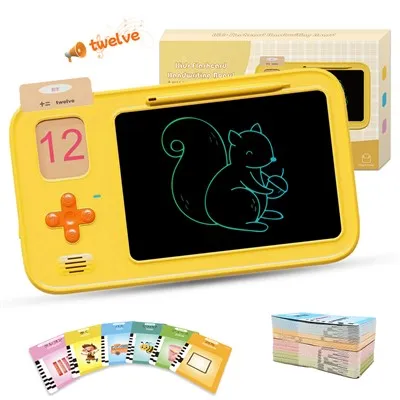
Step C → Interaction and reinforcement: Beyond one-way playback, platforms can add quiz mode, repeating, and - on the tablet format - an LCD writing surface and stylus so a child can trace the letter or character after hearing it. This is the feature that most reliably moves a product from "listening toy" to "learning toy" in a buyer's mind.
Step D → Content loading and expansion: Libraries are updated by USB or SD card, so a market can receive a localised set without changing hardware, and refill card packs can be introduced after launch. Plan this at brief stage: deciding later which content ships in the box and which ships as a paid refill is a commercial decision, not a technical one.
Step E → Build, test and scale: Housings are injection-moulded in ABS non-toxic plastic, cards are printed on 400gsm coated paper with waterproof lamination, and every unit passes 100% functional testing to the AQL 1.0 standard before packing. For a custom programme our rapid path is 3 days for an STP file, 3 days for a 3D print, 3 days for the programme white paper and 5 days for a PCBA sample, followed by 30 days for exclusive tooling and 30 days for mass production.
Key Features of Talking Flash Cards

1. Fully Offline Playback - No Screen, No Network
Feature: Recognition and audio both run locally on the device, with 4GB to 16GB of onboard memory. There is no Wi-Fi module, no companion app, no account creation and no microphone.
Advantage: This removes the failure modes that generate returns and one-star reviews in connected learning toys - pairing problems, failed firmware updates, abandoned companion apps and dead cloud services.
Benefit: For your business that means a measurably lower return rate, no post-launch server or app maintenance cost on the SKU, and a product that stays sellable in markets tightening rules on children's data. It also makes the unit far easier to demonstrate on a shop floor, where Wi-Fi is rarely available.
Evidence: Standard platforms run AAA replaceable cells or rechargeable lithium sized to the duty cycle; every unit is 100% functionally tested to AQL 1.0 before it is packed.
2. Card Library Depth and Category Coverage
Feature: 200+ card capacity with 6+ theme categories - nature, daily objects, animals, colours, numbers and body parts - and 138 preloaded cards in the standard set.
Advantage: Breadth of content lets a single hardware platform serve several age bands and several curriculum frameworks without re-engineering the reader.
Benefit: One tooling investment, multiple listings or multiple planogram slots. You can launch a starter set at an entry price point and an age-graded range at a premium one, sharing the same reader, the same certification file and the same spare parts pool - which is where the margin in this category is actually made.
Evidence: Cards are printed on 400gsm coated paper with lamination for wipe-clean durability, and content can be split into starter and extension packs at the artwork stage.
3. Bilingual Audio with Native Voice Production
Feature: Bilingual output with Chinese and English plus optional pinyin display, and further languages including Spanish, Arabic, French and Japanese, recorded with native voice artists.
Advantage: Language quality is the most common reason a flash card programme fails in a new territory. Machine-generated or heavily accented audio is visible in reviews within weeks, and by then the season is gone.
Benefit: A single hardware platform can be localised for several markets, so you consolidate tooling and purchasing volume while still listing a product that sounds locally credible - the cheapest route to multi-country distribution available in this category.
Evidence: Our content team includes a dedicated AI content creator alongside two graphic designers; audio is mastered and tested on the actual device speaker rather than approved on studio headphones.
4. Two Hardware Formats on One Card Ecosystem
Feature: A pocket card reader at roughly 25 x 18 x 3 cm, or a tablet format combining an LCD screen, an LCD writing surface and a stylus.
Advantage: The writing board adds a tracing and fine-motor activity to what is otherwise a listening product, raising perceived value for a modest increase in bill of materials.
Benefit: You can build a good / better / best ladder inside one family - pocket unit for promotional and volume price points, tablet unit for gift and specialty channels - while keeping a single card library, a single certification package and one set of retail artwork.
Evidence: ABS non-toxic housing; stylus, lanyard and card storage accessories are specified in-house by three structural and design engineers, so they are engineered with the tooling rather than sourced around it.


5. In-House Card and Packaging Printing
Feature: Cards, instruction manuals, content films and retail packaging are printed on our own lines, on 400gsm coated stock with waterproof lamination.
Advantage: Artwork revisions, language variants and private-label packaging do not sit in an outside printer's production queue.
Benefit: This is where schedules are genuinely saved. A card revision that costs three weeks through a third-party printer becomes an internal job, which matters most when a retail chain asks for a localised pack late in the process - the moment that usually pushes a launch past its delivery window.
Evidence: In-house print operation supported by two graphic designers; we develop 10 new products a year, so artwork throughput is built into the annual plan rather than squeezed in.
6. Refill Card Packs as a Repeat-Purchase Engine
Feature: The reader is designed for library expansion, so themed refill packs can be added after launch and mapped to the existing audio index.
Advantage: This converts a one-off hardware sale into a consumable programme with a second purchase reason built in.
Benefit: Higher lifetime value per customer, and - more importantly for distributors - reorder volume that does not depend on winning new shelf space every season. Retailers also have a reason to keep the fixture rather than replace it after one rotation.
Evidence: Because both card content and card printing are in-house, extension packs can be produced at low MOQ, tested on a small run, and only then committed to volume.
B2B Applications: Where Talking Flash Cards Fit

The same talking flash cards platform is bought for very different reasons depending on who is signing the purchase order. Below is how we normally recommend configuring a programme, and what each buyer type should insist on before placing it.
1. Brand Owners → ODM from concept to shelf - Recommended lines: talking flash cards and AI interactive toys. If your objective is a product nobody else can list, ODM is the only real route. The decision that matters most is locking the content scope, language set and character direction before tooling, not after. Expect 30 days for an exclusive mold and a further 30 days to volume.
2. Large Retail Chains & Hypermarkets → compliance-led, shelf-ready programmes - Recommended lines: talking flash cards, kids story players and interactive plush. Chain buyers rarely reject a product on price; they reject it on missing paperwork. Insist on three files up front: social compliance audit coverage (we hold BSCI and SEDEX), product certification for your market (CE/EN71, FCC, RoHS, UKCA, CPSIA), and a documented quality system (ISO9001, AQL 1.0 with 100% functional testing). Then plan retail packaging early - UPC and barcode assignment, shelf-ready cartons and multi-language manuals typically add weeks if they are left to the end. Supply continuity should be evidenced too: 20,000+ units daily output across a 5,000 square metre facility.
3. Importers & Distributors → standardised SKUs with fast replenishment - Recommended lines: all eight, prioritising platforms with existing tooling. Reusing existing molds keeps MOQ at 500 units and shortens the critical path, which matters more than a small unit-price difference when you are carrying seasonal stock across several markets.
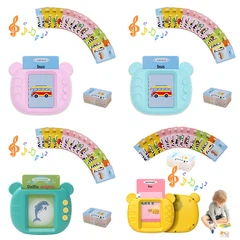
4. Amazon & E-Commerce Sellers → differentiation with compact packaging - Recommended lines: talking flash cards and children's projector toys. Multiple colourways let you A/B test listings without new tooling, and flat, compact packaging directly reduces FBA storage fees. Both formats also photograph and video well, which is where conversion is actually won.
5. IP Owners & Licensing Partners → character-true merchandise - Recommended lines: talking flash cards card packs, interactive plush and AI plush. The commercial logic in licensing is series: a base product plus extendable content. We build the character voice and the physical likeness together, so the toy sounds like the IP rather than like a generic module.
6. Educational Institutions & Preschool Chains → curriculum-aligned content - Recommended lines: talking flash cards, story players and projector toys. Content can be graded by difficulty and aligned to a specific curriculum, with bilingual output where programmes require it. Specify durability and cleanability at brief stage for institutional use - laminated cards and sealed housings are the two requests we see most often from this channel.
OEM/ODM Customization Services for Talking Flash Cards

Product Design Customization
From the first sketch to the finished carton, our design and engineering teams cover every stage of the programme:
• Industrial design, 3D modelling and Pantone-matched colour development
• Reader silhouette: pocket format or tablet format with integrated writing surface
• Card format engineering: size, corner radius, code placement and storage solution
• Logo application: printing, embossing, silicone keypad or woven label
• Accessory specification: stylus, lanyard, card storage box, carry handle
Engineers review manufacturability before artwork is finalised, which is where most schedule risk in this category is actually removed.
Hardware Customization
The platform is configured to your price point, market and channel rather than offered as a fixed specification:
• Display: small portable screen or full-size tablet writing surface with stylus
• Power: AAA replaceable cells or rechargeable lithium, matched to expected duty cycle
• Memory: 4GB to 16GB, sized to the card library you intend to ship and sell later
• Audio: standard or higher-output speakers, with headphone jack options for classroom use
• Interaction: NFC, RFID, touch sensing, vibration sensing, voice or colour recognition
Software & Audio Customization
Content is where this product earns its price. Our team manages the full pipeline:
• Multi-language production: English, Chinese, Spanish, Arabic, French, Japanese and more, recorded with native voice artists
• Bilingual logic: Chinese and English switching with optional pinyin support
• Curriculum mapping: theme categories and difficulty grading aligned to your market's expectations
• UI customisation: boot logo, menu icons, font styles, language switching behaviour
• Content updates: USB or SD card expansion for post-launch card and refill packs
You receive mastered, production-ready audio that has already been tested on the actual device - not studio files that sound good on headphones and thin on a toy speaker.
Packaging & Compliance Customization
The part buyers most often leave too late, and the part most likely to delay a launch:
• Packaging formats: window box, gift box, or shelf-ready retail carton
• Card packaging: starter deck plus separately barcoded refill packs for repeat purchase
• Brand assets: UPC and barcode assignment, multi-language manuals, warning labels
• Documentation pack: full certification files for quality control and customs clearance
• Audit support: BSCI and SEDEX documentation for retail chain onboarding
• Sustainability options: recycled materials and reduced-plastic packaging

Why Choose KidsoundBook as Your Talking Flash Cards Partner
Factory-Direct Manufacturing
KidsoundBook operates a complete production model in Shenzhen, China - from electronic modules and firmware through card printing and manual assembly. For this product format specifically, that vertical structure matters more than in most categories: the two halves of the product, the electronics and the printed cards, are usually made by two different suppliers who blame each other when tolerances disagree. Making both ourselves means we solve reader fit, print registration and assembly tolerance as a single problem.
• 5,000 square metre facility with 20,000+ units daily output
• In-house mold workshop with 10 injection machines, controlling quality from the source
• In-house card and packaging printing on 400gsm laminated stock
• Quality control to the AQL 1.0 standard with 100% functional testing before packing
• Rapid development path: 3 days for an STP file, 3 days for 3D printing, 3 days for the programme white paper, 5 days for a PCBA sample, 30 days for tooling
Global Export Experience
We have shipped to more than 120 countries and regions across North America, Europe, Southeast Asia and the Middle East, and have supported buyers through retail chain onboarding, not just customs clearance. Since 2010 we have produced over 1,000,000 units and now serve more than 20,000 customers.
• Certifications: CE (EN71), FCC, RoHS, UKCA and CPSIA, plus ISO9001, BSCI and SEDEX factory audits
• Raw materials fully compliant with RoHS and CPSIA requirements
• Shipping methods: sea freight (FOB Shenzhen), air freight, express (DHL / FedEx / UPS)
• Payment terms: T/T, L/C, trade assurance available
• MOQ: from 500 units on existing tooling, negotiable for custom designs

Frequently Asked Questions About Talking Flash Cards
Q1: What is the minimum order quantity for talking flash cards?
MOQ starts at 500 units for standard models using existing tooling. Fully custom designs requiring new molds typically start at 1,000-2,000 units. Refill card packs can be produced at lower quantities, which makes them a practical way to test a new theme before committing to a full hardware run. We are flexible on first trial orders, because we would rather prove a product on a small run and grow the programme with you.
Q2: Can you meet large retail chain compliance requirements?
Yes. Our factory holds ISO9001, BSCI and SEDEX certification, which covers the social compliance audits most chains require before onboarding a supplier. Products are built to CE (EN71), FCC, RoHS and CPSIA standards, with UKCA arranged on request. We supply a full documentation pack with every order so your quality team and your customs broker are working from the same files, rather than requesting certificates separately three weeks before delivery.
Q3: How do talking flash cards handle children's privacy?
This is one of the format's strongest arguments. Talking flash cards have no microphone, no camera, no Wi-Fi and no account, so by design they collect no personal data and there is no cloud service to audit. Recognition and playback both happen on the device. If your range also includes AI interactive toys, we configure those separately with no camera, push-to-wake activation, data minimisation and optional on-device processing - tell us your target markets early so we can configure accordingly.
Q4: How long does the OEM/ODM process take?
For a talking flash cards programme on an existing platform, typically 25-45 days end to end: 5-10 days for sample confirmation, 20-30 days for mass production, plus 3-5 days for inspection and packing. New tooling adds roughly 30 days. Our rapid path is 3 days for an STP file, 3 days for a 3D print, 3 days for the programme white paper and 5 days for a PCBA sample. The variable that most often extends this is content - recording and mastering a new language set takes longer than buyers expect, so brief it first.
Q5: Do you support private label and retail packaging?
Yes. Full private label service including custom box design, instruction manuals, brand logo placement, UPC and barcode assignment, and shelf-ready retail cartons. Card decks and refill packs can be barcoded separately so they scan as independent SKUs at your retail partner's till. Your brand appears on the product, the packaging and the documentation; we stay invisible.
Q6: What warranty do you offer?
We provide a 12-month warranty covering manufacturing defects, with replacement units or components shipped within 15 days of defect confirmation. Spare parts kits can be included with bulk orders to support your after-sales service, and our sales team is reachable 7x24 throughout the project - which matters most during a seasonal launch, when a question about a shipment rarely arrives during office hours.
Future Trends in Talking Flash Cards
1. Refill Economics Overtaking Hardware Margin - As hardware prices compress, the profitable part of a talking flash cards programme is increasingly the second and third card pack. For buyers, the practical implication is that the reader must be specified for library expansion from day one; a closed system cannot be retrofitted once it is tooled.
2. Localisation Depth Replacing Language Count - Listing six languages is no longer a differentiator. What moves conversion is whether the audio sounds native and whether the content matches local curriculum expectations. Buyers should budget for proper native recording and regional content review rather than treating translation as a line item.
3. Hybrid Screen-Free and AI Formats - The category is splitting: strictly offline card readers for price-led and privacy-sensitive channels, and LLM-driven talking companions for premium ranges. Most distributors will end up carrying both. Plan the two as separate certifications and separate price architecture rather than one range with an upgrade.
4. Sustainability as a Listing Requirement - Recycled plastics and reduced-plastic packaging are shifting from marketing angle to an onboarding condition with several European chains. Specifying this at brief stage is far cheaper than retooling or reprinting later - and it is usually the packaging, not the product, that triggers the request.
Conclusion: Start Your Talking Flash Cards Programme
Talking flash cards reward buyers who plan the unglamorous parts early. The programmes that reach shelf on time are rarely the most ambitious ones - they are the ones whose language set, certification scope and packaging specification were settled before tooling started. Everything else in this category is comparatively easy; content and paperwork are where launches actually slip.
At KidsoundBook we combine in-house electronics, card printing and assembly with BSCI and SEDEX audited production, so design, certification and volume are handled as one system rather than three vendors. Send us a concept, a reference product or simply a target price, and our engineers will come back with a manufacturable proposal - with 7x24 response throughout the project.
Contact Us
Contact: Zoey
WhatsApp: +86 13342950150
Email: xdt06@dtdianzi.com
Company: SHENZHEN XINDITAI ELECTRONIC CO., LTD | Website: www.kidsoundbook.com
Hot Tags: talking flash card, China, suppliers, manufacturers, factory, customized, wholesale, bulk, quotation, made in China