


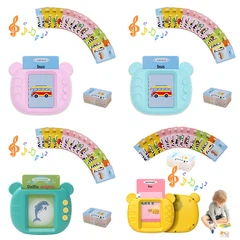
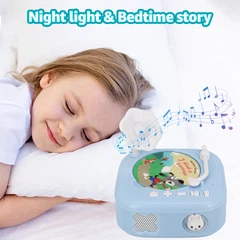


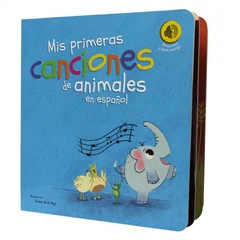

What Are Talking Flash Cards?

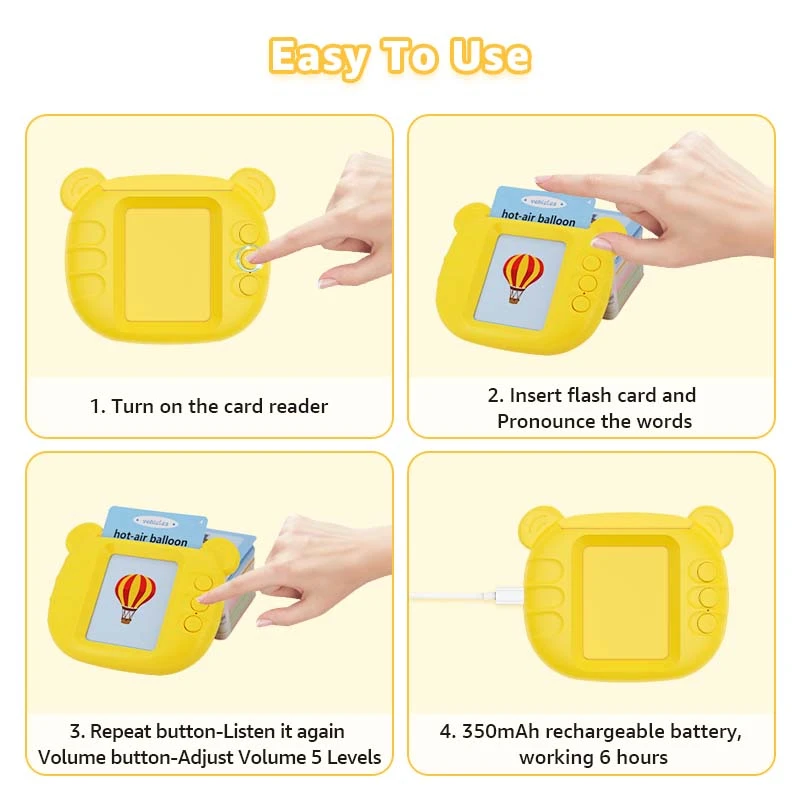
Talking flash cards are a screen-free learning format built around one simple action: a child inserts a printed card into a handheld reader, and the reader plays a short native-voice audio clip that names the picture and, depending on the programme, adds a second language track, a sound effect or a simple question. There is no display to watch, no network to join and no account to create. The intelligence sits in the card, the reader and the audio file, not in a cloud service. For a B2B buyer, that simplicity is the commercial point: the product works on the first day of a school term, in a shop demonstration unit, or in a household with no reliable broadband, and it keeps working without a firmware subscription.
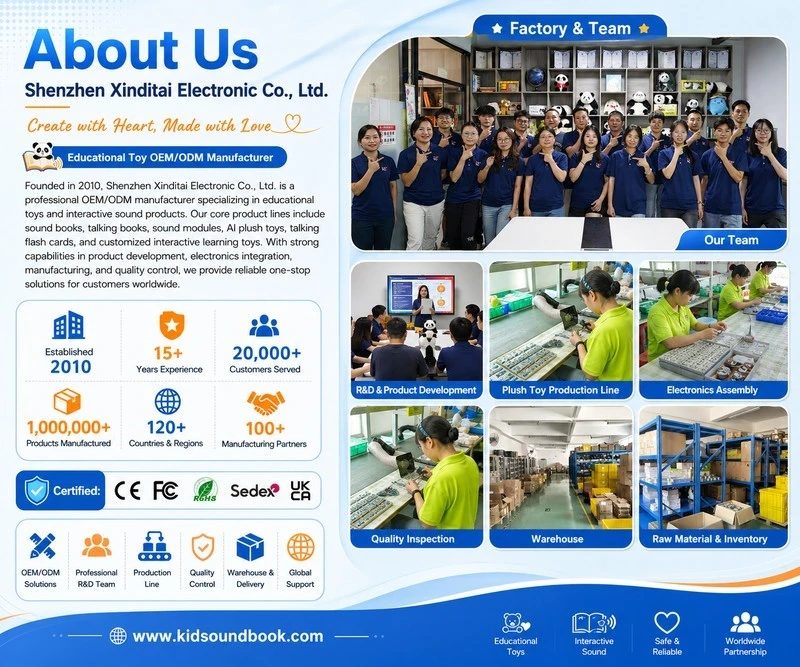
We build talking flash cards as an OEM/ODM manufacturer rather than as a reseller. That means the reader housing, the recognition method, the card set, the audio content, the packaging and the compliance file are all developed in one place. Founded in 2010, SHENZHEN XINDITAI ELECTRONIC CO., LTD operates a 5,000 square metre facility with its own mould workshop, ten injection machines, and an in-house team of three structural and design engineers, four electronics engineers, two quality engineers, one AI content creator, two graphic designers and ten QC staff. When you buy talking flash cards from us, you are buying a development slot, not a catalogue number.
How Do Talking Flash Cards Programmes Run From Brief To Shipment?
Most talking flash cards projects do not fail because the engineering is hard. They fail because the decisions are made in the wrong order: the housing is tooled before the card list is agreed, or the audio is recorded before somebody checks which market the unit will actually ship to. The five steps below are the sequence we run, and each one carries a fixed internal commitment you can plan a retail calendar around.
Step A → Fix the scenario and the card list first: Before any shape exists, we agree where your talking flash cards will be used, which age band they serve, and which words go on the cards. A classroom kit, a bilingual home programme and a supermarket impulse SKU need different card counts, different vocabulary difficulty and different packaging volumes. This step costs you nothing in tooling and decides everything downstream, so we do it before a single drawing is issued.
Step B → Structure and industrial design: With the brief frozen, our structural team issues the STP file set within 3 days and produces a 3D-printed prototype within 3 days. You hold the form, the card slot geometry and the button layout in your hand before committing to steel. This is the cheapest moment in the whole project to change your mind, and it is where most of our clients change it.
Step C → Content script and programme definition: The audio flow, trigger logic, language switching behaviour, timer and power management are written into a programme white paper, completed within 3 days. Recording scripts, illustration style and card layout are prepared in parallel by our AI content creator and graphic designers. Locking this document before electronics are frozen is what prevents the classic failure mode of a unit that works perfectly but plays the wrong file.
Step D → Electronics, power and acoustics: A PCBA sample is built within 5 days. At this stage we settle the decisions that drive your cost and your compliance route: AAA dry cells versus rechargeable lithium, 4GB to 16GB of local storage, speaker cavity and volume ceiling, USB or SD content updates, and whether any radio feature is added at all. A unit without a radio module avoids a whole layer of testing; that is a cost decision, not a marketing one.
Step E → Tooling and mass production: Once the sample is approved, we complete an exclusive mould in 30 days and complete mass production in 30 days. Because the mould, the injection machines and the assembly lines sit in the same facility, the gap between sample approval and first carton is a schedule you can quote to your retail buyer rather than an estimate you have to hedge.
Key Features of Talking Flash Cards
1. Offline Playback That Survives A Classroom Day
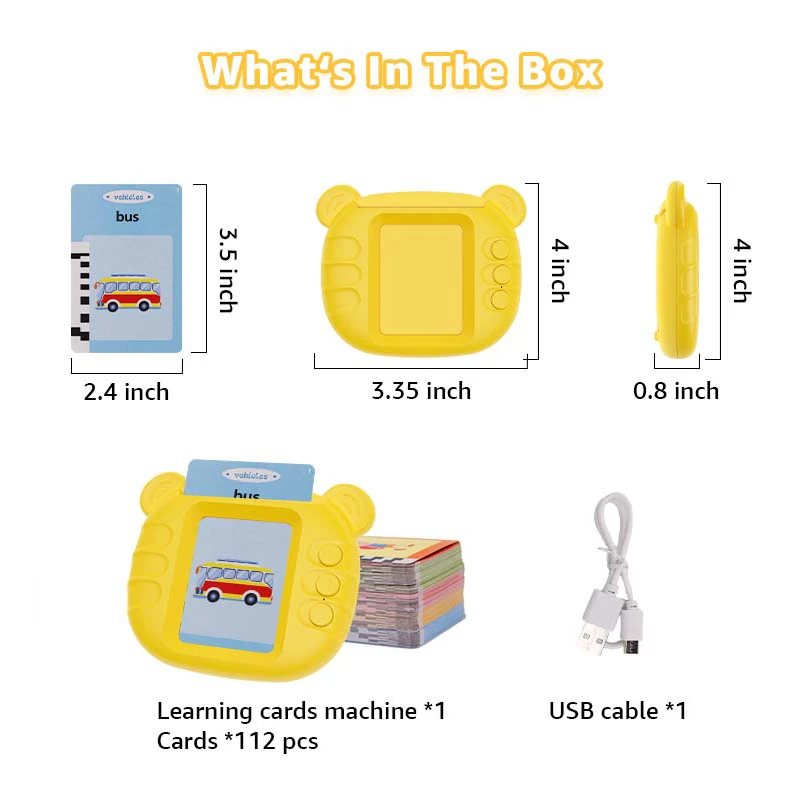
Feature: Card insertion triggers optical or contact recognition, and the matching audio file plays from local memory. There is no screen, no Wi-Fi pairing, no app and no user account. Cards are printed on 400gsm coated paper with waterproof lamination, and the housing is ABS.
Advantage: Nothing needs charging overnight for a twenty-unit kit, nothing needs configuring on a school network, and no IT administrator has to approve anything. Compared with a tablet-based literacy app, playback starts in under a second and there is no glass to crack and no annual licence to renew.
Benefit: For an education distributor or a retail buyer, this removes the two cost centres that quietly destroy margin in this channel, which are onboarding labour and breakage replacement. A teacher can deploy a full kit inside one lesson with zero support tickets, and your returns profile is driven by manufacturing defect rate rather than by cracked displays or expired subscriptions. That is a lower cost of ownership you can put in a tender document.
Evidence: Local storage from 4GB to 16GB, USB or SD content updates, laminated 400gsm cards, and every single unit passing 100% function test before packing under our AQL 1.0 inspection regime.
2. A Card Library Deep Enough To Carry A School Term
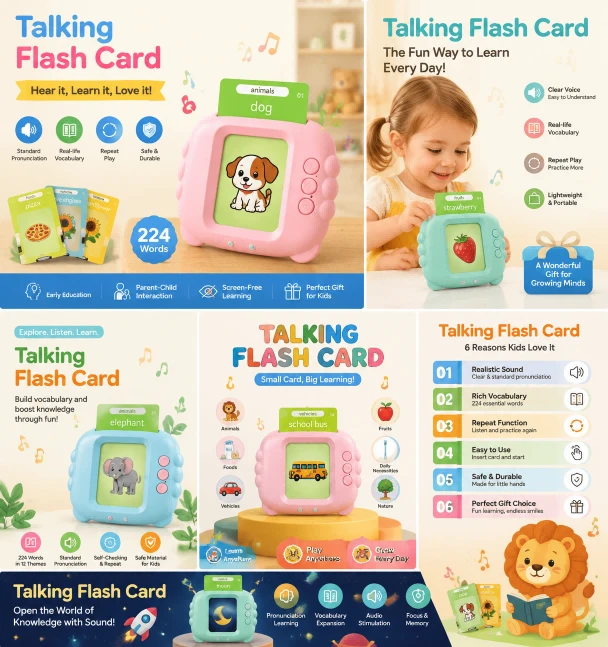
Feature: The platform supports a library of 200+ cards across six or more theme categories, including nature, everyday objects, animals, colours, numbers and body parts, with 138 cards preloaded in the standard configuration.
Advantage: One purchase covers a full term of vocabulary rather than a single topic, and the theme structure maps onto the unit layout most language programmes already teach in. Depth is also what lets the same reader be re-boxed for a different channel simply by changing the card set.
Benefit: Library depth is what converts a classroom pilot into a standing order. You are not defending a single SKU against a cheaper copy, you are defending a curriculum slot, and a competitor has to reproduce the entire card set to displace you. It also lowers your inventory risk, because one electronics platform serves several channels and only the low-cost printed component varies.
Evidence: 138 preloaded cards produced with native-voice talent, six-language recording in English, Chinese, Spanish, Arabic, French and Japanese, and card script, illustration and layout handled in-house by our AI content creator and two graphic designers.
3. Bilingual Audio Recorded By Native Speakers
Feature: Each card carries two language tracks with a switch, optional pinyin support on the Chinese track, and all audio is recorded by native speakers rather than generated.
Key functions include:
• Two-language switching on the same card, so one card set serves two markets
• Optional pinyin display track for early literacy programmes
• Additional language versions added to the same content architecture
• Volume, speed and repeat behaviour configured per market
Advantage: A single hardware platform and a single content production run serve a domestic market and an export market, so you are not paying twice for tooling, studio time or certification.
Benefit: Bilingual capability roughly halves the number of SKUs you need to hold for two markets, which directly reduces tooling exposure and forecast risk, and it supports a higher shelf price because bilingual positioning is a value claim parents and schools understand immediately. It is the cheapest way to differentiate talking flash cards without changing the electronics.
Evidence: Six-language native recording with optional pinyin, developed by a team of three structural and design engineers, four electronics engineers and one dedicated AI content creator.
4. Two Hardware Formats On One Card Ecosystem
Feature: The standard handheld reader and a tablet-format unit with an LCD screen, an LCD writing board and a stylus both read the same card library. The tablet-format unit measures approximately 25 x 18 x 3 cm.
Advantage: You get a good, better and best price ladder from one card ecosystem, one audio production run and one mould investment, instead of developing two unrelated products.
Benefit: This is the single most effective inventory-risk move available in the category. One tooling investment supports three price points, so a slow quarter on the premium format does not strand the entry format, and every refill pack you sell later fits whichever unit the customer bought. Fewer stranded SKUs means less working capital sitting in a warehouse.
Evidence: Both formats run on our Flashcard System platform, produced in our own mould workshop with ten injection machines, and we develop around ten new products a year on this shared architecture.
5. Refill Card Packs Turn One Sale Into A Programme
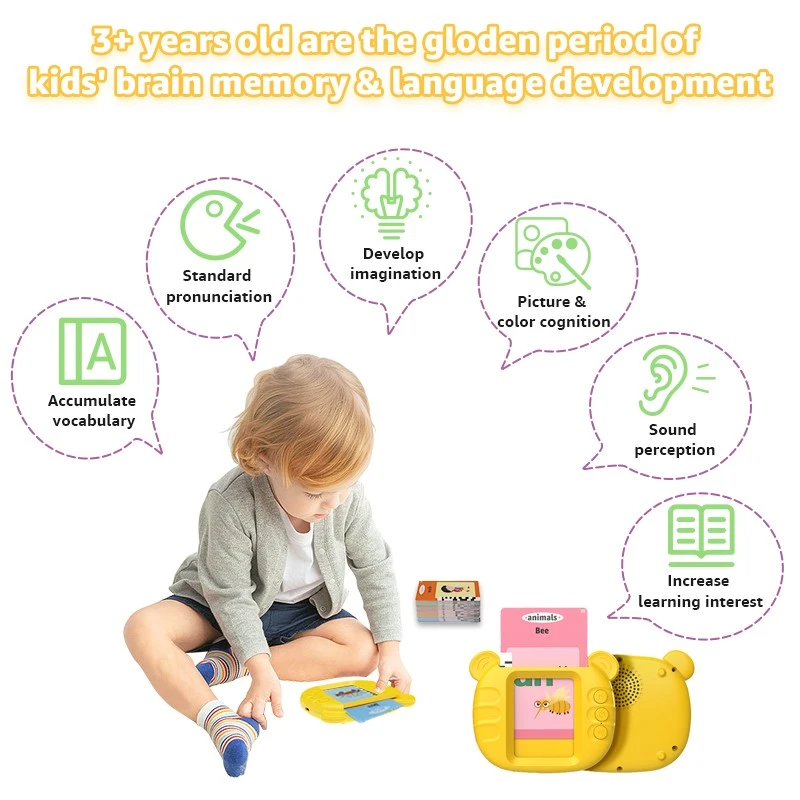
Feature: Themed card packs are sold as separate items, and the content library on the reader can be refreshed through USB or SD.
Advantage: The reader stops being a one-off purchase and becomes a platform with an attach rate, while the incremental item is printed paper rather than electronics.
Benefit: Refill packs are the highest-margin line you can add to a talking flash cards programme, because they cost a fraction of the reader to make and they bring the customer back without any new customer acquisition spend. Holding paper inventory is also far cheaper than holding electronics inventory, so the same marketing budget supports a deeper catalogue with less capital at risk.
Evidence: 4GB to 16GB on-board storage with USB or SD updating, laminated 400gsm cards printed to the same specification as the base set, and six or more theme categories available for expansion packs.
6. A Compliance And QC File That Clears Retail Onboarding
Feature: Every project ships with a documentation pack covering CE (EN71) with EN71-1, EN71-2 and EN71-3 reports, EN 62115 for the electric toy function where applicable, FCC Part 15 where a radio feature is added, RoHS, UKCA, and CPSIA with Children's Product Certificate supporting documents, plus our ISO9001, BSCI and SEDEX credentials.
Advantage: Your compliance team receives one indexed file instead of chasing six suppliers for partial paperwork, and the gaps are visible before production rather than after a container lands.
Benefit: Vendor setup is usually the longest lead time in a retail calendar, longer than tooling and longer than shipping. A complete file shortens that queue, and a complete file is also what keeps a listing alive through a marketplace audit. Faster approval means your seasonal window is not consumed by paperwork.
Evidence: AQL 1.0 inspection with 100% function testing, all raw materials compliant with RoHS and CPSIA, delivered by two quality engineers and ten QC staff inside a 5,000 square metre ISO9001, BSCI and SEDEX audited facility.
B2B Applications: Where Talking Flash Cards Fit
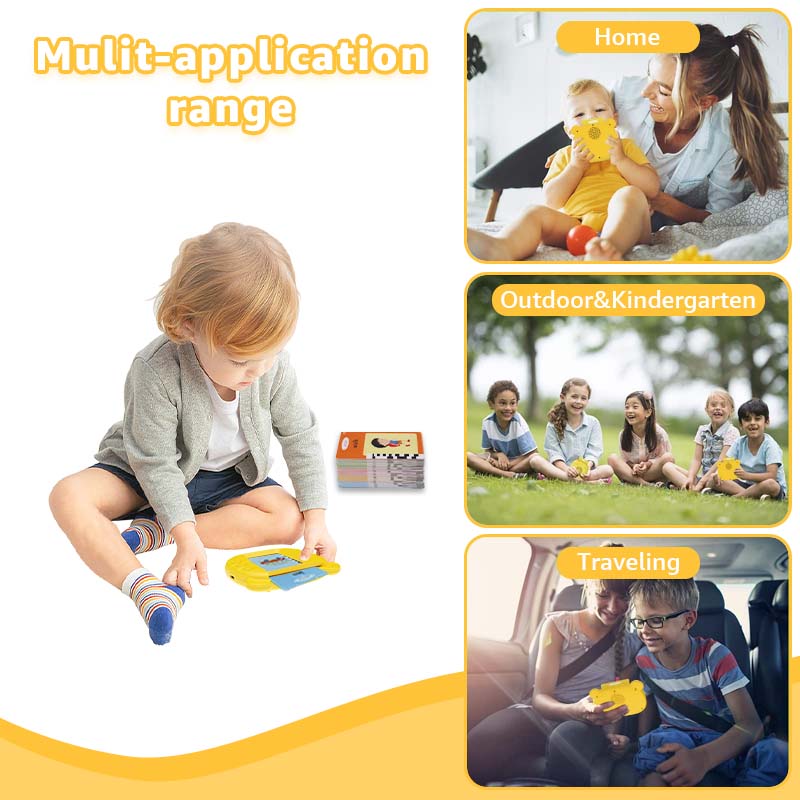
Talking flash cards sell into six very different channels, and each one buys on a different trigger. Knowing which trigger you are selling against changes the spec you should order, so here is how we configure talking flash cards for each buyer type.
1. Large supermarkets and chain retail - This channel buys documentation before it buys product. We supply the full compliance file in one pass: BSCI and SEDEX social audit credentials, ISO9001 quality management, CE (EN71) covering EN71-1, EN71-2 and EN71-3, EN 62115 for the electric toy function, FCC Part 15 where a radio feature is included, RoHS, UKCA, and CPSIA with Children's Product Certificate supporting documents. Inspection runs to AQL 1.0 with 100% function testing, and packaging is built for shelf presentation with barcodes, UPC and multilingual manuals. Recommended configuration: the standard reader with a bilingual preloaded set and a themed refill pack beside it on the same peg.
2. Brand owners building a differentiated product - If you are creating a literacy brand from zero, the value is in owning the shape and the content. We run full ODM: exclusive housing, custom card set, custom voice talent, and an exclusive mould completed in 30 days so nobody else can buy your silhouette. Recommended configuration: private-tooled reader plus a proprietary card library that competitors cannot copy in one season.
3. B2B importers and distributors - You need standard talking flash cards SKUs that reorder cleanly. We keep a stable base platform so a repeat order produces the same unit as the last one, supported by 20,000+ units daily capacity and export experience across 120+ countries. Recommended configuration: our existing reader formats with your brand artwork, plus one or two market-specific card sets.
4. Amazon and e-commerce sellers - Your constraints are dimensional weight, review score and colourway testing. We build compact packaging to reduce fulfilment fees, offer multiple colourways so you can A/B test a listing, and keep the unit simple enough that the two most common negative reviews, dead on arrival and confusing setup, do not happen. Recommended configuration: compact bilingual set with a refill pack as the follow-up purchase.
5. Education groups, language schools and kindergarten chains - This buyer thinks in kits and terms, not units. We configure twenty-unit classroom kits with difficulty grading across card sets, durable laminated cards that survive daily handling, and bilingual audio that matches the curriculum language pair. Recommended configuration: tablet-format unit with writing board for teacher-led groups and the handheld reader for individual practice, sharing one card library.
6. IP licensors and gift or subscription channels - Character fidelity sells here, and series structure keeps it selling. We reproduce character voices with approved talent, build series card packs that release in waves, and design gift-box packaging that presents well without assembly. Where a project wants a conversational layer, we can add an LLM-driven dialogue feature on the same platform, with no camera and local processing options.
OEM/ODM Customization Services for Talking Flash Cards
Product Design Customization
Design is where a talking flash cards project becomes yours rather than ours. We start from your channel, your age band and your price point, then work backwards to the shape.
• Exclusive housing design with your own silhouette, or adaptation of an existing platform to shorten the schedule
• Card slot geometry tuned for small hands and for the card thickness you intend to ship
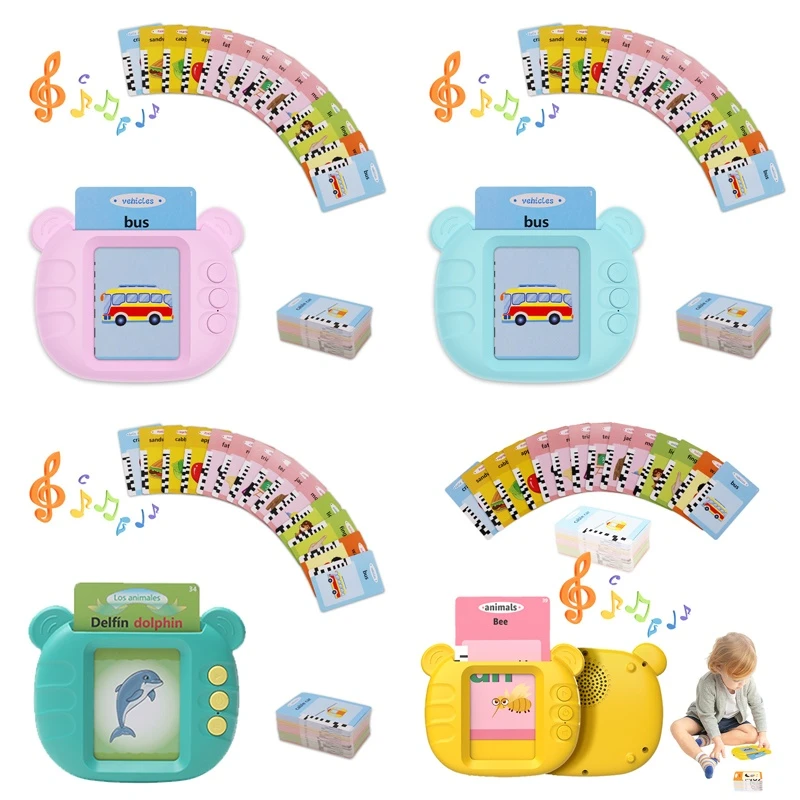
• Colourway, texture and finish selection including soft-touch and two-shot moulding options
• Card size, corner radius, lamination grade and storage solution such as a slipcase, ring binder or box
• STP files within 3 days and a 3D-printed prototype within 3 days, so decisions are made on a physical part
An exclusive mould is completed in 30 days, which is what turns a design into an asset nobody else can order.
Hardware Customization
Hardware choices in this category are mostly cost and compliance choices, and they should be made with your market in mind rather than with a feature list.
• Recognition method: optical or contact reading, selected for card durability and unit cost
• Power architecture: AAA dry cells or rechargeable lithium, with battery compartment design suited to your target age band
• Storage from 4GB to 16GB, with USB or SD content updating
• Speaker cavity tuning, volume ceiling and optional headphone output for classroom use
• Optional LCD screen, LCD writing board and stylus on the tablet-format unit
A PCBA sample is completed within 5 days, and we flag at this stage which tests your feature set will require so the compliance route is planned, not discovered.
Software & AI Content Customization
Content is the part of a talking flash cards programme that a competitor cannot copy in one season, so we treat it as a development deliverable with its own document.
• Programme white paper covering trigger logic, audio flow, language switching, timer and power behaviour, completed within 3 days
• Vocabulary list built to your curriculum, market or internal scope and sequence
• Native-voice recording in English, Chinese, Spanish, Arabic, French or Japanese, with optional pinyin
• Sound effects, question prompts and simple quiz flows layered onto the base naming track
• Optional LLM-driven conversational layer for projects that want dialogue, designed with no camera and with local processing options; we do not claim a privacy certification we do not hold
Where an AI feature is added, we document what data the unit handles so your own legal review has something concrete to read.
Packaging & Compliance Customization
Packaging is a compliance surface and a fulfilment cost at the same time, and both matter before a carton is packed.
• Retail-ready colour box, window box or gift box artwork produced by our two in-house graphic designers
• Barcode and UPC assignment, carton markings and pallet configuration for your distribution centre
• Multilingual manuals and age grading statements prepared for your destination markets
• CE (EN71) covering EN71-1, EN71-2 and EN71-3, EN 62115, FCC Part 15 where a radio feature is added, RoHS, UKCA and CPSIA with Children's Product Certificate supporting documents
• Drop-test informed pack design and compact sizing to reduce dimensional weight on e-commerce channels
Which route applies to your feature set should be confirmed with your own notified body or local market authority; we design to the requirements you bring us and document what we built.
Why Choose KidsoundBook as Your Talking Flash Cards Partner
Factory-Direct Manufacturing
You are dealing with the facility that cuts the mould, injects the housing, assembles the board and tests the finished unit. There is no trading layer between your drawing and the machine, which is why a design change can still be made cheaply in week two and why a tooling question gets answered by the people who will run the tool.
• 5,000 square metre facility established in 2010, with its own mould workshop and ten injection machines
• 20,000+ units daily capacity and 1,000,000+ products manufactured cumulatively
• In-house team of three structural and design engineers, four electronics engineers, two quality engineers, one AI content creator, two graphic designers and ten QC staff
• AQL 1.0 inspection with 100% function testing on every unit, and all raw materials compliant with RoHS and CPSIA
• Recognised as a national high-tech enterprise, with ISO9001, BSCI and SEDEX credentials
Global Export Experience
Export work with talking flash cards is mostly about knowing what a buyer's compliance team will ask for before they ask. We have shipped to 120+ countries and regions, and roughly half of our business is OEM with the other half ODM, so we are used to both a customer's drawing and a blank sheet of paper.
• Exports to 120+ countries and regions, serving 20,000+ customers with 100+ manufacturing partners
• Around ten new products developed every year, with OEM and ODM each accounting for about half of our business
• Documentation experience across CE (EN71), EN 62115, FCC Part 15, RoHS, UKCA and CPSIA with Children's Product Certificate supporting files
• 7x24 sales response, a 12 month warranty and spare-part kits available for education and retail programmes
Frequently Asked Questions About Talking Flash Cards
Q1: What is the minimum order quantity for a custom talking flash cards project?
MOQ depends on how much of the programme is exclusive. Rebranding an existing reader with your artwork and your card set carries the lowest threshold, because no new tooling is involved. A private mould with a custom housing carries a higher one, since the tooling investment has to be amortised across the first run. Card sets are quoted separately from electronics, and because cards are printed paper they carry their own smaller minimum, which is what makes a themed refill pack viable as a low-risk test before you commit to a full second electronics run.
Q2: Can you supply the compliance file a supermarket chain will ask for?
Yes. We provide BSCI and SEDEX social audit credentials, ISO9001 quality management documentation, CE (EN71) test reports covering EN71-1, EN71-2 and EN71-3, EN 62115 for the electric toy function, FCC Part 15 where a radio feature is included, RoHS, UKCA, and CPSIA with Children's Product Certificate supporting documents. Inspection runs to AQL 1.0 with 100% function testing on every unit. We recommend sharing your retailer's vendor requirements with us at quotation stage, because the file is faster to assemble as an input than to retrofit as an afterthought.
Q3: How is privacy handled if we add an AI conversation feature?
Our AI work is LLM-driven, and we design these units without a camera and with local processing options so that audio does not need to leave the device. We state plainly that we do not claim a privacy certification we do not hold. What we do provide is a one-page description of what the unit collects, where it is processed, how long it is retained and how it is deleted, which is the document your own legal or compliance reviewer actually needs. The applicable rules in your market should be confirmed with your own counsel.
Q4: What lead times should we plan around?
From a frozen brief, we issue STP files within 3 days, produce a 3D-printed prototype within 3 days, complete the programme white paper within 3 days and build a PCBA sample within 5 days. After sample approval, an exclusive mould is completed in 30 days and mass production is completed in 30 days. In practice the longest variable in your calendar is usually your own retail vendor setup, which is why we prepare the documentation pack in parallel with engineering rather than after it.
Q5: Can we have our own packaging and our own mould?
Both. Our two in-house graphic designers produce retail-ready artwork, and we handle barcode and UPC assignment, carton markings, multilingual manuals and age grading statements. On the tooling side, an exclusive mould is completed in 30 days and it is yours, which matters if your channel depends on a silhouette nobody else can buy. If your timeline is tighter, we can start on an existing platform with custom artwork and move to a private tool on the second run.
Q6: What happens after shipment if something goes wrong?
Every talking flash cards unit passes a 100% function test before packing under AQL 1.0 inspection, which is what keeps dead-on-arrival rates low in the first place. Beyond that we provide a 12 month warranty, spare-part kits for education and retail programmes that need to service units in the field, and 7x24 sales response so a question raised on a Friday evening does not wait until Monday. Batch records are retained so a defect report can be traced back to a specific production run rather than argued about in general terms.
Future Trends in Talking Flash Cards
1. Curriculum alignment replaces feature count - Buyers in education channels are increasingly asking which scope and sequence a card set follows rather than how many words it holds. For you this means the vocabulary list is now a sales document, not a packaging detail, and a supplier who can build a card set to your curriculum is worth more than one who offers a longer generic list.
2. Bilingual and heritage-language demand keeps widening - Language pairs beyond English and Spanish are moving from niche to standard in several markets, supported by native-voice recording. The commercial read is simple: one hardware platform with two language tracks halves your SKU count for two markets and reduces tooling exposure, so bilingual capability is a cost decision as much as a marketing one.
3. Refill and subscription economics move into physical product - Wave-released card packs turn a single purchase into a programme with an attach rate. Because the incremental item is printed paper rather than electronics, the margin profile is better than the base unit and the inventory risk is lower, which is why refill packs are now the first question we ask about in a new talking flash cards programme.
4. Voice-first hardware with an optional AI upgrade path - Screen-free design continues to gain shelf space, and where a project does want conversation, the LLM-driven layer is being added to proven platforms rather than replacing them. The practical advice is to design the housing and the power budget now so the AI version can be introduced later without a second tooling investment.
Conclusion: Start Your Talking Flash Cards Programme
Talking flash cards reward the buyer who decides the scenario before the shape. Once you know whether the unit is going into a twenty-unit classroom kit, a supermarket peg or a bilingual home programme, the rest of the specification follows quickly, and the decisions that cost real money become visible early enough to change. The projects that go wrong are the ones where the mould is cut before the card list is agreed.
Our role is to make that sequence short and predictable. You get STP files in 3 days, a 3D-printed prototype in 3 days, a programme white paper in 3 days, a PCBA sample in 5 days, an exclusive mould in 30 days and mass production in 30 days, all inside one 5,000 square metre facility with its own mould workshop and AQL 1.0 inspection with 100% function testing. Send us your channel, your language pair and your card list, and we will come back with a specification and a schedule you can take into a retail review.
Contact Us
Contact: Zoey
WhatsApp: +86 13342950150
Email: xdt06@dtdianzi.com
Company: SHENZHEN XINDITAI ELECTRONIC CO., LTD | Website: www.kidsoundbook.com
Hot Tags: talking flash cards — screen-free bilingual flash cards with native voice, China, suppliers, manufacturers, factory, customized, wholesale, bulk, quotation, made in China


