





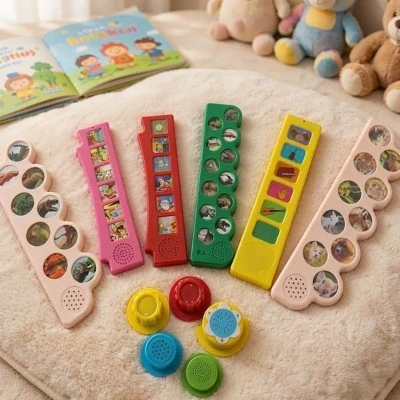

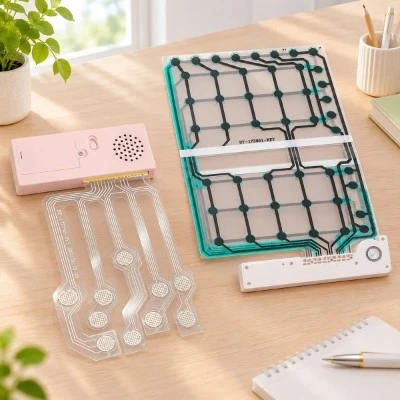


How many times have you encountered this confusing problem in the premium gift packaging industry lately? 🤷

Intuitively, which board do you think records better?
Same microphone, same speaker, same working voltage, same recording & playback function - but the audio performance is worlds apart.
I've gotten this question from dozens of gift box procurement managers and product designers this month alone. Many clients even doubt our hardware supply quality at first, until we tear down both modules and show the core truth behind the sound gap.
Let me share a real, unpolished hardware insight today, based on two mainstream Jieli (JL) audio chips widely used in voice gift boxes:
✅ Option 1: Dedicated low-cost recording IC
✅ Option 2: Jieli Bluetooth audio SOC (applied for voice recording & playback only)
🎧 First, break a universal industry misunderstanding
Most buyers think: audio accessories decide sound quality. THIS IS WRONG.
Let's use an easy anthropomorphic analogy👇
Microphone = human ears: only responsible for receiving sound signals, no signal processing ability
Speaker = human mouth: only responsible for outputting sound, cannot optimize audio signals
Audio chip + peripheral circuit = human brain + nervous system: this is the core that dominates all sound details
Even with the same ears and mouth, a brain with low computing power will always produce dull, noisy, distorted voice - that's exactly what happens to our two audio modules.
🔍 Core Gap: Two Jieli chips, completely different "brain configurations" (The root cause of sound difference)
Both modules adopt original Jieli chips, but they are designed for two totally different markets from the very beginning.

The appearance looks very similar, but the difference in sound quality is at least 300%.
🔴 Low-cost dedicated recording IC (Basic module) It is a cost-oriented minimalist chip born for cheap toys and paper greeting cards. Its "brain" is deliberately cut down to save costs:
8kHz low sampling rate, only supports narrow telephone-grade voice bandwidth
No built-in AGC automatic gain control: sound breaks easily when recording too close, heavy background noise when recording far away
Integrated ultra-low-power amplifier inside the chip: thin sound, obvious clipping distortion once turning up volume
Simplest PCB circuit without noise suppression circuit: constant current buzzing noise during playback
It can only finish basic recording and playback tasks, with no extra ability to polish audio details.
🟢 Jieli Bluetooth audio SOC (Upgraded module) This chip is originally designed for Bluetooth speakers and TWS earbuds, high-end consumer audio products. Using it for simple voice recording is performance downgrade but audio quality upgrade:
Standard 16kHz high sampling rate + 16-bit high-precision ADC/DAC: retains complete human voice timbre, breath and emotional details
Built-in professional audio DSP, independent MIC pre-amplifier and hardware noise reduction
Matching external professional power amplifier: strong driving force for the same speaker, full mid-range voice, no distortion even at high volume
Complete power filter circuit and separated analog/digital wiring: ultra-clean playback background with almost no current noise
💰 Key business point: Is ¥3 extra BOM cost (≈$0.42) worth investing for premium gift boxes? (Core suggestion for B-end buyers)
A lot of clients hesitate about this tiny extra cost, and here is my straightforward answer for premium gift packaging scenarios:
Absolutely yes, and this is the most cost-effective upgrade for high-end gift boxes.
Opening experience decides brand impression Customers open gift boxes in a quiet indoor environment. Slight noise, dull voice or broken sound will instantly destroy the high-end texture of delicate packaging. Clear, warm and noise-free voice greatly improves ritual sense of gift-giving.
Tiny cost, huge sensory gap The extra $0.42 cost only accounts for less than 5% of the total gift box BOM cost, but brings generational audio experience improvement. Most competitors still use cheap recording ICs, so this small upgrade builds obvious product differentiation easily.
Avoid after-sales risk of bulk orders For corporate customized gift bulk orders, poor audio quality will lead to order rejection, rework and compensation. The extra small cost is actually a low-risk quality guarantee.
📝 Final industry conclusion
Never judge audio module performance only by external accessories like mic and speaker.
For low-end promotional gifts: the basic Jieli recording IC is enough, cost priority comes first.

What module you choose depends on what product you will use on.
For all premium gift boxes & high-end customized gifts: never save this $0.42 cost on audio chips.
Audio is the first interactive touch point when customers open gifts. A small hardware upgrade can always bring unexpected brand value improvement ✨
Have you ever met such hidden audio quality pitfalls in gift electronic matching? Welcome to comment and exchange!💬
#AudioModule #GiftBoxElectronics #JieliChip #PackagingInnovation #HardwareSolution #PremiumGiftPackaging #VoiceRecordingModule