


Why Global Children's Language Learning Matters
Walk into almost any classroom from São Paulo to Seoul and one pressure is the same: children are expected to learn in, or alongside, a language that may not be the one spoken at home. That is not a passing trend. It is a structural feature of a world where families move, markets connect, and opportunity increasingly travels along language lines. The question for parents, schools, and brands is no longer whether children should learn additional languages, but how to do it early, affordably, and without a screen. This guide explains why language learning for children has become a global necessity, and why audio-first, offline devices are the most scalable way to deliver it.
Key Takeaways
- Early language learning is necessary because the brain's plasticity and the world's connectivity both peak in childhood.
- A second language is now practical, not elite: migration, mixed households, and remote work put it into daily life.
- The strongest case today is equity - access to quality language exposure is uneven, and low-cost audio tools close the gap.
- Screen-free audio (talking cards, story players, sound books) delivers native-voice repetition without data, apps, or adult tutoring time.
- KidsoundBook platforms carry 60+ languages and are built offline-first for exactly this scale.

The short answer - language learning is no longer optional
For most of history, learning another language was a choice available to the wealthy or the well-traveled. That changed. Today a child in a non-English-speaking home may need English for school, a child of migrants may need the language of their new country to make friends, and a child anywhere may need a regional lingua franca to access jobs a generation away. The necessity is not about prestige; it is about participation. When exposure starts early and stays playful, children absorb accent, rhythm, and structure that become harder to acquire later. The hardware question follows the social one: how do you give millions of children that exposure without millions of tutors?
The cognitive case - what early language learning does to a child's brain
The most cited reason is also the most durable: the young brain is built for language. Between roughly birth and puberty, children acquire phonology - the sound system of a language - with an ease adults rarely recover. Early bilingual or multilingual exposure is linked in research to stronger executive function: the mental skills of switching attention, holding information, and inhibiting distraction. It also builds metalinguistic awareness, the ability to think about language itself, which helps with literacy in any language a child later meets. None of this requires a screen. It requires repeated, comprehensible, emotionally safe exposure - exactly what a well-built audio device can provide on loop.

The window closes - why timing matters
The reason urgency appears in every serious discussion is biological. Phonology - the ability to hear and produce the sounds of a new language - is acquired most easily before puberty, and accent and rhythm gradually fossilize after. This is not a claim that older learners cannot succeed; they can, with more effort and different methods. The point for a child is that early, low-pressure exposure is the cheapest insurance you will ever buy. A device that a three-year-old can press and hear a word repeated is doing work that a tutor at age twelve would have to do with far more strain. Timing is why "start early" is the single recommendation every language researcher agrees on, and why waiting is the most expensive choice a program can make.
A mobile, mixed world makes a second language practical
Families today are cross-border by default. A child may live with one parent's language, study in another, and video-call relatives in a third. Remote work and global friendships push the same reality outward. Language learning is no longer something you do "abroad"; it is something that happens at the kitchen table. For brands and educators, this means the market is not a niche of eager parents - it is the default condition of modern childhood in most of the world.
What "exposure" actually means (and what it is not)
Necessity is often confused with hours logged. Exposure that works has three traits. It is comprehensible - the child can follow the meaning, not just hear noise. It is repeated - the same words and patterns return often enough to stick. And it is emotionally safe - the child is not being tested, only invited. Passive background television fails on all three; a caring adult or a well-designed audio device succeeds because it loops the same friendly input until it lands.

The economic and opportunity case
The opportunity argument is real but easy to overstate, so we state it carefully. Children who speak more than one language can reach more educational pathways, more employers, and more markets as adults. In many countries a second language is effectively a gate to higher tracks of schooling. We do not promise salaries or test scores; we note the structural fact that language lines map onto opportunity lines. The practical takeaway for a buyer is to treat language exposure as infrastructure, not luxury - early and consistent, like nutrition.
Equity and access - the part most brands miss
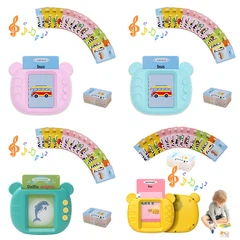
Here is the gap that makes language learning a necessity rather than a privilege. Affluent families buy tutors, bilingual schools, and tablet apps with data plans. Rural, low-income, and refugee families often get none of that, even though their children may need a second language most urgently to integrate. The necessity is universal; the access is not. This is where low-cost, screen-free audio changes the equation. A talking flash card set or a story player needs no subscription, no smartphone, and no fluent adult in the room. It puts native-voice repetition into a child's hands for the price of a toy.
Common myths that stall language programs
- Myth: only wealthy families need it. The opposite is true - lower-access families gain the most from cheap, offline tools.
- Myth: screens are the best medium. For the early years, audio plus repetition outperforms passive video and avoids overuse.
- Myth: a parent must be fluent to help. A device delivers native voice regardless of the adult's skill.
- Myth: wait until school age. That forfeits the easiest acquisition window.
- Myth: one language only, to avoid confusion. Healthy bilingualism is normal worldwide and supports, not harms, development.
Protecting heritage languages while gaining global ones
Necessity is not only about adopting a global lingua franca. For many families the urgent task is the opposite: keeping a heritage or minority language alive while the child learns the majority language at school. Audio devices help here too. Content - a grandparent's story, a folk song, a set of daily phrases - can be recorded and played back so the heritage language stays present without relying on a fluent speaker being available every evening. Bilingualism that includes the home language, not just the school language, is the version linked to the strongest identity and well-being outcomes.

Play is the medium, not the reward
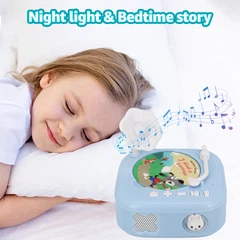
For young children, language arrives through play, not instruction, which is why the device format matters as much as the content. A card a child taps to hear a word, a book that speaks when pressed, a story player they carry to bed - these are play, and play is when the brain is most open to repetition without resistance. A worksheet or a lesson app fights that current; a toy joins it. This is the quiet advantage of the audio-toy approach: it does not ask a child to "study." It asks them to play, and language arrives as a side effect of enjoyment. For buyers, that means choosing formats children choose themselves, rather than formats an adult must enforce.
Why screen-free audio is the right delivery at scale
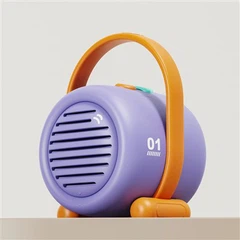
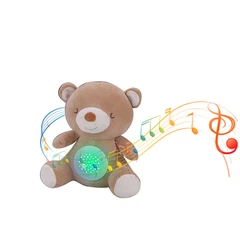
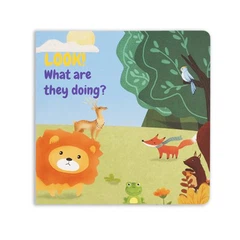
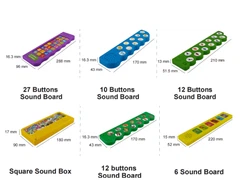
This is the engineering and pedagogy point. To reach children worldwide, a language tool must be cheap, safe, durable, and independent of connectivity. Screens fail on three of those counts: they cost more, they invite overuse, and they assume a device and a data plan. Audio-first toys - talking cards, story players, sound books - strip the experience down to sound and repetition, which is what language acquisition actually needs in the early years. They work offline, survive drops, and hand a child autonomy. That is why KidsoundBook's screen-free categories exist: the format is the strategy.
How audio devices fit a school or NGO deployment
The equity case only matters if the tool survives real deployment. Audio-first devices suit schools and NGOs precisely because they ask little: no network, no charging infrastructure beyond a USB port, no teacher training beyond a five-minute demo, and no small parts to lose if cards are tethered. A classroom can rotate a set of talking cards across groups; a community center can lend story players like library books. Because content is swappable, the same hardware serves a newcomer language program in one term and a heritage-language program the next. The total cost of ownership stays close to the sticker price - the rare thing in education technology, and the reason offline audio scales where apps do not.

What this means for brands and educators
If language learning is necessary and access is the bottleneck, then the job for a brand is to localize content, not just translate a user interface. That means native-voice recording in each target language, age-appropriate scripts, and a content update path that does not require shipping new hardware. For educators and distributors, it means choosing devices that are offline-first and certifiable for local markets, so a language program can deploy in a village or a city with the same unit. KidsoundBook supports this through OEM/ODM: the same hardware platform carries 60+ languages, and content is swappable per region.
Measuring whether it works
Buyers and educators should track the right signals. Vocabulary growth and willingness to speak are better early indicators than any single test score, because confidence often precedes accuracy. Practical markers include whether a child requests the device, repeats phrases unprompted, and understands simple instructions in the target language after a few weeks. We advise setting those observations before purchase, so a deployment is judged on child-level change, not on feature lists. A language program that moves a shy child from silence to repetition has already succeeded where expensive ones fail.
A 20-minute way to evaluate a language-learning device for your market
Before committing budget, check a sample against your market in this order: is the audio a real native voice or a synthetic one (children notice); does it run fully offline; can a child operate it alone; does the content cover the languages and ages you need; how is new content loaded (card, USB, OTA); and are the certifications correct for your countries. Twenty minutes with a sample answers most of the questions a catalog hides.
A regional view of where necessity is acute
The pressure is not evenly spread. In parts of Southeast Asia and Africa, children commonly navigate three languages before secondary school - home, school, and a regional trade language - with little adult support. In the Middle East and Europe, displacement has put multilingual classrooms into ordinary towns. Across Latin America, English access is increasingly a divide between those who can and cannot reach formal employment. None of these is a niche. Offline audio meets that majority where it is.
Why XDT / KidsoundBook is built for this
We run the soft and hard sides in one Shenzhen factory - about 3,000 square meters with SMT, injection, card printing, and assembly, above 50,000 units a month. Our screen-free lines - talking flash cards, story players, sound books, reading pens - are designed offline-first and carry 60+ languages at the platform level. We certify per configuration (CE, FCC, RoHS, REACH, and UKCA, CPSIA, ASTM F963, CCC, SASO as markets require), keep an update discipline so device software does not break, and back manufacturing with a 12-month warranty. Standard lead time is 25–35 days from deposit; full custom tooling runs 45–60 days; minimum order is 500 units for standard builds.
If the goal is to make language learning a normal part of childhood everywhere, the device has to be the equalizer - cheap, offline, and native-voiced. That is the device we build.

The bottom line
Pull the threads together and the answer to "why is global children's language learning necessary" is straightforward. The brain is most ready in childhood, the world most connected in history, and the children who need it most are the least served by current tools. Necessity plus inequality is the signal for a different delivery method - one that is offline, native-voiced, durable, and cheap enough to hand to any child. Screen-free audio is that method, and it is the one KidsoundBook builds. The task left to brands and educators is not to convince families that language matters, but to make sure the means to learn it reach every child, not just the privileged few.
Frequently Asked Questions
Q: At what age should language learning start?
A: Early and through play. The sound system is easiest to absorb in childhood; the goal is exposure and repetition, not drills or screens.
Q: Is screen-free less effective than an app?
A: For young children, no. Audio plus repetition is what drives early acquisition, and it avoids the overuse and access problems screens create.
Q: Can heritage or minority languages be supported?
A: Yes. Custom audio content - stories, songs, phrases - can be produced and loaded so a home language stays present.
Q: Do these devices need the internet?
A: No. They are offline by design, which is precisely why they scale to low-connectivity markets.
Q: What is the minimum order and lead time?
A: 500 units for standard builds, 25–35 days from deposit; full custom tooling starts at 1,000–2,000 units with 45–60 days.