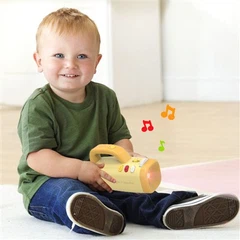
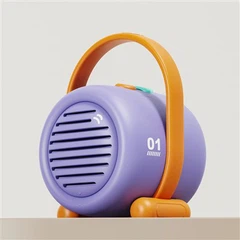



Ⅰ. Design Philosophy: Returning to Purity, Focusing on "Companionship"
The view that "children's phonographs are more heartfelt than smart speakers" essentially compares the differences between the two products in terms of emotional connection, experiential forms, and functional positioning. The following analyzes the underlying reasons from dimensions such as design philosophy, usage scenarios, and emotional value:
1. The Warmth of Physical Interaction
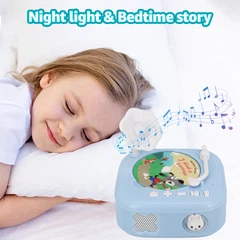
Phonograph: It uses mechanical operations such as knobs to adjust volume and manual switching of records or cassettes. Children need to physically "tinker" to play music, and this tactile engagement turns the operation itself into an exploratory pleasure. For example, the "rustling" friction sound when turning a record or the clicking feedback of buttons both reinforce the authentic feeling of "interaction between humans and machines."
Smart Speaker: It relies on voice commands or mobile apps for control, with highly digital and virtualized operations. A child might just need to shout, "Play a story," to complete a task, lacking the ritual of "creating with their own hands." This makes it easy for them to see the product as a "tool" rather than a "companion."


| Comparison Aspect | Children's Record Player | Smart Speaker |
|---|---|---|
| Interaction Method | Physical operation (crank, record swap) | Voice commands (risk of dependency) |
| Content Control | Parent-curated (recordings/classic songs) | Algorithm-driven recommendations (uncontrolled content) |
| Educational Value | Visualized acoustic principles (disassemblable models) | Primarily entertainment-focused |
| Emotional Value | Preserves generational voices/childhood recordings | Cloud-stored data (lacks tangible memory) |


Develops Patience & Focus
✅ Slow-Interaction Mode: Manual cranking and record-changing teach delayed gratification
❌ Smart Speakers: Instant voice responses encourage "immediate satisfaction" dependency
Eye Protection & Anti-Addiction
✅ Screen-Free Design: Eliminates blue light exposure and reduces screen time
❌ Smart Speakers: Often require tablet/phone pairing, increasing device usage
Authentic Audio Experience
✅ Physical Vibration Acoustics: Vinyl/mechanical players produce warm, textured sound
❌ Smart Speakers: Digitally compressed audio lacks organic richness
Enhances Parent-Child Bonding
✅ Collaborative Operation: Shared record-changing and speed adjustment create quality time
❌ Smart Speakers: One-way command interaction minimizes family engagement
Emotional Time Capsule
✅ Recordable & Preservable: Capture family voices and childhood memories as heirlooms
❌ Smart Speakers: Cloud storage risks data loss and lacks tangible nostalgia