
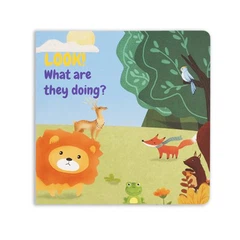
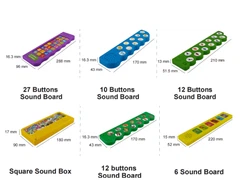
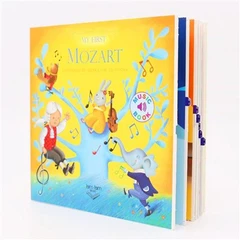


Parents shopping for baby toys want something safe, engaging, and durable enough to survive the chaos of everyday life with a little one. But for manufacturers and product developers, creating sound toys for babies and toddlers involves a whole different set of challenges compared to toys designed for older children. The baby and toddler segment stands out as one of the most heavily regulated areas in the entire toy industry. A product meant for a 12-month-old often needs to clear roughly three times as many safety tests as something for a 5-year-old.
This extra layer of scrutiny isn't just bureaucracy-it's a reflection of how young children interact with objects. Babies and toddlers explore the world with their mouths, hands, and unlimited curiosity. They don't read warnings, follow instructions, or understand limits. That means every decision, from materials to electronics, has to prioritize safety from day one. Many first-time OEM buyers learn this lesson the expensive way: they pick a standard sound module, pick cute fabric, and get a sample that looks perfect-only to fail lab tests on choking hazards, battery access, or restricted chemicals. Fixing those problems after tooling can run thousands of dollars and delay launches by weeks. Smart teams build compliance into the design from the start, turning what feels like extra cost into better margins and fewer headaches down the road.
In this article, we'll walk through the key engineering rules that set baby sound toys apart. We'll look at real scenarios, practical solutions, and why getting these details right matters for both safety and business success. Whether you're developing plush sound animals, interactive sound books, or musical toys, these insights can help you avoid common pitfalls and deliver products that parents trust.
The High Stakes of Small Parts in Baby Toys
One of the biggest differences in designing for babies comes down to the small parts test. Regulators know that anything small enough to fit in a young child's mouth poses a serious choking risk, so testing is rigorous. The U.S. CPSC's small parts regulation (16 CFR 1501) is a prime example. It requires that every component withstand significant pull force and not fit inside a special test cylinder that mimics a child's throat.
Imagine developing a charming talking plush rabbit for the U.S. market. The sample arrives looking soft and appealing, with embroidered eyes and a gentle recorded voice. Everything seems fine until the lab applies a 15-pound pull force to those eyes. They detach and fit completely inside the test cylinder-immediate failure. This isn't uncommon. Embroidered details, sewn buttons, or loosely attached features that work fine on older kids' toys become liabilities here.
The fix involves rethinking attachments entirely. Instead of relying on thread that can pull loose, teams switch to ultrasonic welding or heat-sealing techniques that make features part of the fabric itself. The eye becomes integrated rather than added on. This kind of redesign might add just a few cents to the bill of materials (BOM), but it passes testing reliably. Similar changes apply to noses, zippers, snaps, and even internal components. The goal is to ensure a determined toddler can't tear open the toy and reach wires, speakers, or batteries.
In practice, this rule touches almost every element of a sound toy. Loose fabric edges need overlocking or heat-sealing. Decorative elements must be robust. Even something as simple as hook-and-loop fasteners requires extra attention. These adjustments typically add between 15 and 30 cents per unit, but the alternative-failing tests and retooling-can easily cost thousands and push back production timelines by a month or more. For brands building trust in the baby space, that upfront investment pays off through smoother certifications and happier customers.


Securing Battery Compartments Against Curious Little Hands
Batteries introduce another layer of complexity unique to young children's toys. Older kids might handle a standard screw, but toddlers need extra barriers. Regulations like the EU's EN 62115 for electric toy safety demand that battery compartments require a tool to open-something not readily available to a child. A regular Phillips head screw might seem secure, but labs have found that many three-year-olds can access common household screwdrivers.
A real-world case involved a sound book for the European market. The initial design used a standard screw, which failed testing because it didn't meet the tool requirement. Switching to a specialized five-lobe security screw solved the issue. These screws need a proprietary driver bit that's uncommon in homes, adding only a couple of pennies to the cost. Other markets have their own twists: ASTM F963 in the U.S. often requires two independent movements, like a screw combined with a sliding latch, while Chinese standards align closely with EU rules.
Design teams have several effective options. Security screws offer a great balance of cost and compliance. Push-and-turn locks work well for larger compartments but can increase assembly time. The key is planning this early so that molds and assembly lines accommodate the chosen mechanism without last-minute changes. Failing here doesn't just delay a project-it risks product recalls or blocked market entry, which can be far more expensive than a slightly higher BOM.
Parents appreciate these thoughtful designs too. A secure compartment means fewer worries about loose batteries becoming choking hazards or causing other issues. It contributes to the overall perception of quality that helps premium baby toys command better prices.
Keeping Sound Levels Safe for Developing Ears
Volume control might seem straightforward, but baby sound toys face strict limits because they're often held right next to a child's ear. EU standard EN 71-1 caps continuous output at 80 dB with peaks no higher than 85 dB, measured at 30 centimeters. U.S. ASTM F963 allows up to 85 dB continuous at 50 centimeters, but the principle remains the same: protect young hearing.
Generic sound modules sourced without these limits in mind frequently test too loud-sometimes hitting 93 dB or more. The solution often involves a current-limiting amplifier chip that keeps output in check without ruining audio quality. Other techniques include smaller speakers, tuned enclosures, or software that caps digital gain levels. These changes might add five to ten cents per unit, but they prevent both regulatory failures and potential long-term harm to children.
This aspect highlights why baby toys can't simply reuse designs meant for older audiences. A toy that sounds fun at a distance might become overwhelming or damaging when a baby presses it close. Designing with these limits in mind from the prototype stage ensures the final product delivers clear, engaging sounds safely. It also reduces return rates, as parents won't send back toys that seem too loud or unreliable.


Material Choices That Withstand Scrutiny and Little Teeth
Chemicals and material safety represent another major area where baby toys differ. Regulations like the U.S. CPSIA limit lead and phthalates, while EU REACH and the Toy Safety Directive impose similar restrictions on a range of substances. Even trace amounts that might be acceptable in other products can fail for items intended for children under three, especially since babies mouth everything.
One common issue arises with PVC coatings used for water resistance. These can contain phthalates above the 0.1 percent limit. Switching to safer alternatives like thermoplastic polyurethane (TPU) resolves the problem, though it raises material costs modestly. Other traps include lead in solder, cadmium in cheap magnets, restricted dyes, or adhesives with volatile compounds. Using lead-free solder, neodymium magnets, OEKO-TEX certified fabrics, and safe glues helps clear these hurdles.
The bite test adds another dimension-materials must hold up to chewing without breaking down or releasing anything harmful. Compliance here typically adds 10 to 30 cents per unit, but the cost of non-compliance can be devastating: recalls, legal issues, and lasting damage to a brand's reputation. In today's market, parents research ingredients carefully. Meeting or exceeding standards becomes a selling point that supports higher pricing and loyalty.
Designing for Real Baby Behavior: The 18-Month-Old Test
Beyond regulations, successful baby sound toys must work in the real world with actual toddlers. Many teams run an informal but powerful test: hand the prototype to a parent with an 18-month-old and observe without instructions. This reveals whether the toy is intuitive and engaging enough for very young users.
Top-performing designs often ditch traditional buttons in favor of capacitive touch or squeeze activation. Physical buttons can become choking hazards and fail quickly when exposed to drool. Limiting interaction modes to just play and sleep keeps things simple-toddlers aren't ready for menus or complex controls. Sound should come from a single, consistent direction to match how young children localize audio. Automatic shutoff after about 10 minutes prevents battery drain, and washable or splash-proof surfaces (IPX4 or better) handle inevitable messes.
These choices might increase costs slightly compared to basic mechanical designs, but they dramatically lower failure rates and returns. A capacitive sensor, for example, eliminates many small parts risks while improving durability against moisture.
Why the Extra Effort Pays Off for Baby Sound Toys
Across all these rules, one principle stands out: baby toys must survive their users. An 18-month-old can't be reasoned with or supervised every second. They test limits constantly-putting things in mouths, pulling at seams, cranking volume, and exploring without fear. The additional dollar or two in BOM for proper engineering isn't waste-it's insurance for safety, compliance, and product longevity.
Brands that embrace these differences don't compete solely on price. They build trust, which parents reward with premium purchases and repeat business. In a crowded market full of cheap imports that fail quickly or raise safety concerns, well-engineered sound toys stand out through reliability and peace of mind.
For anyone working on a new baby sound product, start with these questions: Will every component survive rigorous pull testing? Is the battery access truly child-resistant across target markets? Have materials been vetted for all relevant chemical limits? Addressing them early saves time, money, and stress later.
The baby and toddler sound toy space rewards careful planning. By understanding and applying these specialized engineering rules, developers can create products that are not only compliant but genuinely delightful for the youngest users and reassuring for their parents. In the end, that's what turns a good toy into a trusted favorite.