








White Noise Clock Soothes Night Light – The Decisions an OEM Buyer Has to Make Before Anything Is Built
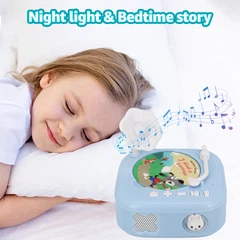
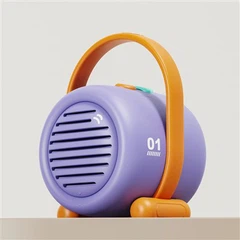
Details: Four functions share one body here: white noise, a soothing night light, a countdown timer and an alarm clock. That combination exists as a working platform, which means most of the engineering question is already answered before a buyer arrives. What is left is the part that decides whether a product fits a market, and it is almost entirely a set of decisions rather than a set of engineering tasks. This unit runs a 3.7V 18650 rechargeable cell at 1800 mAh over Type-C charging, drives a 4 Ω 3 W speaker with a natural-sounding white-noise library, and takes its brightness from a single knob on the face. The case measures 118 × 54 × 148 mm at 350 g. Minimum order: 1,000 pcs.
What Gets Decided Before Anything Is Built
Most OEM projects that run late are not delayed by assembly. They are delayed by decisions that were left open: a sound library nobody signed off, a light temperature argued over after tooling, a carton size that had to change once the retail plan was finalised. The factory can only start once those answers exist, and every week an answer is missing is a week added to the back of the queue.
It helps to separate the platform from the order. The platform is fixed: one board running four functions, one speaker, one cell, one mould family. That part is shared by every buyer we ship to and does not change between orders. The order is everything else – what the white noise sounds like, how the light behaves at its dimmest, which timer presets ship, how the product is coloured, branded and boxed. Those are the variables, and they are the ones worth preparing in advance.
Sound is the first decision, and it is the one buyers underestimate. A white-noise library is not a single loop; it is a set of textures, and a household will hear the same texture for hundreds of nights. The specification calls for a natural reproduction of white noise rather than a synthesised hiss, and the only reliable way to judge it is to sit with a sample in a quiet room and listen at low volume. A voice-heavy or bright-sounding library becomes irritating by the third week in a way that is impossible to predict from a specification sheet.
Light is the second, and it is judged from the bottom rather than the top. Anyone can make a bright lamp; the difficulty is a light dim enough to leave running beside a sleeping child without it reading as a device in the room. The knob on the face adjusts brightness continuously, which is a deliberate choice over discrete buttons, because a parent reaching for a lamp at three in the morning should not have to find the correct button in the dark. Continuous control also removes the stepped jumps that wake a light sleeper.
Power is the third fixed decision, and it is more commercial than it looks. An 18650 cell at 1800 mAh charged over Type-C is a widely available socket, which matters for two reasons: supply is stable across years of production, and the cell is a familiar component to service partners in export markets. A proprietary pack would make the product harder to support and harder to certify, and it would complicate the same unit being sold in several countries.
The timer and alarm complete the set, and they are where a buyer's market knowledge matters most. A countdown timer built for a study desk is set up differently from one built for a nursery, and the alarm behaviour that suits a child learning to sleep through the night is not the behaviour that suits an adult. Both are content decisions living on the same hardware, which is exactly what makes them worth defining early rather than accepting a default.
One more decision sits above all of these and is usually made last, even though it should come first: what problem the product is being bought to solve. A unit positioned as a sleep aid is judged on how it behaves at two in the morning; the same unit positioned as a desk timer is judged on how quickly it can be set. Those are different products wearing identical hardware, and the positioning decides which of the seven specification items genuinely matter. Buyers who write that sentence down before the first sample round consistently need fewer rounds than those who discover their own positioning halfway through the project.
There is a practical way to test whether a specification is complete before sampling begins, and it costs an hour: try to write the user manual. If a behaviour cannot be described in two short sentences without a diagram, that behaviour has not been decided yet. The exercise is uncomfortable and repeatedly exposes exactly the gaps that would otherwise surface as rework once the first sample has been built and shipped – the most expensive moment in the entire schedule at which to discover an unanswered question. Buyers who run this check before sampling routinely report that it saved them a round.
White Noise Clock Soothes Night Light – Model AC 001 Data Sheet
| White Noise Clock Soothes Night Light – Specification Summary (AC 001) | |
| Item | White Noise Clock Soothes Night Light / AC 001 |
| Functions | Four integrated – white noise, soothing night light, countdown timer and alarm clock |
| Sound | White-noise library reproducing the natural sound rather than a synthetic loop |
| Light | Eye-protected illumination with continuous brightness adjustment on the face knob |
| Speaker | 4 Ω 3 W driver |
| Battery & Charging | 3.7V 18650 rechargeable cell, 1800 mAh, Type-C charging |
| Unit Size | 118 × 54 × 148 mm |
| Gift Box | 173 × 133 × 62 mm |
| Unit Weight | 350 g |
| Carton Configuration | 30 pcs per carton / 36.5 × 33.5 × 42.5 cm |
| Carton Weight | 12 kg |
| Compliance | CE, CPC, UKCA, FCC, RoHS (ASTM F963 / EN71 testing available on request) |
| Order Quantity | 1,000 pieces (trial orders negotiable) |
For an OEM enquiry we send the working set rather than a brochure: tiered quantity bands, sample and trial terms, the sound-library specification, the light and timer configuration options, the carton dieline and the 3D data. Send the requirement list through the enquiry form or straight to the export desk and it arrives within one working day. Full range here: https://www.kidsoundbook.com/products
Seven Things an OEM Buyer Specifies on This Platform
Details: The four functions are already integrated, so a buyer's work is not invention. It is specification – deciding what each function does in their market. These are the seven items that change from order to order.
The Sound Library
Which noise textures ship, how long each loop runs and how the set is ordered. A newborn range needs deep, steady textures; a study product benefits from shorter loops and a clear end. This is the first item to sign off, because audio is the slowest element to change later.
Light Temperature and the Dim End
A sleep product is judged at its lowest setting, not its brightest. Warm or neutral, and how far down the dial goes before the light switches off entirely – both are decided here, and both are visible only on a sample in a dark room.
Timer Presets
A countdown timer is only useful if the intervals match how people actually behave. Nursery buyers want short settle windows; desk buyers want long focus blocks. The intervals are a configuration item, so a market can be served without a new board.
Alarm Behaviour
Volume ramp, repeat interval and how the alarm is silenced all differ between a child learning to stay in bed and an adult waking for work. Deciding this early keeps the user manual short, because the behaviour is self-explanatory once set.
Colourway and Housing Finish
A neutral finish suits a nursery; a darker finish suits a study desk. Because colour is set at the moulding stage rather than by a separate process, it is one of the few decisions that affects the production calendar, so it belongs in the first conversation.
Branding and Carton
Logo, carton artwork, the wording on the box and the language of the manual. All of it is printable, so none of it requires engineering time – but all of it needs to be final before the first carton is sealed, and the artwork is what a retailer sees first.

Market Scope and Exclusivity
Whether the order is a general edition or tied to a territory, a channel or a brand. This is a commercial decision rather than a technical one, but it has to be settled alongside the specification, because it determines whether artwork and packaging can be reused by another buyer later.
Who Runs an OEM Project Like This
Platform-based products attract a particular kind of buyer: someone with a market position and a brand, but without the appetite to develop a four-function sleep device from a blank sheet.
The OEM Calendar – Working Backwards From a Delivery Date
| Project Windows – White Noise Clock Soothes Night Light | ||
| Window before delivery | What Should Be Underway | Decision Needed |
| 16 – 20 weeks out | Specification session and sound library selection | Sound set, timer presets, alarm behaviour |
| 12 – 16 weeks out | Colourway confirmed and tooling scheduled | Finish, moulding colour, first sample scope |
| 9 – 12 weeks out | Sample built and shipped for review | Sign-off on sound, light floor and knob feel |
| 7 – 9 weeks out | Certification submission for the destination markets | Which markets, and which test programme |
| 5 – 7 weeks out | Packaging artwork finalised and printed | Logo, carton wording, manual language |
| 3 – 5 weeks out | Pilot batch built and checked against the approved sample | Pilot sign-off |
| 0 – 3 weeks out | Mass production, line inspection and export packing | Shipping documents and carton markings |
The practical point of this table is that only one line involves the factory being busy. Everything before it is decision-making, and decisions are the part a buyer controls. Working backwards from a retail date rather than forwards from an enquiry is what separates an OEM order that lands on time from one that arrives after the season it was intended for.
Two habits shorten the schedule more than anything else. The first is to bring a written specification to the first meeting instead of a set of preferences, because a written brief can be quoted back at every stage and a preference cannot. The second is to nominate one person on the buyer's side who is authorised to approve a sample, since a specification that needs three departments to sign off will always move at the speed of the slowest one.
The Commercial Case – Buying a Platform Rather Than a Project
An OEM order on an existing platform behaves very differently from a development project, and the difference shows up in time, risk and what a buyer has to fund.
| What an OEM Buyer Is Choosing Between | ||
| White Noise Clock platform (AC 001) | A sleep device developed from scratch | |
| Engineering effort before first sellable unit | Already complete | Months of design, board work and acoustic tuning |
| Tooling | Existing mould family | New moulds commissioned and amortised |
| Time to a reviewable sample | Weeks | A season or more |
| Where the buyer's money goes | Specification, packaging and stock | Design, tooling, testing and stock |
| What can be changed without a redesign | Sound set, light behaviour, timer presets, colour, branding | Very little once tooling is cut |
| Repeat order behaviour | Skipped decision stages | Re-approval and re-testing each cycle |
The trade-off is honest and worth stating plainly. A platform gives up absolute freedom of form: the housing shape and the four-function set are fixed, and a buyer who needs a different silhouette or a different function mix is looking at a development project rather than an order. For buyers whose advantage lies in market access, brand and packaging, that trade is usually the right one.
There is also a quieter benefit to platform purchasing that tends to appear in the second year. Because the base product is shared, spare components remain available long after an initial order ships, and a replacement unit can be produced from the same specification without a fresh approval cycle. Buyers planning to support a line for several seasons should weigh that continuity alongside the cost of the first container.
From Enquiry to Container – the Eight Stages
Buyers new to OEM work usually ask what happens after an enquiry is sent. The sequence below is the one this product follows, and knowing it in advance is what keeps a project on schedule.
| OEM Order Flow – Stage by Stage | ||
| Stage | What Happens | What Is Needed From the Buyer |
| 1. Requirement brief | The market, the price position and the intended use are mapped against the platform | Destination markets, target shelf position, intended function emphasis |
| 2. Specification sheet | Sound set, light behaviour, timer presets and alarm logic are written down | Decisions on each of the four functions |
| 3. Industrial design | Colourway, finish and any cosmetic changes are agreed against the existing tooling | Colour reference plus logo files |
| 4. Sample round | A working unit is built to the specification and shipped for review | Sign-off, or a written list of changes |
| 5. Packaging | Carton artwork, manual wording and language versions are laid out | Artwork, wording and manual languages |
| 6. Certification | The destination test programme is run and documents prepared | Confirmation of markets and labelling needs |
| 7. Pilot and mass production | A pilot batch is checked, then the full run is built with line inspection | Pilot approval, quantity and delivery window |
| 8. Packing and export | Units are boxed 30 per carton and export documents prepared | Carton markings and shipping instructions |
Two stages carry most of the risk. The specification sheet decides how much rework happens at the sample stage, and the packaging artwork decides whether the run can ship on time. Both are documents a buyer produces, not the factory, which is why an OEM project that finishes early is usually one where the buyer was organised rather than one where the factory was fast.
For a buyer who has not run an OEM order before, one piece of advice outweighs the rest: treat the specification sheet as the product. Every hour spent defining it before sampling saves several hours of rework afterwards, and that document is what the factory builds to, what the sample is judged against and what a repeat order is reproduced from. A clear specification is the largest cost saving available in a project like this, and it costs nothing but attention.
What OEM Buyers Ask Before Committing
Q1: How many sample rounds should we plan for?
One round is normal when the specification is complete before the sample is built, and two when the sound library or the light behaviour is still being discussed. A third round is unusual and usually means the brief changed rather than the factory. The useful discipline is to bring every decision – sound set, dim end of the light, timer intervals, alarm logic – to the first sample so it can be judged as a whole.
Q2: Can we change the housing shape, and who owns the tooling?
Cosmetic changes – colourway, finish and the branding on the shell – are straightforward and sit within the existing tooling. A new silhouette means a new mould and moves the project into development territory, with the timeline that implies. Tooling ownership and any exclusivity attached to it are agreed in writing at the start of a project, before a mould is cut.
Q3: What quantity does a first order need to be?
Production runs start at 1,000 units, and shorter trial quantities between 200 and 500 units can be arranged for a market test, on terms we confirm with the quotation. Sample units are available before that, and the sample charge is credited against the bulk order. Buyers testing a new channel often begin with a trial quantity and a single specification, then move to a full run once the shelf proves itself.
Q4: How long does a first order take from enquiry to delivery?
Allow three to four months for a first order on this platform, and treat the specification stage as the variable. Sampling, certification and packaging each need a defined window, and the production run itself is the shortest part of the schedule. Buyers who work backwards from a retail date, rather than forwards from the enquiry, are the ones who avoid paying for air freight at the end.
Q5: Can we supply our own audio for the white-noise library?
Yes, and some buyers do. Send finished files and we check them for level and loop quality before they are loaded; or specify the textures you want in words and the studio prepares a set to match. Whichever route is chosen, the library is part of the specification and is signed off before mass production, not after.
Q6: What are the packaging options for an own-brand order?
Carton artwork, wording, manual language and the brand printed on the product are all part of the order. The gift box measures 173 × 133 × 62 mm and units pack 30 to a carton, so retail-ready and distribution-ready packing can both be produced from the same run. Artwork has to be final before the first carton is sealed, which places it early in the schedule rather than at the end.
Q7: Do you handle certification for our destination markets?
We run the test programme for the markets an order is shipping to and prepare the documentation alongside the production schedule. The base tests cover the electrical and safety requirements common to the destinations we serve, and market-specific requirements are added when a new country is involved. Tell us the markets early and the certification stage can run in parallel with sampling rather than after it.
Q8: Can we visit the factory and follow our order being built?
Yes, and we encourage it. Buyers are welcome on site, or to join a live video walkthrough of the line while their batch is running. Because the platform, the audio work, the moulding and the packing all sit on one site, an order can be followed from the components that arrived to the carton that shipped without a gap in between.
The Plant Behind the Platform
for children
Xinditai Electronics is a Shenzhen manufacturer that has worked on children's audio products since 2010. The business is built on OEM and ODM programmes for children's audio and interactive products – sound players, talking cards, audio books, drawing tablets, projection toys, sleep aids and musical devices – for brands and distributors in many countries.
Operating from a 3,000-square-metre site with more than 100 engineers and operators, we keep the whole chain on one floor: audio engineering, moulding, electronics, assembly, testing and packing. The standard is captured in one line – Create with heart, ship with pride – and inspection is placed at each stage rather than only on the finished pallet, so any unit can be traced back to the parts it was built from.

Compliance & Certificates
Certificates
Documentation is prepared for the markets an order is shipping to and reviewed as standards change, so what accompanies a quotation belongs to that order rather than to a previous run.

CE

RoHS

FCC

SEMTA

EMC

ISO