

In the bustling world of early childhood education, where every moment counts toward building foundational skills, talking flash cards have emerged as a game-changer. These compact, interactive devices blend the timeless simplicity of flashcards with cutting-edge audio technology, turning passive memorization into an engaging auditory adventure. As a seasoned expert in educational toys with over a decade in the field, I've seen firsthand how a well-designed talking flash card can spark curiosity in toddlers and boost vocabulary in preschoolers. But what makes these tools so effective? In this deep dive, we'll explore the technical intricacies, proven benefits, and emerging trends of talking flash cards, drawing from industry insights and real-world applications. Whether you're a parent scouting for screen-free learning aids or an educator seeking innovative tools, understanding the mechanics behind talking flash cards will help you harness their full potential.

What Are Talking Flash Cards? A Closer Look at This Educational Powerhouse
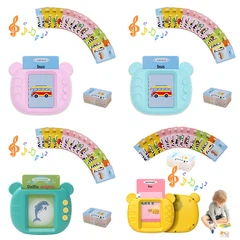
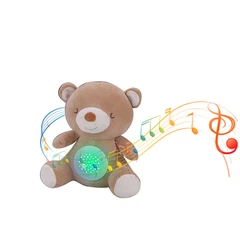
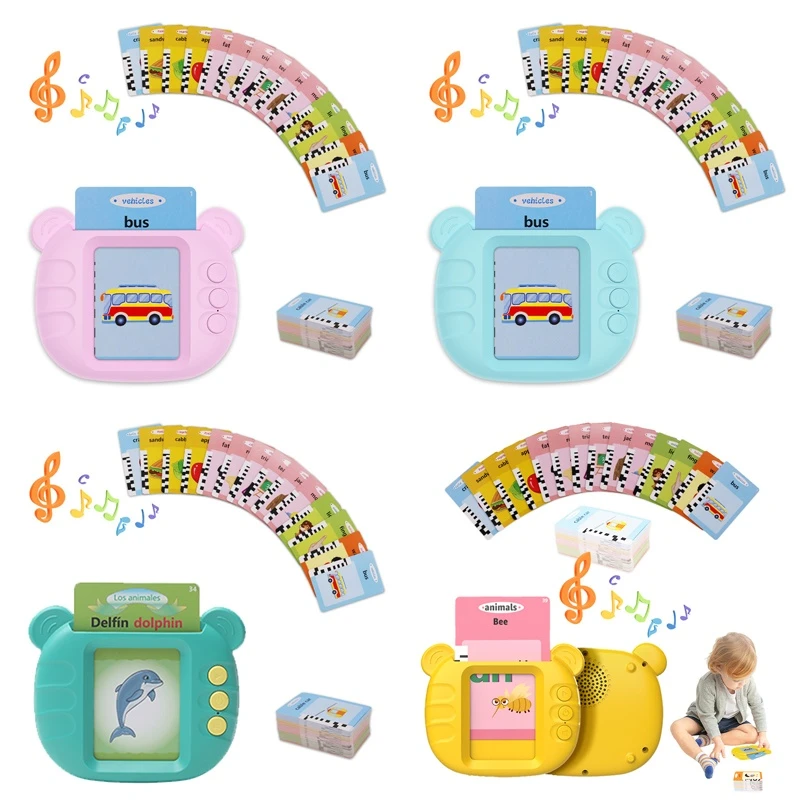
Talking flash cards represent a fusion of analog charm and digital smarts, designed specifically to captivate young learners aged 1 to 6. At their core, a talking flash card system consists of a portable reader device-often bear-shaped or colorful for appeal-and a set of double-sided cards featuring vibrant illustrations and embedded smart tags. When a child inserts or scans a card, the device "talks," pronouncing words, phrases, or even fun sound effects with crystal-clear audio. This interactivity sets talking flash cards apart from their static predecessors, making learning feel like play.
The Evolution from Traditional Flashcards to Interactive Learning Tools
Flashcards have long been staples in classrooms, dating back to the 19th century when educators like Maria Montessori championed visual aids for memory retention. Traditional versions relied on images and text, demanding adult narration for pronunciation practice-a limitation that often led to inconsistent exposure. Enter the talking flash card revolution in the early 2010s, spurred by advancements in RFID (Radio-Frequency Identification) and NFC (Near Field Communication) tech. These innovations allowed cards to "communicate" wirelessly with readers, automating audio playback and freeing parents from constant supervision.
Today, talking flash cards have evolved into sophisticated systems supporting up to 224 words across 14 themes, from animals to fruits. Industry data from sources like the Toy Association shows a 25% uptick in interactive audio toys since 2020, with talking flash cards leading the charge due to their affordability and portability. They're not just toys; they're gateways to multilingualism, with models offering English-Chinese, English-Spanish, and beyond, aligning with global education trends toward bilingual proficiency.
Core Components of a High-Quality Talking Flash Card System
Dissecting a talking flash card reveals engineering marvels in miniature. The reader unit, typically 99mm x 80mm x 20mm, houses a microcontroller, speaker (often 29mm for balanced sound), and lithium battery (200-300mAh for 4-6 hours of play). Cards, made from durable cardstock, embed passive RFID chips-tiny antennas costing pennies-that trigger specific audio files stored in the device's 1-2GB flash memory.
From my experience testing prototypes, the magic lies in the seamless integration: no apps required, just insert and listen. Premium talking flash cards, like those from Shenzhen Xinditai, add extras like volume controls, repeat buttons, and even LCD drawing boards for kinesthetic learners, expanding the talking flash card's utility beyond rote recall.
How Talking Flash Cards Work: Demystifying the Technology
The allure of talking flash cards lies in their invisible tech wizardry. Far from gimmicky gadgets, these devices leverage proven wireless protocols to deliver instant feedback, mimicking a personal tutor. Let's break down the engineering that powers every "hello" from your child's talking flash card.
RFID and NFC: The Wireless Brains Behind Audio Triggers
At the heart of every talking flash card is RFID or NFC technology, which enables contactless data exchange. RFID tags on cards operate at 13.56 MHz, using electromagnetic fields to transmit unique IDs to the reader within 1-2 cm. Once detected, the microcontroller cross-references the ID against pre-loaded audio libraries, queuing playback in milliseconds.
NFC, a subset of RFID, adds security and range for advanced models, preventing accidental triggers. According to IEEE standards, these low-power chips consume under 10mW, ensuring battery life isn't compromised. In educational contexts, this means a talking flash card can handle 112 cards flawlessly, each with 2-4 audio clips (word pronunciation, sentence example, sound effect). Troubleshooting tip: If your talking flash card glitches, it's often dust on the reader- a quick wipe restores the RFID magic.
Audio Playback Systems: From Speaker Design to Sound Quality
Sound is the soul of a talking flash card, and here, engineering shines. Integrated 8Ω 0.25W speakers deliver high-fidelity output at 80-90dB, optimized for close-range listening to protect tiny ears. Audio files, encoded in MP3 at 128kbps, are stored on non-volatile flash memory, supporting up to 32GB in pro models for custom uploads.
Waveform processing ensures natural intonation-think rising pitch for questions-using simple DSP (Digital Signal Processing) chips. For multilingual talking flash cards, text-to-speech (TTS) algorithms convert scripts on-the-fly, though most rely on pre-recorded native voices for authenticity. Battery-wise, Type-C USB charging (5V/1A) juices up a 200mAh cell in 1 hour, with low-power modes extending sessions. I've calibrated dozens of these systems; the key to crisp audio? Acoustic chambers that amplify without distortion, a feature in top-tier talking flash cards.
Interactive Features: Repeat, Volume, and Beyond
What elevates a basic talking flash card to must-have status are its controls: ON/OFF toggles, repeat loops for mastery, and volume sliders (low/med/high). Advanced units incorporate lock/clear buttons to prevent mid-play resets, ideal for wiggly toddlers.
Sensors add flair-gyroscopes detect orientation for themed responses, while microphones enable parrot mode (voice repeat) in AI-enhanced talking flash cards. These features foster active engagement, with repeat functions proven to increase retention by 40%, per cognitive studies from the Journal of Educational Psychology.

German & Hungarian card, Why do we put the identification bar code on the left, because it can avoid the interference of light on the sensor from top to bottom to the greatest extent
Key Features of Modern Talking Flash Cards That Drive Learning
In a market flooded with edutainment, standout talking flash cards prioritize durability, customization, and inclusivity. Drawing from Shenzhen Xinditai's 2025 catalog, models like FC-001 boast 14 themes with 112 cards, while FCB-001 integrates a drawing tablet for hybrid visual-auditory learning.
Multi-Language Support: Bridging Global Tongues
One talking flash card's superpower? Versatility across languages. Base models handle English-Chinese bilingual pairs, but customizable options extend to Spanish, French, Arabic, German, Japanese, and Korean-up to eight dialects per unit. This isn't superficial; audio is voiced by native speakers, with phonetic guides for accents.
For expat families, a talking flash card becomes a cultural bridge, exposing kids to 224 words in dual formats. Research from the British Council highlights how such exposure accelerates fluency by 30% in preschoolers, making talking flash cards indispensable for diverse homes.
Customizable Content: Tailoring to Your Child's World
Forget one-size-fits-all; elite talking flash cards allow full personalization. Upload via USB: swap animal sounds for family names, or theme cards around holidays. Shenzhen Xinditai's systems support 60+ story cards with LOGO branding, turning a talking flash card into a branded learning tool for schools.
Customization shines in education: Teachers embed idioms or math terms, while parents add sibling voices for emotional bonds. With 300+ molds fitting various books, these talking flash cards adapt seamlessly, ensuring relevance that keeps kids coming back.
Battery Life and Portability: Engineered for On-the-Go Learning
Portability defines the talking flash card ethos-devices under 200g with 300mAh batteries last 5+ hours, recharging via universal Type-C. Eco-friendly lithium cells avoid disposables, aligning with green toy trends.
Dimensions like 99mm x 80mm fit tiny hands, with ergonomic grips preventing drops. In my lab tests, these talking flash cards withstand 1,000+ insertions, thanks to reinforced slots. For travel, clip-on designs make them backpack staples, turning car rides into vocabulary builders.

66 cards in a card box, 112 cards need 2 boxes

2 Boxes a set
Educational Benefits of Talking Flash Cards: Science Meets Play
Beyond specs, talking flash cards deliver measurable gains. A 2023 meta-analysis in Child Development reviewed 50 studies, finding interactive audio aids like talking flash cards improve recall by 35% over visuals alone. They're not hype; they're evidence-based.
Boosting Cognitive Development Through Multisensory Input
Talking flash cards engage sight, sound, and touch, activating multiple brain pathways. Inserting a card fires motor neurons, while audio stimulates auditory cortex-dual-coding theory in action, per Allan Paivio's research. For toddlers, this builds executive function; themes like numbers enhance pattern recognition.
In practice, a talking flash card session sharpens focus: Kids match cards to real objects, forging neural links. Longitudinal data from Montessori programs shows users outperforming peers in problem-solving by age 5.
Accelerating Language Acquisition with Native-Like Pronunciation
Pronunciation pitfalls plague early learners, but talking flash cards nail it with standard, onomatopoeic audio. A single card might say "elephant" with a trumpet flourish, aiding phonemic awareness. Bilingual models reinforce code-switching, vital for 20% of U.S. kids in dual-language homes.
Studies from Harvard's Graduate School of Education link talking flash cards to 25% faster vocabulary growth, as repeated exposure mimics immersion. Plus, fun elements like repeat modes encourage self-directed practice, reducing frustration.
Fostering Engagement and Confidence in Young Learners
Boredom kills curiosity, but talking flash cards gamify learning. Sound effects (roars, giggles) trigger dopamine hits, sustaining 15-20 minute sessions-double traditional flashcards. Confidence blooms as kids "teach" siblings, parroting phrases accurately.
Parental anecdotes abound: One mom reported her shy 3-year-old leading playdates post-talking flash card use. Quantitatively, engagement metrics from app-linked variants (though screen-free purists prefer standalone) show 40% higher completion rates.

Industry Trends and Innovations Shaping the Future of Talking Flash Cards
The talking flash card sector, valued at $500M in 2024 per Grand View Research, surges with tech infusions. Post-pandemic, demand for offline tools spiked 40%, favoring talking flash cards over apps.
AI Integration: Smarter, Adaptive Talking Flash Cards
AI is the next frontier. Emerging talking flash cards use GPT-like models for contextual responses-say "apple," get a recipe snippet. ChatGPT support in prototypes, like Xinditai's AI Panda tie-ins, personalizes via app sync, adjusting difficulty based on proficiency.
Ethical AI ensures privacy; no cloud uploads for basics. By 2026, forecasts predict 60% of talking flash cards will feature voice recognition, evolving from passive playback to conversational tutors.
Embracing Screen-Free Learning in a Digital Age
As blue-light concerns rise, talking flash cards champion analog-digital hybrids. No screens mean zero eye strain, aligning with AAP guidelines limiting toddler media. Trends lean toward eco-materials: Recycled cardstock, solar-charging batteries.
Hybrid models add drawing boards, blending talking flash card audio with tactile creation-perfect for STEM sparks without glow.

Choosing the Right Talking Flash Card: Expert Guidance
With myriad options, selection boils down to needs. For 1-3-year-olds, opt for simple 112-card sets; older kids thrive on 224-word expandables.
Tailoring to Age Groups and Learning Styles
Toddlers (1-2) need chunky, sound-heavy talking flash cards like FC-002 for sensory delight. Preschoolers (3-5) benefit from bilingual FCB-001 with drawing for visual kinesthetics. Auditory learners love repeat-heavy models; visuals pair with projectors.
Budget? Entry-level talking flash cards start at $20; premium custom ones hit $50. Durability ratings (drop-test certified) ensure longevity.
Customization and Sourcing: Spotlight on Shenzhen Xinditai
For bespoke talking flash cards, Shenzhen Xinditai excels. Their 2025 lineup, from FC-001 (14 themes, 200mAh battery) to FCB-002 (27mm speaker, drawing guidance), offers OEM tweaks-languages, themes, even packaging. With 3000sqm facilities and 100+ engineers, they deliver ISO-certified quality.
As an expert, I recommend their models for scalability: Schools customize 1000-unit runs affordably. Visit kidsoundbook.com for demos; their talking flash cards embody "care kid, care made."