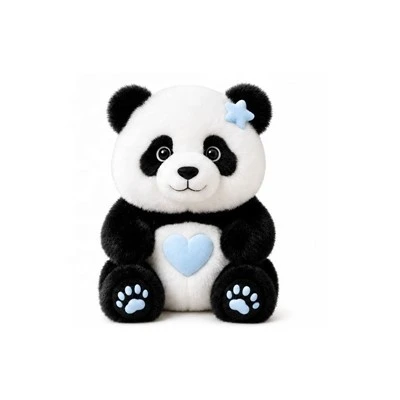
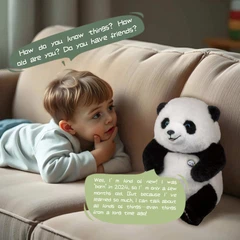
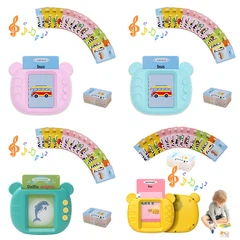
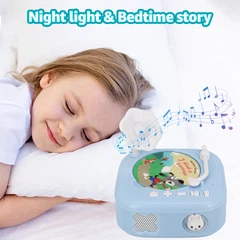
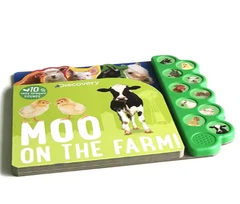
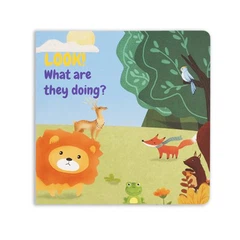
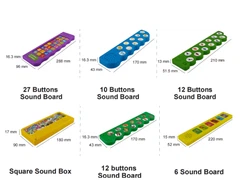
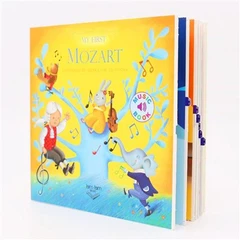
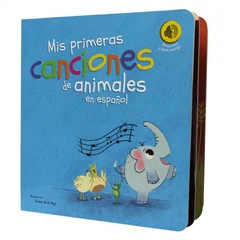
Products Description
In the journey of childhood development, every play session is a learning opportunity. Educational toys, specifically designed to be both engaging and instructive, have become essential tools for parents and educators. But with an overwhelming array of options, how do you choose the right one? This guide explores the benefits of educational toys and provides a scientific framework for selecting the perfect tools to unlock your child's potential.
What Are Educational Toys?
Educational toys are playthings designed to stimulate learning and development in children. Unlike passive entertainment, these toys encourage active participation, problem-solving, and creativity. They are built on the principle that play is the primary vehicle for a child's cognitive, physical, and social-emotional growth.
The Key Benefits: More Than Just Fun

The right educational toy can target and enhance specific areas of a child's development.
Cognitive Development
Problem-Solving Skills: Puzzles, building blocks, and simple logic games challenge children to think critically and find solutions.
Memory and Concentration: Matching games and sequence-based toys enhance memory retention and the ability to focus.
Spatial Reasoning: Construction sets and shape sorters help children understand relationships between objects, a foundational skill for mathematics and engineering.
Motor Skills Development
Fine Motor Skills: Toys with small parts, like stacking rings or pegboards, require precise hand-eye coordination, strengthening the small muscles in the hands and fingers crucial for writing.
Gross Motor Skills: Ride-on toys, balance boards, and large building blocks encourage whole-body movement, improving balance, coordination, and overall physical strength.
Social and Emotional Intelligence
Cooperation and Sharing: Board games and collaborative building projects teach children about turn-taking, negotiation, and working towards a common goal.
Emotional Expression: Dolls, puppets, and role-playing sets allow children to act out scenarios, helping them process emotions and develop empathy.
Resilience: When a tower of blocks falls, a child learns to cope with minor frustration and try again, building perseverance.
A Science-Backed Guide to Choosing Educational Toys
Selecting the right toy isn't about finding the most expensive or technologically advanced option. It's about matching the toy to your child's developmental stage and interests.
1. Follow the Child's Developmental Stage
Infants (0-12 months): Choose toys that engage the senses. Look for high-contrast colors, different textures, and toys that make gentle sounds. Soft blocks, rattles, and activity gyms are excellent.
Toddlers (1-3 years): This stage is all about exploration and cause-and-effect. Opt for sturdy toys like shape sorters, basic puzzles, push-and-pull toys, and stacking cups.
Preschoolers (3-5 years): Imagination and complex skill-building take center stage. Introduce dress-up clothes, art supplies, more complex building sets, and simple board games.
School-Age (5+ years): Children are ready for toys that require strategy and deeper thinking. Science kits, advanced construction models, coding toys, and strategy-based games are ideal.
2. Prioritize Open-Ended Play
The best educational toys are often the simplest. Open-ended toys can be used in multiple ways, limited only by a child's imagination. Examples include:
Building Blocks and Bricks
Modeling Clay or Dough
Generic Wooden Figures
Blankets and Boxes for Fort-Building
These toys foster creativity and adaptability far more than a single-function, battery-operated toy.
3. Look for the "Four C's"
When evaluating a toy, consider if it promotes:
Critical Thinking: Does it present a challenge?
Creativity: Can it be used in more than one way?
Communication: Does it encourage conversation or storytelling?
Collaboration: Can multiple children play with it together?
4. Safety and Quality First
Always check the recommended age range and ensure the toy is made from non-toxic, durable materials. Avoid toys with small, loose parts for young children to prevent choking hazards.

Conclusion: Invest in Play, Invest in Growth
Educational toys are a powerful investment in your child's future. By choosing toys that are appropriate for their developmental stage and encourage active, open-ended play, you are not just buying a distraction-you are providing the tools they need to build a strong foundation for lifelong learning. The next time you select a toy, remember: the goal is not to keep them busy, but to build their brain.