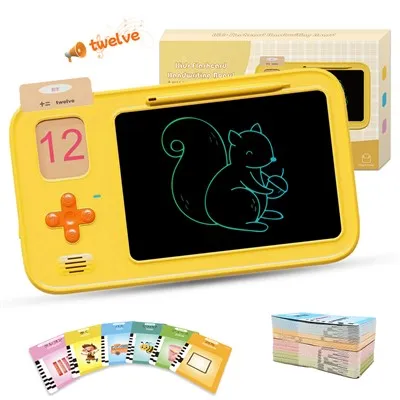

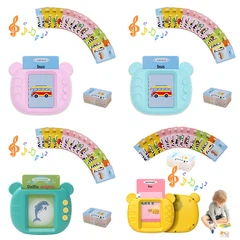
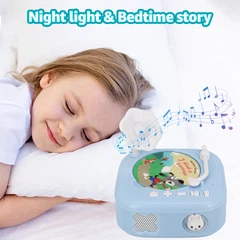




1. Why are Minority Language Markets a Must-Win Battle for Talking Flash Cards?
1.1 Real and Urgent Demand:
Overseas Diasporas and Immigrant Families: Families scattered around the world have a strong desire for cultural connection and are eager for the next generation to master their heritage language.
The Rise of Multilingual Education: Global, discerning families increasingly recognize multilingualism as a core competitive advantage for their children. Beyond English, they are seeking introductory resources for languages like Spanish, French, German, Japanese, Chinese, and even less common languages like Swedish or Dutch.
Scarcity of Resources: The significant demand for learning minority languages contrasts sharply with the severe lack of high-quality, physical educational tools available in local markets. Your product could be the most professional and convenient solution they find.

1.2 High Barriers to Entry & Strong Customer Loyalty:
Once you successfully develop a product for a specific minority language, you establish a temporary "monopoly" advantage. Parents find it extremely difficult to locate suitable Croatian flashcards, for instance. Once they find yours, they will purchase without hesitation and become loyal brand advocates.
1.3 Strong Product Premium Potential:
Scarcity drives value. Compared to standardized, price-transparent English products, minority language Talking Flash Cards can command higher pricing power. Parents are willing to pay a premium for professional, authentic, and scarce resources.
2. How to Precisely Develop Minority Language Markets: A Full-Cycle Strategy from Product to Marketing
Step 1: Product Core-Building "Authenticity," Not Just "Translation"
Users of minority language products are highly sensitive to linguistic "purity." Product strength is the cornerstone of success.
Native Content Development:
No Machine Translation: Never directly machine-translate English content. You must hire native-speaking linguistic experts (preferably with a background in early childhood education) for content creation and audio recording.
Standard Pronunciation: The voice talent is crucial. Use native speakers with clear, engaging voices to ensure every phoneme is accurate. Consider using child voices for greater appeal.
Cultural Adaptation: The images and vocabulary on the cards must align with the cultural habits of the target language country. For example, when introducing "fruit," highlight "mango" in the Spanish version and "persimmon" in the Japanese version.
Hardware and Experience Optimization:
Durability: Minority language products have a high customer acquisition cost and are difficult to replace; parents have extremely high demands for quality. The card thickness and device drop-resistance must meet the highest standards.
Ease of Use: Considering that grandparents might purchase or use the product, the interface (buttons) should be as simple and intuitive as possible.
Step 2: Market Positioning & Channel Building-Precisely Reaching "Communities"
Minority language markets are typical "community-based" markets; broad strategies won't work.

Online Channels:
Independent Website SEO/SEM: Optimize for long-tail keywords like "aprender español para niños" or "French flashcards for toddlers." Build a multilingual independent website .
Community Marketing: Find and join parenting communities or diaspora communities for your target language on platforms like Facebook, WhatsApp, and WeChat. Partner with group admins and provide expert content for precise promotion.
Collaborate with KOLs/KOCs: Find parenting bloggers or educational experts from the target language country for product reviews and recommendations. Their endorsement carries credibility within closed communities.
Offline Channels:
Local Bookstores & Toy Stores: Partner with local language bookstores, children's toy stores, and cultural goods shops in the target countries.
Diaspora Community Shops: Distribute products through specialty stores in ethnic neighborhoods globally .
International Schools & Partner Institutions: Build relationships with international schools and weekend language schools worldwide, positioning your product as teaching material or a recommended educational tool.
Step 3: Marketing & Brand Story-Narrating "Cultural Heritage" and "Global Perspective"
Emotional resonance is more effective than functional for minority language users.
Core Narrative:
For diaspora families, emphasize: "Bridging Your Heritage," "Don't Let Your Mother Tongue Fade with This Generation."
For multilingual families, emphasize: "Opening Another Window to the World for Your Child," "Stay Ahead, Master a Key Language for the Future."
Content Marketing:
On your website and social media, don't just sell products. Share nursery rhymes, simple stories, and other content in the target language, positioning your brand as an authoritative resource for early language learning.


3. Insights from Success Stories
Using the product from your website as an example, we can envision its upgrade path:
Current State: Offering Chinese-English bilingual support is a great starting point.
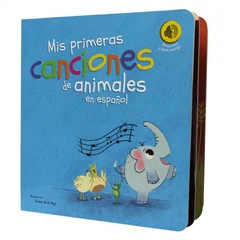
Upgrade Path: Launch single minority language versions (e.g., Spanish-only) or "English + Minority Language" switchable versions. A device containing both English and Japanese modes, for instance, would be highly attractive.
Potential Blockbuster: Developing a high-quality Spanish Talking Flash Card for the vast global Spanish-speaking population holds market potential that could rival or even surpass the English version.
Conclusion
In today's homogenized early education toy market, minority language markets represent one of the few opportunity-rich blue oceans. The key to success lies in "depth" over "breadth." By creating an authentic product core, implementing precise community-based marketing, and telling a compelling brand story, your Talking Flash Cards will transform from a common commodity into a cultural bridge connecting children to the world-a cherished educational investment for countless families.